
I know I shouldn't scratch but I can't resist" | The itching and shame of recurring psoriasis
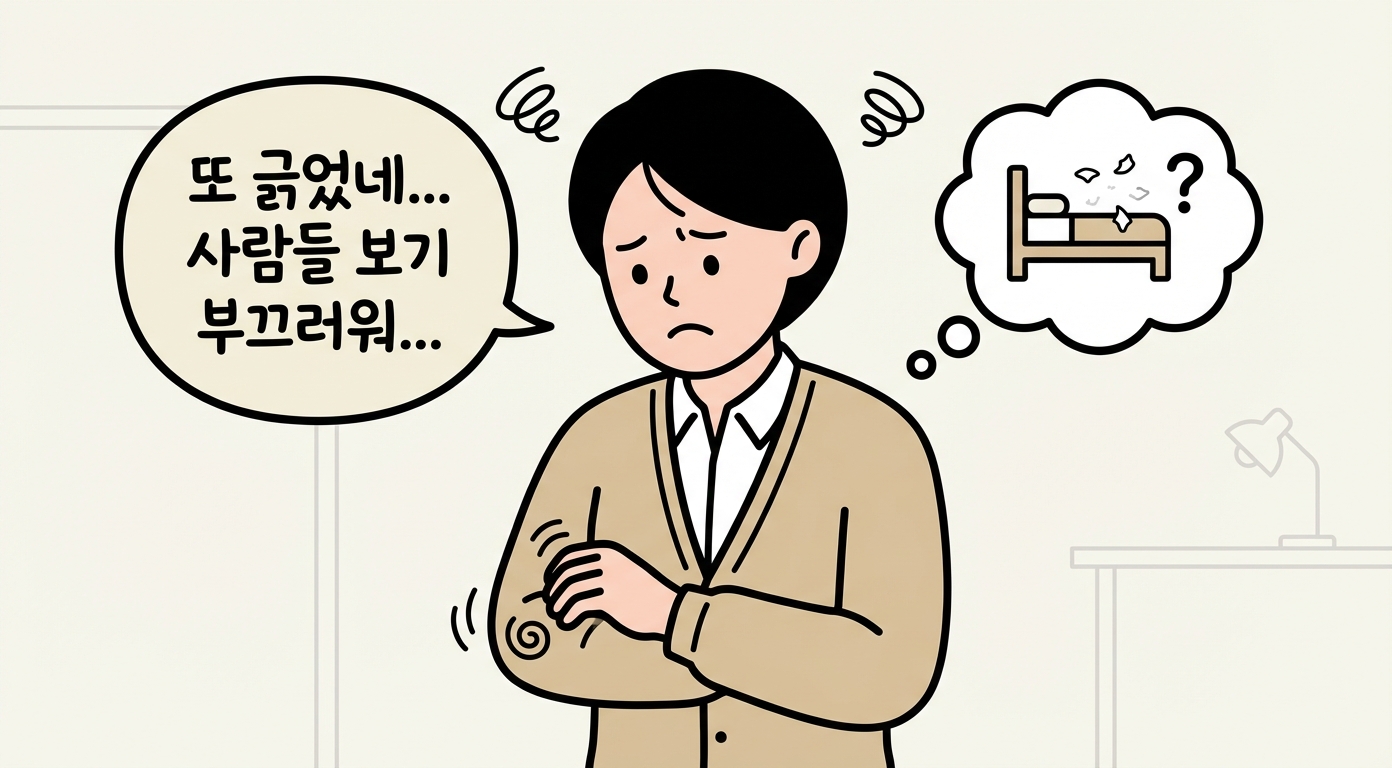 White Traces Left on the Blanket Every Night
"I know I shouldn't scratch.
But when I scratch in my sleep, scales fall all over the blanket.
Every morning when I see that, I feel ashamed of myself."
These were the words of Sun-young (pseudonym), a woman in her mid-thirties working in an office, when she first came to see me.
Sun-young worked in the marketing team of a small company, and small red spots had begun appearing on her elbows after she transferred to a new department two years ago.
At first she thought it was just dryness.
But the spots gradually spread, extending to her knees and back.
She visited three different dermatology clinics.
Steroid ointments would bring about a week of relief, but stopping them seemed to make things worse.
"All the blood tests came back normal.
But when I asked why my skin was like this, they just said it was my constitution."
Even in summer she wore only long sleeves.
At company dinners, sitting next to a colleague in short sleeves, she said her own forearms were the first thing she noticed.
I did not view Sun-young's symptoms as a simple skin condition.
I saw that night shifts, sleep deprivation, and chronic stress were combining to prevent the heat inside her body from circulating properly, pushing it toward the skin.
Every time I hear such stories, I feel deep empathy for the patient.
Psoriasis is not just a disease that makes the skin rough.
It is a disease that makes you shrink from daily life, chips away at self-esteem, and makes you reluctant to even meet people.
So why does psoriasis recur so persistently?
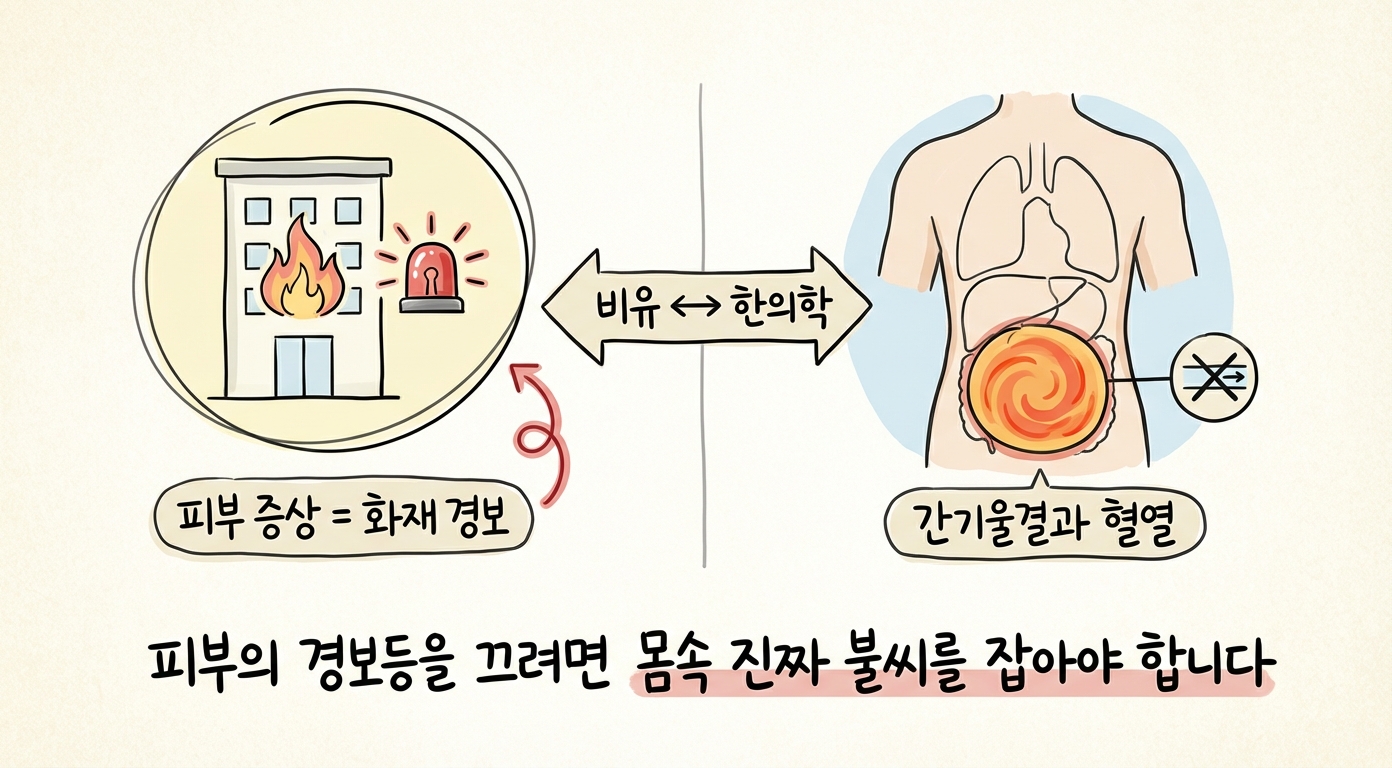 The Alarm the Skin Sends — The Real Embers Within
To understand psoriasis, you first need to look into why the skin reacts so dramatically.
In Korean medicine, the core cause of psoriasis is seen as 혈열(血熱) — heat in the blood.
This "blood heat" refers to a state where unnecessary heat accumulates in the blood and that heat pushes out toward the surface of the skin.
Imagine a fire alarm going off inside a building.
The fire is burning inside the building, but all you can see from outside is a flashing alarm light.
Steroid ointments can temporarily silence this alarm light, but they cannot extinguish the embers inside.
Korean medicine has a saying: "폐주피모(肺主皮毛)" — the lungs govern the health of the skin and body hair.
When the lung's energy weakens or heat concentrates in the lungs, the skin's defenses fall, it becomes dry, and inflammation easily takes hold.
Modern medicine also describes psoriasis as an autoimmune reaction in which T cells — immune cells — become overactivated and mistakenly attack the body's own skin.
Normal skin cells are replaced slowly over about a month, but in psoriasis patients, this cycle accelerates to 3–4 days, and cells are pushed to the surface before they can fully mature.
Think of a stagnant pool.
Just as water that cannot flow and sits in one place turns murky and foul, when the body's heat cannot circulate and accumulates in one area, it manifests on the skin as inflammation.
**Stress deepens this stagnation.**Stress brings on 간기울결(肝氣鬱結) — literally, a state where the flow of qi is blocked — and this blocked qi transforms into heat, further fueling blood heat.
In this way, stress, heat, and immune overreaction chase each other's tails, tightening the vicious cycle of psoriasis.
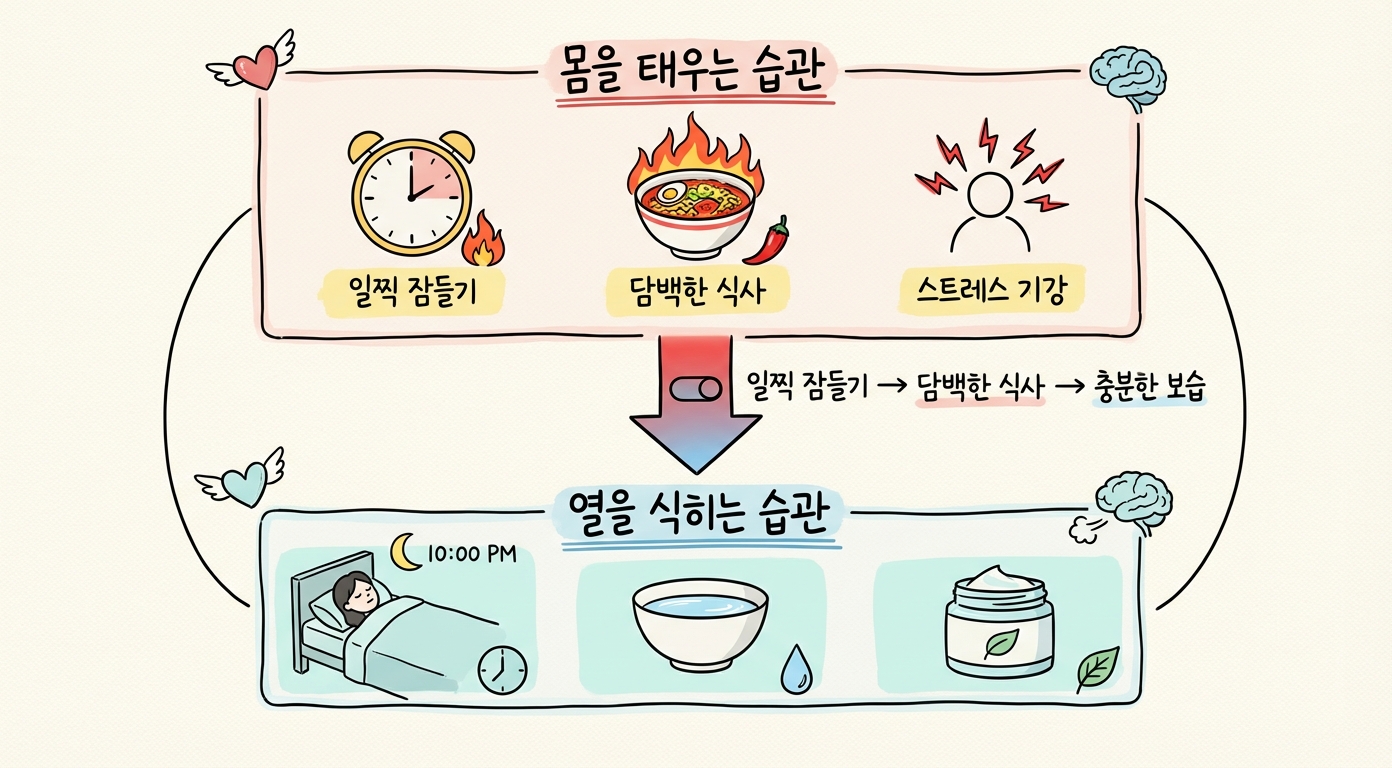 So How Can We Calm This Inflamed Skin?
The factors that worsen psoriasis are hidden surprisingly deep within daily life.
In Sun-young's case, the spicy instant noodles she ate after late nights at the office, frequent drinking, and barely five hours of sleep were constantly stoking the fire inside her body.
Sleep is the time when the body cools itself and recalibrates the immune system.
When this time is insufficient, the body is constantly in an overheated state.
Simply going to bed even a little earlier, and keeping away from screens for an hour before sleep, can change how heat circulates.
Alcohol is a leading factor that directly raises blood heat.
Even if quitting immediately is difficult, reducing the frequency and making a habit of drinking plenty of water the day after can help the skin.
For meals, reducing greasy and spicy foods and eating mainly seasonal vegetables and lean protein is good for lowering heat inside the body.
Moisturizing is also essential.
Because psoriatic skin has a compromised barrier, it is important to apply moisturizer generously right after showering, before the moisture has dried.
However, if the scales are thickly crusted and cracking or bleeding, or if there is pain or swelling in the joints as well, you must seek an accurate diagnosis from a medical institution.
This is because psoriasis left untreated can develop into psoriatic arthritis.
 From a Stagnant Pool Back to a Flowing River
What I consider important in psoriasis treatment is not simply suppressing symptoms, but the process of changing the body's environment. It is not just erasing the red patches on the skin's surface, but examining together why heat accumulated, why circulation was blocked, and why the immune system overreacted.
Tailored to each individual's constitution and condition, it is close to the work of turning the water of a stagnant pool back into a clear and gentle flowing river.
Three months later, Sun-young walked into the clinic for the first time wearing short sleeves.
It was not completely smooth, but she smiled and said, "I think I can go out in front of people now."
Please listen to the signals your body sends.
Your body has a remarkable capacity for recovery.
My role is merely to be a companion who searches together for the key to that recovery.
Even if not through me, I sincerely hope you find a healthcare provider who looks beyond just the skin surface and carefully tends to the whole body.
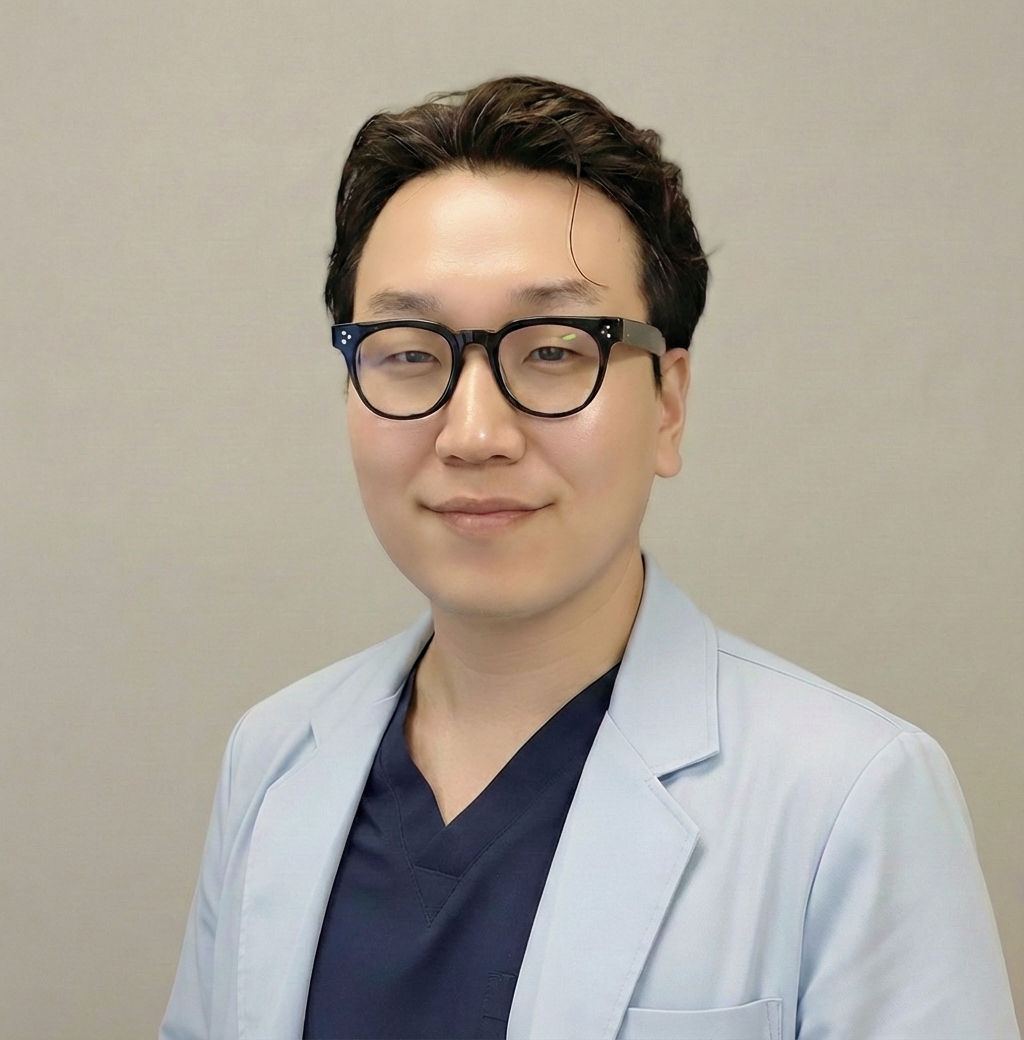
✍️ Reviewed by Dr. Choi Jang-Hyuk, Director of Dongjedang Korean Medicine Clinic
Skin
I know I shouldn't scratch but I can't resist" | The itching and shame of recurring psoriasis
View Program