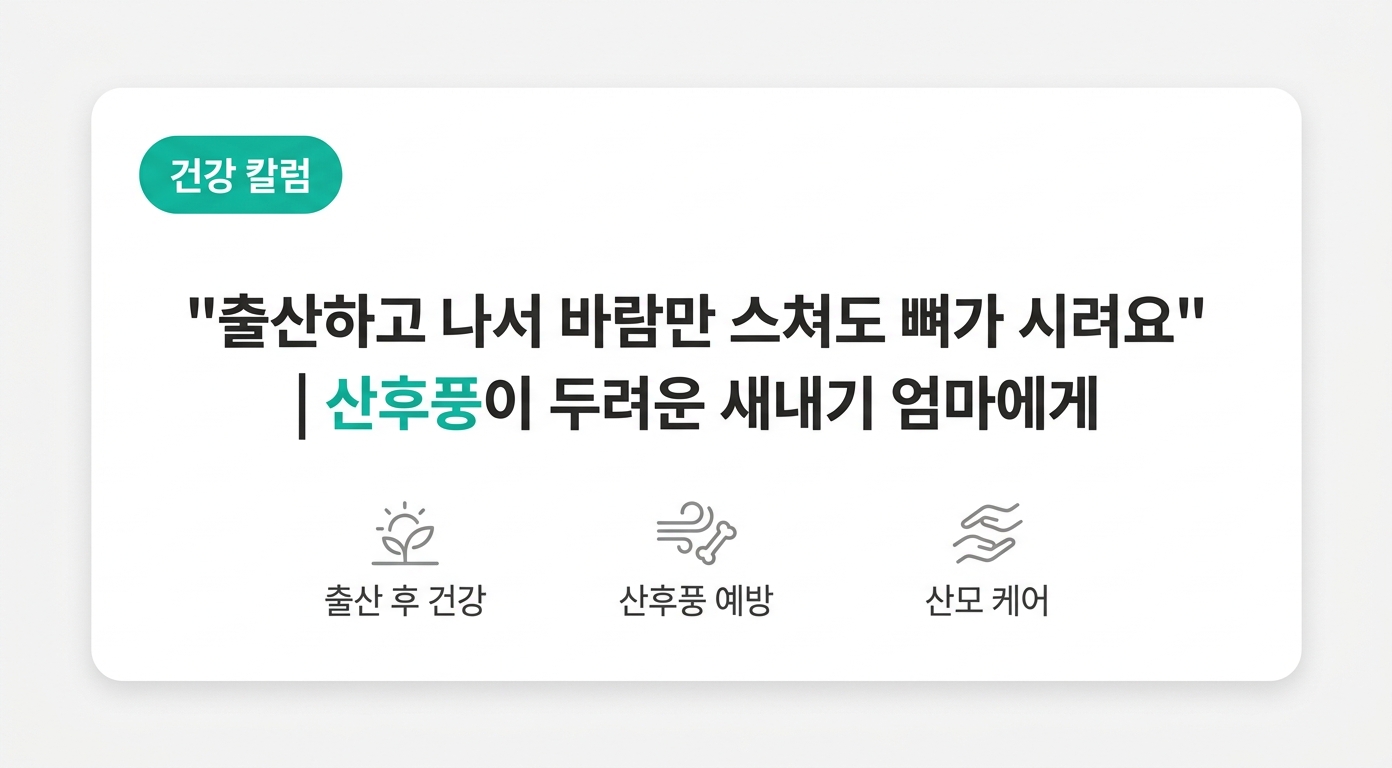
"After giving birth even a breeze makes my bones ache" | For new mothers afraid of postpartum wind syndrome
 A Summer Night When She Couldn't Sleep Even with Socks On
"Ever since giving birth, my finger joints are stiff every morning.
When I try to lift my baby, it feels like my wrists are about to snap."
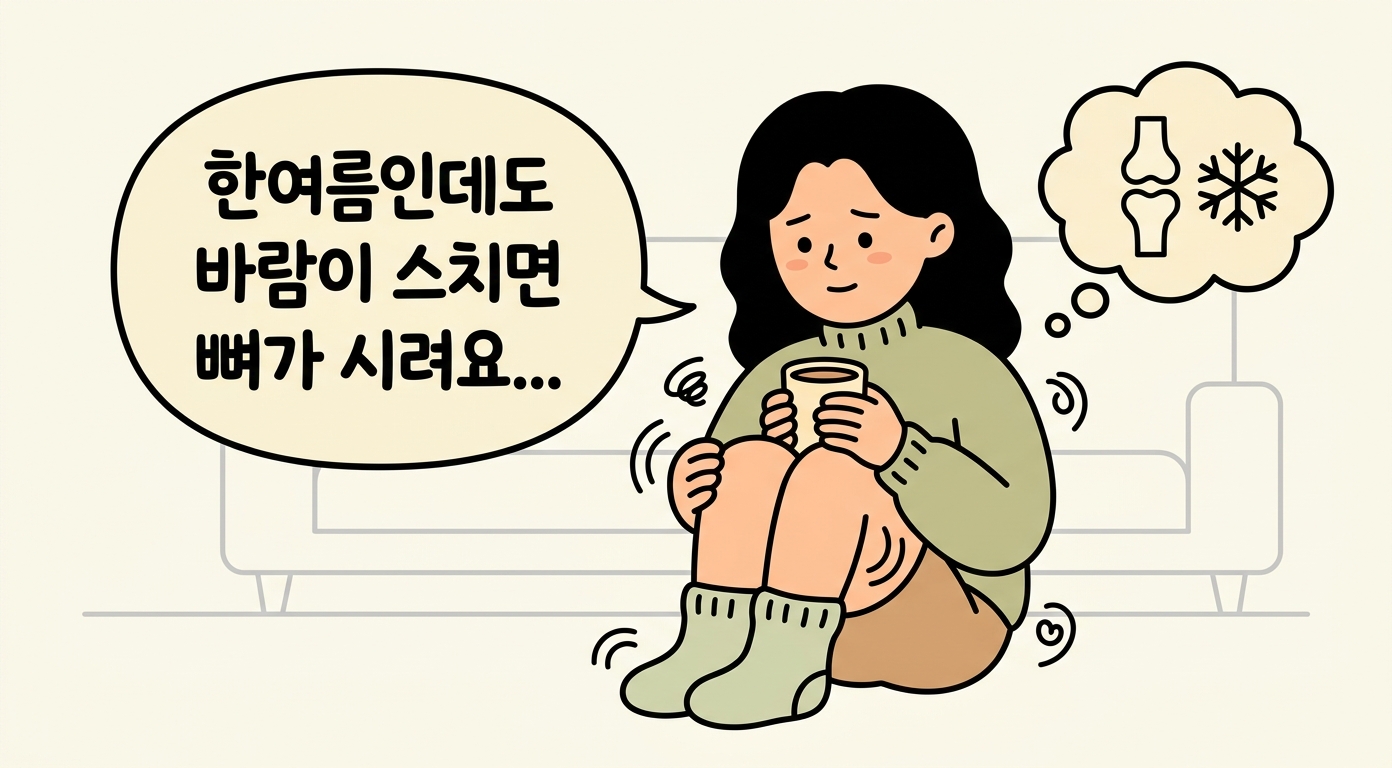
"Even the slightest breeze makes my knees and ankles feel cold to the bone.
In the height of summer, I sleep with socks on."
These were the words of Soo-jin (pseudonym), 33 years old, the first time she came to see me.
Three weeks after the birth of her first child, while on parental leave, Soo-jin had no major issues during her postpartum care stay.
But just two or three days after returning home and beginning to care for her baby on her own, a sharp, biting cold settled into her wrists and knees.
Every night she was waking every two to three hours to nurse, caring for her baby alone during the day, and getting by on takeout for meals.
At first she tried the steam therapy she had learned at the postpartum care center, and mugwort sitz baths she had found online.
A heat pack brought temporary relief — but the cold would return the moment she removed it.
The OB-GYN said her uterine recovery was normal, but for the full-body chill and pain, all she was told was that it was "a natural process after childbirth."
"They say if a mother gets postpartum wind, she suffers for the rest of her life — I'm scared it might already be happening."
Soo-jin's eyes were full of anxiety.
She even felt guilty for worrying about her own body during a time when all her focus should be on her baby.
I deeply relate every time I hear stories like this.
I didn't see Soo-jin's symptoms as simple postpartum pain.
I saw them as the result of the body not receiving enough time and resources to recover after the enormous effort of childbirth.
So what was happening inside Soo-jin's body?
 What if the Heating Goes Out After a Major Renovation?
Childbirth is like one enormous construction project for the body.
Over ten months, the bones and joints spread, the organs shift, and blood volume increases — a massive remodeling to hold a new life.
And once the final construction of delivery is complete, the body must return to its original state.
In Korean medicine, the key to this period is understood as 기혈양허(氣血兩虛) — a simultaneous deficiency of both vital energy and blood.
During childbirth, a significant amount of blood is lost and physical strength is utterly depleted, weakening the body's ability to stay warm and protect the joints.
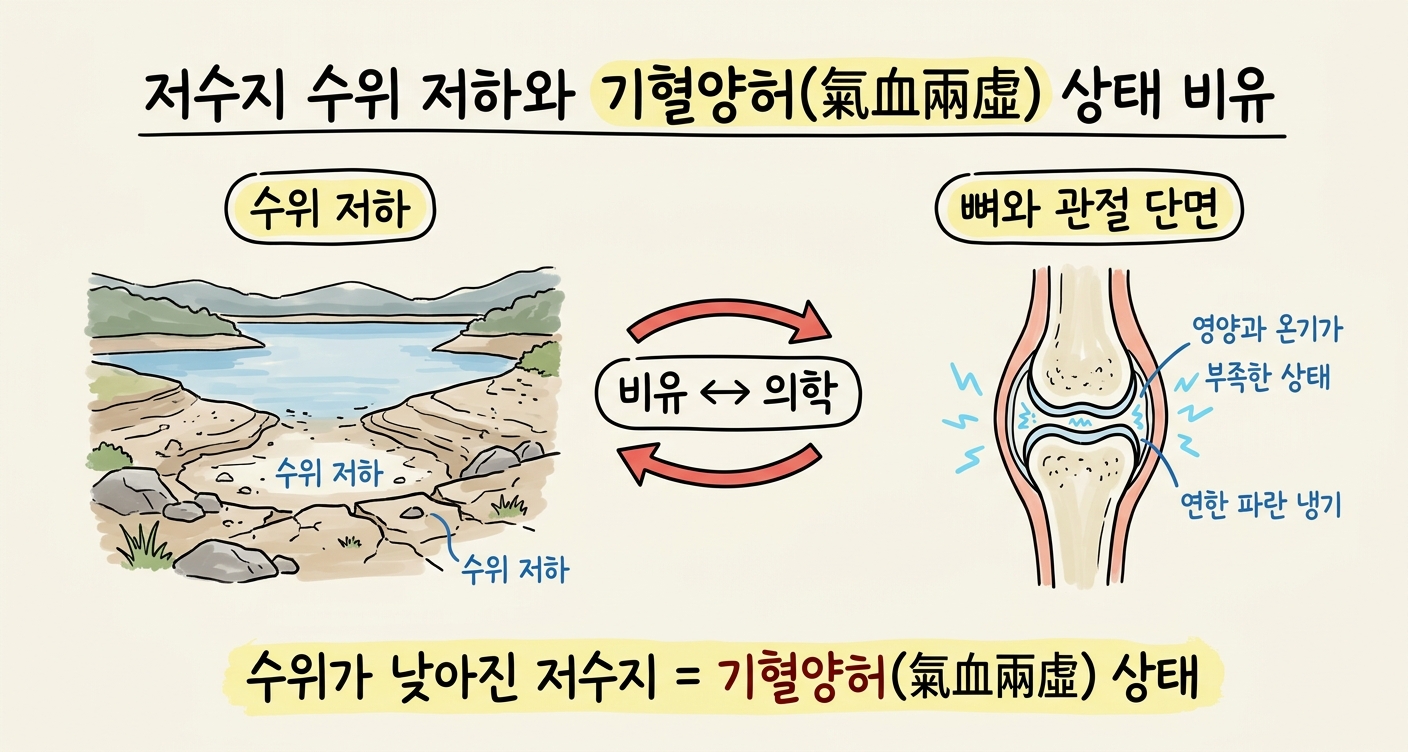
A reservoir analogy makes this easier to understand.
The reservoir that was full is suddenly drained by childbirth — and now nursing and childcare are continuously drawing water out.
Just as surrounding fields dry out when the reservoir runs low, when 기혈(氣血) is insufficient, warmth and nourishment cannot reach the joints and muscles.
This is why even a gentle breeze feels biting cold, and the fingers are stiff every morning.
Modern medicine also recognizes that the hormone 릴랙신(relaxin), secreted during childbirth, loosens the joints and ligaments — and that its effects can persist for several months postpartum.
When sleep deprivation and nutritional imbalance are layered on top, even the immune system falters, causing the body to react intensely to even the slightest chill.
What Korean medicine calls 산후풍(産後風) — postpartum wind — begins precisely at this point.
Cold energy seeps into the joints and muscles through the gaps left by depleted 기혈(氣血).
Additionally, 어혈(瘀血) — blood stasis from unresolved blood that was not properly cleared during delivery — can obstruct circulation and compound the pain.
Deficient 기혈(氣血), the invasion of cold energy, and blood stasis.
These three factors intertwine in a chain, making Soo-jin's body progressively colder and stiffer.
 So What Is a New Mother's Body Asking For?
In postpartum recovery, the most important thing is not a grand prescription — it is creating the conditions in which the body can heal itself.
The first thing to care for is warmth.
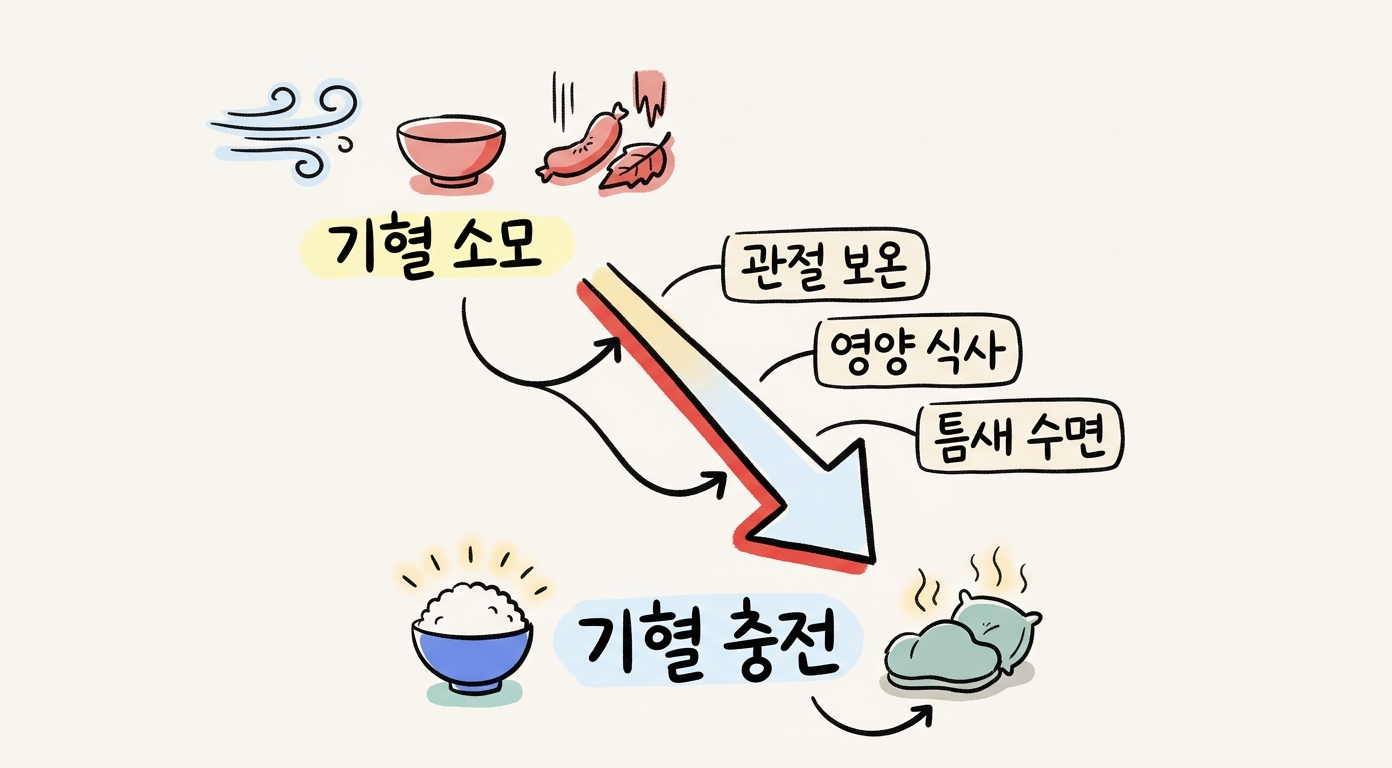
Avoiding cold food and cold drafts, and keeping exposed joints — especially the wrists, ankles, and knees — wrapped and warm can significantly reduce the biting chill.
A warm foot soak before sleep helps circulation throughout the body and eases the cold sensation.
For those with cold wrists, wearing a wrist support and distributing the baby's weight across the entire forearm rather than the wrist can make a small but meaningful difference.
Next is nutrition.
During nursing, 기혈(氣血) is consumed at a greater rate than usual, so warm soups and foods rich in iron must be consistently included.
If the habit of relying on takeout continues, it is not merely failing to refill the empty reservoir — it is draining it further.
And above all, sleep is essential.
Even if nighttime nursing is unavoidable, catching even short naps during the day while the baby sleeps can make a significant difference in recovery.
If family help is available, please do not hesitate to accept it.
However, if the postpartum chill or pain is severe on only one side, accompanied by fever, or if swelling suddenly worsens, there may be another underlying cause — in such cases, please visit a medical institution for a proper examination.
 A Mother's Recovery Is Her Child's Health
Postpartum care is not simply about suppressing symptoms — it is the process of refilling the body's environment that was emptied by childbirth.
It is slowly refilling the empty reservoir, turning the heating back on, and stabilizing the building after a major renovation.
When herbal treatment and acupuncture tailored to each person's constitution and condition, along with small changes in daily habits, accumulate one by one, the body gradually finds its way back to its original balance.
For Soo-jin too, after two months of consistent treatment and lifestyle adjustment, she smiled and said she could now fall asleep without socks, and the morning finger stiffness had improved considerably.
New mothers often put their own discomfort aside for the sake of their child.
But a mother's body must recover so she can care for her child in good health.
Please listen to the signals your body is sending — the chills and stiffness.
Your body already possesses the remarkable resilience that carried it through ten months of pregnancy and the great journey of childbirth.
My role is to be a companion in finding the key to that recovery together.
Even if not with me — please find a healthcare provider who will look carefully at your whole postpartum body.
✍️ Reviewed by Dr. Choi Jang-Hyuk, Director of Dongjedang Korean Medicine Clinic
Women's Health
"After giving birth even a breeze makes my bones ache" | For new mothers afraid of postpartum wind syndrome
View Program