

"Even after washing my hair dandruff falls like snow and I itch like crazy" | Seborrheic scalp dermatitis in a 40s male salesman

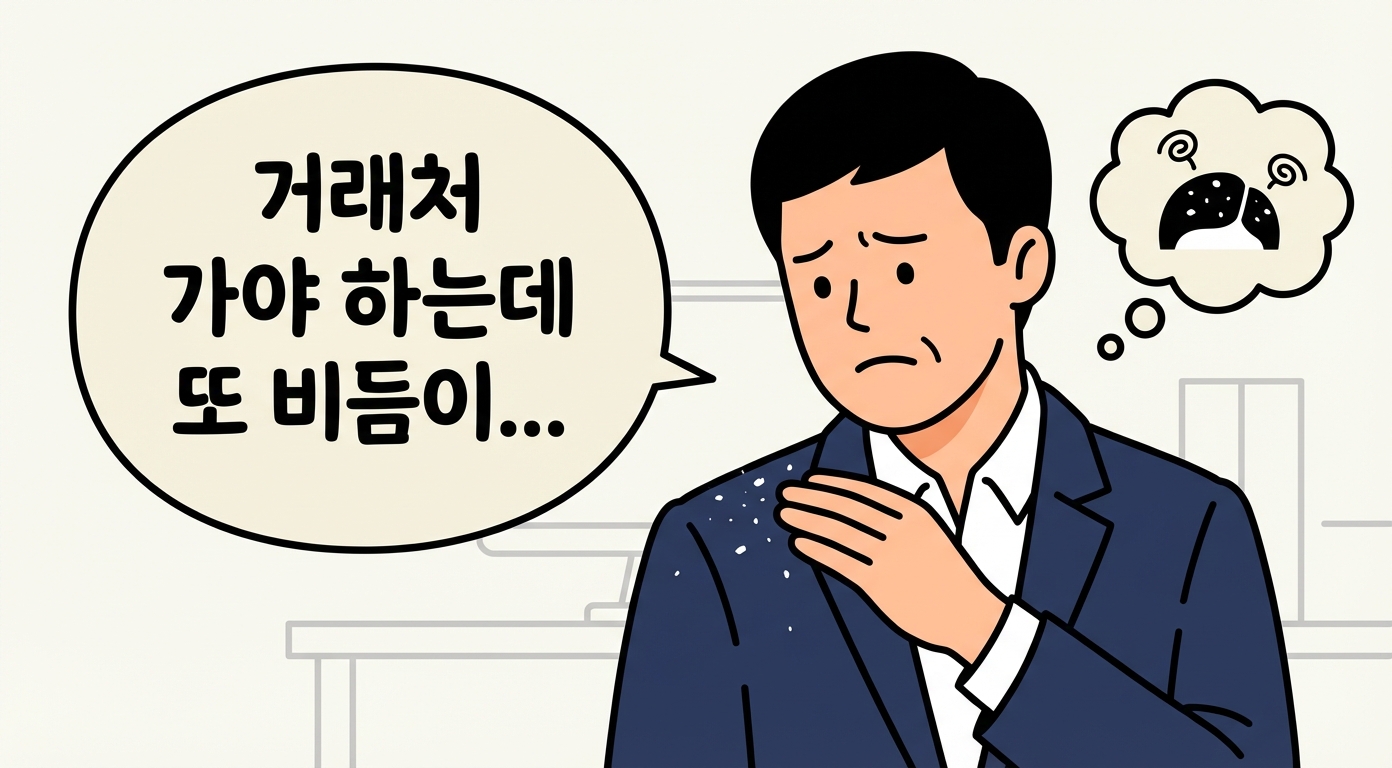 White Snow on Shoulders: The Red Warning Beneath
"Even after washing my hair in the morning, dandruff falls like snow by the afternoon, and the itching drives me crazy.
Every time I meet clients, I feel like they're only looking at my shoulders — I can't bring myself to hold my head up."
These were the words of Jin-woo (pseudonym), a man in his mid-forties working in sales, who brushed away white flakes from his dark navy suit when he first came to see me.
For someone whose profession demands a polished appearance in frequent interpersonal settings, the flaking scalp and red oozing went far beyond a simple skin condition — it was causing psychological withdrawal as well.
At some point, the day after enduring severe stress, his scalp would start to burn, and unable to resist scratching, he would end up with scabs and oozing.
At first he went to a local dermatologist, applied prescribed ointments, and switched to a specialized shampoo — but the symptoms would only subside briefly while using the medication, only to return worse than before, creating a vicious cycle.
The itching kept him up at night, and the sleep deprivation made the next day's symptoms even worse — a trap he couldn't escape.
Even after treating the skin on the surface without much improvement, he had grown deeply discouraged, compounded by anxiety about hair loss.
I did not view Jin-woo's symptoms as merely a surface problem of the scalp.
The red, itchy scalp he described was like drought-cracked earth turned red.
No matter how much you try to moisten the surface, if the deep underground water source has dried up, it will dry out again just as quickly.
Every time I hear such stories, I empathize with the deep pain hidden behind the visible symptoms, and I find myself wondering together with the patient what imbalance inside the body is sending out these red warnings.
So why does our scalp flare up so red and shed scales without pause?
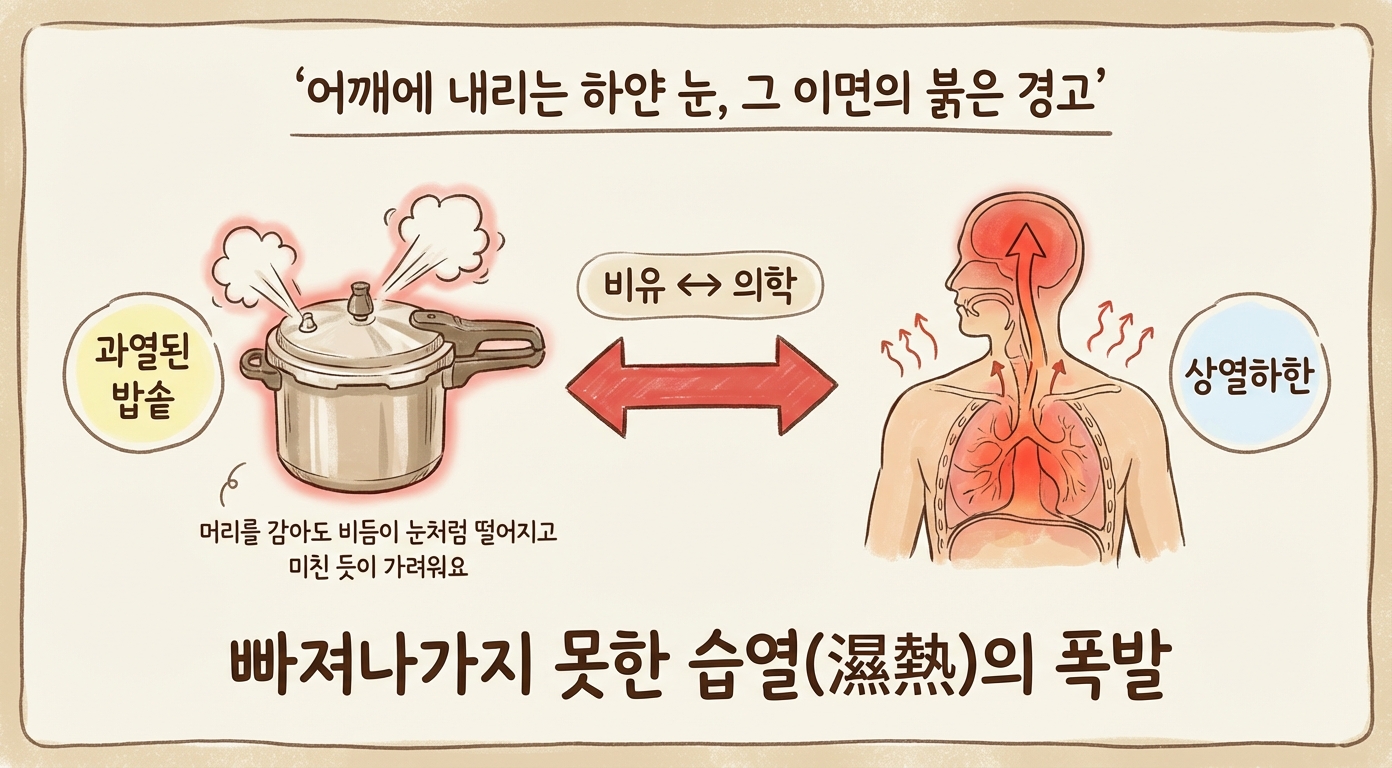
Heat Rising to the Scalp: Signals from the Body's Pressure Cooker
Seborrheic dermatitis of the scalp is a chronic inflammatory skin condition that occurs where sebaceous glands are concentrated, but tracing it to its source reveals it is the result of an immune imbalance arising from the collapse of the body's regulatory system.
In Korean medicine, this is explained through the concept of 상열하한(上熱下寒) — a pattern where heat that should be clear and cool rises to the upper body, while the lower body that should be warm turns cold.
This refers to an abnormal accumulation of heat in the upper body driven by stress and overwork, causing heat to pool where it should not.
Our body's autonomic nervous system is like a finely tuned engine.
When chronic stress and fatigue accumulate, this engine overheats, the sympathetic nervous system becomes hyperactivated, and unnecessary heat builds up inside the body.
Modern Western medicine also explains that chronic stress stimulates the autonomic nervous system, significantly increasing sebum secretion and promoting inflammatory responses.
The accumulated waste and heat in the body entangle into 습열(濕熱) — damp heat — and when it cannot escape outward, it surges upward and is discharged through the scalp, which has a high density of sebaceous glands. This is the true nature of seborrheic dermatitis.
This phenomenon brings to mind a tightly sealed pressure cooker.
Just as when the pressure and heat inside a cooker reach their limit, hot steam bursts violently through the narrow steam vent — the excessive heat inside our bodies erupts forcefully through the scalp, the highest point of the body.
No matter how thoroughly you wash away the sebum and scales on the surface, if you don't put out the fire inside the cooker, steam will keep pouring out.
The scalp inflammation and the body's heat imbalance negatively reinforce each other, ultimately creating a vicious cycle that further weakens immunity and breaks down the skin barrier.
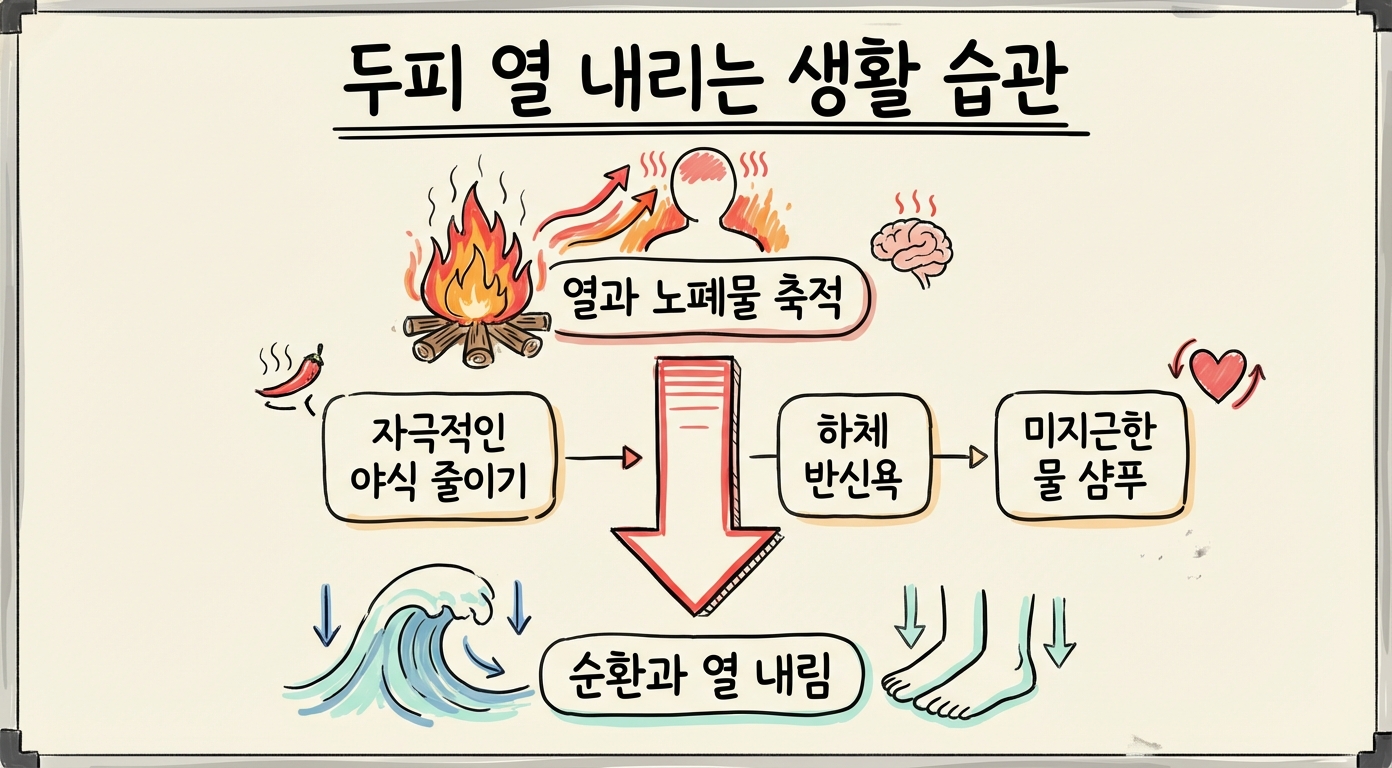 Where Did the Fire Rising to My Head Begin?
So where in our daily lives did this fire that heats the cooker and surges to the scalp originate?
Looking into the daily routines of sales professionals like Jin-woo reveals the answer.
Frequent drinking occasions with greasy food, late-night snacking, and chronic sleep deprivation driven by performance pressure — these are the root causes that continuously pile heat and waste inside the body.
These lifestyle habits are like pouring oil onto an already blazing fire, fueling the body's inflammatory response beyond control.
Therefore, it is essential to make efforts in daily life to bring the body's fire under control.
The first step toward recovery is to reduce intake of spicy, greasy foods, flour-based foods, and alcohol that feed inflammation, and instead adopt a diet of light, clean vegetables that help clear internal heat and support circulation.
Reducing the burden on the digestive system can significantly decrease the accumulation of damp heat in the body.
Also, to prevent heat from surging upward, it is beneficial to keep the lower body warm and guide blood circulation downward through light walking or half-body baths.
The way you wash and care for your hair also needs careful adjustment.
Use a mild, slightly acidic shampoo with fewer chemical ingredients to minimize scalp irritation, and wash gently with lukewarm water instead of hot water.
After washing, lightly press with a towel to remove moisture rather than rubbing, and use cool air rather than hot air to dry the scalp thoroughly from the inside.
Leaving moisture behind creates an environment where inflammation can thrive.
If you experience acute worsening with oozing or severe pain, do not forcibly remove the scales — visit a medical institution immediately to prevent secondary infection.
 The Time of Healing That Waters the Roots — Toward a Healthy Forest
Treatment for chronic seborrheic dermatitis of the scalp must not stop at simply masking the surface redness or suppressing the itching.
It must be an integrative process that helps restore the dry internal environment so the body can recover on its own.
It is important to understand that the dandruff that used to fall like snow on your head was ultimately the body's desperate signal, asking to restore the balance it had lost.
Changing the body's environment does not happen overnight, but with sustained effort, positive change will surely come.
Korean herbal medicine and acupuncture treatment tailored to each patient's constitution and condition work to draw the accumulated heat downward and clear waste from the body.
This is not like sprinkling water on the dry outer bark of a tree, but like watering the deep roots — preparing the foundation for the rough forest that is the scalp to breathe healthily again.
The true direction of healing is to restore balance between body and mind, and to cultivate the strength to overcome inflammation and rebuild the skin barrier from within.
As you listen to the signals your body sends and refine the small aspects of your daily life, your body will demonstrate the remarkable recovery capacity it was designed to have — finding its own balance.
My role is to share the weight of the pain you are experiencing and to be a companion who helps find the key to recovery together.
Even if not through me, I sincerely hope you find a warm healthcare provider who deeply empathizes with the inner pain behind your visible symptoms and carefully tends to the balance of your whole body.
Reviewed by Dr. Choi Jang-hyeok, Director of Dongjedang Korean Medicine Clinic