Is Insomnia the Cause or the Result? How to Break the 'Vicious Cycle of Thoughts'

Hello. I am Choi Jang-hyuk, director of Dongjedang Korean Medicine Clinic.
Many people lie awake at night, endlessly worrying with a clear mind.
"Why can't I fall asleep?" This kind of worry.
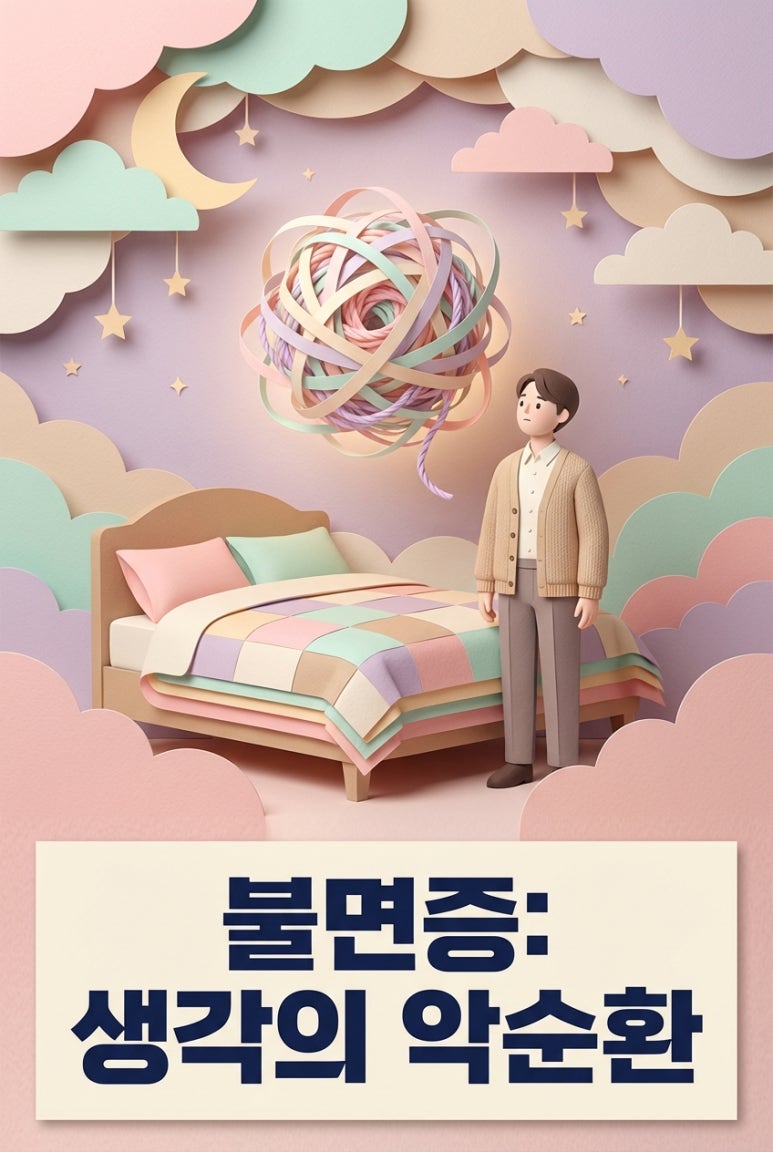
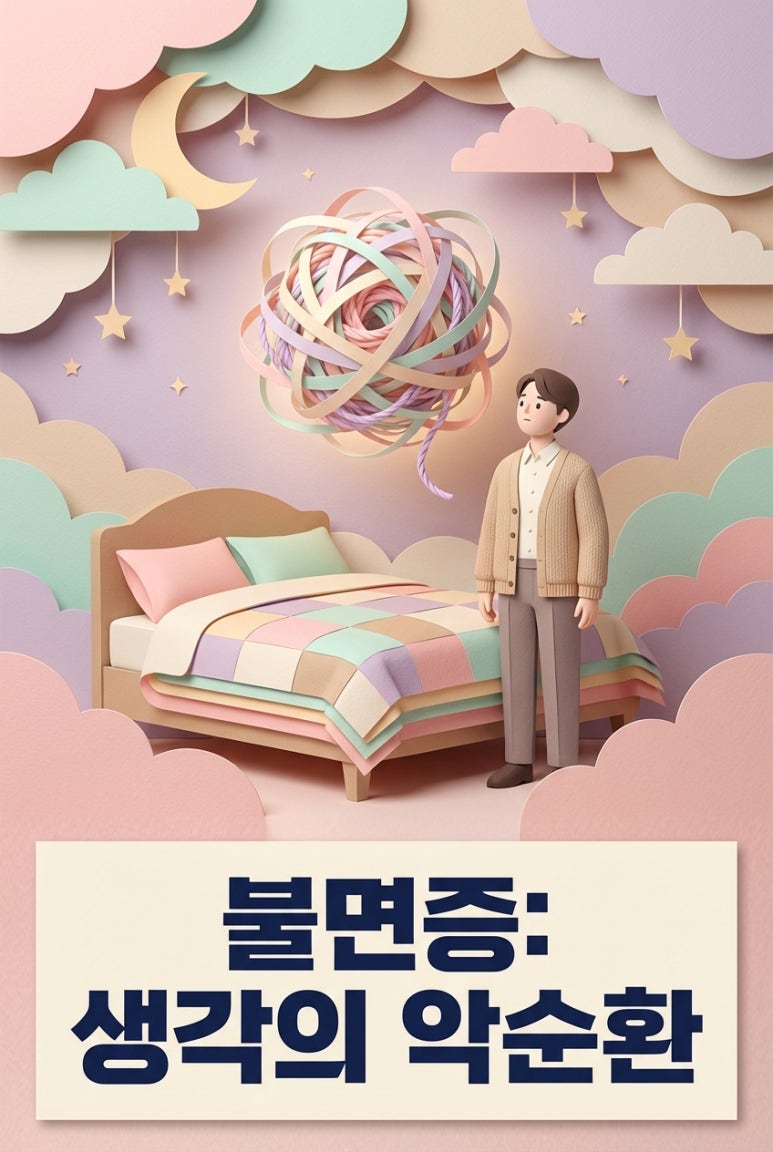
Then worry makes it even harder to fall asleep, and this vicious cycle of sleep deprivation repeats.
Insomnia is often a result rather than a cause.
Of course, there are cases where insomnia itself is the cause.
However, most of the time, insomnia in patients who visit Korean medicine clinics appears as a result, such as somatization symptoms caused by other underlying causes.
Today, rather than addressing insomnia as a cause, I want to discuss insomnia as a result.
Among these, a very common case is
excessive worry and stress about sleep itself as a cause of insomnia.
Interesting, isn't it?
The worry about not being able to sleep makes it even harder to fall asleep.
This type of insomnia is surprisingly very common.
The key is to break this 'vicious cycle of thoughts'.
However, thinking more deeply,
many people have lost trust in their own bodies, and anxiety is unconsciously hidden.
In other words, having lost confidence in their own body, people become anxious and obsessed with insomnia, something everyone experiences occasionally.
Reduce your obsession with sleep.
Regain the lost trust in your own body.
This is the first step to recovering healthy sleep.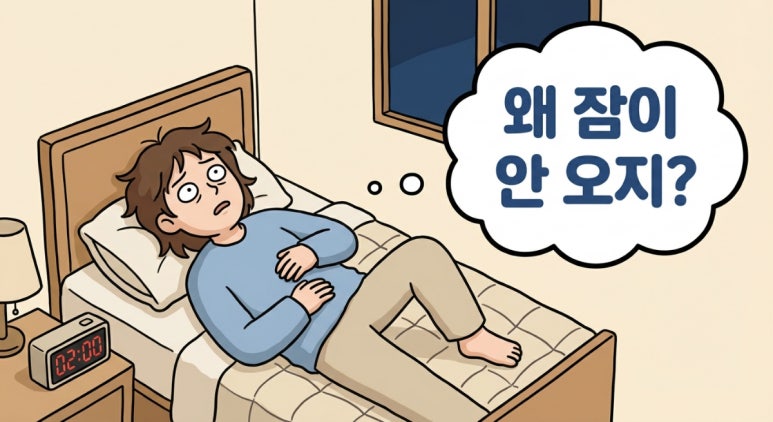
📊 Case | Cases
Among the patients I have seen in clinical practice,
many say they fear the night because of their obsession with sleep.
For example, there was a patient in his 30s who works in an office.
Every night he thought, "If I can't sleep tonight, it will affect my work tomorrow."
He said his heart started racing as soon as he lay down in bed.
During the consultation, I said, "I have never seen a patient die from not sleeping. There's nothing wrong with not sleeping.
Think about it carefully. In your 20s, even if you stayed up all night drinking for several days, you didn't worry about the next day.
The problem isn't insomnia; it's that you've lost trust in your own body.
In other words, the problem is that your body has become weak, and because you don't trust your body, if you don't sleep tonight, you can't sleep tomorrow because you're worried about tomorrow."
I spoke rather forcefully.
It is important to let go of the burden around sleep in any way possible.
Since the problem is not sleep itself but a weakened body,
I provided appropriate treatment to help rebuild trust in their own body.
If you focus on sleep itself, ultimately sleeping pills or sedatives are the only answer.
This becomes an important starting point for improving insomnia at a Korean medicine clinic.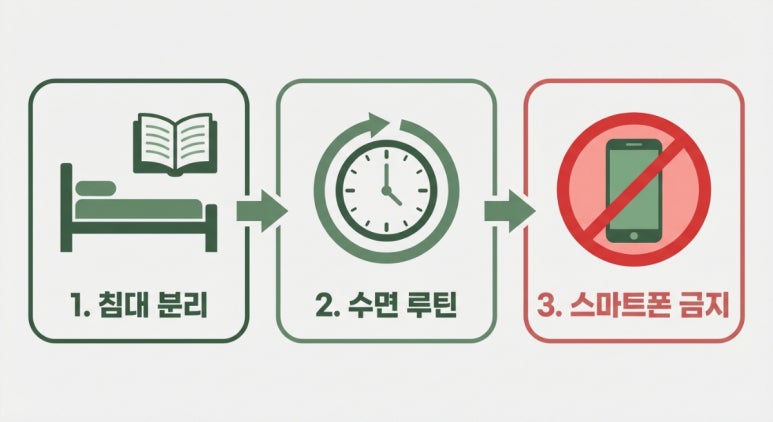 ✅ Action | Implementation Tips
I'll share three things you can implement right now in a hurry. Of course, they help.
1️⃣ Use your bed only as a sleep space.
Don't force yourself to stay in bed if you can't fall asleep.
If you don't fall asleep within 15-20 minutes, get out of bed.
Engage in comfortable activities in another space.
Reading or listening to calm music is good.
When you feel sleepy, return to bed.
2️⃣ Create a regular sleep routine.
It is important to go to bed at the same time every day.
It is also important to wake up at the same time.
Try to maintain this routine as much as possible on weekends too.
Our bodies fall asleep better the more accustomed they become to regular rhythms.
3️⃣ Stay away from smartphones 1 hour before sleep.
Stop using electronic devices such as smartphones and TVs 1 hour before bedtime.
Bright light can interfere with the secretion of hormones that aid sleep.
Instead, try taking a warm shower or meditating.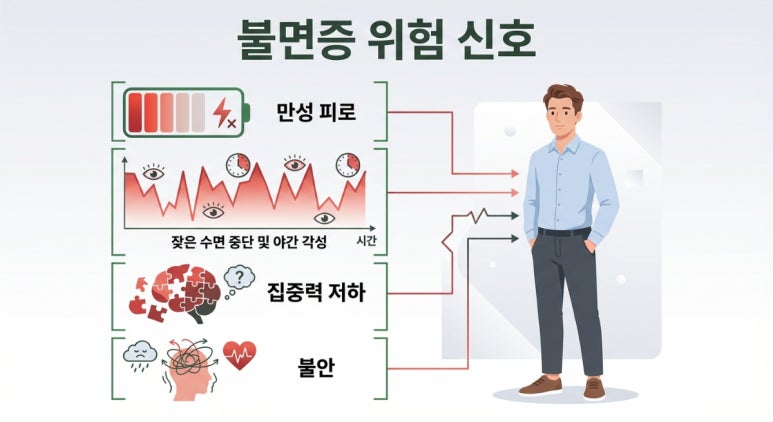 🚨 Warning | Signals You Must Check
If you have these symptoms, implementation tips alone may not resolve the issue easily.
It is good to visit a Korean medicine clinic.
✔ Frequent difficulty falling asleep and nighttime awakening
When you have difficulty falling asleep every night and wake up frequently in the early morning.
✔ Severe daytime fatigue and concentration difficulties
Daytime fatigue becomes severe due to poor sleep.
Concentration difficulties also become serious.
✔ Concerns about dependence on sleeping pills/sleep inducers
Cases where you're worried about becoming dependent on sleeping pills or sleep inducers.
Long-term use of sleeping pills can cause tolerance or side effects, so caution is necessary.
✔ Worsening depression and anxiety due to insomnia
Cases where depression or anxiety worsen because of insomnia.
In these cases, it is important not to hesitate and seek professional help.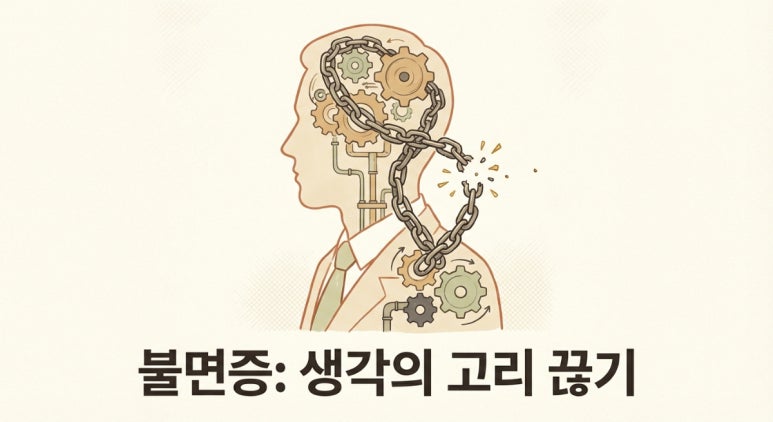
🔚 Closing
Insomnia is merely a result.
Excessive worry about sleep only creates a vicious cycle that interferes with sleep.
Ask yourself why you keep worrying excessively about sleep.
There is an answer.
Start with the small action steps I've given you today.
Also, begin a sincere conversation with your own mind.
One thing is certain: healthy sleep is an important key to improving your quality of life.
You too can regain restful sleep.
✍️ Written/Reviewed by Choi Jang-hyuk, Director of Dongjedang Korean Medicine Clinic
❓ FAQ
Q. What problems occur if insomnia persists for a long time?
If insomnia persists for a long time, you may experience chronic fatigue.
Concentration difficulties and memory loss also appear.
Furthermore, it can lead to mental problems such as depression or anxiety.
It also affects immune system weakness.
It can increase the risk of physical diseases such as cardiovascular disease or diabetes.
Q. Can insomnia be overcome without sleeping pills?
Yes, it is definitely possible.
Improve your lifestyle habits.
Manage your sleep environment.
You can regain healthy sleep without medication by managing stress.
In particular, cognitive behavioral therapy for insomnia (CBT-I) is an effective method.
It is very effective in overcoming insomnia without sleeping pills.
If necessary, seek professional help.
It is good to combine cognitive behavioral therapy and other approaches.
Q. How does a Korean medicine clinic treat insomnia?
Korean medicine clinics identify the cause of insomnia.
Individualized treatment is conducted.
It mainly improves the imbalance between body and mind caused by anxiety and stress.
Tension is relieved through herbal medicine prescriptions, acupuncture treatment, and moxibustion therapy.
It promotes restful sleep.
Additionally, counseling for improving dietary and lifestyle habits is conducted together.
It helps with overall health recovery.
📚 Reference Materials
[Western Medicine (WM)]
[1] National Sleep Foundation (2023). "Cognitive Behavioral Therapy for Insomnia (CBT-I)"
[2] American Academy of Sleep Medicine (2022). "International Classification of Sleep Disorders, 3rd edition (ICSD-3)"
[Korean Medicine (KM)]
[3] Korean Association of Oriental Medicine (2020). "Clinical Practice Guidelines for Insomnia in Korean Medicine"
[4] Department of Neuropsychiatry, National Korean Medicine University (2018). "Korean Medicine Neuropsychiatry"