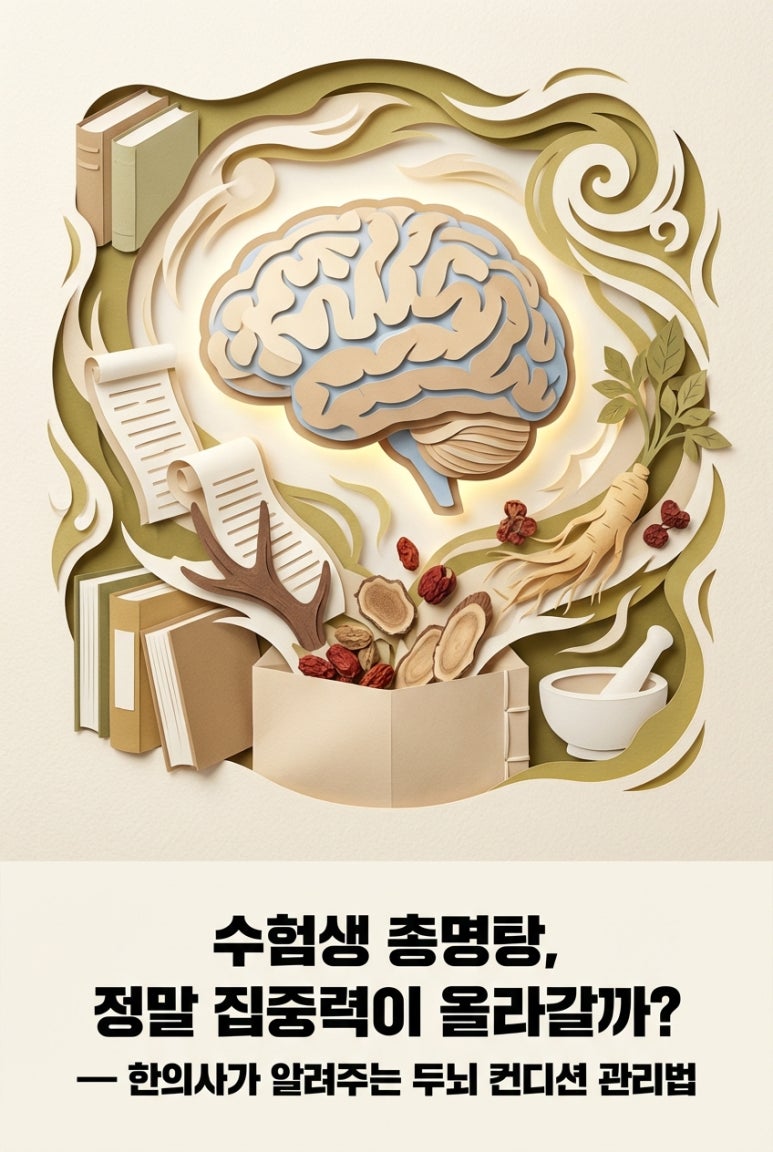

Does Your Mind Go Blank When Exams Approach?: Making Your Effort Count

 🧾 Answer First | Key Conclusion
Hello. I'm Dr. Choi Jang-hyuk, director of Dongjedad Korean Medicine Clinic.
"I studied enough, but I can't remember anything when I see the exam paper."
"The night before the exam, my heart pounds so much that I can't sleep at all."
These are typical concerns that test-takers and parents express in my clinic.
This test anxiety is not simply a matter of willpower,
but rather a biological phenomenon where the balance between brain and body is disrupted—a signal your body is sending.
When you manage this signal rather than ignore it,
your effort will finally translate into results.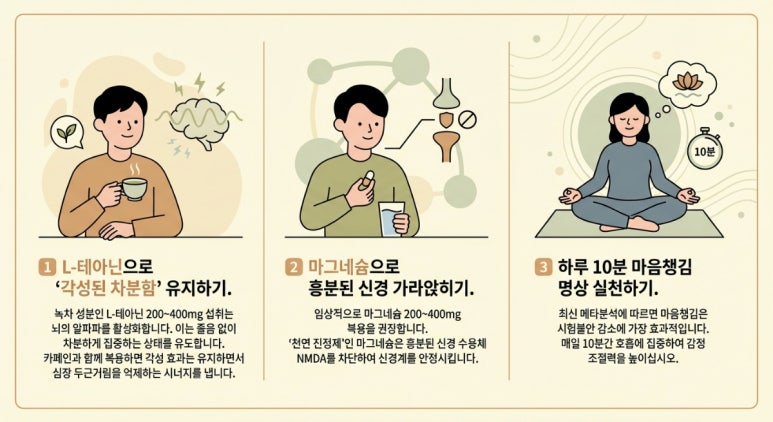 ✅ Action | Immediate Implementation
Here are helpful methods to control anxiety and maximize cognitive ability.
1️⃣ Maintain 'Alert Calm' with L-Theanine.
Consuming 200-400mg of L-theanine, a green tea component, activates alpha waves in the brain.
This induces a state of calm focus without drowsiness.
When taken together with caffeine, it creates a synergistic effect that maintains alertness while suppressing heart palpitations.
2️⃣ Calm Overexcited Nerves with Magnesium.
Clinically, supplementing with 200-400mg of magnesium is recommended.
Magnesium, a 'natural sedative,' stabilizes the nervous system by blocking overexcited NMDA receptors.
3️⃣ Practice 10 Minutes of Mindfulness Meditation Daily.
According to the latest meta-analysis, mindfulness is the most effective method for reducing test anxiety.
Focus on your breathing for 10 minutes daily to improve emotional regulation.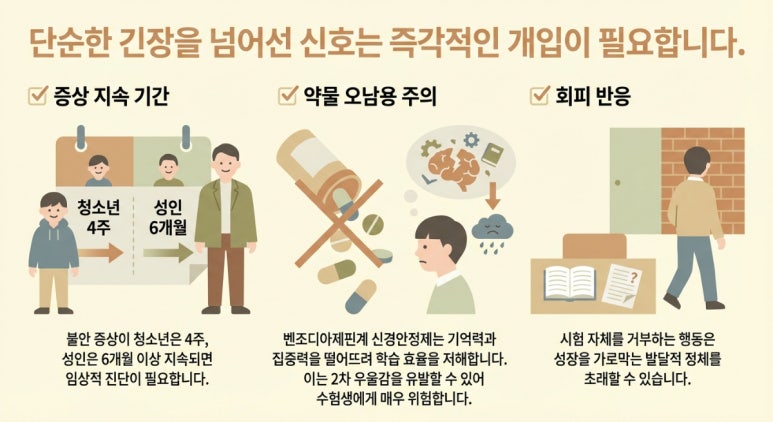 🚨 Warning | Critical Signs to Monitor
Signals beyond simple nervousness require immediate intervention.
✔ Duration of Symptoms
If anxiety symptoms persist for 4 weeks or longer in adolescents or 6 months or longer in adults, clinical evaluation is necessary.
✔ Caution Against Drug Misuse
Benzodiazepine tranquilizers impair memory and concentration, reducing learning efficiency.
This can trigger secondary depression and is extremely dangerous for test-takers.
✔ Avoidance Response
Refusing to take the exam itself can lead to developmental stagnation that hinders growth.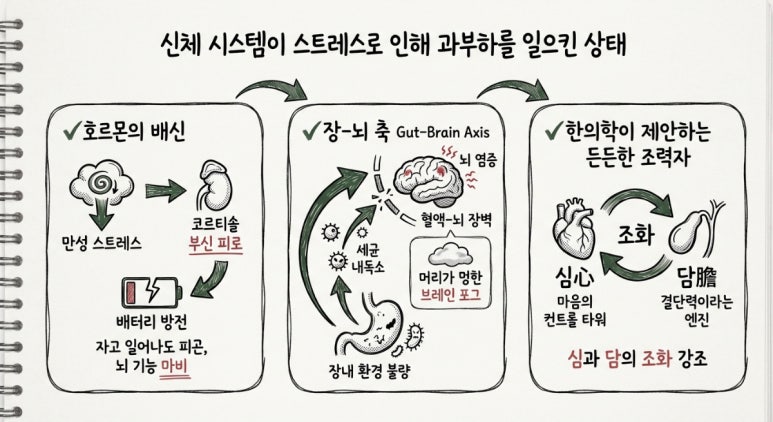 🧠 The Why | Root Cause Analysis
Why does my body malfunction before exams?
Your body's system is overloaded due to stress.
✔ Hormonal Betrayal
When cortisol, the stress hormone, remains chronically elevated, adrenal fatigue develops.
Like a drained battery, you feel tired even after sleep, and your brain function becomes paralyzed.
✔ The Gut-Brain Axis
When the intestinal environment deteriorates, bacterial endotoxins enter the bloodstream and cross the blood-brain barrier.
When these toxins cause inflammation in the brain, brain fog develops.
✔ A Reliable Ally Proposed by Korean Medicine.
Korean medicine emphasizes the harmony between the Heart (心), which is the control tower of the mind, and the Gallbladder (膽), which handles the engine of determination.
 🔚 Closing | Summary and Encouragement
I believe in your potential.
Anxiety is merely your body's signal trying to protect you.
When you restore your body's balance through integrated management, your potential will shine fully in the exam room.
✍️ Written and Reviewed by Dr. Choi Jang-hyuk, Director of Dongjedad Korean Medicine Clinic
🔬 Deep Dive
✔ SSRI and SNRI Guidelines
The SSRI fluoxetine is approved for use in those 8 years and older, and escitalopram is approved for those 12 years and older.
SNRIs such as venlafaxine require mandatory blood pressure monitoring.
✔ DSM-5-TR Diagnostic Criteria
Test anxiety is clinically classified as generalized anxiety disorder or specific phobia.
Diagnosis is made when it significantly interferes with academic performance.
❓ FAQ
Q. I studied enough, but why can't I remember anything during the exam?
A. Test anxiety is not a matter of willpower but a biological phenomenon where stress disrupts the balance between brain and body, temporarily blocking memory retrieval function.
Q. What is the most effective method I can implement immediately to reduce test anxiety?
A. L-theanine and magnesium supplementation, along with 10 minutes of daily mindfulness meditation, are effective routines for managing anxiety and maintaining concentration.
Q. How do I distinguish between simple exam nervousness and a state requiring professional consultation?
A. If anxiety symptoms persist for 4 weeks or longer in adolescents or 6 months or longer in adults, or if avoidance behaviors toward exams appear, professional evaluation and intervention are necessary.
Pediatric
Does Your Mind Go Blank When Exams Approach?: Making Your Effort Count
View Program