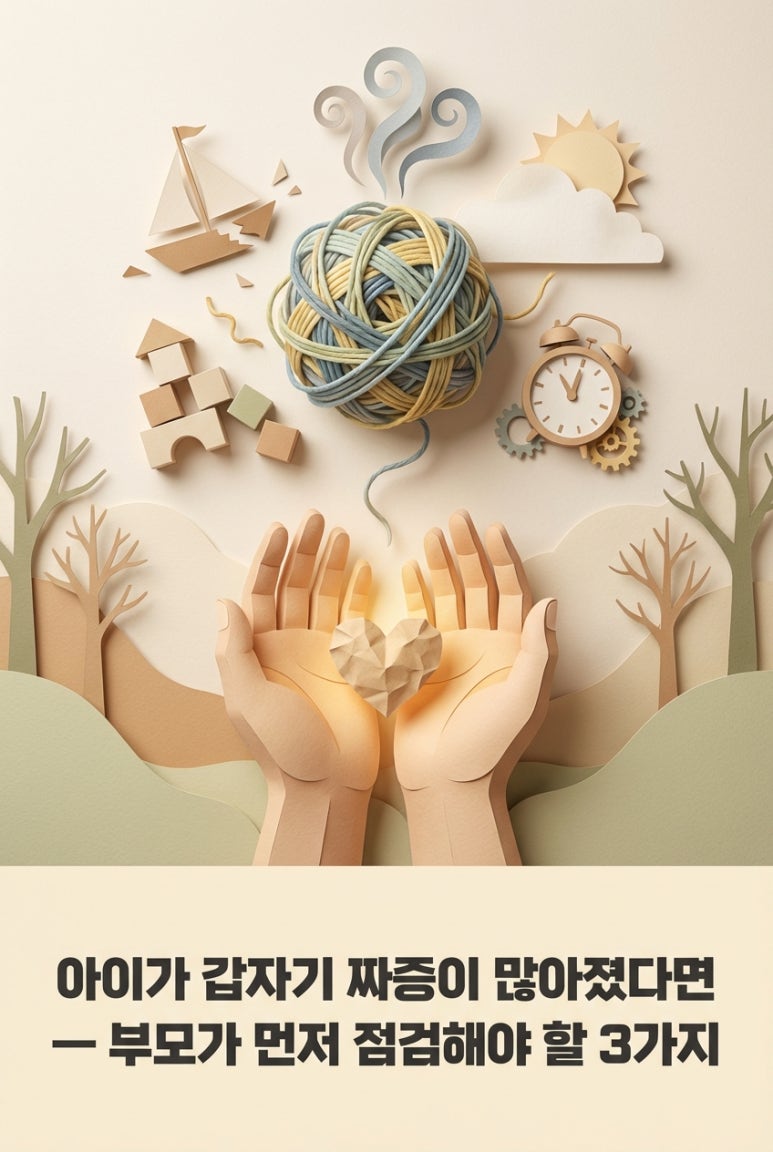

Your Child's Excessive Anxiety Is Not Mere Sensitivity—It's a Signal Your Body Is Sending

 🧾 Answer First | Key Conclusion
Hello. I am Dr. Choi Jang-hyuk, director of Dongjejdang Korean Medicine Clinic.
"My child is too sensitive to minor things." Or "My child complains of stomach pain before going to school every time."
This is one of the most significant concerns parents have been expressing more frequently during consultations at our Korean medicine clinic recently.
I understood this better when I learned that the prevalence of anxiety disorders in adolescents has surged by as much as 60% over the past 7 years.
This is because I have actually experienced a significant difference from the concerns I heard about pediatric-related issues
when providing consultations at Korean medicine clinics 10 and 15 years ago.
The cause of the recent surge in pediatric anxiety disorders is not
parenting issues, the child's willpower, or personality problems.
Rather, it is due to an imbalance between the amygdala and the prefrontal cortex.
Additionally, it is a biological overload resulting from metabolic defects in the gut-brain axis.
In other words, it is a secondary anxiety disorder caused by weakened or imbalanced bodily functions.
This is a signal your body is sending.
Parents can only help their children by correctly recognizing the signals of illness.
 ✅ Action | Immediate Steps to Take
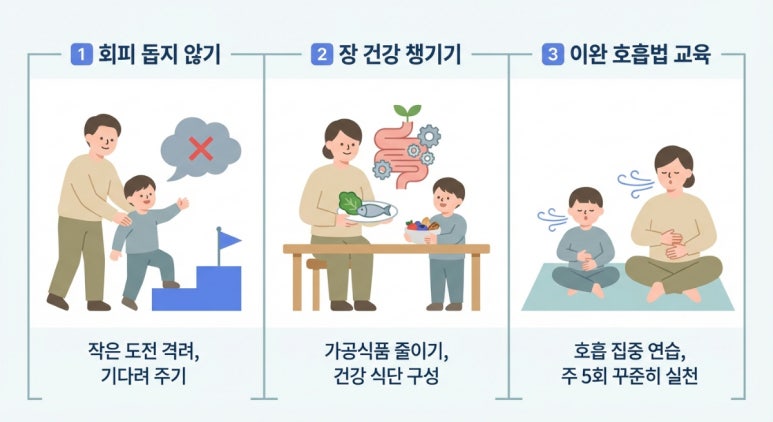
Starting today, I will provide detailed guidance on three key response strategies that parents can immediately implement at home.
1️⃣ Do Not Help Your Child Avoid
Family accommodation behaviors—solving situations your child fears on their behalf—actually become a cause of chronifying your child's anxiety. Please wait warmly by your child's side and encourage them to overcome small challenges on their own without avoidance.
2️⃣ Take Care of Gut Health
For the health of the "second brain," the gut, reduce processed foods and compose a healthy diet that promotes the growth of beneficial bacteria. At our Korean medicine clinic, we recommend constitutional diet based on constitutional identification through Sasang Constitutional Medicine. Though challenging, adhering to a diet centered on constitutional food therapy will be very helpful.
3️⃣ Teach Relaxation Breathing Techniques
Using the principle of the Ijunbyeonji, guide your child in practicing the technique of escaping from frightening thoughts and focusing solely on their own breathing and bodily sensations. Help your child consistently practice this training for identifying and objectively observing emotions at least 5 times a week without skipping.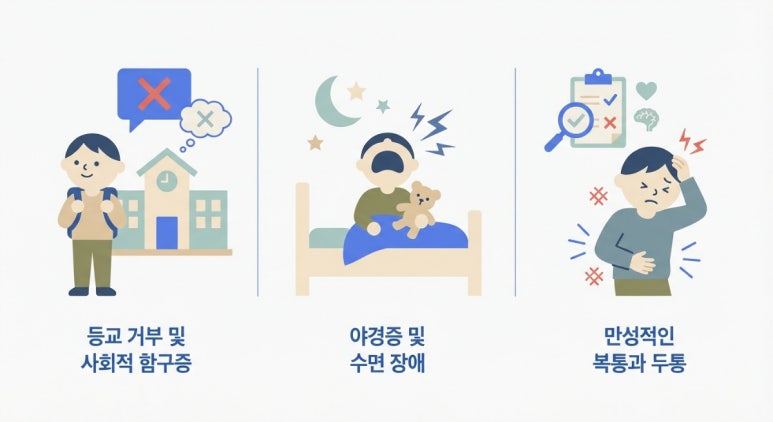 🚨 Warning | Critical Warning Signs to Monitor
If the following symptoms appear, professional clinical intervention is absolutely necessary.
✔ School Refusal and Selective Mutism
Your child adamantly refuses to go to school or is completely unable to speak in certain social situations.
This occurs when your child shows selective mutism—being completely unable to speak in specific places such as school.
✔ Night Terrors and Sleep Disorders
This is when your child cannot fall asleep alone due to separation anxiety or wakes up every night screaming in extreme fear.
✔ Chronic Abdominal Pain and Headaches
Despite normal hospital examinations, chronic abdominal pain and headaches are typical signals of pediatric anxiety disorder symptoms.
🧠 The Why | Understanding the Cause
Why is my child more anxious than others?
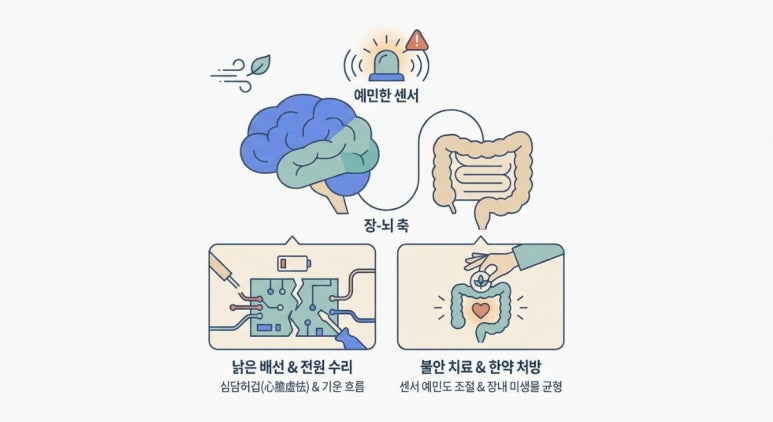
Your child's anxiety is the result of the brain, gut, and the flow of qi becoming entangled.
Western medicine focuses on hyperactivity of the amygdala that detects fear and malfunction of the stress control switch.
In Korean medicine, weak heart qi or "Simdam Hyperxia" (心膽虛怯) is deeply connected to intestinal microbial imbalance.
According to the gut-brain axis theory, harmful bacteria in the intestines lead to deficiency of neurotransmitters.
 📊 Proof | Cases and Evidence
A child's brain is like a security system equipped with a high-performance sensor.
Currently, the sensor has become too sensitive, and an alarm sounds even from a light breeze.
Korean medicine anxiety treatment and herbal medicine prescriptions work by lowering the sensitivity of the malfunctioning sensor.
At the same time, it is a process of replacing old wiring and repairing unstable power supply systems!
There was a child who blamed themselves for minor mistakes and searched for solutions to school refusal.
This child nourished their mind and body using the benefits of Guibi-tang among herbal medicines and replenished lacking nutrients.
After 12 weeks, anxiety scores decreased significantly, and the child successfully adapted to school.
 🔚 Closing
Pediatric emotional development is not a sprint but a long marathon walked together with parents.
Your child's anxiety is not a character flaw but a condition that can sufficiently be controlled and improved when parents and professionals work together.
Parents, carefully observe your child's brain and gut health and become a partner rather than an enabler of your child's avoidance.
With your parents' support, your child will soon find peace again.
❓ FAQ
Q: Are selective serotonin reuptake inhibitor medications dangerous or cause severe side effects to my child's body?
A: While medication is effective in calming hyperactivity in the brain, side effects such as suicidal ideation must be carefully monitored during the initial 4 to 6 weeks.
Q: Will an integrated treatment approach of simultaneously taking both Western and herbal medicine actually be effective in improving my child's symptoms?
A: An initial strategy of controlling acute symptoms with Western medicine, improving gut health and constitution with herbal medicine, and gradually reducing Western medicine is recommended.
📚 Reference Materials
[1] Clinical Practice Guideline for the Assessment and Treatment of Children and Adolescents With Anxiety Disorders
[2] Anxiety Disorders: Parents' Medication Guide - AACAP
[3] Neural Efficiency as a Brain-Wide Signature of Pediatric Anxiety and a Biomarker for Treatment Response
[4] Amygdala and Ventrolateral Prefrontal Cortex Activation to Masked Angry Faces in Children and Adolescents With Generalized Anxiety Disorder
[5] Clinical Practice Guideline for the Assessment and Treatment of Children and Adolescents With Anxiety Disorders - PubMed
[6] Pattern Differentiation and Treatment Principles of Pediatric Anxiety Disorders in Korean Medicine
[7] The Gut-Brain Axis in Kids: How Digestion Shapes Mood, Behavior, and Learning
[8] Effects of High Dose of Vitamin B6 With Magnesium in Children With Autism Spectrum Disorder
Pediatric
Your Child's Excessive Anxiety Is Not Mere Sensitivity—It's a Signal Your Body Is Sending
View Program