"I Studied and I Know the Material, But My Mind Goes Blank During Exams" | Difficulty Concentrating and Test Anxiety in Students Preparing for the CSAT
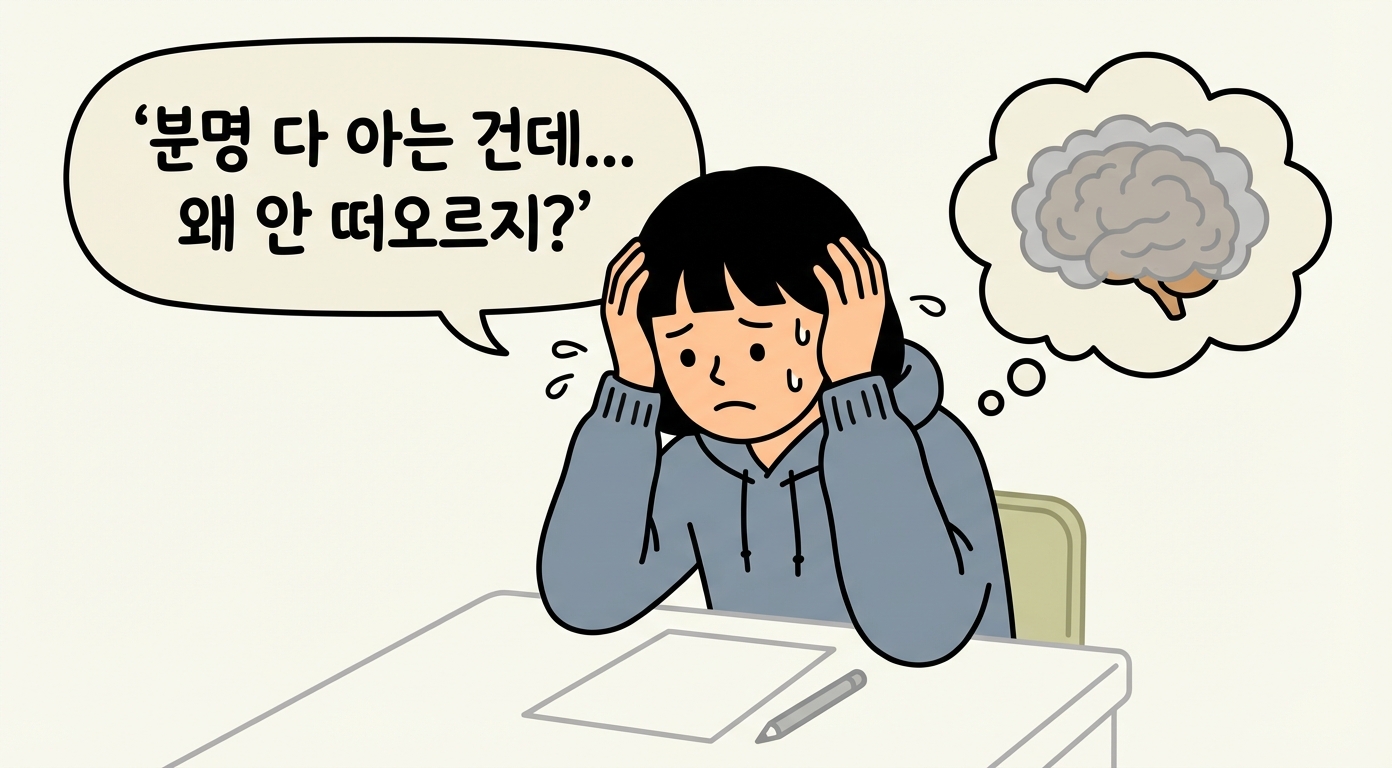 A Child Lost in the Fog
"I had everything memorized just last night, but the moment I get the exam paper, my mind goes completely blank. I know the answers — I just can't recall them. What makes it worse is that everything comes back to me right after the exam is over."
These were the words of Seoyeon (pseudonym), a high school senior preparing for the CSAT, when she first came to my clinic with her mother.
Seoyeon was an eighteen-year-old student at an academic high school.
She had always ranked in the top of her class and was known for her diligent study habits.
But after sitting for her first mock exam in her final year, something strange began to happen.
She told me that information seemed to sink in well while she was studying, but the moment she sat down in front of an exam paper, it felt as though a fog had settled over her mind.
Her heart would race, her palms would sweat, and the words on the page simply wouldn't register.
At first, she assumed it was just an off day — but when the same thing happened in her second and third exams, her anxiety grew.
When she lay down to sleep, fear of going blank again the next day kept her awake until two or three in the morning.
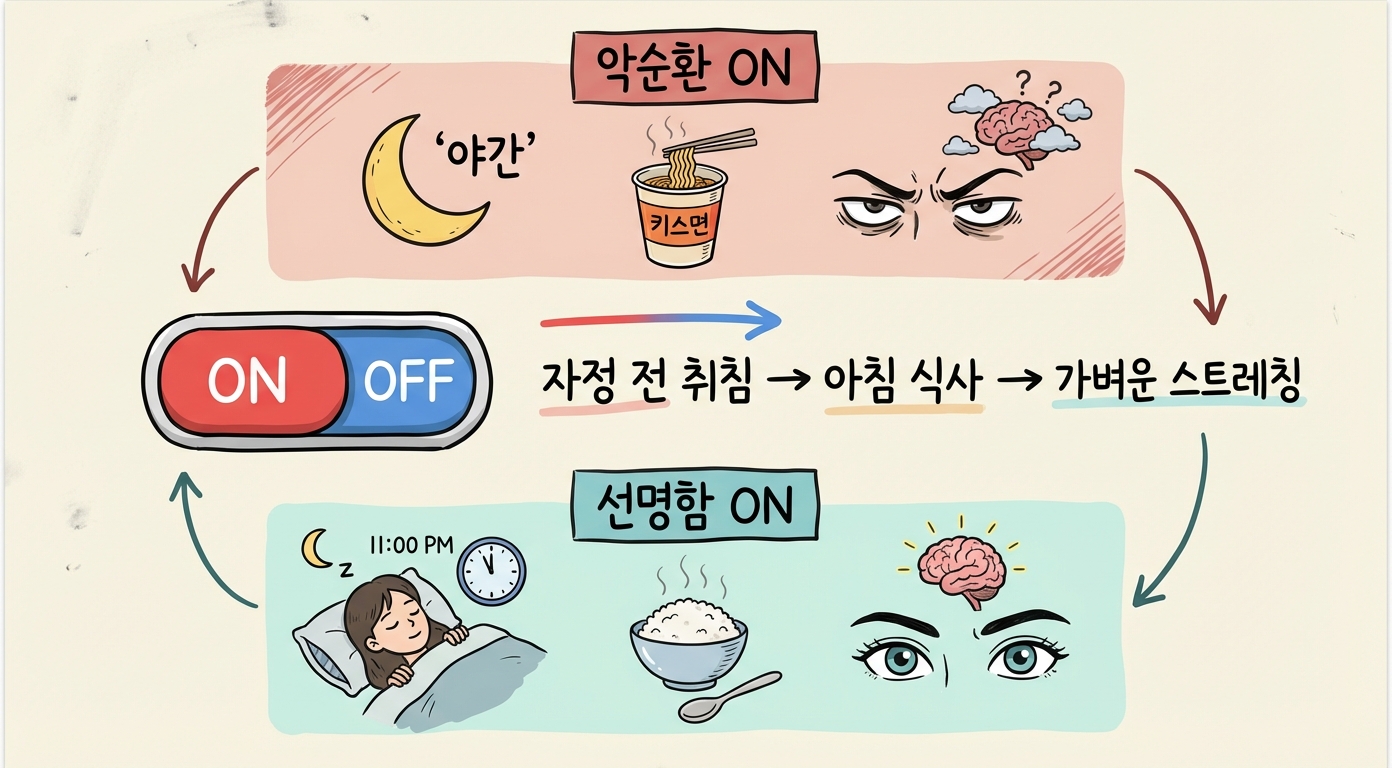
The lack of sleep left her dazed during the day; studying in a dazed state reduced her efficiency; and falling efficiency only deepened her anxiety — a vicious cycle that fed itself.
She had blood work done at an internal medicine clinic, but nothing unusual was found.
She was told, "It's stress-related — you'll feel better if you rest," but telling a high school senior in the final stretch before the CSAT to "just rest" was simply not realistic.
I did not view Seoyeon's symptoms as mere exam nerves.
The signals her body was sending needed to be read through a broader lens.
Every time I meet students like her in my clinic, I think first — before grades ever come up — about how exhausted their bodies and minds truly are.
So why is it that we can blank on things we clearly know, the moment we walk into an exam room?
**When the Window Is Fogged Over, the View Disappears**
In Korean medicine, the Heart(心) is considered the center of memory and cognitive activity.
The Heart(心) does not simply refer to the physical organ — it is the functional system that governs mental activity, consciousness, and the ability to concentrate.
The Dongui Bogam (東醫寶鑑) explains that when the Heart(心) is clear and calm, one is able to perceive and remember things with clarity.
However, when prolonged stress, tension, and sleep deprivation accumulate, turbidity begins to cloud the function of the Heart(心).
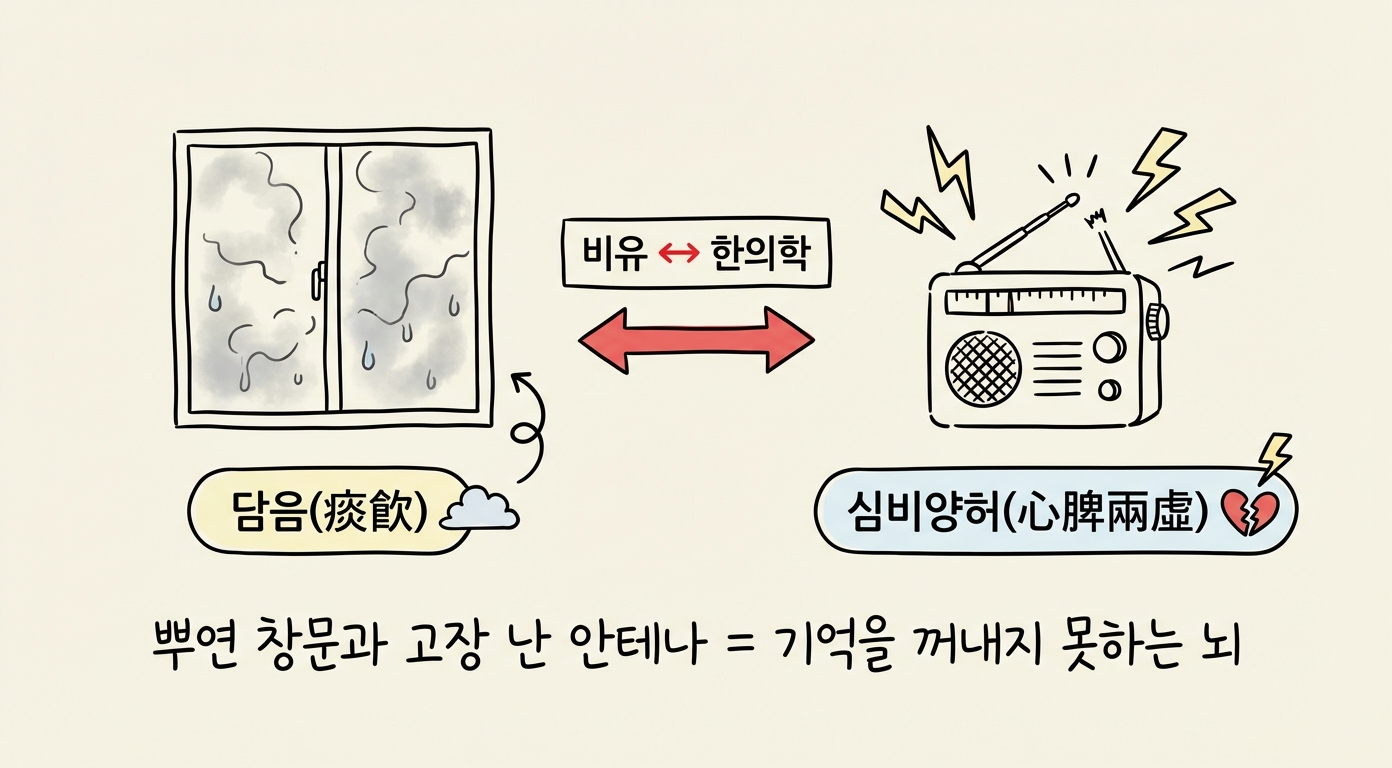
In Korean medicine, this is described as Dameum(痰飮) — pathological phlegm-fluid — obstructing the Simgyu(心竅), the orifice of the Heart.
The Simgyu(心竅) is the channel through which the mind communicates with the outer world.
Just as moisture condensing on a window makes the glass opaque and obscures the view outside, when the Simgyu(心竅) becomes blocked, even memories that are clearly stored become impossible to retrieve.
In modern medicine as well, it is well established that chronic stress causes excessive secretion of cortisol, which in turn interferes with the hippocampus's ability to retrieve memories.
The Korean medicine explanation — "Dameum(痰飮) obstructs the Simgyu(心竅)" — and the neuroscientific explanation — "stress hormones impair memory retrieval" — are two different languages pointing to the same phenomenon.
The dysfunction of the Spleen and Stomach(脾胃) also compounds the problem.
When a student sits for long hours, eats irregularly, and goes to bed late day after day, digestive function weakens.
In Korean medicine, the Spleen(脾) is responsible for producing nutrients and distributing them throughout the body; when this function declines, the clear qi(氣) that nourishes the brain becomes insufficient.
This condition is called Simbi-yangheo(心脾兩虛) — a simultaneous deficiency of both the Heart(心) and the Spleen(脾).
It is a state in which the Heart(心), which governs the mind, and the Spleen(脾), which generates energy, have both become weakened.
To use a radio analogy: the frequency is tuned correctly, but the antenna is weak and static has crept in, so the sound cannot come through clearly.
What Seoyeon needed was not more studying — it was realigning the antenna and clearing the static.
**So How Do We Clear the Fogged Window?**
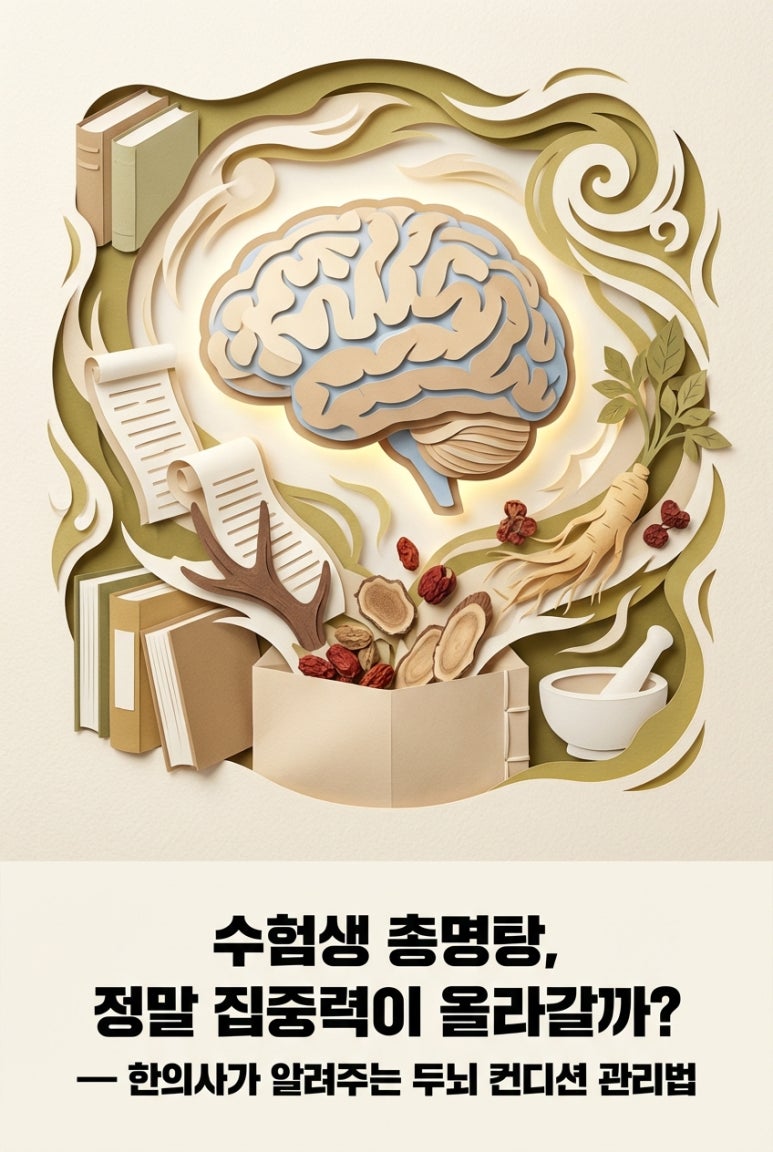
The Dongui Bogam (東醫寶鑑) records a formula designed for exactly this condition: Chongmyeongtang(聰明湯).
The old description — "it treats forgetfulness, and taken over time, one can memorize a thousand words in a single day" — is admittedly an exaggeration, but its underlying meaning is clear.
Chongmyeongtang(聰明湯) is composed of three herbs: Baekboksin(白茯神), Wonji(遠志), and Seokchangpo(石菖蒲).
Baekboksin(白茯神) calms an anxious and easily startled mind, bringing a sense of ease; Seokchangpo(石菖蒲) promotes blood flow to the brain, clearing and opening the mind; and Wonji(遠志) cleanses the accumulated turbidity blocking the Simgyu(心竅).
When these three herbs work together, they can lift the fog in the mind — much like wiping the condensation from a clouded window.
That said, simply taking Chongmyeongtang(聰明湯) does not automatically improve exam scores.
The formula works by elevating the condition of both body and mind — it does not study on your behalf.
What matters is that alongside the herbal treatment, lifestyle habits are also reformed in parallel.
For a student's brain to function at its best, sufficient sleep is above all else essential.
Staying up until the early hours of the morning to study is far less effective for memory consolidation than going to bed before midnight and getting at least six hours of sleep.
During the night, the brain organizes and stores the information that was taken in throughout the day.
Meals must not be skipped, either.
When breakfast is skipped or replaced repeatedly with instant noodles and bread, the Spleen and Stomach(脾胃) weaken, and the brain is left without adequate energy.
A warm, balanced meal — with rice, soup, and sufficient protein — has a greater impact on mental clarity than most people realize.
Simple stretching to loosen the neck and shoulders throughout the day is also beneficial.
Prolonged sitting causes the neck and shoulder muscles to tighten, which impairs blood circulation to the head and can lead to headaches and difficulty concentrating.
If test anxiety is severe enough to interfere with daily functioning, or if sleepless nights persist for more than a week, it is essential to seek consultation at a qualified medical institution.
Ignoring the signals the body sends and simply pushing through is not a sustainable approach.
 The Morning the Fog Lifts — the Path Becomes Clear Again
Seoyeon took a formula based on Chongmyeongtang(聰明湯), tailored to her constitution and symptoms, for two months.
Alongside the treatment, she consistently practiced going to bed before midnight, eating breakfast, and doing brief stretching sessions.
Two months later, Seoyeon told me that her heart no longer raced as intensely during exams.
The fog in her mind had not lifted entirely, but she said she was able to read the questions far more clearly than before.
The bodies of students preparing for exams are already carrying an enormous amount.
Please listen to the signals of fatigue and tension that their bodies send.
Our children's bodies possess a remarkable capacity for recovery.
But to find the key to that recovery, a thoughtful approach — one that attends to both body and mind together — is essential.
My role is to be the guide who helps find that key alongside you.
Even if it is not with me, please make sure your child sees a healthcare provider who carefully attends to their whole body.
Before exam scores, your child's health comes first.
✍️ Supervised by Dr. Jang-Hyuk Choi, Director of Dongjedang Korean Medicine Clinic
Pediatric
"I Studied and I Know the Material, But My Mind Goes Blank During Exams" | Difficulty Concentrating and Test Anxiety in Students Preparing for the CSAT
View Program