Modern Reinterpretation of Bibak-tamna (鄙薄貪懦): Structural Analogy Between Sasang Simhak Personality Pathology Theory and DSM-5 Personality Disorders

Table of Contents
- Abstract
- 1. Introduction — Medicine That Excludes the Person vs. Medicine That Centers the Person
- 1-1. The Location of the Problem
- 1-2. The Original Position of Bibak-tamna
- 2. The Three-Tier Structure of Jema Yi's Pathology Theory
- 2-1. The Relational Tier — External Friction and Han-yeol Pathology
- 2-2. The Ontological Tier — Constitutional Nature's Bias
- 2-3. The Personality Pathology Tier — Bibak-tamna
- 3. Simji-cheongtag (心地淸濁) — A Precursor to the Spectrum Concept
- 3-1. Original Passages
- 3-2. The Structure of Simji-cheongtag
- 3-3. Comparison with DSM-5's Spectrum Shift
- 4. Bibak-tamna × DSM-5 Personality Disorders — Structural Analogies by Constitutional Type
- 4-1. Premises and Limitations of Comparison
- 4-2. Bibak-tamna × DSM-5 Correspondence by Constitutional Type
- 5. Ontological Divergence — Pathological Description vs. Ethical Prescription
- 5-1. Jema Yi's Neo-Confucian Foundation
- 5-2. DSM-5's Professed Value Neutrality and Its Paradox
- 5-3. Jema Yi's Honesty
- 5-4. The Divergence of Change Potential
- 5-5. The Essence of Bibak-tamna — Blockade of Self-Awareness
- 6. Cross-Reading — What Do the Two Systems Say Together
- 7. Limitations and Additional Research Questions
- 8. Conclusion
- References (Citation Cards)
Author: Choi Jang-Hyuk | Physician of Korean Medicine | Director, Dongjedang Korean Medicine Clinic Research Method: DJD Multi-Literature Cross Research | Sasang Simhak RAG Corpus + DSM-5 Cross Analysis
Abstract
Jema Yi's (李濟馬) Bibak-tamna (鄙薄貪懦) occupies the deepest layer among the three tiers of Sasang medicine pathology — the relational tier, the ontological tier, and the personality pathology tier. Bibak-tamna individuals exhibit a structural pathology in which the motivation for self-cultivation is completely blocked, relational triggers fire unidirectionally, the individual themselves remains asymptomatic, and those around them suffer pathological harm. Cross-analyzing this with DSM-5 personality disorder classifications reveals significant structural analogies by constitutional type. However, the two systems are not merely related by linguistic translation. While DSM-5 provides a pathological description of personality pathology, Sasang Simhak offers an ethical prescription. This ontological divergence produces decisive differences in clinical issues of personality change potential, attribution of responsibility, and provision of language for victims. This paper simultaneously demonstrates the structural analogies between the two systems and clarifies their fundamental heterogeneity, presenting the independent clinical value of Sasang Simhak personality pathology theory.
1. Introduction — Medicine That Excludes the Person vs. Medicine That Centers the Person
1-1. The Location of the Problem
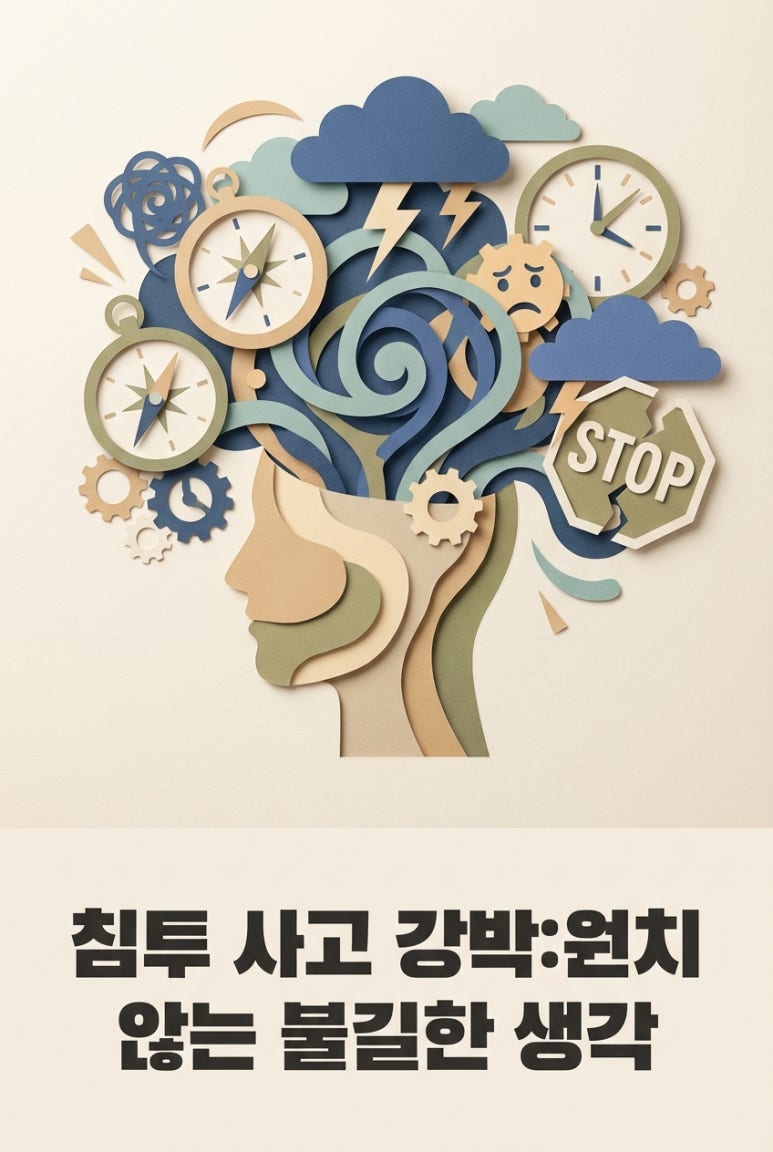
At first glance, modern psychiatry's personality disorder classifications and Jema Yi's concept of Bibak-tamna appear unrelated. One was described in the Neo-Confucian medical language of 19th-century Joseon, and the other was written in the diagnostic-statistical language of 21st-century Western psychiatry. Yet both systems target the same object — the personality structure that causes continuous harm to others within relationships while the individual themselves remains asymptomatic.
DSM-5 (2013) deepened understanding of personality pathology by shifting from categorical diagnosis to a spectrum concept. However, DSM-5's fundamental philosophy was maintained: personality pathology is described as symptom clusters, and the patient's seongjeong (性情) and relational history are treated as secondary variables.
Jema Yi (李濟馬, 1837~1900) moved in a different direction. In Dongui Susebowon (東醫壽世保元), he traced the origin of pathology to the friction of seongjeong (性情) between people, and placed the entire personality at the center of medicine through the concept of constitutional type (體質). In Yi's system, a syndrome (證) has meaning only through the person.
Bibak-tamna (鄙薄貪懦) is the concept positioned at the deepest layer of this person-centered medicine. This paper cross-analyzes this concept with DSM-5 personality disorder classifications, simultaneously clarifying the structural analogies and ontological divergence of the two systems.
1-2. The Original Position of Bibak-tamna
Jema Yi defined Bibak-tamna in the Sadanron (四端論) of Dongui Susebowon as follows.
棄禮而放縱者 名曰 鄙人 棄智而飾私者 名曰 薄人 棄仁而極慾者 名曰 貪人 棄義而偸逸者 名曰 懦人
(One who abandons propriety and acts licentiously is called a Bi-person; one who abandons wisdom and adorns self-interest is called a Bak-person; one who abandons benevolence and pursues extreme desire is called a Tam-person; one who abandons righteousness and steals rest is called a Na-person.) — Dongui Susebowon (東醫壽世保元), Sadanron (四端論)
The state of having lost one's dominant function (優勢機能) by constitutional type is Bibak-tamna. Since Taeyang (太陽) persons have propriety (禮) as their dominant function, abandoning propriety makes them Bi-persons; since Soyang (少陽) persons have wisdom (智) as dominant, abandoning wisdom makes them Bak-persons. Taeum (太陰) persons who abandon benevolence (仁) become Tam-persons, and Soeum (少陰) persons who abandon righteousness (義) become Na-persons. Bibak-tamna individuals are those who have abandoned even their innate strengths (長技) — the extreme of personality in which the motivation for self-cultivation is completely blocked.
2. The Three-Tier Structure of Jema Yi's Pathology Theory
To accurately grasp the position of Bibak-tamna, one must first understand the full tiered structure of Jema Yi's pathology theory.
2-1. The Relational Tier — External Friction and Han-yeol Pathology
Jema Yi identified the first trigger of pathology as interpersonal friction. When seongjeong (性情) clashes in person-to-person encounters, this friction transfers into han-yeol (寒熱) pathology. Pathology arising from external friction is addressed through prescription (藥). The clinician's task at this tier is to read which frictions produce which han-yeol deviations and select the appropriate prescription.
2-2. The Ontological Tier — Constitutional Nature's Bias
The second tier is the bias (偏僻) of constitutional nature. The four constitutional types are born with large-small (大小) deviations among the lung, spleen, liver, and kidney, and this deviation itself is the structural foundation of pathology. Pathology from constitutional bias is addressed through self-cultivation (修養) and lifestyle regulation (攝生). Yi's explicit statement that "external causes are addressed with medicine, internal causes of weakened vital energy with self-cultivation" presents the separation of these two tiers as a principle.
2-3. The Personality Pathology Tier — Bibak-tamna
The third tier is Bibak-tamna. Bibak-tamna individuals have their self-awareness blocked even when relational triggers fire, and the motivation for self-cultivation does not operate. The pathology of this tier appears not in the individual but in those around them. Bibak-tamna individuals themselves are asymptomatic, while those who relate with them manifest symptoms of exhaustion, confusion, and suffering. That Jema Yi did not present a direct treatment strategy for this tier is interpreted not as an absence of discussion but as his recognition that this tier lies outside the existing prescription-cultivation dichotomy.
| Tier | Cause of Pathology | Resolution Path | Treatment Target |
|---|---|---|---|
| Relational | External friction → han-yeol deviation | Prescription (藥) | The individual's symptoms |
| Ontological | Constitutional nature's bias | Self-cultivation / Lifestyle regulation | The individual's seongjeong |
| Personality Pathology | Blockade of cultivation motivation | Not discussed by Jema Yi | Surrounding persons' symptoms |
3. Simji-cheongtag (心地淸濁) — A Precursor to the Spectrum Concept
To understand that Bibak-tamna is the extreme of a personality spectrum, one must first examine Jema Yi's concept of Simji-cheongtag (心地淸濁).
3-1. Original Passages
鄙薄貪懦之心地淺濁 四不同中 有萬不同 人欲之闊狹也 聖人與衆人 萬殊也
(The simji-cheongtag of Bibak-tamna is different in ten thousand ways within the four differences — this is the breadth and narrowness of human desire, and sages and commoners differ in ten thousand ways.) — Dongui Susebowon, Sadanron
鄙薄貪懦之淺濁闊狹萬殊之中有一同衆人所以希聖也
(In the midst of the ten thousand differences in the cheongtag and breadth-narrowness of Bibak-tamna, there is one sameness — this is the basis on which commoners aspire to sagehood.) — Dongui Susebowon, Sadanron
3-2. The Structure of Simji-cheongtag
Jema Yi separated directionality — the four constitutional types (臟局短長) — from magnitude — the variable of simji-cheongtag. The four constitutional types are the direction of a vector, and simji-cheongtag is the magnitude. Even among Taeum persons, one may be close to sagehood or at the extreme of Tam-person depending on simji-cheongtag.
Bibak-tamna individuals are positioned at the lowest end of this spectrum, the extreme of turbid mind (濁心). Decisively, however, Jema Yi did not view Bibak-tamna individuals as an ontologically fixed category. The commentary that "all ordinary people possess great conduct and private mind, but Bibak-tamna individuals are so extreme as to be entirely steeped in great conduct and private mind" explicitly states that Bibak-tamna is an extreme position, not a different kind of being.
3-3. Comparison with DSM-5's Spectrum Shift
DSM-5 (2013) enacted a shift from the previous edition's categorical diagnosis to a spectrum model. The integration of Autism Spectrum Disorder (ASD) is a representative example. The core of this shift is abandoning the either-or dichotomy in favor of understanding personality pathology as a continuum of degree.
Jema Yi declared in Dongui Susebowon in 1894 that "simji-cheongtag differs in ten thousand ways." Given that DSM-5's spectrum shift was academically formalized in 2013, Yi's intuition anticipated a structural insight that modern psychiatry took 120 years to reach.
However, there is a decisive difference between the two spectrum concepts. This will be elaborated in Section 5.
4. Bibak-tamna × DSM-5 Personality Disorders — Structural Analogies by Constitutional Type
4-1. Premises and Limitations of Comparison
The correspondence between Bibak-tamna and DSM-5 personality disorders is not a 1:1 translation. The two systems stand on different classification principles. Sasang Simhak uses constitutional type (temperament) as the primary classification criterion, while DSM-5 uses symptom clusters as the primary criterion. Therefore, the correspondence table below represents structural analogies, and asymmetry in the strength of evidence by type exists. The Bi-person (鄙人) correspondence has strong documentary evidence, while the Bak-person (薄人) correspondence is relatively weaker.
4-2. Bibak-tamna × DSM-5 Correspondence by Constitutional Type
Taeyang (太陽) → Bi-person (鄙人)
棄禮而放縱. Abandons propriety and acts licentiously. The dominant function of Taeyang persons is intuition (直升之氣). The Bi-person converts this intuition into contempt and domination of others, appropriates others' achievements, and structurally produces others' incompetence.
This is structurally similar to the core features of DSM-5 Narcissistic Personality Disorder (NPD) — grandiosity, lack of empathy, exploitative interpersonal relationships. In states approximating malignant narcissism in particular, paranoid elements are added, preemptively excluding others who pose a threat. Evidence strength: Strong.
Soyang (少陽) → Bak-person (薄人)
棄智而飾私. Abandons wisdom and adorns self-interest. The dominant function of Soyang persons is insight into affairs (事務). The Bak-person focuses this insight solely on calculations of self-interest and structurally ignores the emotional costs to others.
Primary correspondence with DSM-5 Histrionic Personality Disorder (HPD) is most natural. Excessive emotional expression, need for attention, and superficiality in relationships are common features. Partial overlap with Borderline Personality Disorder (BPD) exists, but BPD's ego-dystonic characteristics — awareness of distress about one's own behavior — distinguish it from the Bak-person's ego-syntonic structure. Evidence strength: Moderate.
Taeum (太陰) → Tam-person (貪人)
棄仁而極慾. Abandons benevolence and pursues extreme desire. The dominant function of Taeum persons is the persistence of achievement (成就). The Tam-person invests this persistence in resource monopolization and competitor elimination, gradually depleting the resources of those around them.
Positioned at the intersection of DSM-5 Narcissistic Personality Disorder (malignant type) and Obsessive-Compulsive Personality Disorder (OCPD). It is a structure in which OCPD-type control desire combines with malignant narcissism. Evidence strength: Moderate.
Soeum (少陰) → Na-person (懦人)
棄義而偸逸. Abandons righteousness and steals rest. The dominant function of Soeum persons is the precision of organization (組織). The Na-person uses this precision to justify avoidance and delay, paralyzing those around through decision avoidance and controlling relationships passively and aggressively.
Structurally similar to the overlap of DSM-5 Dependent Personality Disorder (DPD) and Avoidant Personality Disorder (AVPD), and passive-aggressive patterns. Evidence strength: Moderate-Strong.
| Constitutional Type | Bibak-tamna | Abandoned Virtue | Primary DSM-5 Correspondence | Harm Structure | Evidence Strength |
|---|---|---|---|---|---|
| Taeyang (太陽) | Bi-person (鄙人) | Propriety (禮) | NPD (malignant) + Paranoid | Disabling others, appropriating achievements | Strong |
| Soyang (少陽) | Bak-person (薄人) | Wisdom (智) | HPD + partial BPD overlap | Emotional exhaustion, superficialization of relationships | Moderate |
| Taeum (太陰) | Tam-person (貪人) | Benevolence (仁) | NPD (malignant) + OCPD | Resource depletion, competitor elimination | Moderate |
| Soeum (少陰) | Na-person (懦人) | Righteousness (義) | DPD + AVPD + passive-aggressive | Decision paralysis, passive control | Moderate-Strong |
5. Ontological Divergence — Pathological Description vs. Ethical Prescription
5-1. Jema Yi's Neo-Confucian Foundation
The reason Sasang Simhak is inevitably ethics-based lies in Yi's intellectual foundation. Jema Yi adopted the Neo-Confucian (性理學) system of benevolence-righteousness-propriety-wisdom (仁義禮智) as the axis of medical classification. In Neo-Confucianism, these virtues are not merely a list of virtues but the intrinsic expression of heavenly principle (天理) that persons must actualize. Therefore, "abandoning" these virtues is not a factual description but a normative violation.
The judgment that Bibak-tamna is "wrong" follows automatically in Yi's system. Ethical judgment is built into the language of Sasang Simhak from the start.
5-2. DSM-5's Professed Value Neutrality and Its Paradox
DSM-5 professes value-neutral description. Narcissistic personality disorder is a pathological condition, not an object of moral judgment. This position is a core principle guaranteeing the scientific nature of psychiatry.
However, before relational pathology, value neutrality becomes an epistemological fiction. Personality disorders are by definition manifested in relationships — that DSM-5 requires "persistent impairment in interpersonal functioning" as the first condition for personality disorder diagnosis proves this. The moment a relationship occurs, a perpetrator-victim structure is created, and within this structure, "describing neutrally" is either impossible or ethical evasion.
Furthermore, DSM-5's descriptive language itself already contains ethical judgment. "Persistently disregards the rights of others" (antisocial), "exploitative interpersonal relationships" (narcissistic) are language that has meaning only from the victim's perspective. DSM-5 stands on the contradiction of professing value neutrality while describing pathology in the language of the victim's perspective.
The clinical consequence of this contradiction is frequently witnessed in today's clinical settings: understand the narcissist, they too had a wounded childhood. This is a structure that burdens victims with the obligation to understand the perpetrator's psychology. This is the paradox in which value neutrality actually pathologizes the victim's ethical indignation.
5-3. Jema Yi's Honesty
Jema Yi did not conceal from the start that his system is ethics-based. "One who abandons propriety is a Bi-person" — this judgment is explicit. Describing Bibak-tamna in Yi's language is giving back, in the name of medicine, the language that allows victims to say "you were wrong" to perpetrators.
This is not a defect. In medicine dealing with relational pathology, the explicitness of ethical judgment is Sasang Simhak's unique clinical strength.
5-4. The Divergence of Change Potential
The divergence between pathology and ethics is also decisive in the question of change potential.
In DSM-5's spectrum model, severe personality disorders exist at a specific position on the spectrum. Symptom management and functional improvement are possible through psychotherapy and medication, but the directionality of the diagnostic category itself is fixed. DSM-5 is a system for describing being, not a system aimed at transforming the direction of being.
Jema Yi takes a different position.
鄙薄貪懦一心之慾 明而辨之則 浩然之理 出於此也
(If one clearly discerns the desires of Bibak-tamna's single mind, the principle of boundless vital energy [浩然之理] emerges from this.) — Dongui Susebowon
鄙薄貪懦之淺濁闊狹萬殊之中有一同衆人所以希聖也
(In the midst of the ten thousand differences in the cheongtag of Bibak-tamna, there is one sameness — this is the basis on which commoners aspire to sagehood.)
Even Bibak-tamna individuals are beings who can advance toward sagehood. Though positioned at the extreme, position does not define being. If DSM-5's spectrum is ontology, Sasang Simhak's simji-cheongtag is ethics.
| Category | DSM-5 Spectrum | Sasang Simhak Simji-cheongtag |
|---|---|---|
| Paradigm | Pathological description (description) | Ethical prescription (prescription) |
| Nature of spectrum | Continuity of neurodevelopment/temperament — value-neutral | Continuity of personality cultivation — directional |
| Meaning of extreme | Severe state — fixed within category | Extreme position — directional change possible |
| Goal of change | Functional improvement, symptom management | Reaching sagehood (聖人) |
| Attribution of responsibility | Weakened (innate neurodevelopment) | Explicit (obligation of self-cultivation) |
| Language for victims | Indirect (implied in descriptive language) | Direct (judgment of "wrong" made explicit) |
5-5. The Essence of Bibak-tamna — Blockade of Self-Awareness
The essence of Bibak-tamna does not lie in bad behavior. What is Bibak-tamna is the state of not being aware that one is Bibak-tamna — more precisely, the state in which the capacity for awareness itself is blocked.
This distinction is important. A person who does bad things knowingly may not be Bibak-tamna. Bibak-tamna individuals do not perceive the fact that they are abandoning propriety, that they are exploiting others — or rather, they are in a state in which they can no longer perceive this. This is the structural reason that cultivation motivation is blocked. Self-cultivation begins from self-awareness, but that starting point itself is closed.
That Jema Yi presented "myeong-i-byeon-ji (明而辨之)" — clearly discerning — as the starting point of hoyeon-jiri (浩然之理) precisely captures this paradox.
鄙薄貪懦一心之慾 明而辨之則 浩然之理 出於此也
(If one clearly discerns the desires of Bibak-tamna's single mind, the principle of boundless vital energy emerges from this.)
One who can discern is already one step removed from Bibak-tamna. Conversely, the state of being unable to discern is the definition of Bibak-tamna. Bibak-tamna individuals can in principle advance through self-cultivation — but the precondition that the gate of self-awareness is closed is the structural particularity of the pathology of this tier.
DSM-5's ego-syntonic concept captures this structure in phenomenal description. The core reason personality disorders have poor treatment prognosis — because one feels that one's behavior is consistent with one's ego and thus change motivation does not arise — is explained in Yi's language as "the state in which the capacity for myeong-i-byeon-ji is blocked." DSM-5 describes this state, and Jema Yi explains it from the perspective of personality development.
6. Cross-Reading — What Do the Two Systems Say Together
Despite the heterogeneity of the two systems, Bibak-tamna and DSM-5 personality disorders are complementary at the following points.
Structural Prediction vs. State Description: Sasang Simhak predicts the direction of personality pathology from constitutional type. The possibility of a Taeum person becoming a Tam-person, or a Soeum person becoming a Na-person, is derived a priori from constitutional diagnosis. DSM-5 precisely describes already-manifested pathological states. The two systems can operate complementarily through a division of roles between prediction and description.
Mechanism of Development vs. Phenomenal Classification: Jema Yi explains why Bibak-tamna occurs (abandonment of inferior function, great conduct and private mind). DSM-5 classifies how Bibak-tamna states appear. The combination of mechanism and phenomenon deepens clinical understanding.
Honest Acknowledgment of Limitations: Jema Yi did not present a direct treatment strategy for the Bibak-tamna tier. DSM-5 acknowledges the difficulty of long-term change in personality disorder treatment. That both systems stop at the same point paradoxically confirms that the pathology of this tier represents the current limits of medical knowledge.
7. Limitations and Additional Research Questions
The correspondence analysis of this paper has the following limitations.
First, the correspondence between Bibak-tamna by constitutional type and DSM-5 personality disorders is a structural analogy and has not undergone empirical verification. Correspondences such as Bi-person = NPD, Na-person = DPD+AVPD may be rejected in empirical research, and in that case, the theoretical value of the three-tier structure itself holds independently.
Second, the clinical strength of Bibak-tamna's ethical judgment possibility simultaneously carries the risk of over-application. The judgment "that patient is a Tam-person" can be misused to justify the clinician's countertransference.
Third, establishing a genealogical lineage between traditional Korean medicine and DSM-5 is not a claim of direct influence but a notation of similarity. It is a claim that the two systems converged in the same philosophical direction, not a claim of historical lineage.
Additional research questions:
- Correlation study between Sasang constitutional diagnosis and DSM-5 personality disorder diagnosis — empirical confirmation of the Taeum-Tam-person tendency
- Development of operational definitions of Bibak-tamna assessment criteria — a clinically applicable checklist
- Analysis of countertransference patterns by constitutional type in therapeutic relationships with Bibak-tamna patients
- Feasibility of developing simji-cheongtag measurement tools — a Sasang Simhak personality maturity scale
- Possibility of self-cultivation in Bibak-tamna individuals — long-term follow-up clinical case reports
8. Conclusion
Bibak-tamna is the personality pathology concept positioned at the deepest tier of Jema Yi's pathology theory. When compared with DSM-5 personality disorders, significant structural analogies are confirmed by constitutional type. More important, however, is the ontological divergence of the two systems.
DSM-5 describes personality pathology; Sasang Simhak prescribes for personality pathology. DSM-5's spectrum arranges pathological continuity in a value-neutral manner; simji-cheongtag arranges the ethical continuity of self-cultivation with directionality. Bibak-tamna individuals are at the extreme of the spectrum but not fixed beings, and the original text's statement that "commoners aspire to sagehood (衆人所以希聖)" leaves open the possibility of directional change even at the extreme.
In clinical practice dealing with relational pathology, Jema Yi's ethical explicitness is not a defect. Providing in the name of medicine the language that allows victims to say "you were wrong" to perpetrators — this is the independent clinical value of Sasang Simhak personality pathology theory.
If DSM-5 moved the person to a secondary variable by describing personality pathology as symptom clusters, Jema Yi placed the person themselves at the center of medicine. In medicine dealing with relational pathology, which frame is more honest — this question must take its place as one of the central topics of Sasang Simhak modernization research.
References (Citation Cards)
Source 1 [KM]
- Source: Dongui Susebowon (東醫壽世保元), Sadanron (四端論)
- Author/Era: Jema Yi (李濟馬), Year 31 of King Gojong of Joseon (1894)
- Reliability: high
- Key point: Original text defining Bibak-tamna (棄禮而放縱者 名曰 鄙人, etc.), simji-cheongtag ten thousand differences (萬不同), commoners aspiring to sagehood (衆人希聖), passages related to hoyeon-jiri (浩然之理)
Source 2 [KM]
- Source: Sasang Simhak (四象心學) — Reading a Vivid Susebowon 2.0
- Author/Era: Taeul (Kim Do-sun), modern commentary
- Reliability: high
- Key point: Simji-cheongtag vector concept, Bibak-tamna spectrum structure, commentary on gyosim, geungsim, beolsim, and gwasim by constitutional type
Source 3 [WM]
- Source: Diagnostic and Statistical Manual of Mental Disorders, Fifth Edition (DSM-5)
- Author/Year: American Psychiatric Association, 2013
- Reliability: high
- Key point: Personality disorder spectrum shift, diagnostic criteria for narcissistic, borderline, dependent, avoidant, and histrionic personality disorders
Source 4 [WM]
- Source: DSM-5-TR (Text Revision)
- Author/Year: American Psychiatric Association, 2022
- Reliability: high
- Key point: Personality disorder criteria updates, clarification of ego-syntonic vs. ego-dystonic concepts
Source 5 [KM]
- Source: Taeul's Full Lectures on Gyeokchigo
- Author/Era: Taeul (Kim Do-sun), modern
- Reliability: high
- Key point: Turbid mind to guard against by constitutional type (Taeum = gyosim, Soeum = geungsim, Taeyang = beolsim, Soyang = gwasim)
Choi Jang-Hyuk | Physician of Korean Medicine, Director, Dongjedang Korean Medicine Clinic
Research Method: DJD Multi-Literature Cross Research
Mental Health
Modern Reinterpretation of Bibak-tamna (鄙薄貪懦): Structural Analogy Between Sasang Simhak Personality Pathology Theory and DSM-5 Personality Disorders
View Program