
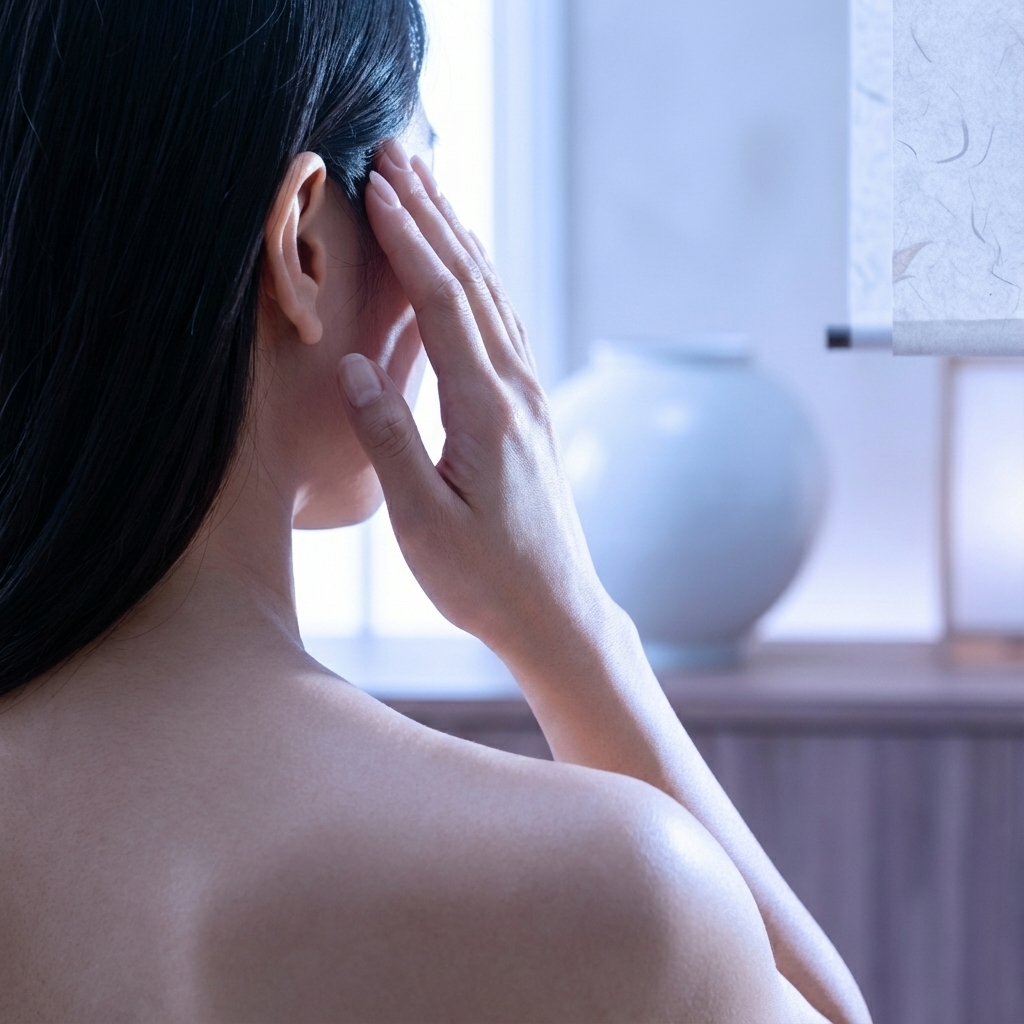
Postnasal Drip
Post-nasal Drip
Excess mucus dripping down the back of the throat

# Possibility / Realistic Goals (1)
# Comorbidities (2)
Q I have post-nasal drip and also keep coughing at night. Is there a connection?
A. Yes. Post-nasal drip-associated cough is caused by secretions irritating the airway and is one of the most common causes of chronic cough. It worsens at night when lying down and often takes the form of a dry, throat-clearing cough.
View details →Q My voice keeps getting hoarse and I often have to clear my throat. Is this related to post-nasal drip?
A. Yes. When post-nasal drip secretions flow down onto the vocal cords and irritate them, the voice becomes hoarse and frequent throat-clearing occurs. This is especially common when laryngopharyngeal reflux (LPR) is also present.
View details →# Lifestyle Management (2)
Q I heard nasal irrigation helps. How should I do it, and is it okay to do it every day?
A. Saline (0.9%) nasal irrigation is one of the most evidence-based self-care methods for managing post-nasal drip. Using a nasal irrigation device (neti pot or medical irrigator) once or twice a day with saline at near body temperature is effective for clearing secretions and maintaining mucosal moisture.
View details →Q When I lie down to sleep, mucus seems to drip down the back of my throat more severely. Does sleeping posture affect it?
A. When you lie down, the direction of gravity changes so secretions collect at the back of the throat more easily. Raising the head of the bed by 10 to 15 cm or slightly elevating the upper body with a thick pillow eases symptoms. This is especially effective when reflux is the cause.
View details →# Safety (2)
Q I am pregnant and suffering from severe postnasal drip. Is it safe to take herbal medicine?
A. Taking herbal medicine during pregnancy must be decided after consulting with a specialist Korean medicine doctor, by informing them of your gestational age and current condition. While it is possible to prescribe only safe herbs while excluding those contraindicated during pregnancy, please do not take it on your own judgment.
View details →Q I thought it was post-nasal drip, but there was blood mixed in the secretions. Can I come straight to the Korean medicine clinic?
A. No. Blood-tinged nasal secretions can be a warning sign of a malignant tumor of the nasal cavity or sinuses, a vascular abnormality, or a bleeding disorder. Please first get a nasal endoscopy and imaging examination at an ENT clinic or specialized ENT hospital.
View details →# Drug Combination / Interactions (1)
# Prognosis / Recovery (2)
Q It has been two months since I had a cold, and I feel like something is stuck in my throat. Can it get better on its own?
A. Postnasal drip following a cold is a continuation of mucosal hypersensitivity; while some cases improve naturally within 4 to 6 weeks, there is a possibility of it becoming chronic if it persists for more than 2 months. Starting active treatment at this point is advantageous for preventing chronicity.
View details →Q I've had post-nasal drip for more than three years. Can it still be treated even after so long?
A. Chronic post-nasal drip can still be treated. However, the longer it lasts, the more fixed the mucosal changes become, so rather than complete elimination, we set staged goals such as reducing the amount of secretion, easing the throat sensation, and lowering the frequency of flare-ups. Three to six months of consistent treatment is needed.
View details →# Causes Explained (2)
Q Mucus keeps dripping down the back of my throat and the feeling of something stuck won't go away. Is this post-nasal drip?
A. Post-nasal drip is when secretions produced in the nasal cavity and sinuses flow down the back of the throat. The most common signs are a sensation of something stuck in the throat, frequent coughing, and hoarseness. Rhinitis, sinusitis, acid reflux, and dry environments are the main causes.
View details →Q I heard there are several causes of post-nasal drip. How can I tell whether mine is from rhinitis or from reflux?
A. Post-nasal drip caused by rhinitis or sinusitis is usually worse during the day and changes with the season or environment, while reflux-related drip tends to worsen after meals, at night, and when lying down. In many cases the two overlap.
View details →# Food / Triggers (2)
Q When I eat dairy or flour-based foods, the phlegm in my throat feels worse. Is there a connection?
A. In some people, dairy products (milk, cheese, yogurt) can worsen post-nasal drip by increasing mucus production or thickening it. Flour (gluten) can also trigger mucosal hypersensitivity in some cases, so it helps to restrict them for 2 to 4 weeks and check the difference.
View details →Q I work at a factory in Dong-gu, Incheon, and the dusty environment seems to make my post-nasal drip worse.
A. Dust, chemical particulates, and dry environments are typical occupational triggers that directly irritate the nasal mucosa and increase secretion. Wearing a mask, drinking water frequently during work, and nasal irrigation are the first-line measures.
View details →# Treatment Schedule (1)
# Treatment Stages (2)
Q How does the consultation proceed during the first visit?
A. During the initial consultation, we assess the characteristics of the secretions (clearness, viscosity, color), accompanying symptoms (nasal congestion, headache, cough, reflux), and the severity of the condition. We then diagnose the degree of Lung Deficiency and Phlegm-Yang through pulse diagnosis. Subsequently, we begin prescribing herbal decoctions tailored to the differential diagnosis, along with nasal acupuncture and pharmacopuncture treatments.
View details →Q How long do I need to receive Korean medicine treatment for post-nasal drip to improve?
A. In faster cases, you begin to feel reduced secretion and eased throat sensation within 2 to 4 weeks, and we consider three months as the first course of treatment. For chronic cases (more than three years), six months or more is needed, and preventing recurrence is important.
View details →# Effectiveness (1)
Postnasal Drip is not just a simple symptom
Korean medicine that considers both your constitution and lifestyle rhythm treats the root cause.
From consultation to precise treatment, we provide personalized care.
Prescriptions tailored to your constitution and symptoms treat the root cause
The director personally sees you from first to follow-up visits
We identify the essence through Sasang constitution, pulse and abdominal diagnosis
Treatment based on long clinical experience and evidence
Was this helpful? If you need accurate care for your condition, please contact us below.