
Scoliosis
Scoliosis
Scoliosis, where the spine curves sideways, resulting in uneven shoulder and pelvic heights.
# Possibility / Realistic Goals (2)
Q My college-aged daughter has 30-degree scoliosis, but she says she does not want surgery. Is it actually possible to reduce the angle through non-surgical treatment? I would like to know the realistic expectations.
A. The honest answer is that it is difficult to significantly reduce a 30-degree curvature in a case where growth has stopped using non-surgical methods. Realistic goals are to prevent progression, manage pain and fatigue, and functionally improve body asymmetry. While improvements of a few degrees have been reported through scoliosis-specific exercises, individual differences are significant.
View details →Q I first found out I had scoliosis at age 52. I’ve lived like this my whole life; is it meaningful to start treatment at this age? Isn't it too late?
A. It is not too late. The goal of adult scoliosis treatment is not just angle correction, but pain reduction, inhibition of progression, and maintenance of muscle strength and balance; these treatments are effective regardless of when you start. In particular, now that pain has started is the optimal time to slow down degenerative progression.
View details →# Comorbidities (1)
# Lifestyle Management (2)
Q I am a 17-year-old high school student with 18-degree scoliosis. What kind of exercise is good to do regularly, and are there any exercises I should avoid? I would also like to do weight training at the gym.
A. Swimming, walking, and core strengthening exercises are generally helpful, and scoliosis-specific exercises such as Schroth are most recommended. Weight training is also possible, but it is safer to perform unilateral exercises that place asymmetric loads on the spine and excessive axial compression (heavy squats and deadlifts) gradually after posture correction.
View details →Q I am a 39-year-old developer who sits in front of a monitor for 10 hours a day. I am curious about lifestyle management methods I can practice in the office after being diagnosed with scoliosis.
A. The basics include standing up and walking for 5 to 10 minutes after sitting for 50 minutes, adjusting the monitor and chair heights to be symmetrical, and eliminating the habit of leaning on one armrest. Adding spinal extension and lateral stretches once a day, along with core exercises at least three times a week, will be of great help in managing pain and progression.
View details →# Safety (1)
# Drug Combination / Interactions (1)
# Prognosis / Recovery (2)
Q My 9th-grade daughter has 20-degree scoliosis. Will the angle worsen as she grows taller? I’ve heard that it stops once she becomes an adult, but I would like to know the prognosis.
A. There is a risk of progression as long as growth remains, and caution is required, especially during periods of rapid growth. While the rate of progression slows significantly once bone maturation is complete, large curvatures of 50 degrees or more can continue to progress slowly even after adulthood. For a 20-degree curvature, regular follow-up and exercise management are key.
View details →Q I am a self-employed individual in my late 40s. If I start Korean medicine treatment for lower back and back pain caused by scoliosis, how long does it usually take to see improvement?
A. Pain relief is often felt within 4 to 8 weeks of treatment, and consistent management for 3 to 6 months is required to improve muscle imbalances and prevent recurrence. Since there are individual differences depending on the degree of curvature, duration of the condition, and occupational burden, we determine stage-by-stage goals together during the initial consultation.
View details →# Causes Explained (2)
Q I am a mother raising a 2nd-year middle school daughter in Dongincheon. The school checkup diagnosed her with scoliosis; did it develop due to poor posture? I am curious about the cause.
A. 80–85% of adolescent scoliosis is idiopathic scoliosis, where the cause is unclear. It is not caused by poor posture, but rather by a complex interplay of asymmetrical spinal growth during the developmental period and genetic factors. However, postural imbalances can accelerate progression, so management is necessary.
View details →Q I am a 58-year-old housewife. I was fine when I was young, but recently my back seems to be gradually curving to one side, and I am experiencing pain. Is there such a thing as scoliosis that develops with age?
A. Yes, there is a type of degenerative scoliosis that develops in adults. It involves the spine gradually curving due to the asymmetrical degeneration of the discs and facet joints; unlike adolescent scoliosis, it is often accompanied by symptoms of pain and stenosis. Pain management and maintaining muscle strength are key to treatment.
View details →# Food / Triggers (2)
Q I am a father of a first-year middle school son with scoliosis. Does making sure to feed him foods that are good for bones help with his scoliosis? Are there any foods he should avoid?
A. While specific foods cannot straighten the curvature, consuming calcium, vitamin D, and protein is important for bone health during the growth period. A diet centered on carbonated drinks, excessive caffeine, and instant foods is detrimental to calcium metabolism, and obesity increases the burden on the spine, so a balanced diet is fundamental.
View details →Q I am a first-year high school student commuting from Dong-gu, Incheon. I have been diagnosed with 15-degree scoliosis. Do carrying a heavy backpack, crossing my legs, or sleeping on my side worsen the scoliosis?
A. While these habits are not the cause of scoliosis, they can exacerbate left-right muscle imbalances, increase pain, and act unfavorably on the progression of the curvature. It is recommended to carry a backpack on both shoulders with the weight limited to 10–15% of your body weight, and to reduce postures such as crossing your legs or leaning on only one side.
View details →# Treatment Schedule (1)
# Treatment Stages (2)
Q I am a university student diagnosed with 22-degree scoliosis. I would like to know in advance the sequence and stages of treatment when visiting the Korean medicine clinic.
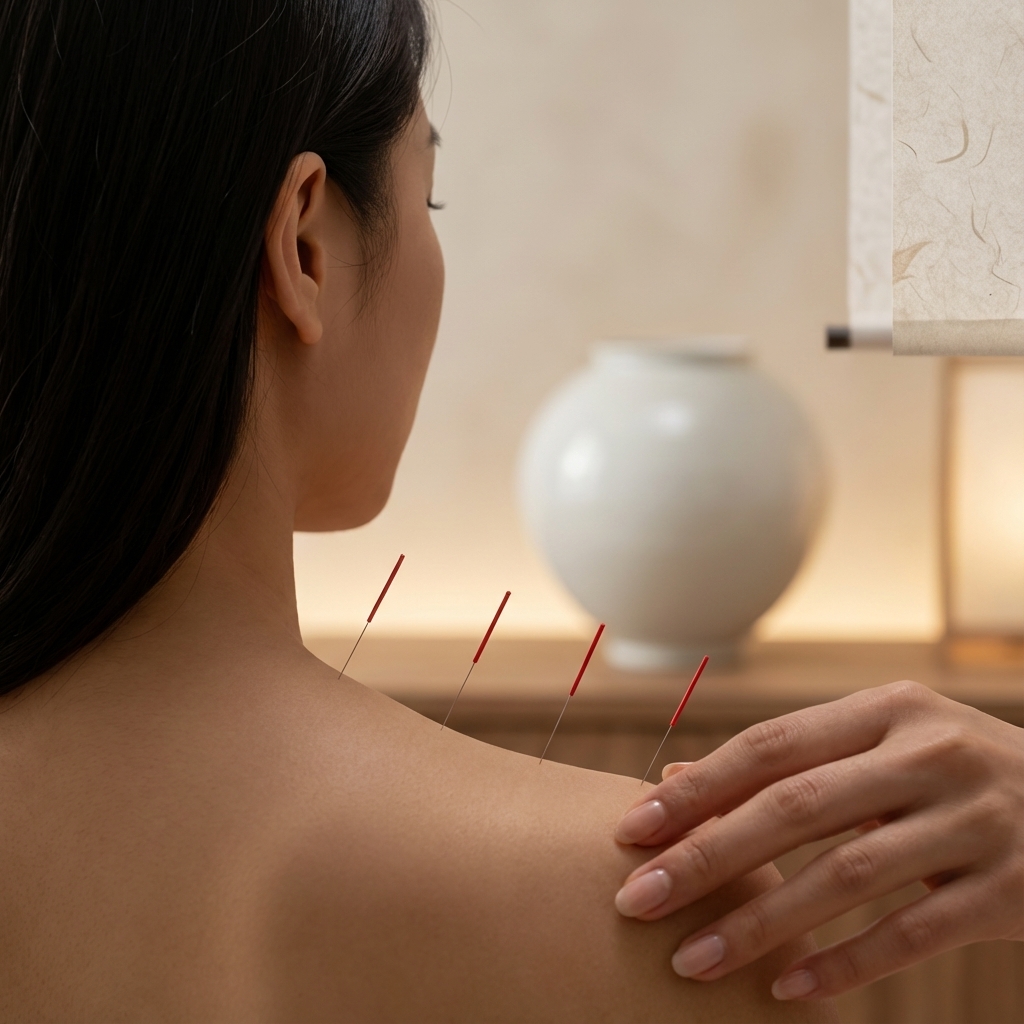
A. First, we assess the condition through an evaluation of body shape and muscle imbalances and a review of existing X-rays. We then relieve muscle tension using Stage 1 acupuncture and Chuna manual therapy. If there are hardened adhesions, we add Stage 2 moxibustion; for areas with chronic inflammation or those requiring regeneration, we add Stage 3 treatments such as fire acupuncture, thread embedding, and pharmacopuncture. Throughout the entire process, we provide exercise education and, if necessary, administer herbal medicine.
View details →Q My first-year middle school son has started wearing a brace for a curvature of 28 degrees. How are traditional Korean medicine treatments combined with wearing the brace?
A. Since the brace is the standard treatment for preventing the progression of the curvature, it is maintained as is. Traditional Korean medicine treatments are used in conjunction to manage muscle stiffness, fatigue, and pain caused by wearing the brace. The schedule is planned by scheduling acupuncture, Chuna manual therapy, and exercise during the times when the brace is removed.
View details →# Effectiveness (2)
Q My high school son has 25-degree scoliosis, and honestly, I find it hard to believe that acupuncture can straighten a curved spine. What kind of effect does traditional Korean medicine actually have?
A. Acupuncture treatment does not directly straighten the curvature of hardened bones. The actual effectiveness of Korean medicine lies in slowing the progression of the curvature and improving function by alleviating left-right muscle imbalances, reducing pain, and improving blood and energy circulation around the spine. It is particularly meaningful when combined with assistive devices and exercise therapy.
View details →Q I am an office worker in my 30s. I was recommended Chuna manual therapy for scoliosis, but how is it different from massage or manual therapy? I am wondering if the effects are only temporary.
A. Chuna is a medical procedure in which a doctor of Korean medicine corrects the joints and muscles of the spine and pelvis based on a diagnosis, and it differs from relaxation-focused massage. In the case of scoliosis, it plays a role in improving joint mobility and muscle imbalances around the curvature, and combining it with exercise and lifestyle management is essential to maintain its effects.
View details →Scoliosis is not just a simple symptom
Korean medicine that considers both your constitution and lifestyle rhythm treats the root cause.
From consultation to precise treatment, we provide personalized care.
Prescriptions tailored to your constitution and symptoms treat the root cause
The director personally sees you from first to follow-up visits
We identify the essence through Sasang constitution, pulse and abdominal diagnosis
Treatment based on long clinical experience and evidence
Was this helpful? If you need accurate care for your condition, please contact us below.