
Q I am a woman in my 40s who has just been diagnosed with fibromyalgia, and I would like to know the entire process of how treatment is conducted at the Korean medicine clinic.
A During the first visit, a detailed medical history and body type analysis are used to identify the differential diagnosis (identifying which organ or meridian is affected), and a customized treatment plan is established based on this. Treatment proceeds in stages, following the sequence of meridian circulation using acupuncture and moxibustion → anti-inflammation using pharmacopuncture and bee venom therapy → internal reinforcement using herbal medicine. The plan is adjusted by checking for changes at each visit.
Detailed Answer
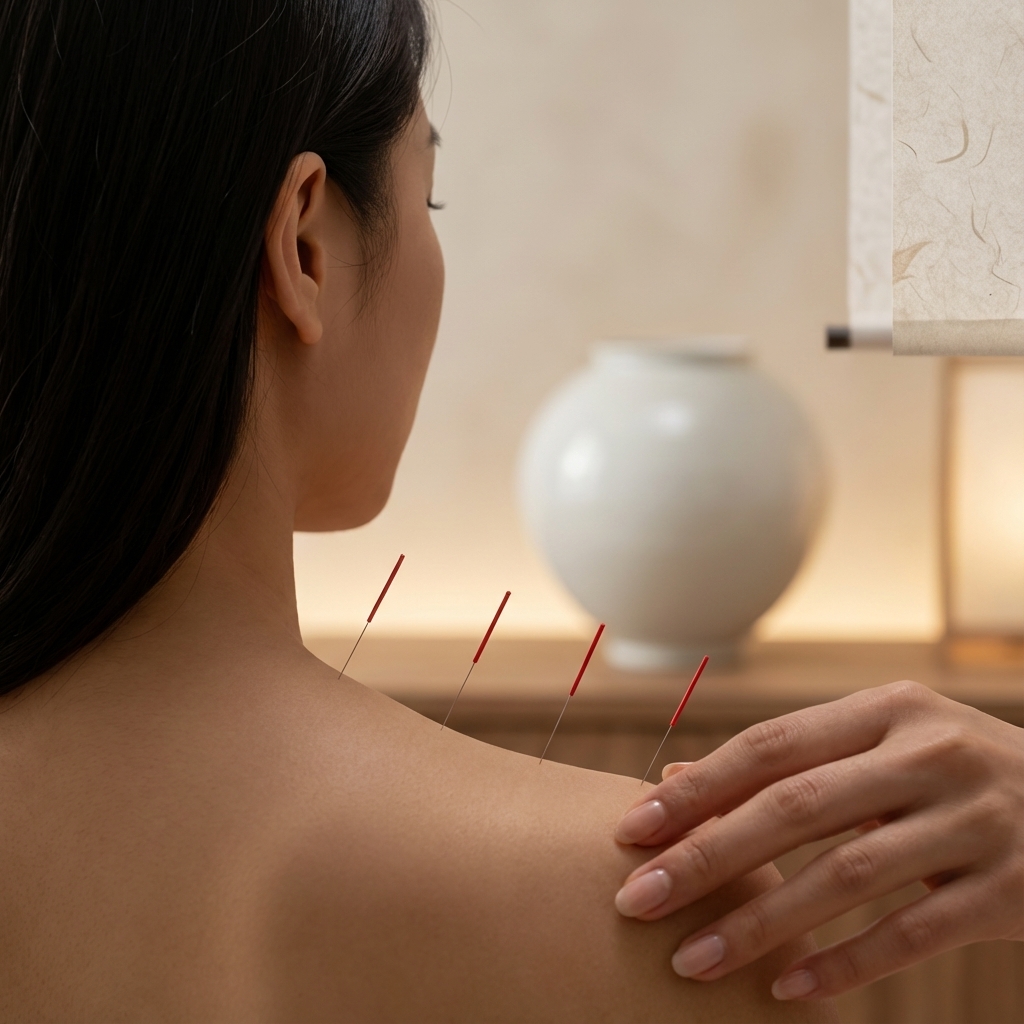
The stages of Korean medicine treatment for fibromyalgia are summarized as follows: Stage 1: Diagnosis and Planning (1-2 sessions): Medical history taking regarding the patient's overall condition (pain location, intensity, sleep patterns, stress levels, digestion, etc.), creation of a tender point map, differential diagnosis classification (liver qi stagnation/qi-blood-yang deficiency/blood-stasis-phlegm, etc.), and establishment of a personalized treatment plan. Stage 2: Intensive Treatment (4-8 weeks): Acupuncture and moxibustion treatment 2-3 times a week, combined with pharmacopuncture and bee venom therapy if necessary, and herbal medicine prescription. Stage 3 Maintenance Treatment (2–4 months): Reduce to once a week to monitor recovery of daily functions. Stage 4 Management (Subsequent): Once every 2–4 weeks; rapid response in case of flare-ups.
Korean Medicine Clinic Perspective
Dongjedang’s fibromyalgia treatment journey is structured around three axes: 'Unblocking blockages → Replenishing deficiencies → Blocking external stimuli.' First, needle acupuncture is used to directly resolve myofascial adhesions and blocked circulation, thereby reducing the transmission of pain signals. Second, herbal medicine tailored to your constitution replenishes vital energy and blood, creating a foundation for central nervous system stability. Third, lifestyle management education (sleep, diet, and exercise) prevents symptom recurrence. In the early stages of treatment, you may experience a temporary increase in fatigue or a shift in the location of pain; this is a normal response to the activation of circulation. Keeping a progress log is highly helpful for managing your treatment.
Related FAQs
-
Q
I am a woman in my 60s who has suffered from fibromyalgia for over 10 years. Would Korean traditional medicine be helpful in such a long-standing case?
#Possibility / Realistic Goals
-
Q
I am an office worker in my 40s currently on leave due to fibromyalgia. Can I return to work with Korean traditional medicine treatment?
#Possibility / Realistic Goals
-
Q
I am a woman in my 30s with fibromyalgia, depression, and irritable bowel syndrome. Can all of these be treated at once?
#Comorbidities
-
Q
I am a housewife in my 40s with fibromyalgia. Should I exercise? What kind of exercise is good?
#Lifestyle Management
-
Q
I am a woman in my 50s living in Dong-gu, Incheon. It is very difficult for me to sleep due to fibromyalgia. Are there any ways to improve my sleep?
#Lifestyle Management