
Q I am a mother of a high school senior daughter preparing for college entrance exams. My daughter was diagnosed with "turtle neck" syndrome, and lately she has been complaining of frequent headaches. Can turtle neck syndrome actually cause headaches?
A Yes, it is a common associated symptom. If the muscles at the back of the neck (such as the suboccipital muscles) become chronically tense due to turtle neck syndrome, it can lead to tension headaches or cervicogenic headaches. It is characterized by a pattern where the headache starts at the back of the head and spreads to the temples and around the eyes.
Detailed Answer
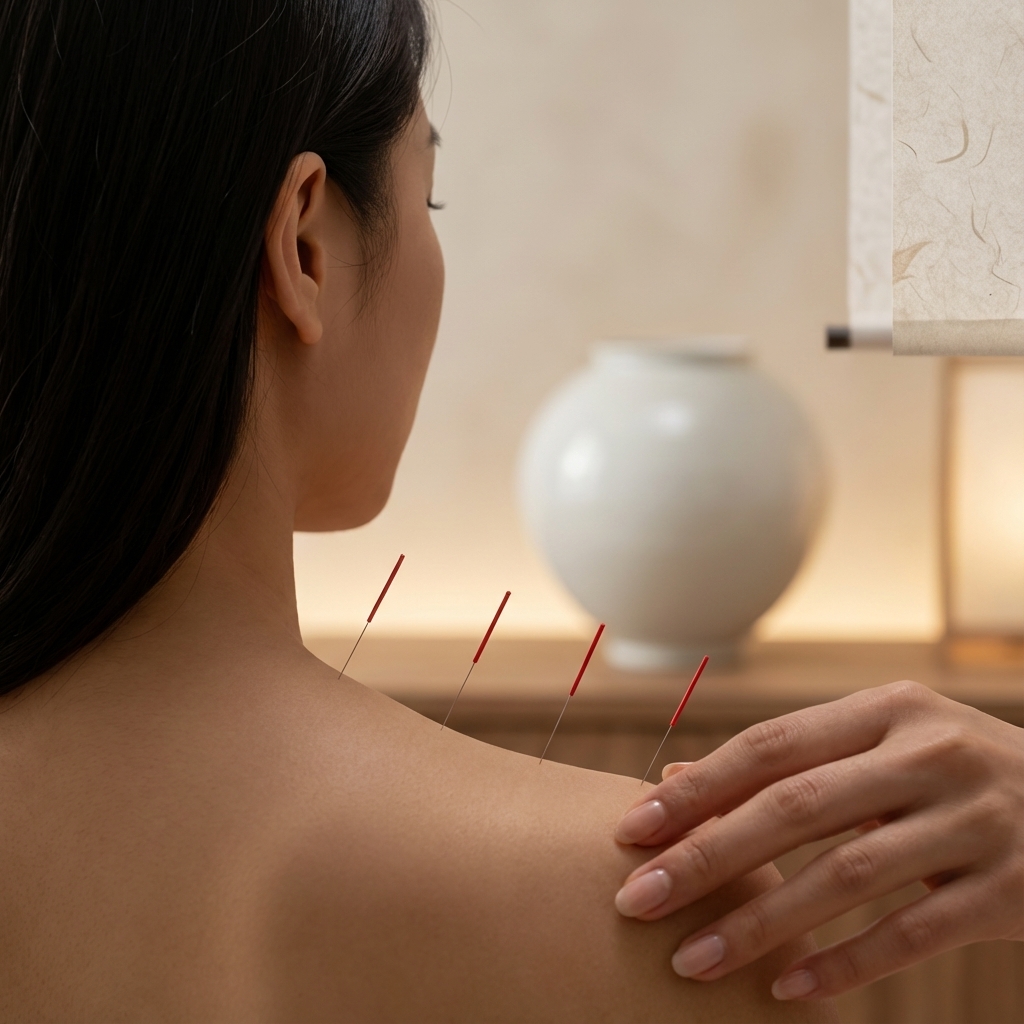
In a turtle neck posture, the suboccipital muscle group located directly beneath the skull continuously contracts to support the weight of the head. The greater occipital nerve passes through this area, and if the tense muscles irritate the nerve, cervicogenic headaches can occur, spreading from the back of the head to the crown and temples. Additionally, myofascial trigger points in the upper trapezius and sternocleidomastoid muscles can also cause headaches and eye strain. This is very common among students who maintain a study posture for long periods, and even if temporarily relieved by painkillers, it recurs if the posture and muscle tension remain unchanged. From the perspective of a Korean medicine clinic, Korean medicine views headaches as arising when the Qi and blood in the meridians passing through the nape of the neck to the head become stagnant, preventing clear energy from ascending to the head. Based on the principle that the liver governs the muscles, if liver Qi becomes stagnant due to exam stress, muscle tension intensifies, resulting in a Qi-Qi and Blood Stasis type headache; if this is compounded by sleep deprivation and overwork, it progresses to a Muscle and Blood Exhaustion type headache, where Qi and blood fail to nourish the muscles and blood vessels. Treatment involves inserting acupuncture needles into the suboccipital and scapular regions—the roots of tension—to facilitate the flow of Qi and blood; hardened trigger points are released using needles; and pharmacopuncture is added if inflammatory tenderness is pronounced. Furthermore, the key to reducing headache recurrence is to clear accumulated fatigue and dampness, replenish liver blood with herbal medicine tailored to your constitution, and restore circulation in both the neck and head.
Related FAQs
-
Q
I am a 38-year-old bank employee who has had forward head posture for 10 years. Honestly, I am curious: is it realistically possible to restore the original neck curve for a neck that has been like this for 10 years? Or is pain management the best option?
#Possibility / Realistic Goals
-
Q
I am a 44-year-old logistics center manager with early-stage cervical disc herniation. The orthopedic doctor says that surgery might be necessary if the condition worsens, but is it possible to manage this with traditional Korean medicine treatments without surgery?
#Possibility / Realistic Goals
-
Q
I am a 47-year-old woman working in a sewing factory. I have a forward head posture and stiff shoulders as a matter of course, and lately, my arms have been tingling as well. Are the tingling in my shoulders and arms also due to the forward head posture, or are there other underlying conditions?
#Comorbidities
-
Q
I am a 36-year-old developer in my third year of working from home. I have started treatment for straight neck syndrome, but how should I change my home desk environment to prevent recurrence?
#Lifestyle Management
-
Q
I am a 42-year-old housewife looking to start exercising. There are so many exercises said to be good for forward head posture that I am confused. Please tell me just a few key exercises I can do at home every day.
#Lifestyle Management