
Thought It Was a Cold, But It's Been 3 Months? How to Distinguish Between Chronic and Acute Sinusitis

 🧾 Answer First | Key Conclusion
"Doctor, last time you said I had chronic rhinitis, but now you're saying sinusitis?"
This is a question many patients ask.
To summarize,
chronic rhinitis and chronic sinusitis are different conditions
but they are closely connected.
In particular, if chronic rhinitis lasting more than 3 months is left untreated for a long time,
it can progress to chronic sinusitis,
and conversely, chronic sinusitis can worsen rhinitis symptoms.
That's why it's important to understand and manage both conditions together.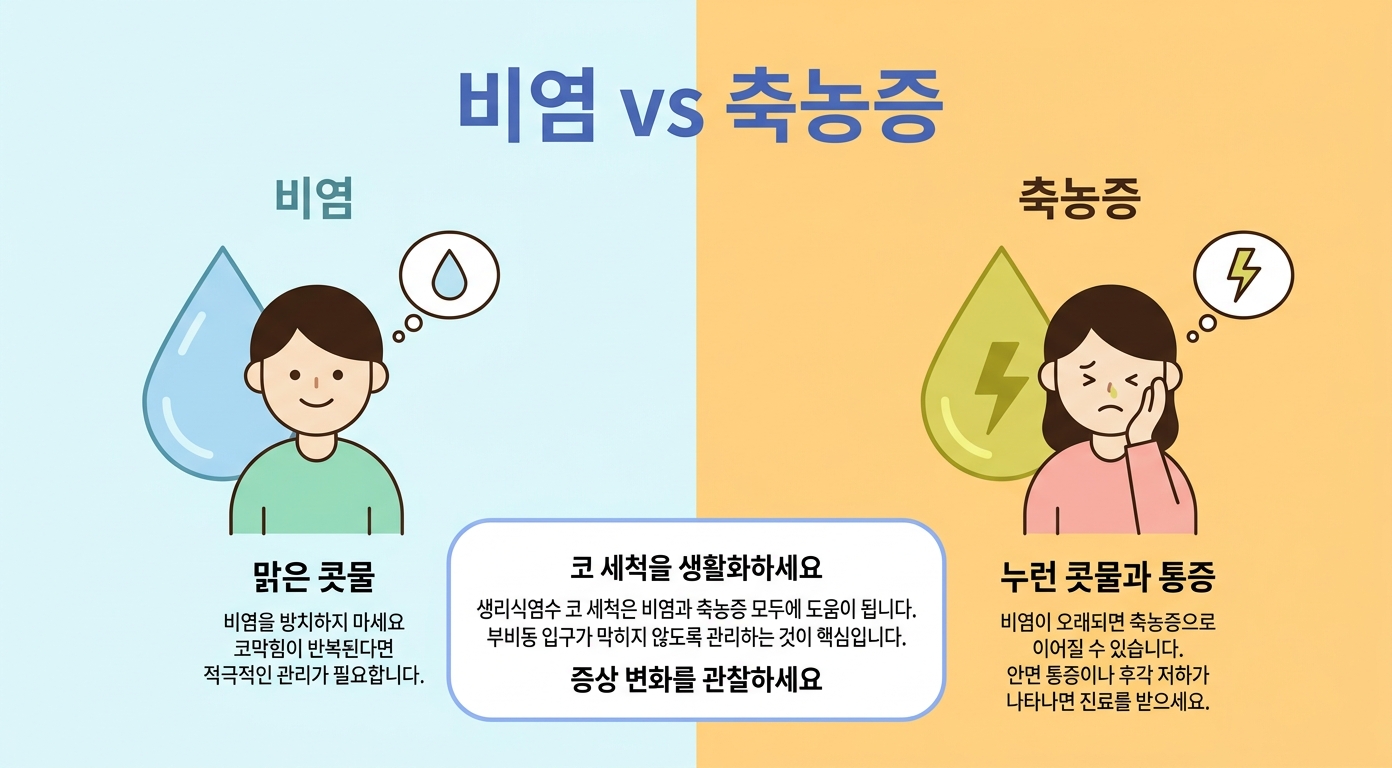 🔍 Key Distinction | Rhinitis vs. Sinusitis, What's the Difference?
Chronic rhinitis is a condition where inflammation occurs in the mucous membrane inside the nose.
It is mainly characterized by clear nasal discharge, sneezing, and nasal congestion.
Allergies, temperature changes, and dry environments are common causes.
Chronic sinusitis is a condition where inflammation occurs in the paranasal sinuses, the empty spaces next to the nose.
It is characterized by yellow or greenish nasal discharge, post-nasal drip, facial pain, and decreased sense of smell.
Bacterial infection after a cold or prolonged rhinitis are common causes.
| Category | Chronic Rhinitis | Chronic Sinusitis |
|---|---|---|
| Location of Inflammation | Nasal mucosa | Paranasal sinuses (empty spaces next to the nose) |
| Nasal Discharge Characteristics | Clear discharge, sneezing | Yellow discharge, post-nasal drip |
| Pain | Almost none | Forehead, around eyes, cheek pain |
| Change in Sense of Smell | Mild | Decreased sense of smell is common |
 🔗 Connection | Why Chronic Rhinitis Leads to Chronic Sinusitis
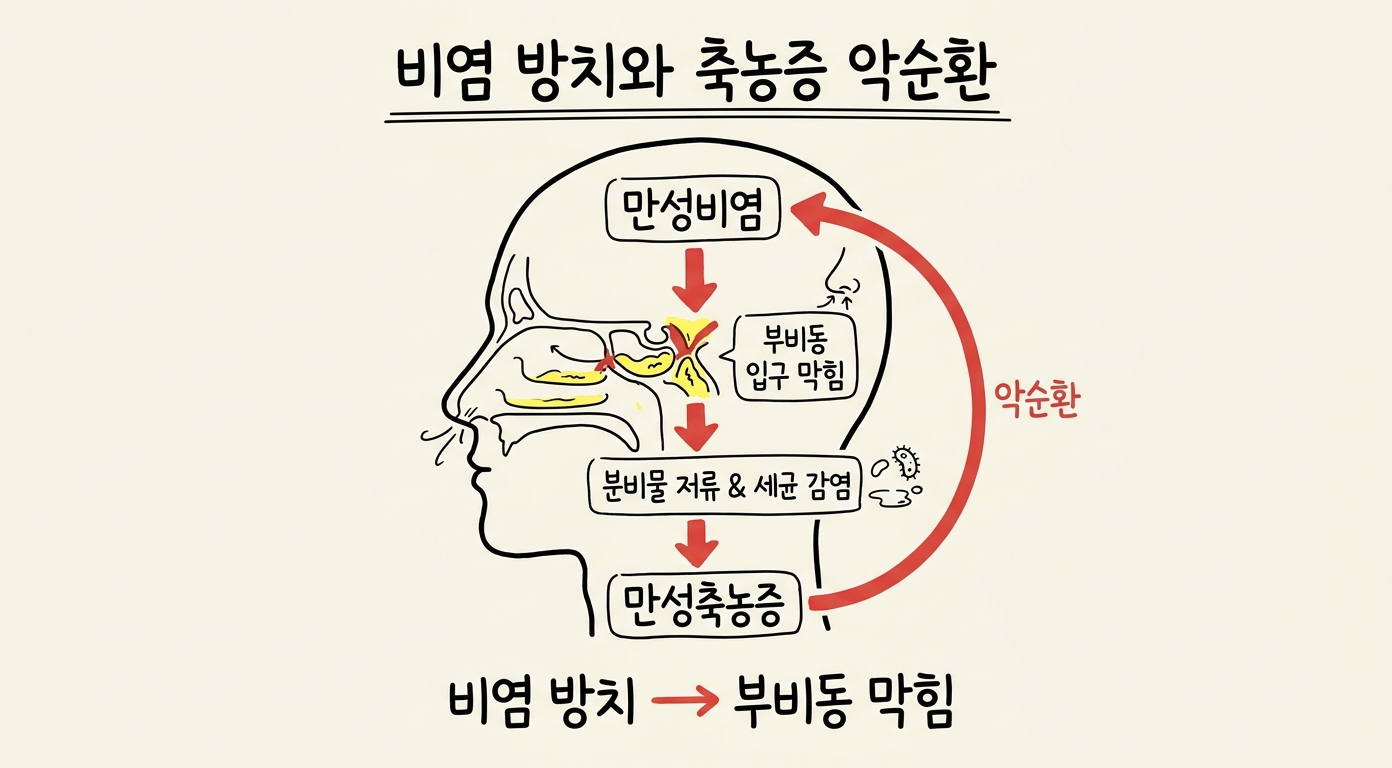
Problems develop when the nasal mucosa remains swollen for a long time.
This is because the narrow passage connecting the paranasal sinuses and the nose becomes blocked.
When this passage is blocked, secretions accumulate inside the paranasal sinuses.
Ventilation is poor and bacteria thrive in such an environment.
This is where sinusitis begins.
Chronic rhinitis → Blocked paranasal sinus opening → Secretion retention → Bacterial infection → Chronic sinusitis
So if rhinitis is left untreated, sinusitis develops,
and sinusitis further worsens rhinitis,
creating a vicious cycle.
⏰ Acute vs. Chronic | Time Matters
Acute Sinusitis
Duration of symptoms: Within 4 weeks
Usually occurs due to bacterial infection following a cold
Complete recovery is possible with appropriate treatment
Chronic Sinusitis
Duration of symptoms: 12 weeks or longer, or recurrent
Nasal mucosa function is already compromised
Nasal polyps may be present
Fundamental restoration of mucosa function is necessary
If nasal symptoms persist for more than 10 days after a cold, suspect acute sinusitis.
Missing this window of time can lead to progression to chronic sinusitis.
 ✅ Action | Manage It This Way
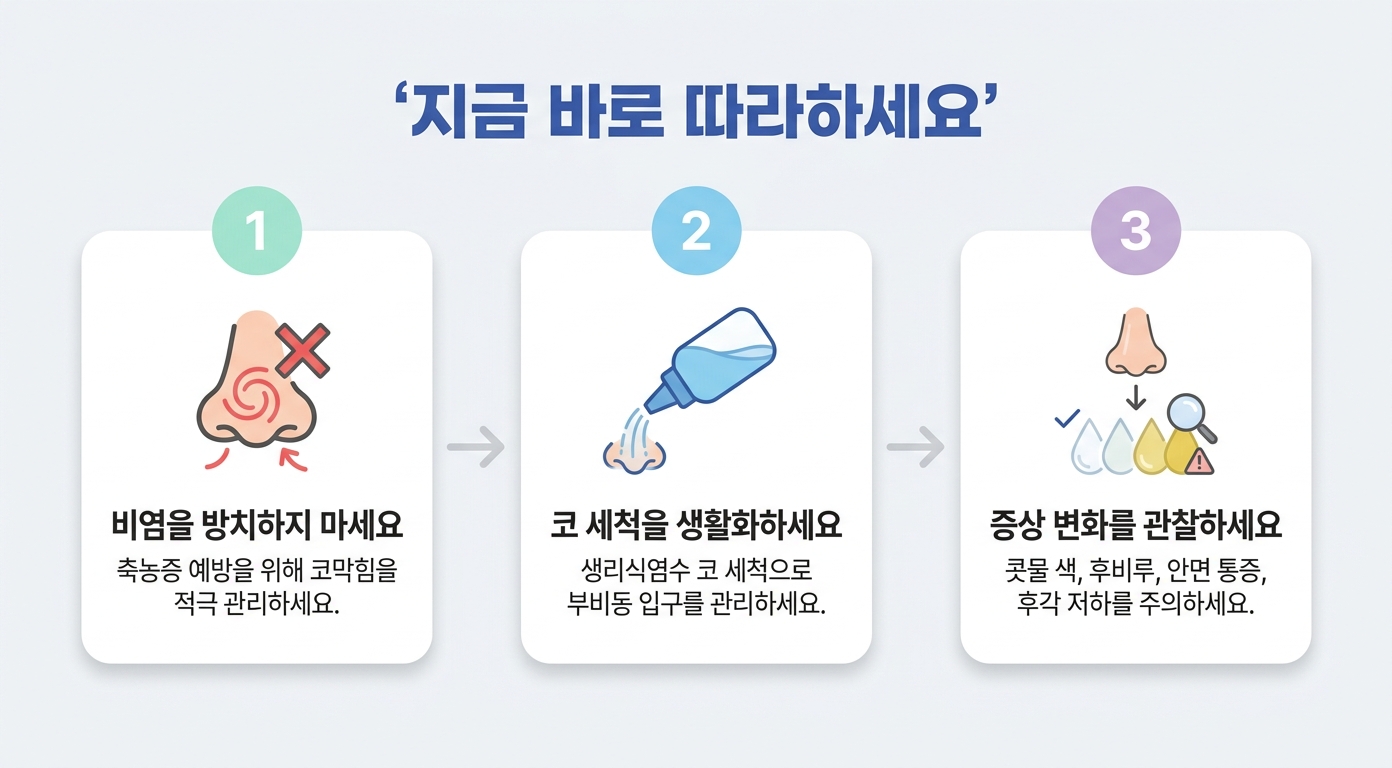
1️⃣ Don't neglect rhinitis
If rhinitis is left untreated for a long time, it can lead to sinusitis.
If nasal congestion repeats, active management is necessary.
2️⃣ Make nasal saline rinse a daily habit
Saline nasal rinse is beneficial for both rhinitis and sinusitis.
The key is to prevent the paranasal sinus opening from becoming blocked.
3️⃣ Observe symptom changes
Be careful if clear nasal discharge turns yellow or post-nasal drip worsens.
If facial pain or decreased sense of smell appears, seek medical consultation.
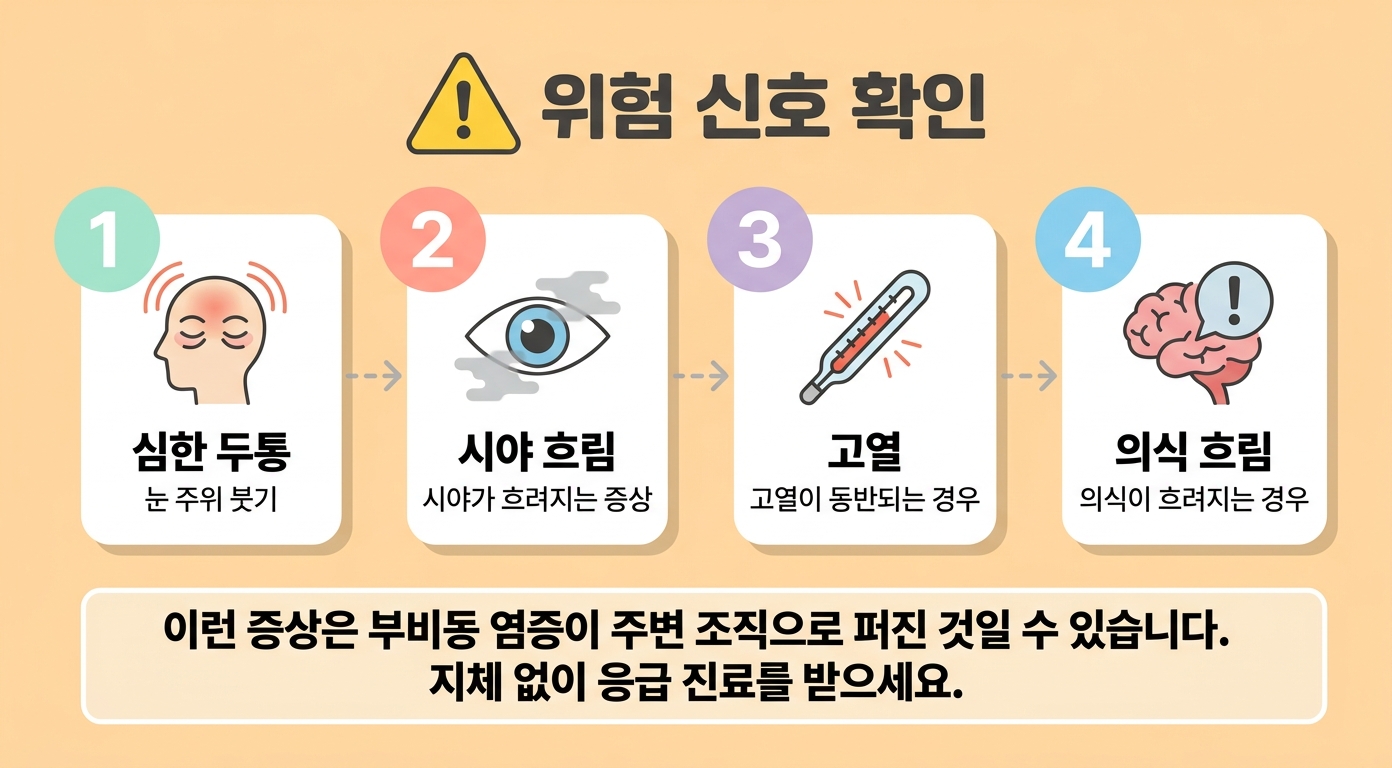 🚨 Warning | Seek Medical Care Immediately for These Symptoms
✔ Severe headache and swelling around the eyes
✔ Blurred vision
✔ High fever accompanying the condition
✔ Altered consciousness
These symptoms may indicate that paranasal sinus inflammation has spread to surrounding tissues.
Seek emergency medical care without delay.
📊 Proof | Clinical Case
I had a patient like this in my practice.
She was a woman in her 40s who had suffered from rhinitis for over 10 years.
At some point, her clear nasal discharge turned yellow.
She had trouble sleeping due to post-nasal drip running down her throat.
Her forehead felt heavy and her sense of smell declined.
The diagnosis showed that chronic rhinitis had progressed to chronic sinusitis.
Treatment involved two approaches.
Herbal medicine treatment to reduce nasal mucosal swelling and acupuncture treatment using cotton swabs with medication
opened the paranasal sinus opening.
Simultaneously, we performed treatment to drain the pus accumulated in the paranasal sinuses.
As a result of consistent treatment, her post-nasal drip decreased and her sense of smell returned.
Most importantly, her rhinitis symptoms improved as well, and she was very satisfied.
 🔚 Closing | Summary
Rhinitis and sinusitis look similar but are different conditions.
However, since they are connected, they need to be managed together.
If you have persistent nasal symptoms, don't make a judgment on your own.
Getting an accurate diagnosis and receiving appropriate treatment at the right time is important.
I hope you have a refreshing day with a clear, open nasal passage.
Dongjae-tang Korean Medicine Clinic will always be with you.
✍️ Reviewed by Director Choi Jang-hyeok, Dongjae-tang Korean Medicine Clinic
❓ FAQ
Q. If I have rhinitis, will sinusitis definitely develop?
It doesn't necessarily happen.
However, if rhinitis is left untreated for a long time, the risk of sinusitis increases.
Active management of rhinitis can prevent sinusitis.
Q. If sinusitis is cured, does rhinitis improve too?
After sinusitis treatment, rhinitis symptoms often improve.
This is because the two conditions affect each other.
Fundamental restoration of nasal mucosal function is important.
Q. How can I tell if I have rhinitis or sinusitis?
Look at the color of the nasal discharge and accompanying symptoms.
If clear nasal discharge with sneezing is the main symptom, rhinitis is likely.
If you have yellow nasal discharge with facial pain and decreased sense of smell, suspect sinusitis.
For an accurate diagnosis, it's best to consult with a medical professional.
📚 Reference Materials
[1] CDC (2020). "Sinusitis (Sinus Infection)"
[2] American Academy of Otolaryngology–Head and Neck Surgery (2015). "Clinical Practice Guideline: Adult Sinusitis"
[3] Korean Academy of Korean Medicine CPG (2021). "Korean Medicine Clinical Practice Guidelines for Rhinosinusitis"
[4] NIKOM (2019). "Latest Trends in Korean Medicine Treatment of Rhinitis and Sinusitis"
Head & Face
Thought It Was a Cold, But It's Been 3 Months? How to Distinguish Between Chronic and Acute Sinusitis
View Program