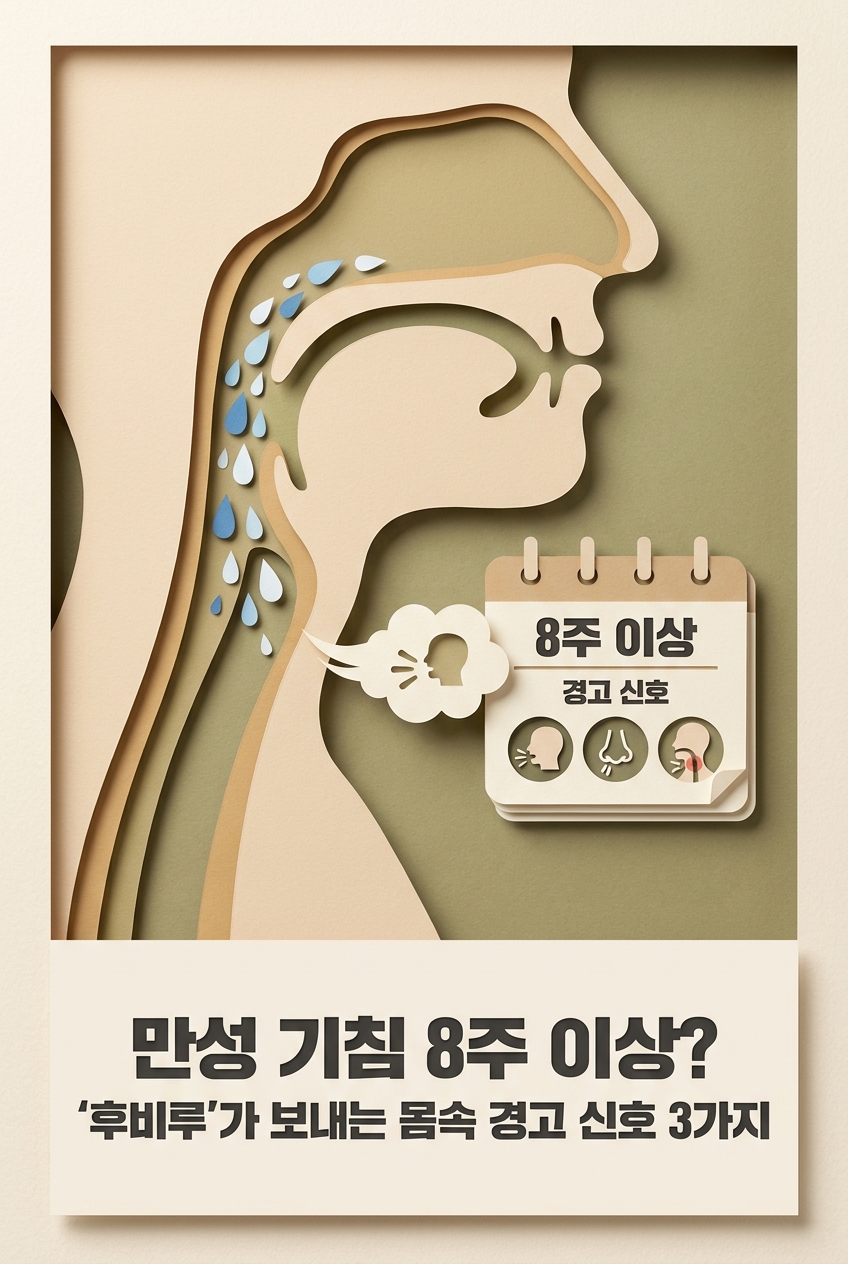
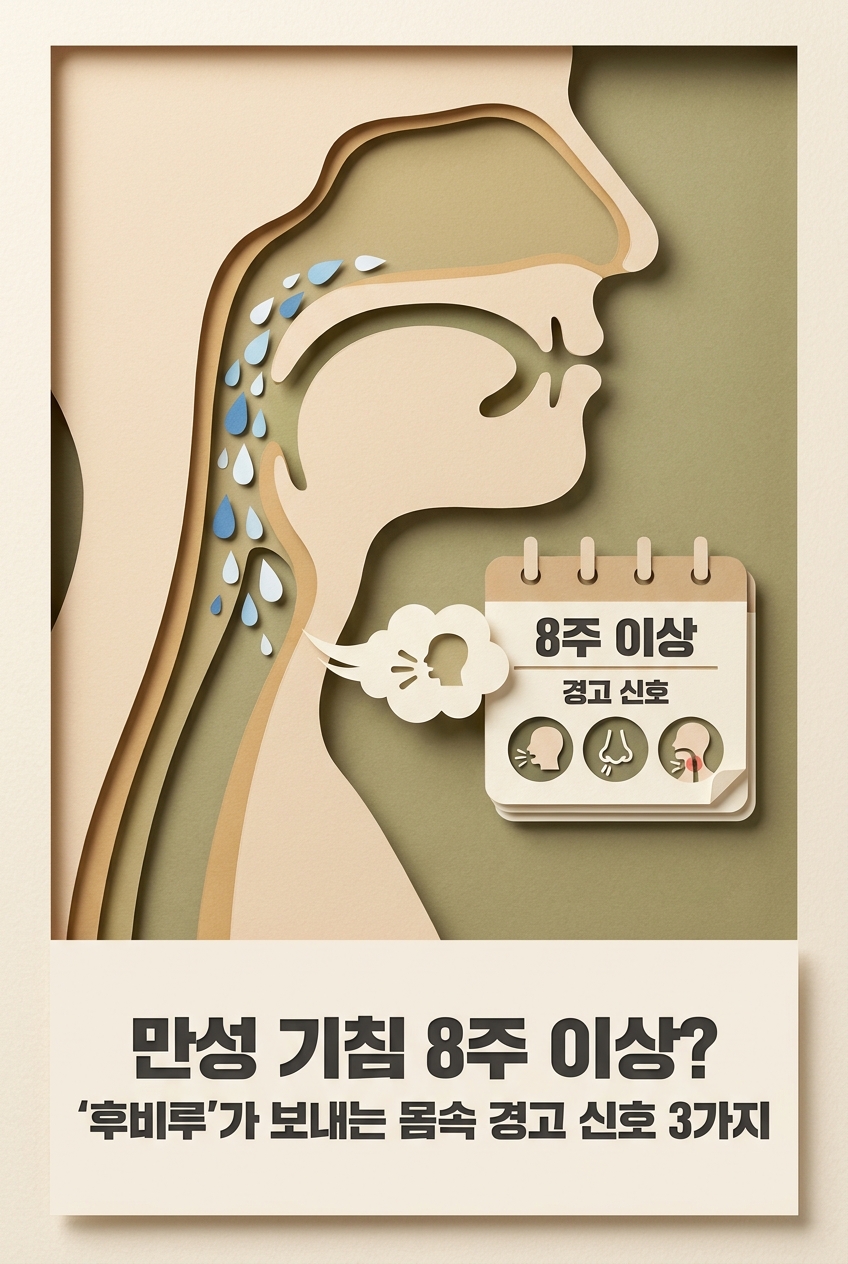
Chronic Cough Lasting 8 Weeks or More? 3 Warning Signals Your Body is Sending Through 'Postnasal Drip'

 📌 A relentless dry cough is a warning signal your body is sending.
Are you suffering from a dry cough that won't stop for weeks or months?
If you experience particularly severe coughing when lying down at night, or frequently feel a sensation of something stuck in your throat (throat discomfort), the cause is likely 'postnasal drip syndrome,' where nasal mucus or phlegm drips down the back of your throat.
Chronic cough is not simply an external irritation,
but rather a warning signal sent by internal phlegm-dampness and circulatory disturbances in your body.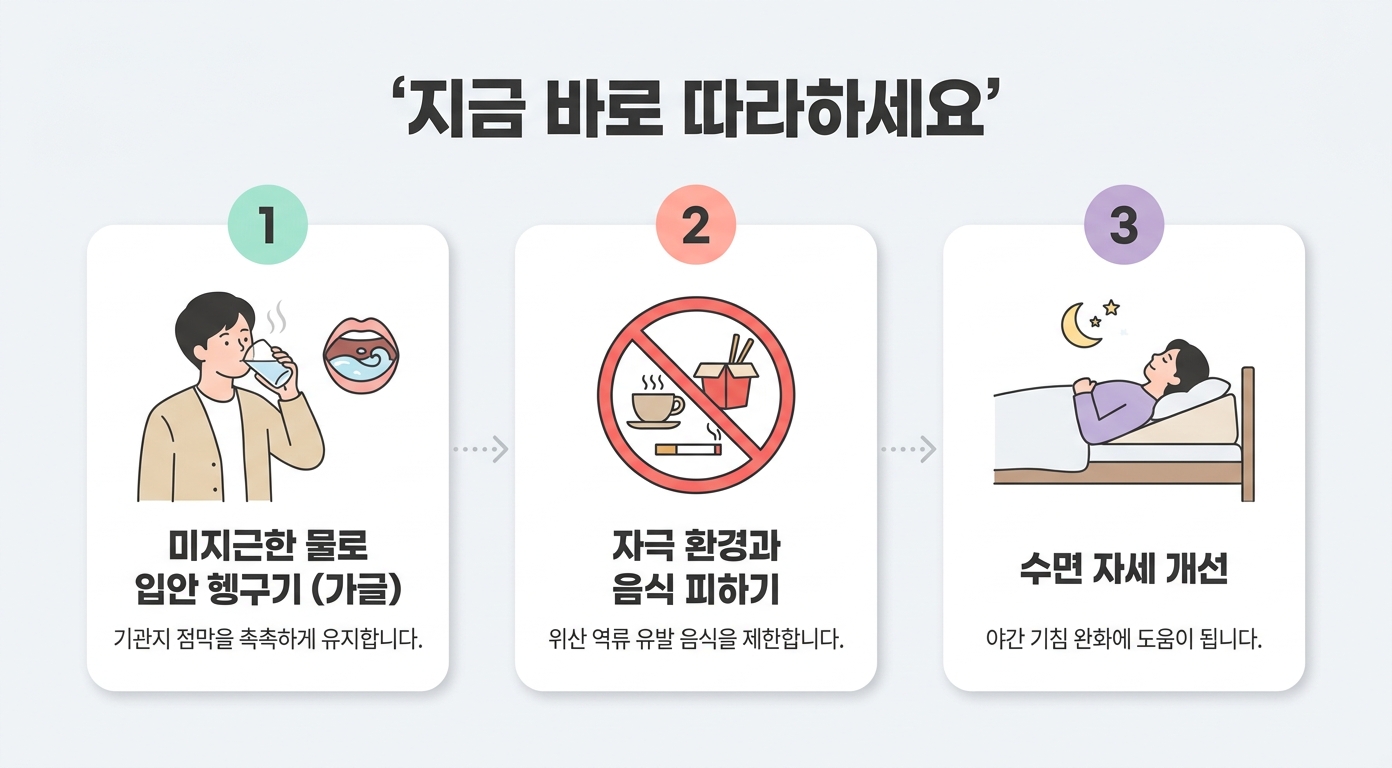 🏃 3 Habits to Start Today: 3 Actions to Reduce Chronic Cough
Managing chronic postnasal drip cough requires great attention to daily habits and environmental management.
You must reduce airway irritation through 3 specific lifestyle routines that you can start immediately.
① Gargling with lukewarm water
It is important to keep the bronchial mucous membrane moist
and to help discharge the secretions (nasal mucus/phlegm) that drip down by thinning them.
Drink lukewarm water frequently rather than hot water,
and gargle with lukewarm water after meals and whenever coughing is severe
to rinse away irritating substances.
② Avoiding irritating environments and foods (avoidance therapy)
Tobacco smoke is a risk factor for chronic bronchitis.
Avoid external irritants such as perfume, chemicals, and dust,
and in particular, strictly limit late-night snacks, alcohol, fatty foods, and coffee—
foods that can trigger acid reflux (GERD).
③ Maintaining psychological stability and improving sleep posture
Stress causes qi stagnation, leading to phlegm formation and chronic irritation.
When sleeping, use a pillow so that your upper body is slightly elevated to prevent acid reflux, which helps relieve nighttime coughing.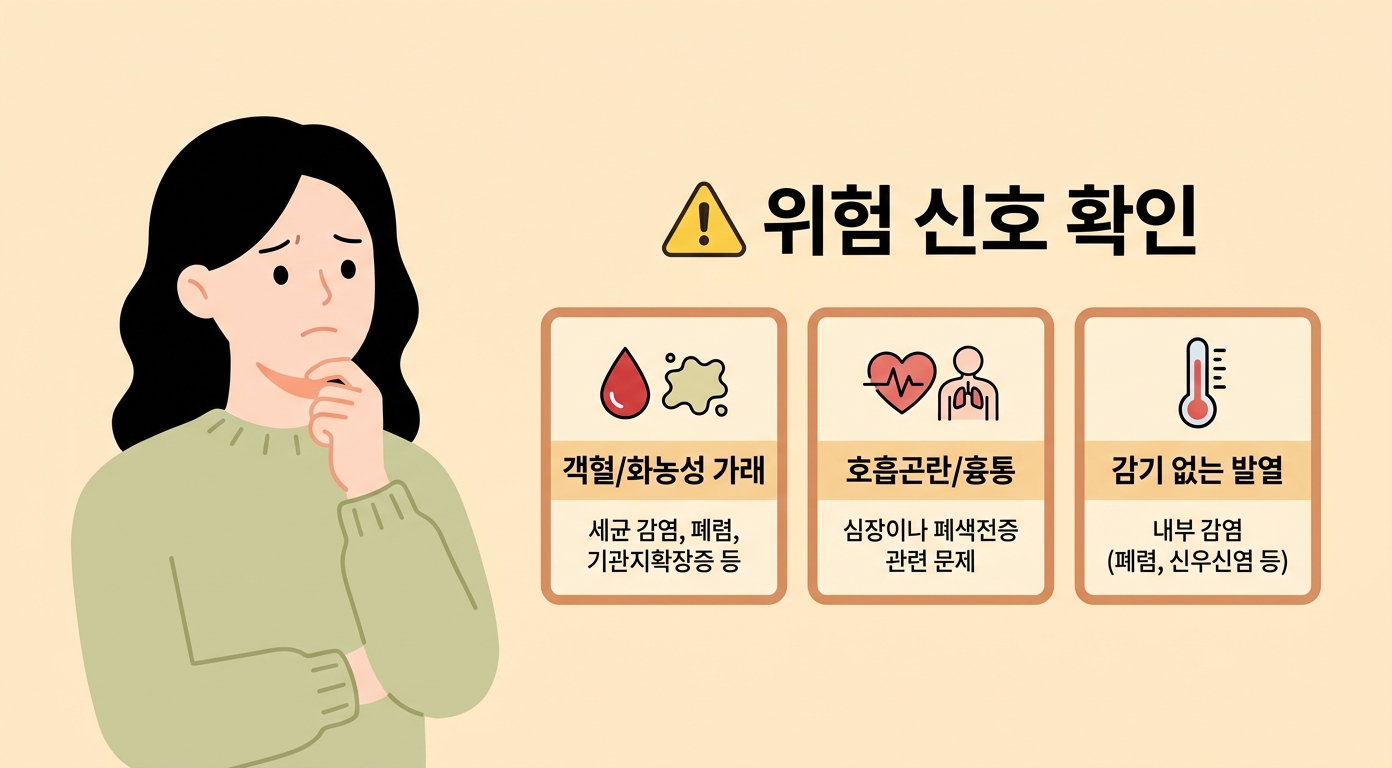 🚨 Danger Signs Requiring Immediate Medical Attention
If the following symptoms are present, the problem may not be simple postnasal drip,
and immediate medical evaluation with detailed diagnosis is necessary.
If the following symptoms are present, the problem may not be simple postnasal drip,
and immediate medical evaluation with detailed diagnosis is necessary.
| Danger Signs (Red Flag) | Suspected Conditions |
|---|---|
| Coughing up blood or yellowish or greenish purulent sputum | Signs of serious inflammatory diseases such as bacterial infection, pneumonia, or bronchiectasis |
| Dyspnea and chest pain, syncope from coughing | Cardiac or pulmonary embolism-related issues |
| Persistent fever and chills without initial cold symptoms | Internal infection (pneumonia, pyelonephritis, etc.) |
 🧐 Traditional Korean Medicine Perspective on Postnasal Drip and Chronic Cough
In traditional Korean medicine, cough is viewed as an abnormality of lung function,
and chronic cough lasting 8 weeks or longer
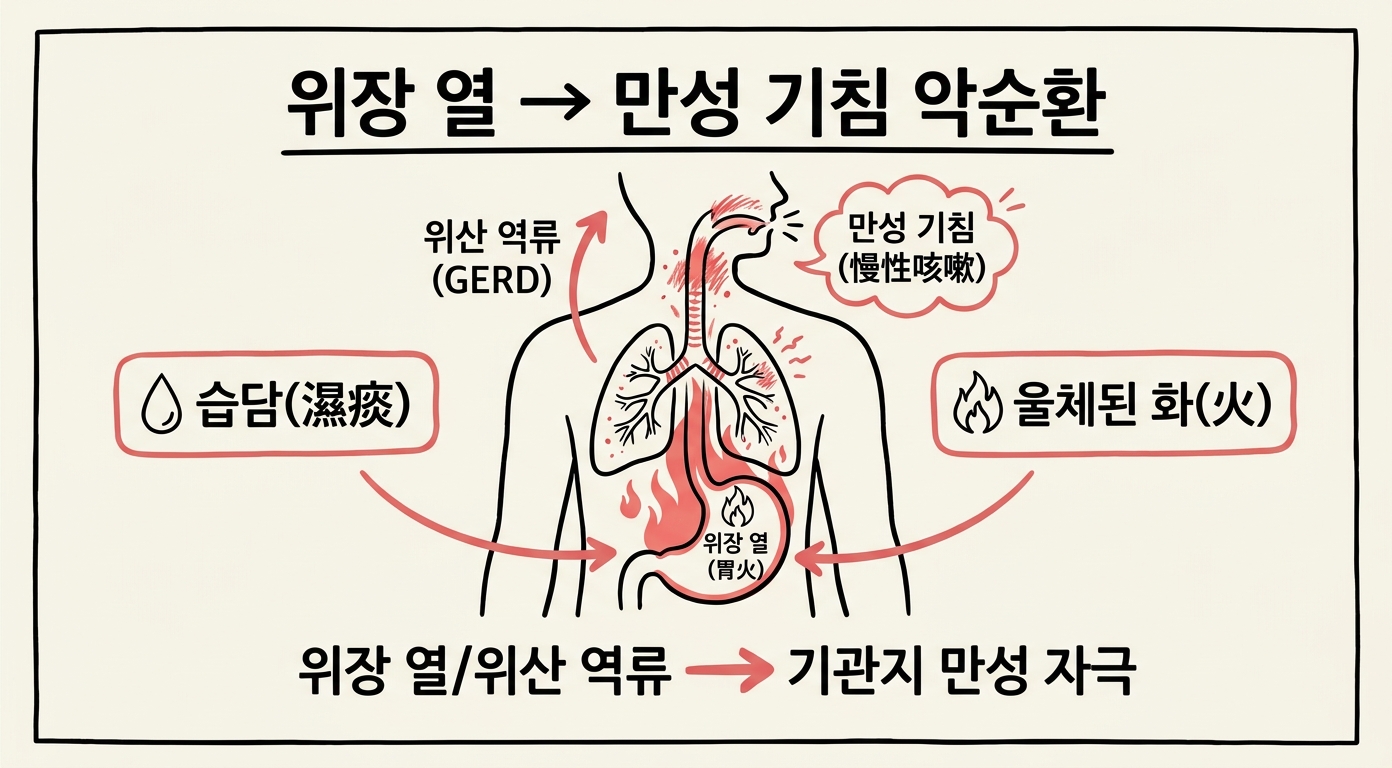
often occurs when internal phlegm-dampness becomes stagnant in the lungs.
Phlegm-dampness and retained fluids: Postnasal drip is a symptom where sticky phlegm or clear nasal mucus drips down the back of the throat, which means there is an accumulation of unnecessary fluids (retained fluids) in the body.
Stagnant heat and vicious cycles: Chronic stress and poor dietary habits accumulate heat in the stomach and liver, and this heat rises upward to dry the pharynx and trigger coughing.
Furthermore, chronic coughing itself increases abdominal pressure, triggering acid reflux (GERD) and causing esophageal inflammation (esophagitis), creating a vicious cycle that prolongs coughing.
💡 Real Clinical Case: Internal Problems Must Be Addressed Together
In clinical practice, patients presenting with chronic coughing or throat foreign body sensation often have accompanying internal issues such as cardiac weakness, esophagitis, and functional gastrointestinal disorders.
Indeed, there have been cases where patients presenting with chronic cough showed ischemic changes around the heart and esophagitis.
This patient experienced psychological anxiety from workplace changes and existing cardiac issues acting in combination, leading to complaints of nausea, dizziness, and headaches.
Treating only the cough was insufficient, and fundamental improvement required treatment addressing internal phlegm removal and circulatory improvement.
 🙏 Correcting Your Body's Imbalance Must Come First
Chronic postnasal drip cough is a warning signal sent by your body's immune and autonomic nervous systems.
Do not rely solely on symptomatic treatment to suppress coughing;
correcting the imbalance within your body through lifestyle habit improvements
is the wisest way to prevent recurrence.
Consistent management is the path to freedom from chronic suffering.
✍️ Reviewed by Director Choi Jang-hyeok, Dongjjedang Korean Medicine Clinic
Head & Face
Chronic Cough Lasting 8 Weeks or More? 3 Warning Signals Your Body is Sending Through 'Postnasal Drip'
View Program