"Every night my throat tightens and I'm afraid to fall asleep" | Sleep panic disorder in a 40s working mom
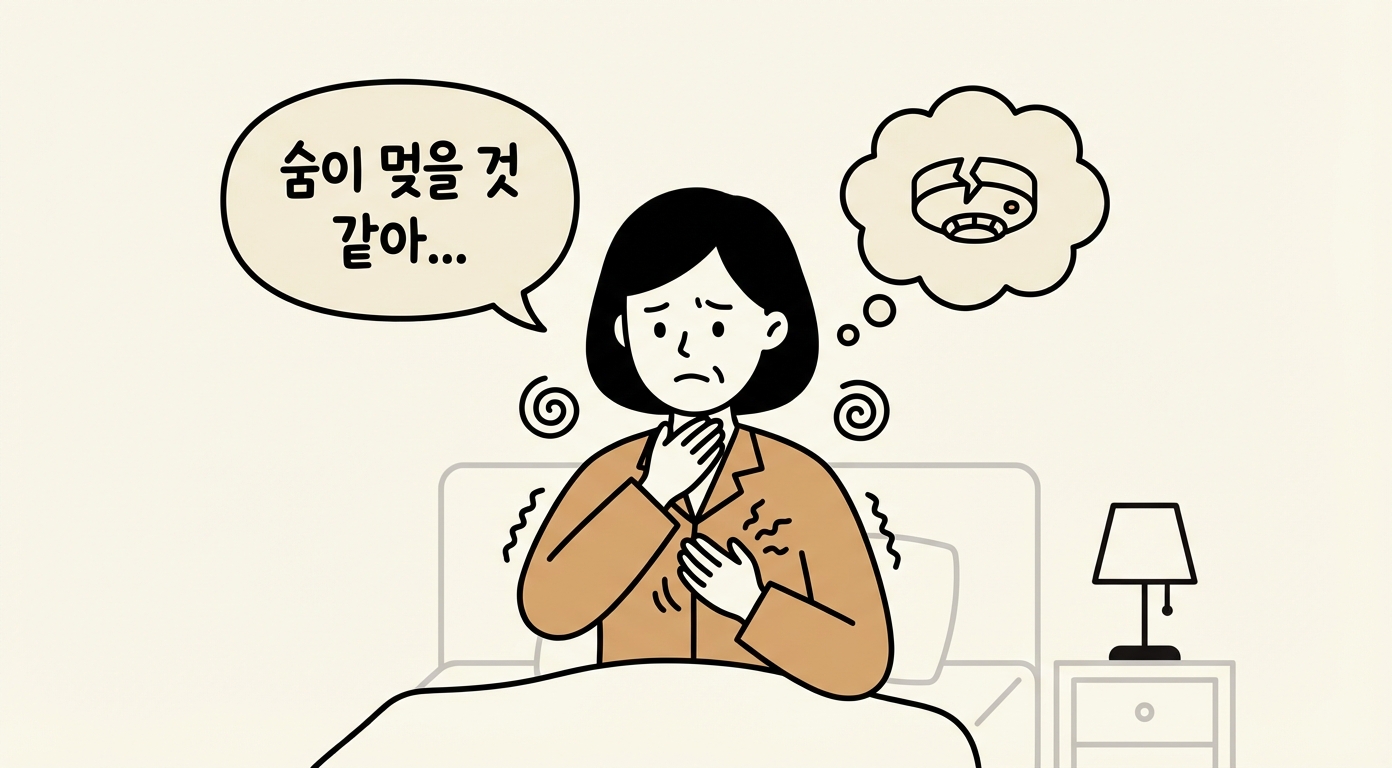
"When I lie down to sleep, it feels like someone is squeezing my throat, and right before I fall asleep, it feels like my breathing will stop — I bolt upright every time. Every night is terrifying."
These were the words of Ji-yeon (pseudonym), a working mom in her 40s, when she first walked through my clinic door.
Her face was deeply etched with exhaustion from prolonged sleep deprivation, and it was clear she had come to dread the night itself.
Having run nonstop while juggling work and childcare, Ji-yeon began suffering from sudden episodes of breathlessness that started one night seemingly out of nowhere.
At first, fearing something seriously wrong with her heart or lungs, she went from ENT specialists to cardiologists, undergoing test after test.
Many were the nights she sat in silent dread, alone, agonizing over whether she should go to the emergency room.
But every time, the answer was the same: no structural abnormalities found. Lost in helpless confusion, her symptoms only grew worse by the day.
Unable to sleep, fatigue accumulated — and the worse the fatigue, the worse the next night's symptoms. A relentless vicious cycle.
It felt like a room full of choking smoke with no visible flames — no physical damage, yet body and mind were registering extreme emergency.
Every time I hear such a story, I am deeply moved by the sense of helplessness and loneliness it conveys.
To be honest, it always saddens me that patients' suffering is so often dismissed as mere "nerves" simply because test results come back normal.
I did not see Ji-yeon's symptoms as simple insomnia or temporary stress.
So why does such suffocating fear come in the very hours that should be the most peaceful — the night?
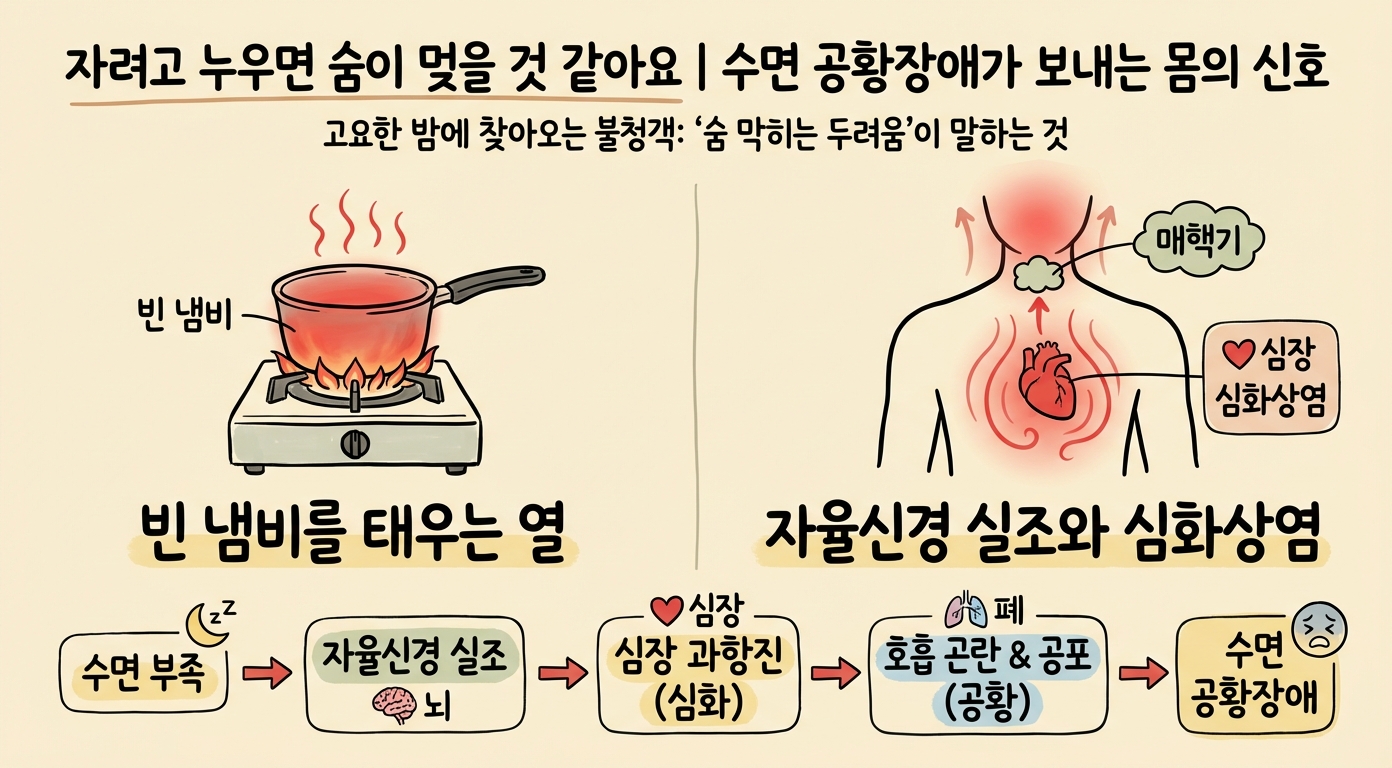 An Empty Pot on the Stove and a Broken Alarm: The Revolt of the Autonomic Nervous System
Ji-yeon's body, pushed to extreme tension throughout the day shouldering the weight of work and parenting, was utterly unable to unwind even at night — leading to the state Korean medicine calls 심화상염 (心火上炎) (a condition in which heat from the heart, fueled by stress and fatigue, surges upward toward the head and chest).
Like a pot left empty on a lit stove forgotten to be turned off, the fiery heat generated by the day's overexertion and tension cannot subside and surges upward.
As this rising heat scorches the fluid surrounding the throat, it creates the sensation of something stuck in the throat that can neither be swallowed nor expelled — the condition known as 매핵기 (梅核氣) (a stress-related sensation of a foreign body in the throat), which constricts the airway.
From the perspective of modern Western medicine, this phenomenon is explained as autonomic nervous system dysregulation (自律神經失調) — a breakdown in the balance between the sympathetic and parasympathetic nervous systems, resulting in loss of the body's regulatory capacity.
During sleep — the time the body most needs rest — instead of the parasympathetic system promoting relaxation, the sympathetic nervous system runs wild as though responding to a crisis, paradoxically putting the body on high alert for survival.
This is no different from a broken fire alarm blaring in a completely safe and quiet room.
The heat of an empty pot boiling on the stove and the dysregulated autonomic nervous system feed each other in a continuous negative loop, dragging Ji-yeon ever deeper into an inescapable swamp of anxiety.
How Can We Loosen the Taut String of the Mind?
Then is there truly no way out of this suffocating, self-imposed dread?
To calm the symptoms and reclaim peaceful nights, it is essential above all to gently release the tightly knotted energy in the chest through the everyday practice of 소간해울 (疏肝解鬱) — the treatment principle of promoting the free flow of the liver's qi to relieve stress and tension.
Ji-yeon's daily life was like a tightly stretched instrument string, pulled so taut it seemed ready to snap at any moment.
Just as a taut string snaps when plucked too hard, forcing sleep when none will come only stimulates the sympathetic nervous system, amplifying anxiety.
Rather than lying in bed straining, it is better to dim the bedroom lights very low and listen to gentle music, or to do a warm foot soak before bed.
Warming the feet gently draws the heat that has pooled in the head and chest downward — a process that greatly helps relieve the vague dread that precedes sleep.
Taking slow, deep abdominal breaths during the day to release tension in the chest muscles is also an excellent way to unwind.
However, please take note of one important caution:
If this sensation of breathlessness or chest tightness occurs during the day regardless of sleep, or if it radiates to the jaw or left arm and is accompanied by cold sweats, this may not be an autonomic nervous system issue but a genuine cardiovascular emergency — seek a specialist or emergency medical care without delay.
 The Journey of Recovery: Toward Nights That Are Once Again a Place of Rest
Treatment for sleep panic disorder must not be a superficial fix that simply suppresses the brain's sensations with sleeping pills or tranquilizers.
It must be a careful, integrative process of thoroughly examining the body's disrupted environment and restoring it to its original state of calm.
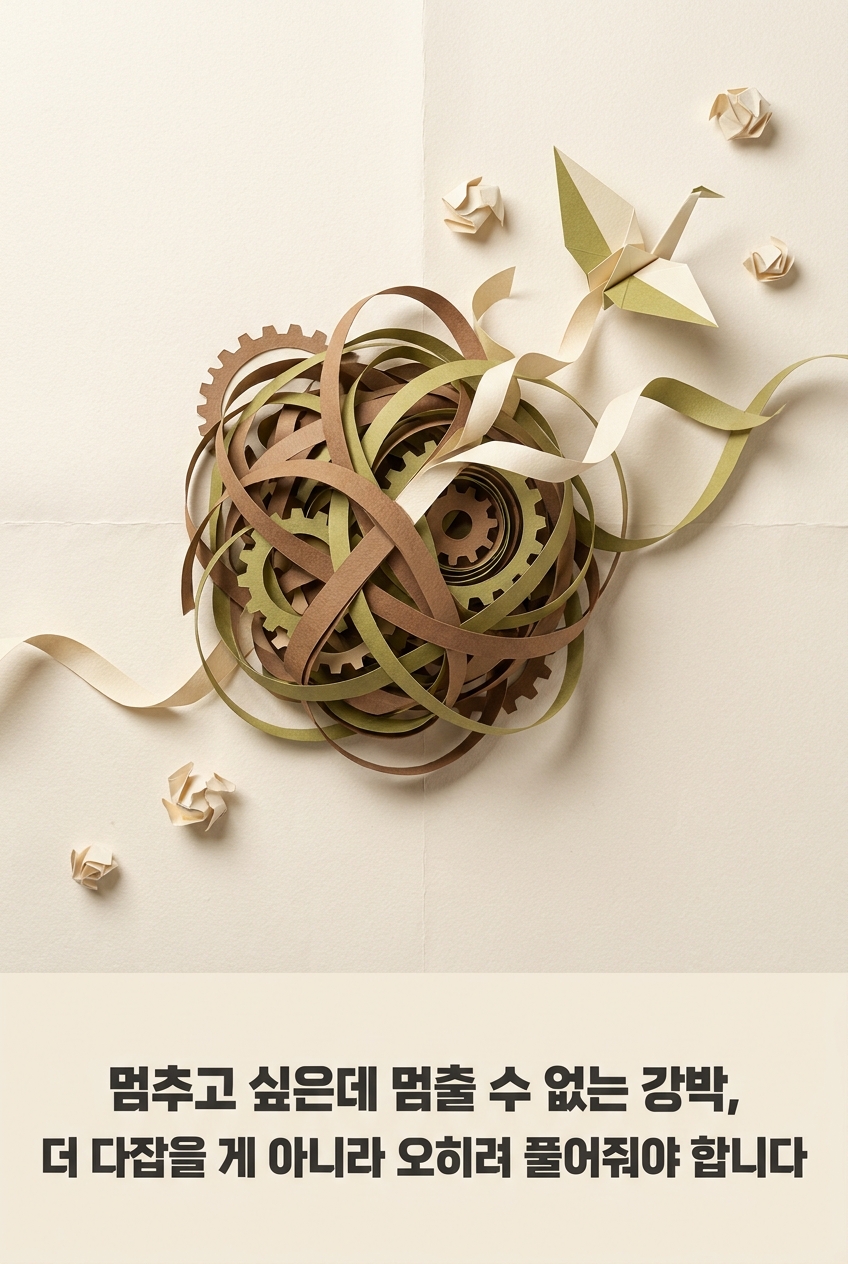
Korean medicine treatment is like the process of carefully finding and loosening the first knot in a tangled skein of thread — not cutting out and treating a single organ in isolation, but helping the entire body of patients like Ji-yeon function harmoniously again by cooling the heart's heat and releasing the liver's tension.
Please listen quietly to what your body is telling you through these signals of anxiety and pain.
Your body is not broken or malfunctioning — it is simply working far too hard, straining under the weight of an overwhelming daily life to protect itself.
With the right, careful guidance, your body possesses a remarkable capacity for self-healing, and you can once again greet peaceful nights.
My role is simply to be a steadfast companion, searching alongside you for the key to that recovery.
Please do not silently endure the pain of those dark and frightening nights alone.
Even if not with me — I sincerely hope you will find a healthcare provider who truly empathizes with your suffering and attends with care to the most subtle imbalances of your body as a whole, so that you may reclaim a healthy, tranquil daily life.
Reviewed by Director Jang-Hyuk Choi, Dongjedang Korean Medicine Clinic
Mental Health
"Every night my throat tightens and I'm afraid to fall asleep" | Sleep panic disorder in a 40s working mom
View Program