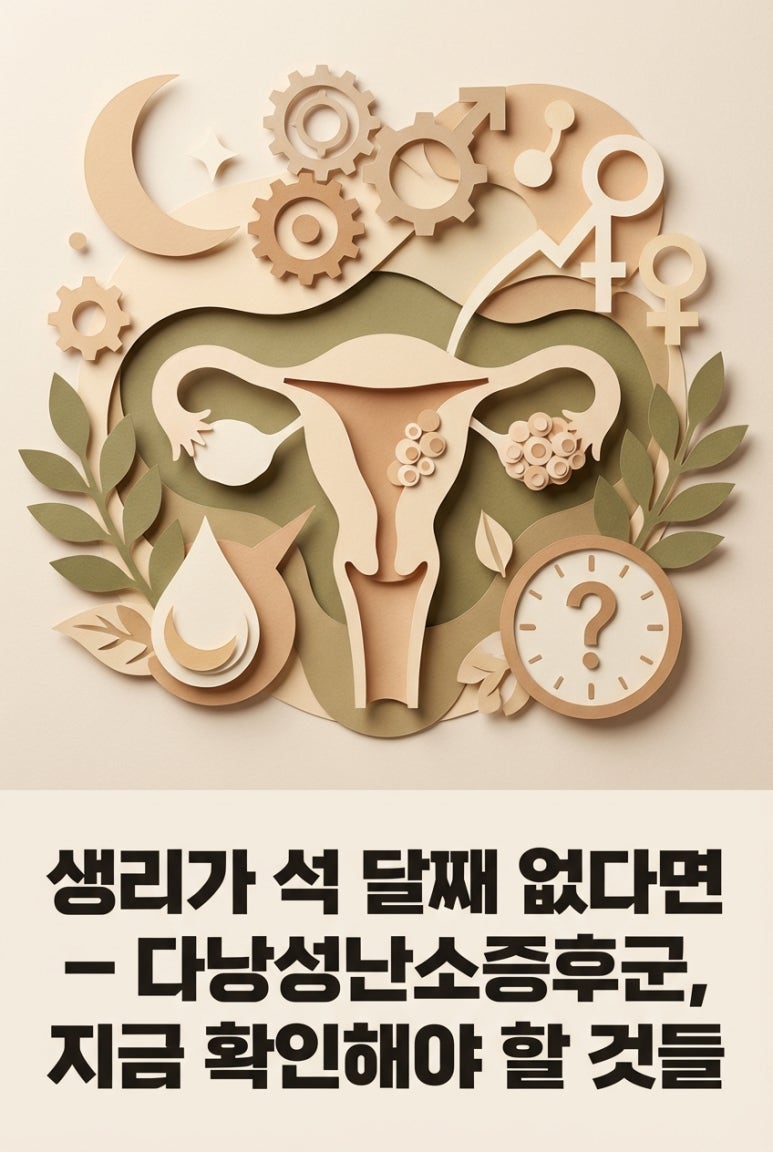
No Period for Three Months? — Polycystic Ovary Syndrome, What You Need to Check Now
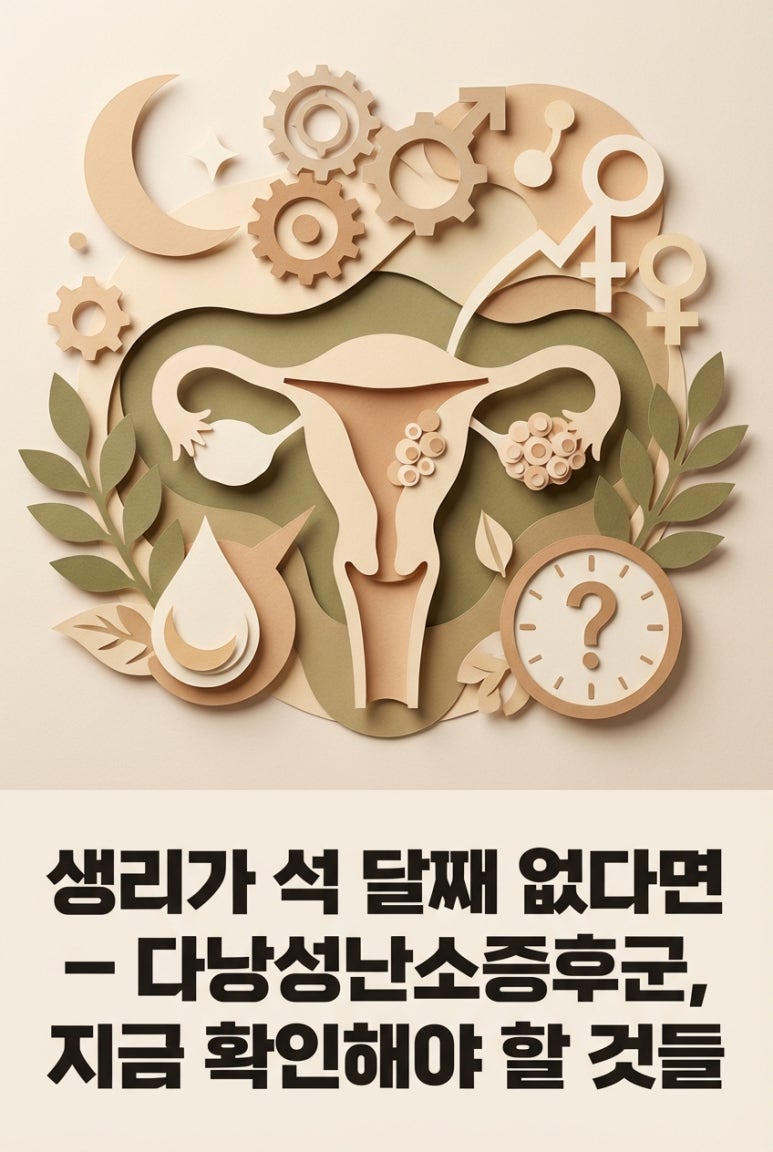 🧾 Answer First | Key Conclusion
Your period doesn't come even after the expected date.
One month, two months — before you know it, three months have passed.
Looking in the mirror, acne starts appearing along your jawline, and your pants feel tighter around the waist.
If you've thought, "Could I have polycystic ovary syndrome too?" — please read this article to the end.
Polycystic ovary syndrome is a very common hormonal disorder that affects 1 in 10 women of reproductive age[1].
And many people find their menstrual cycle returns simply by changing their lifestyle habits.
The 3 things I'm about to share can be started this evening.
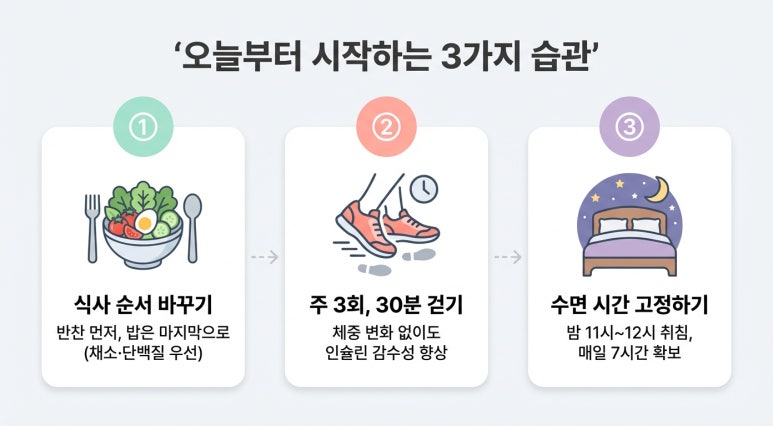 ✅ Action | Immediate Practice
1️⃣ Change Your Eating Order — Side Dishes First, Rice Last
Insulin resistance is confirmed in 50-75% of polycystic ovary syndrome patients[2].
When insulin is high, the ovaries produce excessive male hormones, which blocks ovulation.
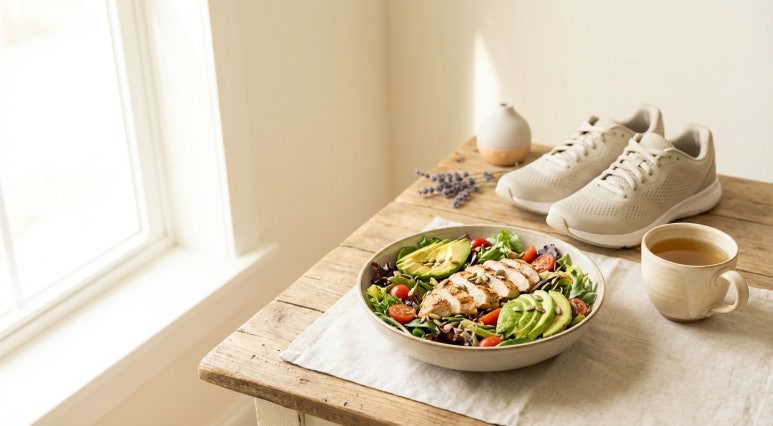
When eating, consume vegetables and protein first, and have rice last.
Research shows this alone can reduce post-meal blood sugar spikes by over 30%.
Brown rice instead of white rice, sweet potato instead of bread — these are choices you can make without great willpower.
2️⃣ Walk for 30 Minutes, Three Times a Week
The type doesn't matter.
Walking, cycling, swimming — anything works.
The 2023 International PCOS Guideline also recommends 150-300 minutes per week of moderate-intensity aerobic activity[1].
What's important is that exercise itself improves insulin sensitivity even without weight loss.
Don't give up just because you're not losing weight.
There are definitely cases where metabolic markers improve without weight change[1].
3️⃣ Fix Your Sleep Schedule
Go to bed between 11 PM and 12 AM and secure 7 hours of sleep.
Insufficient sleep raises cortisol (stress hormone), which worsens insulin resistance as a result.
Sleeping and waking at the same time every day — it's simple, but I've seen many patients in my clinical practice whose cycles stabilize from this alone.
Set an additional alarm on your phone as a 'bedtime alarm'.
Try these three things consistently for 2-3 months, and if there's no change, you should identify the cause with a professional.
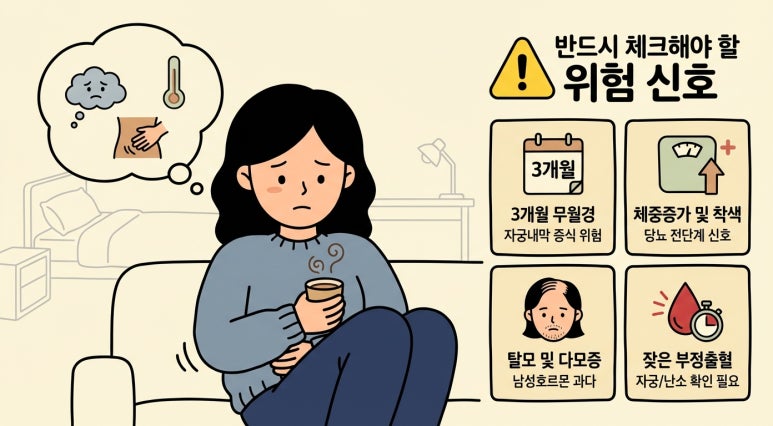 🚨 Warning | Red Flags You Must Check
If any of the following apply, don't delay.
✔ No period for more than 3 months
If amenorrhea lasts long, the uterine lining fails to shed and continues to thicken.
The risk of endometrial hyperplasia and even endometrial cancer increases[3].
Don't brush it off saying "my period has always been irregular."
✔ Weight gain of 5kg or more in a short period with darkening at the back of the neck and armpits
Skin darkening is called acanthosis nigricans.
It's your body's signal that insulin resistance has worsened, directly linked to prediabetes[2].
✔ Hair thinning on the crown while thick hair grows on face, abdomen, and thighs
This means excess androgens (male hormones) are progressing.
If hair loss and excessive hair growth occur simultaneously, hurry to get hormone testing.
✔ Abnormal bleeding (not period) occurring more than twice a month repeatedly
It may not be simple menstrual irregularity.
The status of the uterine lining and ovaries should be confirmed by ultrasound.
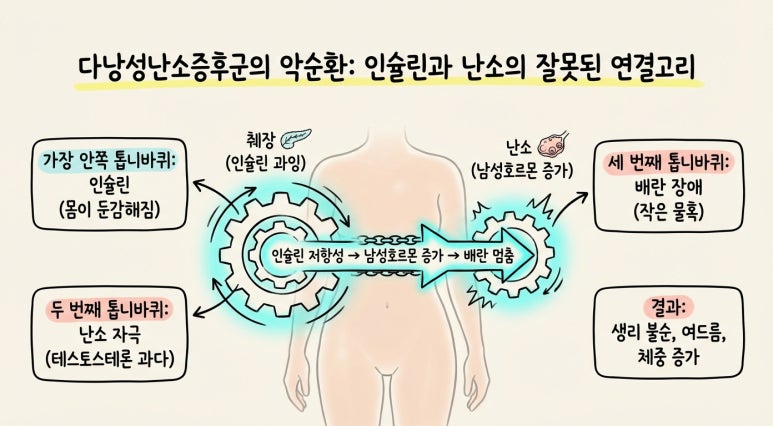 🧠 The Why | Understanding the Cause
Polycystic ovary syndrome is not caused by one single factor, but rather multiple gears working together.
The innermost gear is insulin.
When the body becomes insensitive to insulin, the pancreas thinks "I need to produce more" and excessively secretes insulin.
The second gear starts turning.
Excess insulin stimulates the ovaries to produce testosterone (male hormone) more than necessary.
The third gear — when male hormone levels rise, follicles fail to grow properly.
Multiple follicles enlarge simultaneously but none reach ovulation and they stop.
This is why multiple small cysts appear in a line on ultrasound.
Since ovulation doesn't occur, progesterone isn't secreted, and periods become delayed or stop.
Acne, excessive hair growth, hair loss, weight gain — all are results of this gear chain reaction.
The core pathophysiology is the vicious cycle of insulin resistance → high androgens → chronic anovulation.
The 2023 International PCOS Guideline recognizes insulin resistance as a key characteristic, yet notes that current clinical tools to accurately measure it are lacking[1].
Diagnosis is made with 2 or more of the following: menstrual abnormality + excess male hormone + ultrasound findings (or AMH).
In Korean medicine, this condition is understood as 'phlegm-dampness' and 'blood stasis' blocking qi and blood circulation to the uterus and ovaries.
Reduced function of the digestive system leads to accumulation of phlegm-dampness, and stagnation of lower abdominal blood circulation causes the ovaries to lose their function.
In a multi-center retrospective study of 4 Korean medicine university hospitals, the most commonly used prescriptions for PCOS patients were Jogyeong-san, Gami-gwibee-tang, and Changbu-doddam-tang[4].
The core of treatment is clearing phlegm-dampness, resolving blood stasis, and restoring qi and blood flow.
📊 Proof | Cases and Evidence
According to the 2023 International Guideline, ovulation recovery begins when overweight PCOS patients lose just 5% of their body weight[1].
There are also reports that reducing weight by 2-5% improves hyperandrogenic symptoms (acne, excessive hair growth)[2].
Lifestyle modification is recommended as first-line treatment for all PCOS patients because it improves metabolic health and quality of life even without weight loss[1].
This is the story of a 29-year-old office worker I met in my clinic.
She had irregular periods for over 2 years and was only taking birth control pills after a PCOS diagnosis at an obstetric clinic.
Ultrasound showed 12 or more small follicles in both ovaries, with BMI 27 and waist circumference 86cm.
After body constitution assessment, I prescribed herbal medicine to eliminate phlegm-dampness, and we started 20-minute walks after lunch and corrected evening meal eating order together.
After 6 weeks, her natural period returned.
By the 4th month, her cycle stabilized to 33-36 days, and she lost 3.2kg.
Her jawline acne decreased noticeably, which made her happiest.
 🔚 Closing | Summary and Encouragement
Polycystic ovary syndrome is not scary.
But if left untreated, problems grow.
Changing eating order, walking 3 times a week, fixing sleep time — start these three things today.
In 2-3 months, your body's response may be different.
If self-management is difficult or you notice the warning signs mentioned above — feel free to get a consultation that examines your body constitution and lifestyle habits together.
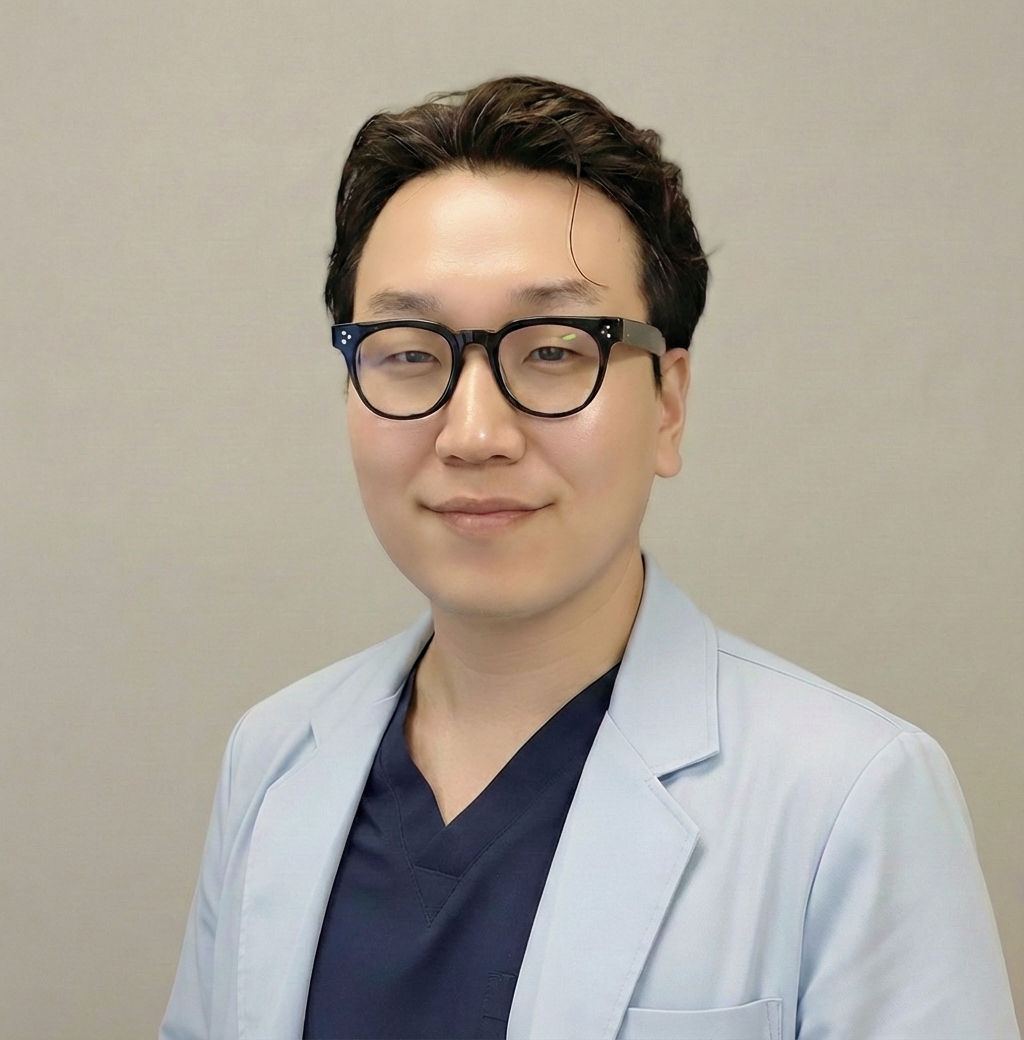
✍️ Reviewed by Director Choi Jang-hyeok, Dongjjedang Korean Medicine Clinic
❓ FAQ
Q. If I have polycystic ovary syndrome, do I have to take birth control pills for life?
No.
Birth control pills artificially regulate your cycle and suppress male hormones,
but many people become irregular again when stopping.
Because it doesn't address the root cause: insulin resistance.
There are people whose cycles stabilize without birth control pills when natural ovulation is restored through lifestyle modification or herbal medicine treatment.
Consult with your healthcare provider and make a plan suited to your situation.
Q. Can I have polycystic ovary syndrome even if I'm thin?
Yes, you can.
Not all PCOS patients are obese.
Thin-bodied people can also have insulin resistance, and symptoms can appear from hormonal imbalance alone.
You can't be assured just because your weight is in the normal range; if menstrual irregularity persists, it's good to get tested.
Q. Is it true that inositol (supplements) helps?
Myo-inositol is a substance that aids insulin signal transmission and is the most researched supplement for PCOS.
There is data suggesting it can help supplementarily with ovulation recovery and insulin sensitivity improvement.
However, PCOS cannot be solved by supplement alone.
First establish diet, exercise, and sleep, then use supplements as an auxiliary tool.
I also recommend checking your vitamin D levels.
📚 References
[Western Medicine (WM)]
[1] Teede HJ et al. (2023). "Recommendations From the 2023 International Evidence-based Guideline for the Assessment and Management of PCOS." J Clin Endocrinol Metab. 108(10):2447-2469
[2] Gangnam CHA Hospital Polycystic Ovary Syndrome Clinic. "Polycystic Ovary Syndrome — Diagnosis and Treatment" (gangnam.chamc.co.kr)
[3] Seoul Asan Hospital Disease Encyclopedia. "Polycystic Ovary Syndrome" (amc.seoul.kr)
[Korean Medicine (KM)]
[4] Kim JH et al. (2021). "Prescription patterns of herbal medicine for polycystic ovarian syndrome in major Korean medicine hospitals: a multicenter retrospective study." Clin Exp Obstet Gynecol. 48(3):537-544
[5] Park JJ et al. (2017). "Successful treatment with Korean herbal medicine and lifestyle management in an obese woman with polycystic ovarian syndrome." Integr Med Res. 7(2):188-193
Women's Health
No Period for Three Months? — Polycystic Ovary Syndrome, What You Need to Check Now
View Program