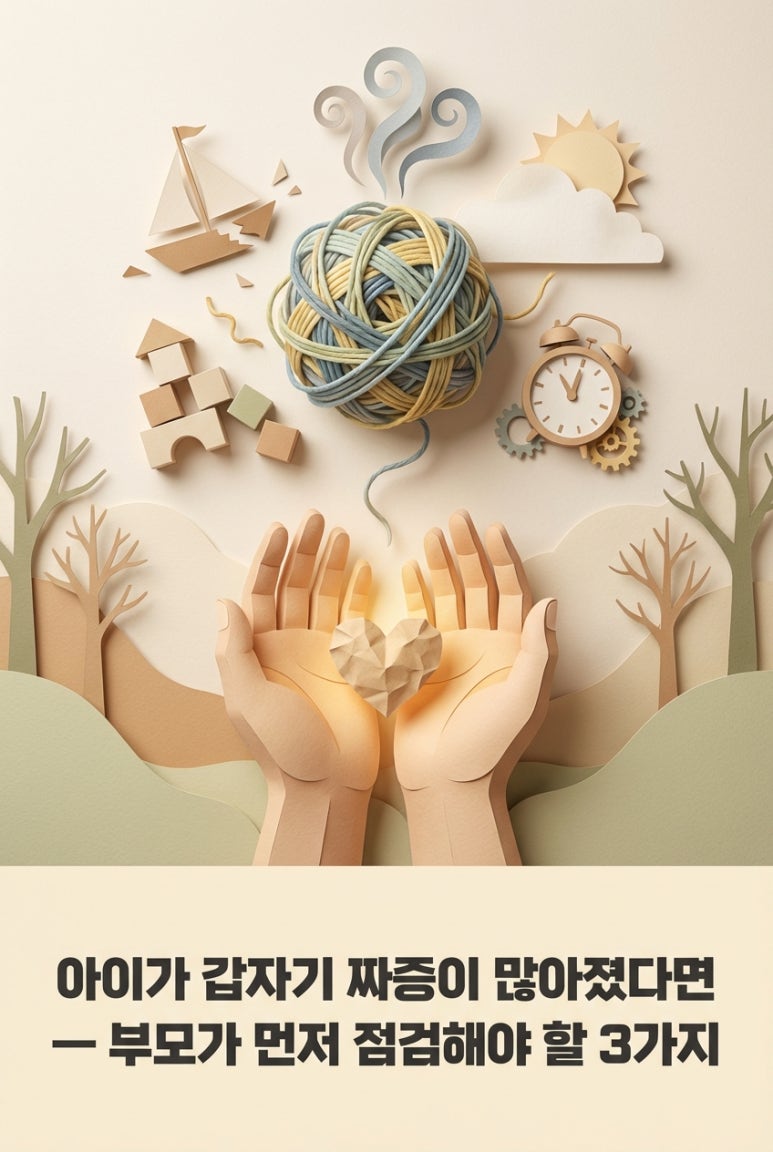
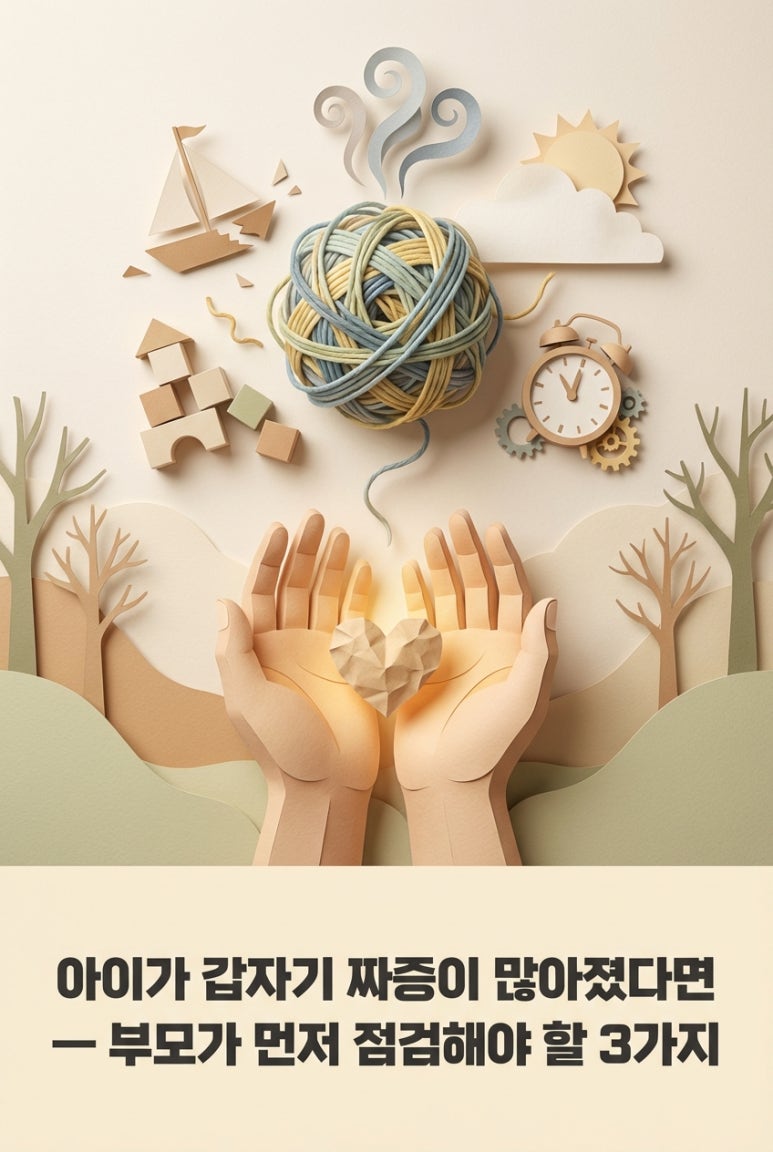
If Your Child Has Suddenly Become More Irritable — 3 Things Parents Should Check First

 🧾 Answer First | Key Conclusion
A child who suddenly shouts over nothing, throws a pencil while doing homework, and bursts into tears while eating.
You may have worried, "Has puberty already arrived?"
I am Choi Jang-hyuk, director of Dongjejdang Korean Medicine Clinic.
When I meet children like this in my clinic, I always ask parents three questions first.
Are they sleeping well, eating a lot of sweets, and having time to play outside?
A child's irritability may not be a personality trait, but a signal from their body.
Please check just three things first.
 ✅ Action | Immediate Implementation
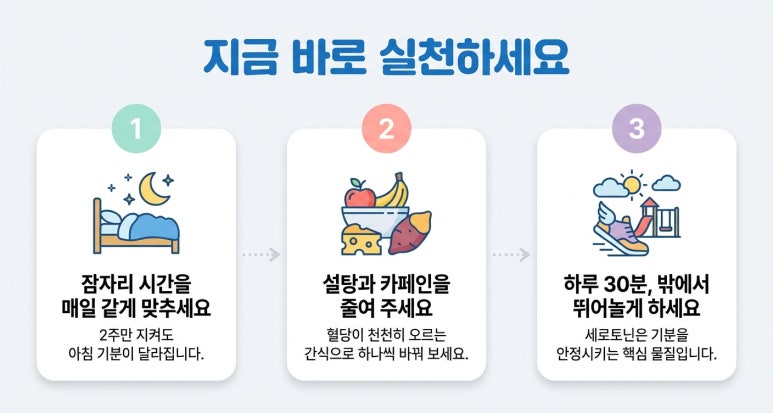
1️⃣ Keep bedtime consistent every day
70% of a child's mood is influenced by sleep[3].
When sleep is insufficient, the brain area that controls emotions (prefrontal cortex) cannot function properly.
The standard is 9–11 hours for elementary school students and 10–13 hours for toddlers.
Even on weekends, don't delay wake-up time by more than 30 minutes.
One hour before bedtime, turn off TV and tablets, and create a routine: brushing teeth → reading → turning off the lights.
Even just two weeks of maintaining this will change your child's morning mood.
2️⃣ Reduce sugar and caffeine
Chocolate milk, jelly, carbonated drinks.
Most snacks children love are loaded with sugar.
Research shows that children who consume excessive sugar have a higher likelihood of behavioral problems[2].
When blood sugar spikes and then plummets, irritability, poor concentration, and lethargy all come at once.
It's difficult to cut out all at once.
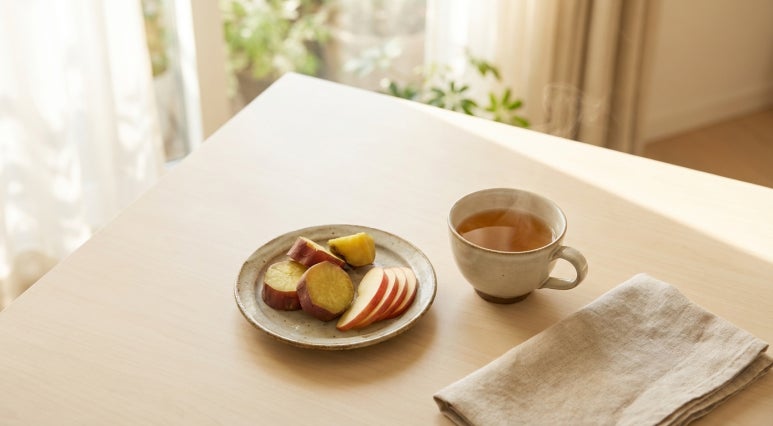
Try replacing snacks one by one with foods where blood sugar rises slowly, such as fruit, sweet potatoes, and cheese.
3️⃣ Let your child play outside for 30 minutes a day
When exposed to sunlight while moving the body, serotonin increases.
Serotonin is the key substance that stabilizes mood.
Even if the academy schedule is packed, just walking 15 minutes on the way to and from school is enough.
Running around in a playground for 10 minutes is also good.
Children who stay indoors tend to experience more irritability and anxiety.
If trying on your own doesn't improve things, working with a professional to identify the underlying cause is the fastest path forward.
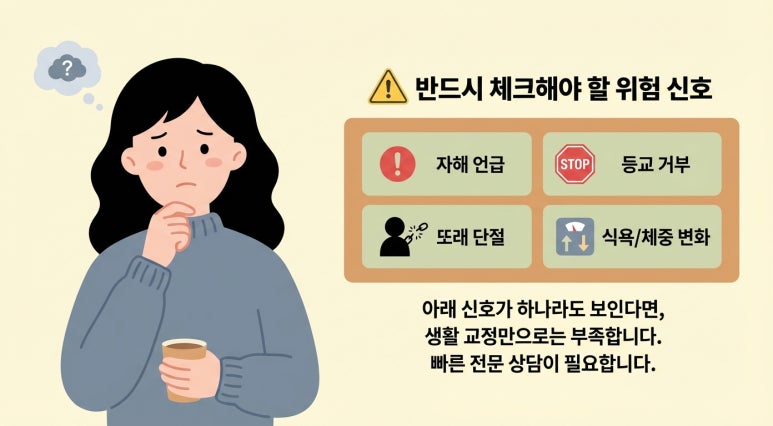 🚨 Warning | Warning Signs You Must Check
If any of the following signs appear, lifestyle correction alone is insufficient.
Prompt professional consultation is necessary.
✔ The child says things like "I want to die" or "I want to disappear"
When a child mentions self-harm or death, professional consultation is needed immediately, regardless of circumstances.
✔ Refuses to go to school for more than 2 weeks
It may not be simple tiredness, but school itself has become an object of fear.
It could be an early signal of separation anxiety or social anxiety.
✔ Refuses to meet friends altogether
Completely cutting off peer relationships is a sign that depression or anxiety has deepened.
If the child repeatedly says "I want to be alone," pay close attention.
✔ Appetite changes drastically and weight fluctuates
If weight changes noticeably within 2 weeks, both body and mind need to be checked.
 🧠 The Why | Understanding the Cause
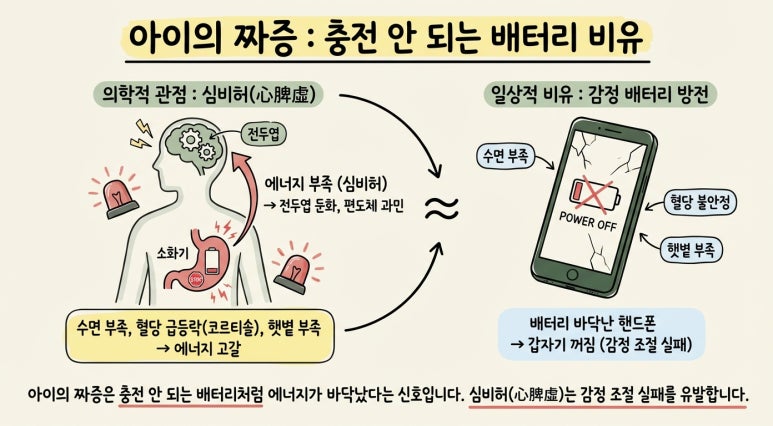
Think of your child's irritability as a battery that isn't charging.
Not sleeping enough, blood sugar going up and down repeatedly, no sunlight exposure — the battery is drained.
Just like a phone with a dead battery suddenly shuts off, a child's emotion regulation function suddenly stops working.
When sleep is insufficient, the prefrontal cortex, which acts as the emotion brake, becomes dull, and the amygdala, which acts as the emotion accelerator, becomes oversensitive[3].
When eating lots of sugar, blood sugar spikes and crashes, triggering the release of stress hormones (cortisol).
In Korean medicine, we view such children as having weak spleen function, or spleen deficiency (脾虛).
When the digestive system is weak, the body cannot produce sufficient qi and blood (energy) even when eating.
When energy is insufficient, the heart (mind) loses stability and overreacts to minor stimuli.
This is called heart-spleen deficiency (心脾虛)[4].
When emotional stress from academic pressure or parental conflict accumulates, liver qi stagnation (肝氣鬱結) also develops.
When liver qi becomes blocked, irritability, sighing, and chest tightness appear.
A phenomenon similar to adult hwa-byung (rage syndrome) can also occur in children.
📊 Proof | Cases and Evidence
According to the American Academy of Pediatrics (APA), the prevalence of childhood anxiety disorders is 7–9%.
With early intervention, more than 80% show marked improvement[1].
Let me share the case of an 8-year-old boy I treated.
After the new school year began, he suddenly became very irritable, ate poorly, and took over an hour to fall asleep.
He had weak digestion with a yellowish complexion, indicating a weak spleen constitution.
We started correcting his sleep routine and controlling his snacks, while I prescribed herbal medicine to strengthen the spleen and stabilize the mind.
After 2 weeks, his time to fall asleep was reduced to 20 minutes.
After 3 weeks, his mother reported that his irritability at school had been cut in half.
 🔚 Closing | Summary and Encouragement
Your child's irritability is not a bad personality.
It is your child's body asking for help.
Regulate sleep, reduce sweets, and let your child play outside.
Just these three things can make a big difference for many children.
If there's still no improvement, it can help to examine your child's constitution and physical condition together.
You don't need to worry alone.
Feel free to reach out.
✍️ Reviewed by Choi Jang-hyuk, Director of Dongjejdang Korean Medicine Clinic
❓ FAQ
Q. Is herbal medicine treatment safe for children?
Yes, it is safe.
Pediatric herbal medicine doses are adjusted according to the child's weight and constitution.
Prescriptions are based on the Korean Association of Oriental Pediatrics' clinical practice guidelines, and adult prescriptions are not simply applied to children[5].
Because detailed intake interviews and constitution assessment are conducted before prescription, the risk of side effects is very low.
Q. From what age can children receive herbal medicine treatment?
Children 2 years old and above can take herbal medicine and receive pediatric acupuncture.
For children 4 years and younger, medicine is often prescribed in syrup form, making it easy to take.
For children who are afraid of needles, we use pediatric acupuncture (shallow needle insertion) with minimal stimulation.
Q. Should I visit a child psychiatrist or a Korean medicine clinic first?
If there are mentions of self-harm, hallucinations, or severe aggressive behavior, visit a child psychiatrist first.
If the level of irritability or sensitivity can be improved through lifestyle modification, it's also good to first try constitution improvement and lifestyle guidance at a Korean medicine clinic.
Combining both treatments is possible, and many people actually do pursue both in parallel.
📚 References
[Western Medicine (WM)]
[1] APA (2022). "Anxiety Disorders in Children and Adolescents"
[2] Del-Ponte B et al., Pediatrics (2019). "Sugar-Sweetened Beverage Intake and Behavioral Problems"
[3] Palmer CA & Alfano CA, Sleep Medicine Reviews (2021). "Sleep and Emotion Regulation in Children"
[Korean Medicine (KM)]
[4] Journal of Korean Oriental Pediatrics (2020). "A Study on the Pattern Differentiation of Pediatric Emotional Disorders in Korean Medicine"
[5] NIKOM (2021). "Korean Medicine Clinical Practice Guidelines for Childhood Anxiety Disorders"
Pediatric
If Your Child Has Suddenly Become More Irritable — 3 Things Parents Should Check First
View Program