
"Even slight fatigue makes me feel like the world is shaking" | Chronic BPPV in a 40s office worker suffering from sleep deprivation

 "Even a Little Fatigue Makes the World Spin" | The Real Cause of Residual Dizziness That Won't Stop Even After BPPV Correction
The Voice Behind the Symptoms: What the "Spinning World" Is Telling Us
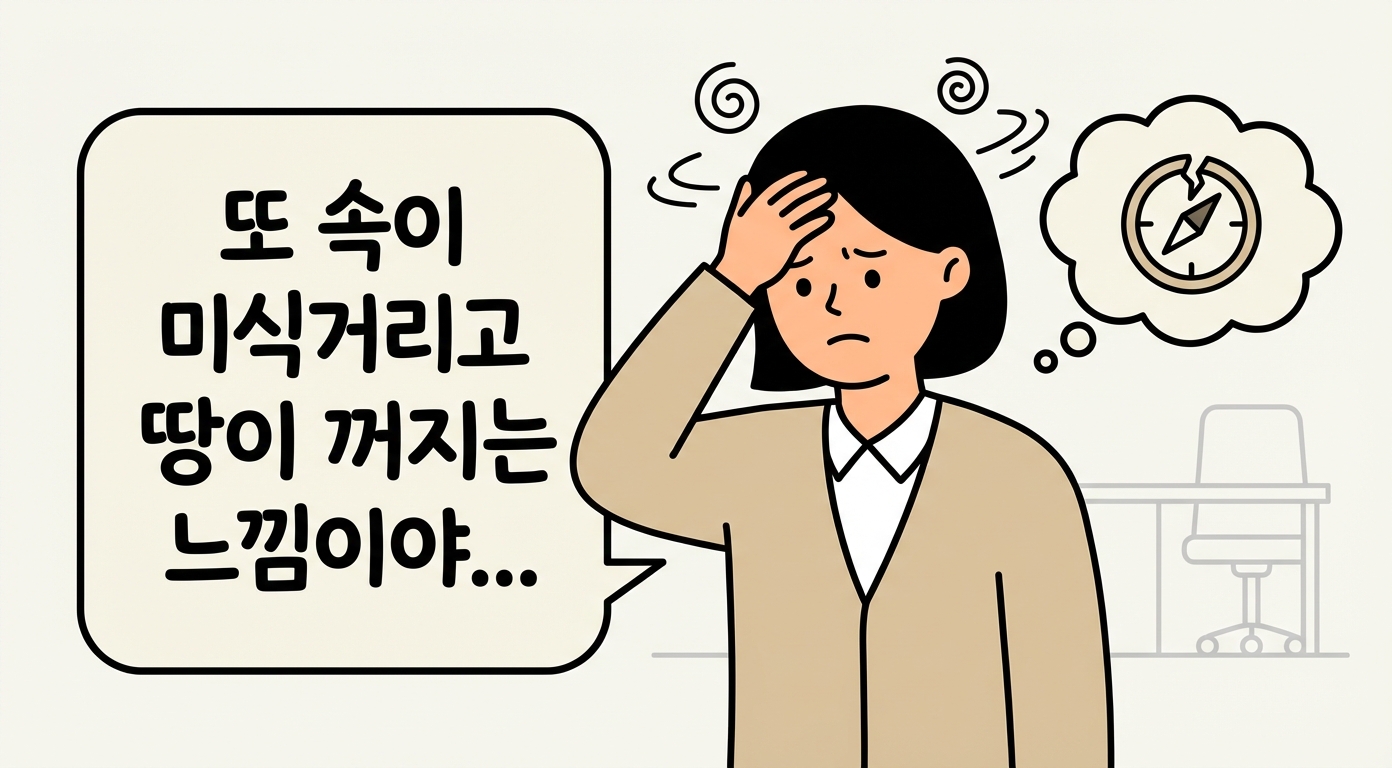
"The ENT said the otoliths have returned to their proper place, but I feel nauseated all day as if I'm on a boat, and the ground keeps dropping out from under me — I'm scared to walk.
Even a little fatigue makes the world feel like it's spinning."
These were the words of Ji-yeon (pseudonym), a woman in her 40s who works at an office, spoken with a deep sigh in my clinic.
Her daily life — running without rest through frequent overtime and sleep deprivation — crumbled helplessly one morning.
It happened the moment she got out of bed and experienced extreme dizziness with the ceiling spinning around her.
She was diagnosed with BPPV at the ENT clinic and received repositioning treatment, but symptoms kept recurring.
Even after the repositioning, a persistent residual dizziness like seasickness continued to torment her.
The fear of not knowing when the dizziness would return made her cautious even about walking, and the extreme tension created a vicious cycle of insomnia and severe fatigue.
Ji-yeon, who carefully stepped through the clinic door, looked terribly unsteady and anxious — like a broken compass spinning in circles, having lost its bearings.
In her frustration, she went from one major hospital to another, receiving brain MRIs and detailed ear examinations, only to receive the dry answer that there was nothing structurally wrong.
I did not see Ji-yeon's instability as merely a problem with the equilibrium crystals inside her ear.
When I encounter this endless suffering experienced by office workers tormented by frequent overtime and sleep deprivation, I often feel a deep sense of helplessness as the attending physician.
Then why do the otoliths — which tests say have returned to their proper place — keep shaking her world so violently?
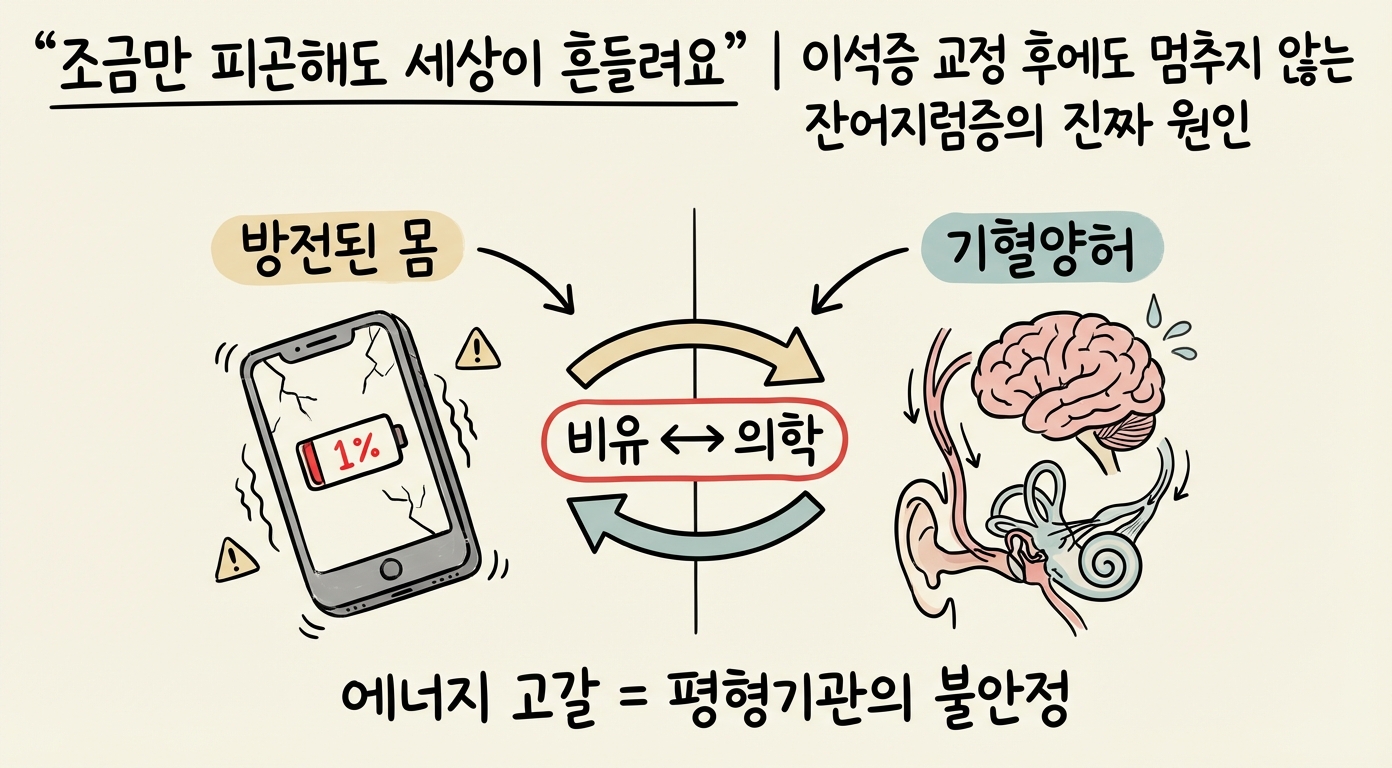 Beyond the Ear: Looking Into the Depleted Body
In traditional Korean medicine, these symptoms are viewed as a state of Qi and Blood Deficiency (기혈양허, 氣血兩虛) — where both vital energy and blood have been completely exhausted by chronic fatigue.
This refers to a state in which the fundamental energy sustaining the body has completely bottomed out due to stress and overwork.
This is like a smartphone screen flickering unstably when the battery drops to 1%.
With insufficient energy, blood flow to the brain and vestibular organs becomes sluggish, and even the smallest stimulus can easily destabilize their function.
Western medicine also defines BPPV as a condition in which the equilibrium crystals inside the ear become dislodged.
However, frequent recurrence and residual dizziness are not simply problems with the ear alone — they are deeply connected to impairment of the entire body's autonomic nervous system and immune function.
Persistent sleep deprivation and extreme fatigue overstimulate the sympathetic nervous system, which constricts the microvessels leading to the brain and ears.
When circulation decreases, the connective tissue holding the equilibrium crystals weakens, making the otoliths more prone to dislodging.
This is why, even after repositioning treatment, recovery of vestibular function is delayed and subtle dizziness persists.
The depleted body also impairs digestive function, generating a pathological fluid waste called dampness-phlegm (담음, 痰飮) within the body.
This unnecessary bodily fluid obstructs clear qi from ascending to the brain, causes vertigo (현훈, 眩暈), and in turn raises overall body tension.
Each negatively influences the other, repeating a vicious cycle.
Therefore, beyond the narrow focus on the ear, only by replenishing the energy of the entire depleted body can that relentless spinning be fully stopped.
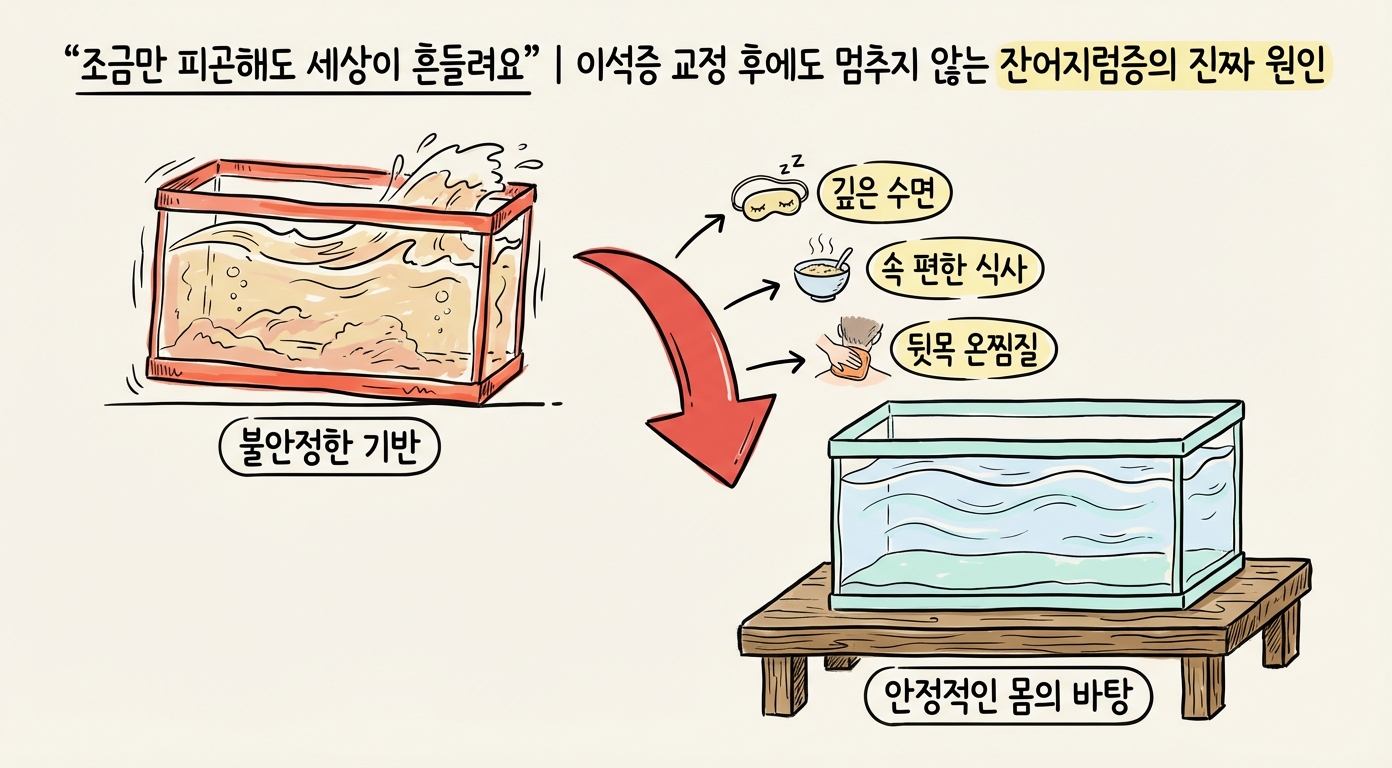 How to Drop Anchor in Daily Life: Where Does My Dizziness Begin?
So what efforts should we make to escape the frustrating cycle of dizziness?
The first thing I recommended to Ji-yeon in the clinic to stabilize her unsteady daily life was to place the swaying fish tank itself on a solid table.
That is because achieving deep, stable sleep — allowing the brain and vestibular organs to rest fully — is the most fundamental foundation for stabilizing our shaky body.
Before going to bed, you should reduce visual stimulation from smartphones or TV to calm the brain's excitement.
Daily efforts must also be made to keep the digestive system comfortable: avoiding late-night snacks, cold beverages, and flour-based foods that burden digestion and produce turbid waste.
Gently applying a warm towel to the stiff neck and shoulders is also an excellent method to open the pathway of blood flow up to the head.
However, if frequent dizziness is accompanied by sudden slurring of speech, decreased sensation in one arm or leg, or an unbearable severe headache, caution is warranted.
This may be a dangerous warning sign of cerebrovascular disease, so I always urge patients not to delay — seek emergency examination at a major hospital immediately.
 The Journey to Finding Your Center: Trusting the Quiet Within
Listening to the signals your body sends and reflecting on your own lifestyle is the true starting point of healing.
True recovery is not simply suppressing symptoms — it is the process of healthily rebuilding the body's depleted internal environment so that it can find its own center.
A comprehensive prescription that carefully examines each patient's unique constitution and life trajectory and replenishes depleted energy is needed.
Through this, our body can use the remarkable natural resilience it possesses to firmly stand on solid ground once again.
Your body has more extraordinary recovery power than even the most sophisticated machine.
My role is to serve as a reliable guide — not confined to fragmented symptoms, but finding together with patients the key to restoring the lost balance of body and mind.
Even if not through me, I hope you will find someone who can empathize deeply with your exhausted daily life and the stories behind your symptoms.
Please meet a warm healthcare provider who can help you find your body's center together through an integrative perspective, and sincerely hope you regain your peaceful daily life.
✍️ Reviewed by Dr. Choi Jang-Hyuk, Director of Dongjedang Korean Medicine Clinic
Head & Face
"Even slight fatigue makes me feel like the world is shaking" | Chronic BPPV in a 40s office worker suffering from sleep deprivation
View Program