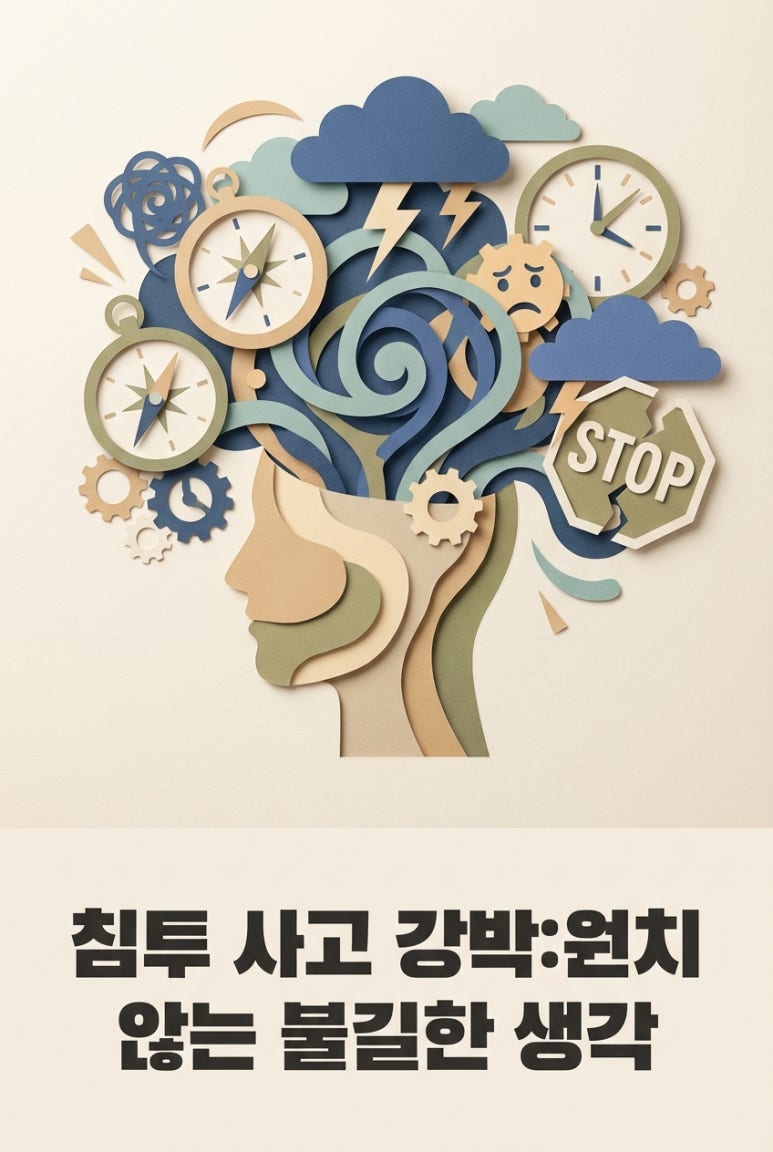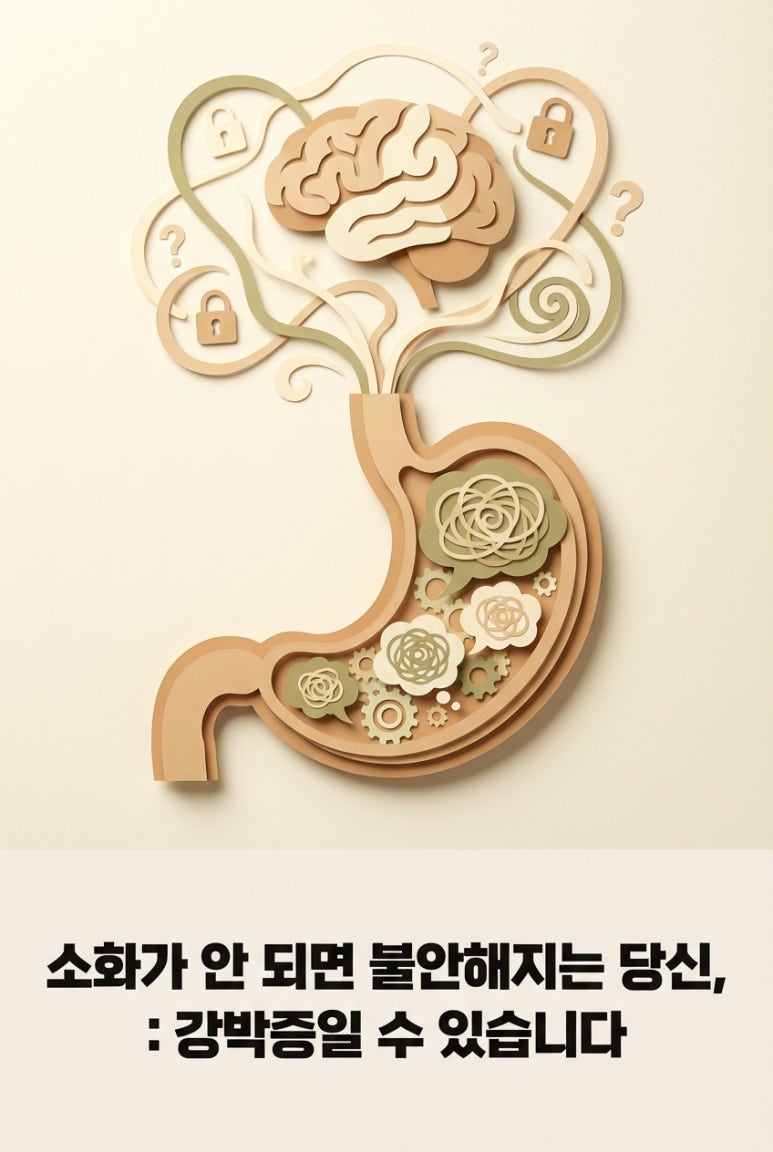
"It feels like a boulder is sitting on my chest and I can't breathe" | Anxiety disorder and chest tightness in a 40s middle manager

The Heavy Silence Created by Suppressed Responsibility Becomes a Stone in the Chest
"Doctor, my solar plexus feels completely blocked—there's no way to open it up.
It feels like a huge stone is pressing down on my chest, making it impossible to breathe all the way in, and even when I'm sitting still, my heart pounds as if it's about to burst—I feel like I'm going mad."
These were the words Ji-hun (pseudonym), a 45-year-old man, said as he loosened his necktie when he first came to see me.
Working as a sales team leader at a large corporation, he bore the heavy responsibility of silently enduring performance pressure from executives above while leading his exhausted team members below.
At some point, an inexplicable fear and chest tightness began visiting him every night, and it had reached the point where he simply couldn't sleep without sleeping pills.
So frightened by his symptoms, he first visited a cardiology clinic for an ECG and even underwent a thorough endoscopy at a gastroenterology clinic.
But the answer that came back was nothing more than the dry statement that there was nothing physically wrong—just stress-induced nervous tension.
Honestly, when objective tests come back normal, patients often feel not relieved but instead deeply frustrated that they have no way to prove their pain.
The doctor's words that there was no clear cause ultimately gave him a deep sense of guilt that he was too mentally weak to endure all of this—creating a vicious cycle that worsened his symptoms even further.
Knowing how difficult it must have been to struggle alone within that miserable gap—where objective test results said "normal" but subjective pain was tightening around his throat every single night—I did not view Ji-hun's symptoms as mere sensitivity or temporary fatigue.
Every time I hear these stories of fierce, relentless lives in the clinic, I find myself deeply empathizing with the patient's suffering and fully listening to the true cause hidden beneath it all.
So why does this kind of physical pain arise, where the outside and inside seem to be operating as two completely separate entities?
The Tangled Thread of Emotions Translated into the Body's Language
In Korean medicine, which views the human body as a precisely interconnected organism, this state is explained by the term Gan-gi Ul-gyeol (肝氣鬱結)—liver qi stagnation.
This refers to a state in which the vital energy that is the foundation of life activity cannot flow smoothly throughout the entire body due to excessive stress and suppressed emotions, instead hardening and clumping tightly around the chest and solar plexus.
By analogy, it is like a completely congested commuter highway where an accident has caused countless cars to be stuck, unable to move in either direction.
Because the flow of vital energy is completely blocked, the breath cannot reach deep into the lungs, the solar plexus feels constantly obstructed, and a persistent sensation of something lodged in the throat continues without relief.
In modern Western medicine, Ji-hun's symptoms are also explained as an imbalance of the gut-brain axis and excessive activation of the sympathetic nervous system within the autonomic nervous system.
The brain is mistaking ordinary work stress for an actual threat to survival, continuously sending sharp warning signals to the body to remain in battle readiness.
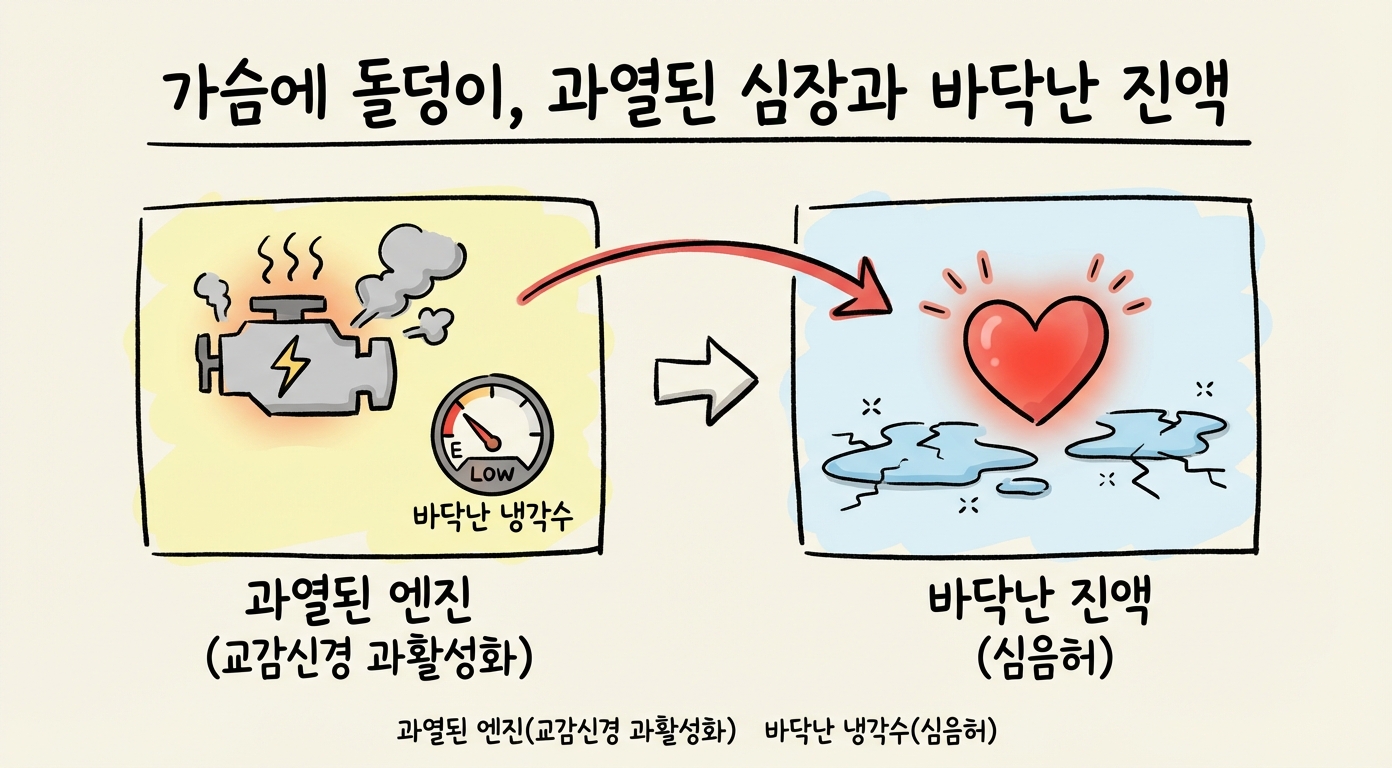
In addition, Ji-hun also showed symptoms of Sim-eum-heo (心陰虛)—a state in which the vital fluids and energy of the heart have become severely depleted due to long-accumulated sleep deprivation and anxiety.
When the nourishing substances that should stabilize the heart and gently cool its heat have dried up, even the slightest external stimulus causes the heart to palpitate wildly and anxiety to amplify uncontrollably.
This is like an overheated engine with depleted coolant.
The car attempts to keep driving without stopping, but without water to cool the hot engine, the components eventually clatter and strain under the load.
In the end, the blocked vital energy and dried vital fluids exert negative influence upon each other, creating a cycle of suffering that is difficult to escape.
How to Apply the Brakes of Daily Life for a Self That Cannot Stop
So where in daily life are the causes hiding that clog the highway within our body and dry up the coolant of life?
Looking carefully at Ji-hun's daily life through the consultation, I found he had been habitually drinking four or five cups of strong coffee a day to forcibly overcome the chronic fatigue that kept washing over him.
Even after getting home from work, he was overworking his brain without rest—lying in bed, constantly checking work emails on his smartphone.
To change these hardened daily patterns, rather than a grand and perfect plan, what is most important is placing small but definite pauses throughout the day.
First, when your chest feels tight and you can't breathe all the way in, do not strain to force a deep breath.
Instead, I recommend practicing breathing out slowly through the mouth, as if sighing at length—as if expelling all the turbid waste from within the body.
Additionally, gradually reduce caffeine intake, which sharply stimulates the sympathetic nervous system, and replace that space with warm water or a soothing herbal tea such as chamomile.
If you can take even just ten minutes at lunchtime—setting your phone on the desk, walking slowly in the warm sunshine—this will be of great help in releasing the tension built up in your body and finding balance in your autonomic nervous system.
However, there are urgent moments when this chest tightness and difficulty breathing should not be dismissed as merely stress-induced nervousness.
If an extreme chest pain occurs that heavily presses down on or seems to squeeze the solar plexus, and that pain is accompanied by radiating pain spreading toward the left arm or jaw, this may be a life-threatening cardiovascular emergency such as acute myocardial infarction—please visit the nearest emergency medical institution without delay.

The Space of a Loosened Heart Is Where Healing Begins
Treating anxiety disorder and the somatic symptoms it causes is not a one-dimensional process of simply forcibly suppressing the symptoms that appear on the surface.
It is a journey that requires delicate and sustained effort—gently releasing the tense physical environment, taut as a bowstring drawn tight over long time, and helping patients reclaim the inner strength to find balance and recover on their own.
Throughout the treatment process, I always ask patients to fully listen to the signals their body sends and to warmly encourage themselves for all they have endured.
The painful signal your body sends is never because you are weaker than others—it is an earnest and remarkable voice of recovery, asking you to please stop for a moment now and take care of yourself.
Your body possesses a remarkable vitality that can reclaim its original peace on its own, and my role is to be a steadfast ally who helps find the key to opening that closed door, through prescriptions tailored to each person's constitution.
Even if it's not me, I sincerely hope you will meet wonderful medical professionals who fully empathize with the depth of your exhaustion and who can carefully examine the connection between body and mind from an integrative perspective.
I wholeheartedly cheer for you to safely set down that heavy stone you have been carrying on your shoulders, and for a day to come when you can once again breathe deeply and freely.
Director Choi Jang-Hyuk, Dongjedang Korean Medicine Clinic
Mental Health
"It feels like a boulder is sitting on my chest and I can't breathe" | Anxiety disorder and chest tightness in a 40s middle manager
View Program