Compulsion You Want to Stop But Can't: You Need to Release It, Not Grip It Tighter

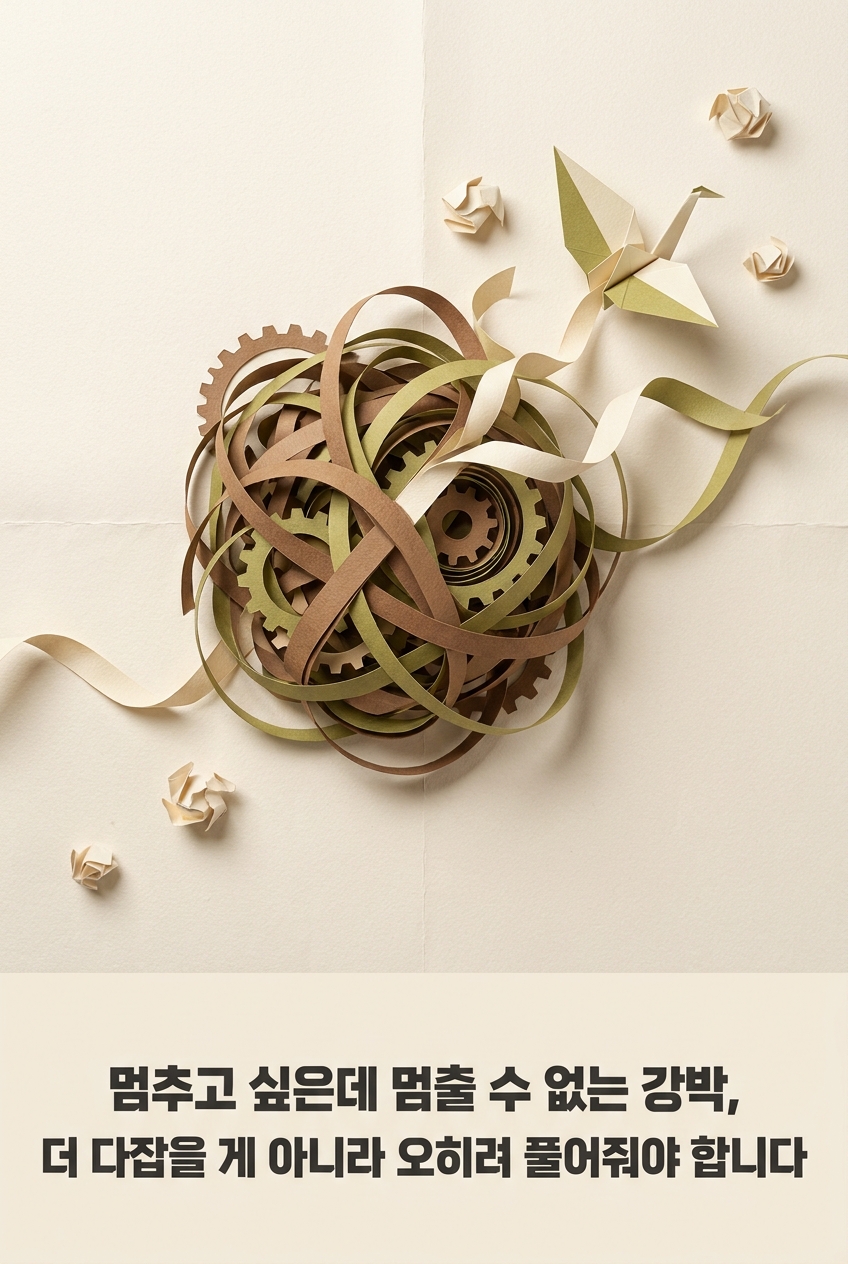 🧾 Answer First | Core Conclusion
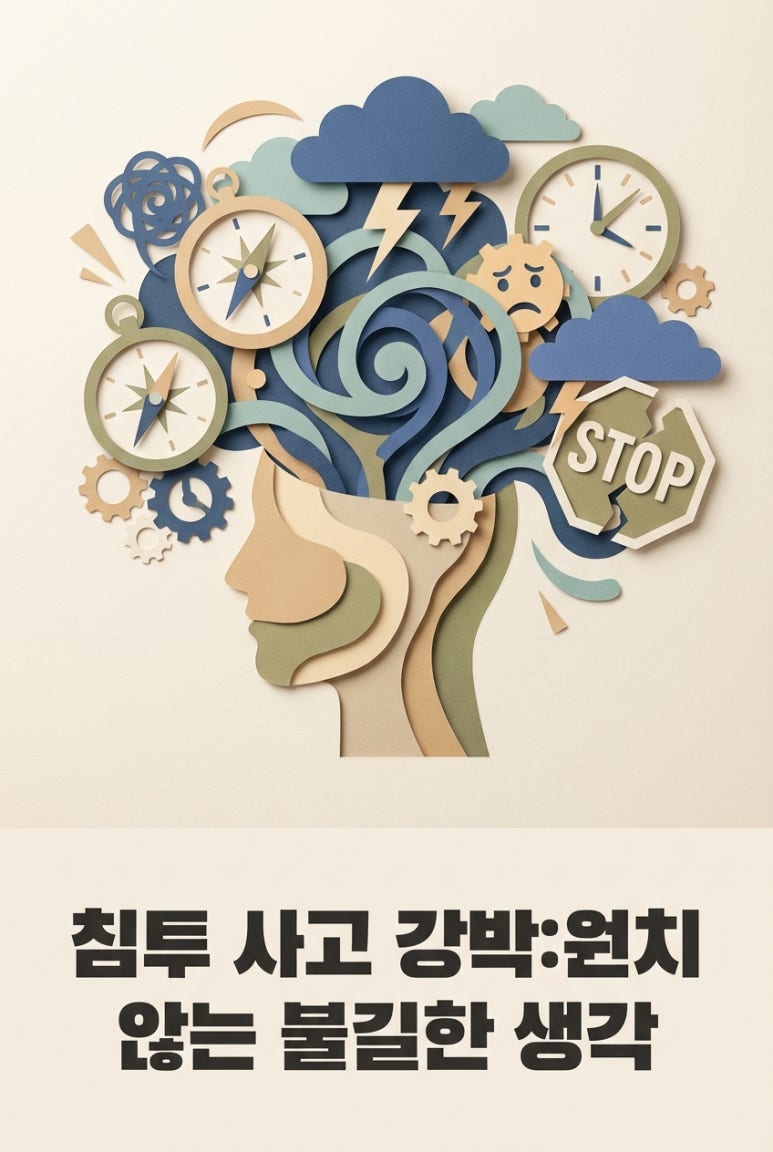
Do you keep checking and rechecking, washing and rewashing, with one thought that won't leave your mind?
The more you try to stop with willpower, the tighter it grips?
Then you start thinking, "Am I weak-willed and lacking determination?"
Compulsion is not a matter of willpower.
It's actually the opposite.
Your mind is bound so tightly to one thing that you cannot free yourself.
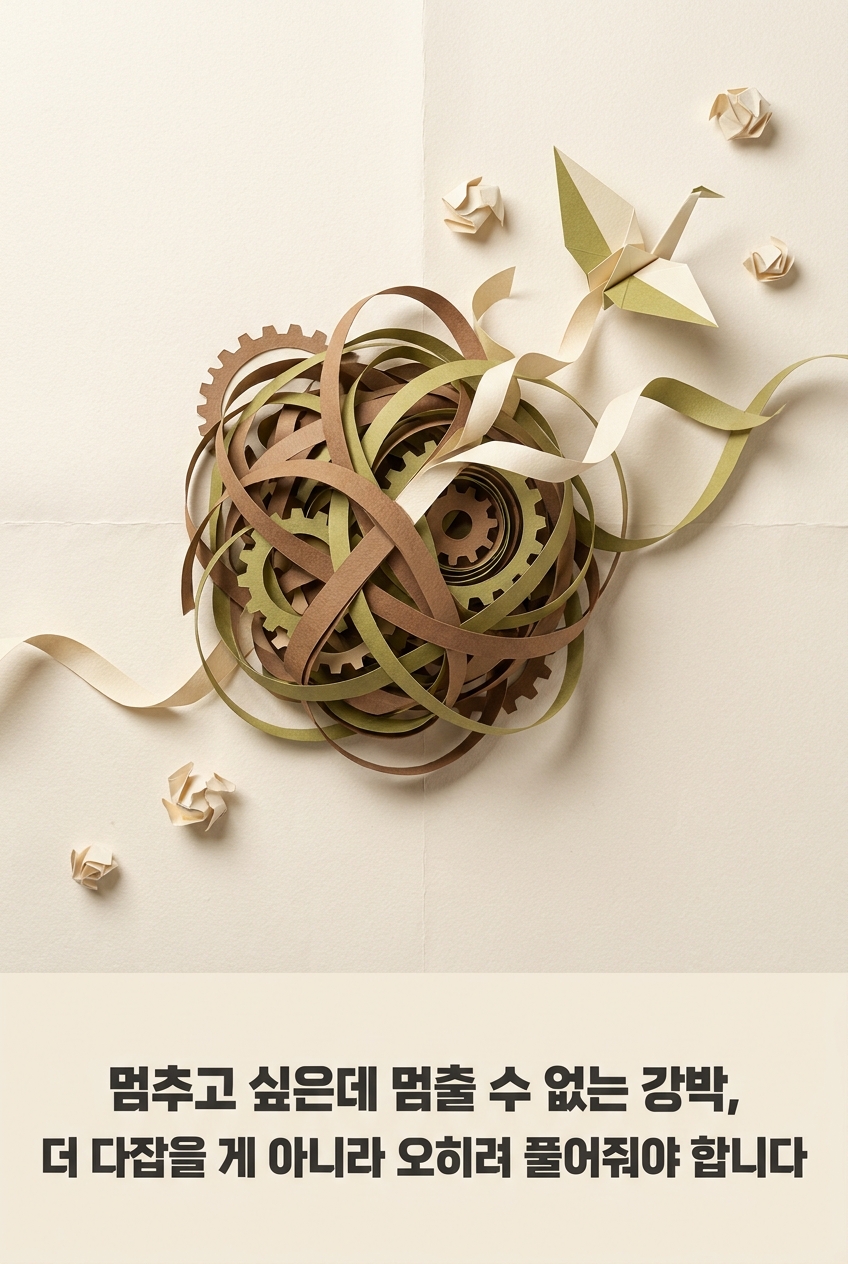
So the more you grip and suppress, the tighter it becomes.
What you need is not control, but release.
Even though the surface appears solid, the inside is tightly bound by anxiety—this is the core of compulsion.
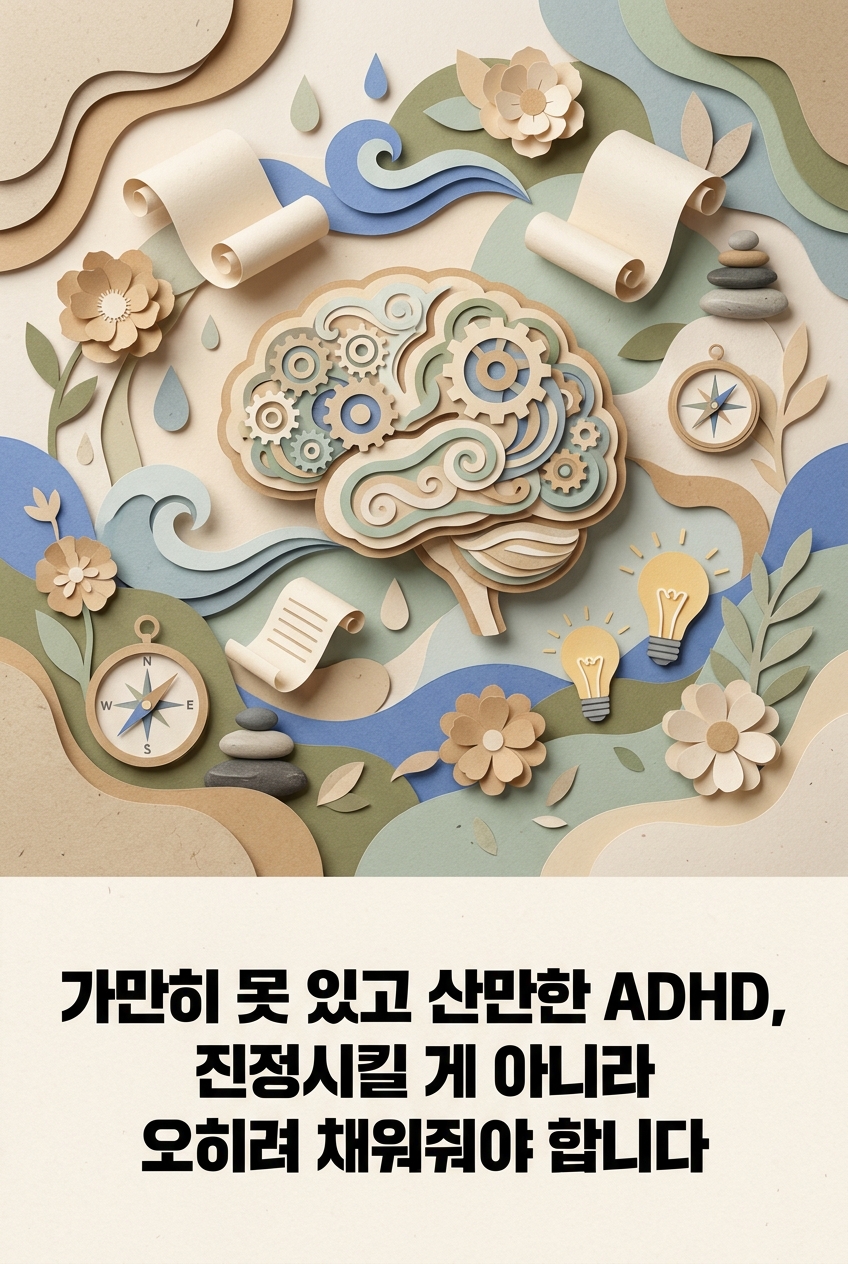
It's the complete opposite direction of scattered ADHD.
Let me explain this below. ✅ Action | 3 Things You Can Do Starting Today
Start by practicing releasing instead of gripping tighter.
1️⃣ Delay by one beat when you want to check
When you want to check the door again, don't do it right away—delay for just 10 minutes.
Anxiety rises like a wave and always comes back down.
As you practice delaying, your body learns that anxiety subsides without acting on it.
2️⃣ Separate "thoughts" from "reality"
A bad thought appearing and that event actually happening are different things.
When you struggle to eliminate a thought, it sticks more.
Try practicing by thinking, "Oh, that thought came again," and letting it pass.
If you don't hold onto it, the thought will pass.
3️⃣ Release tension from your body first
The more severe the compulsion, the more rigid your body becomes.
Spend 10 minutes a day on slow breathing or gentle stretching to loosen your body first.
When your body relaxes, the tightly bound mind loosens a bit too.
If daily life remains bound even after 2-3 weeks, working with a professional to release it together is the fastest way rather than enduring alone.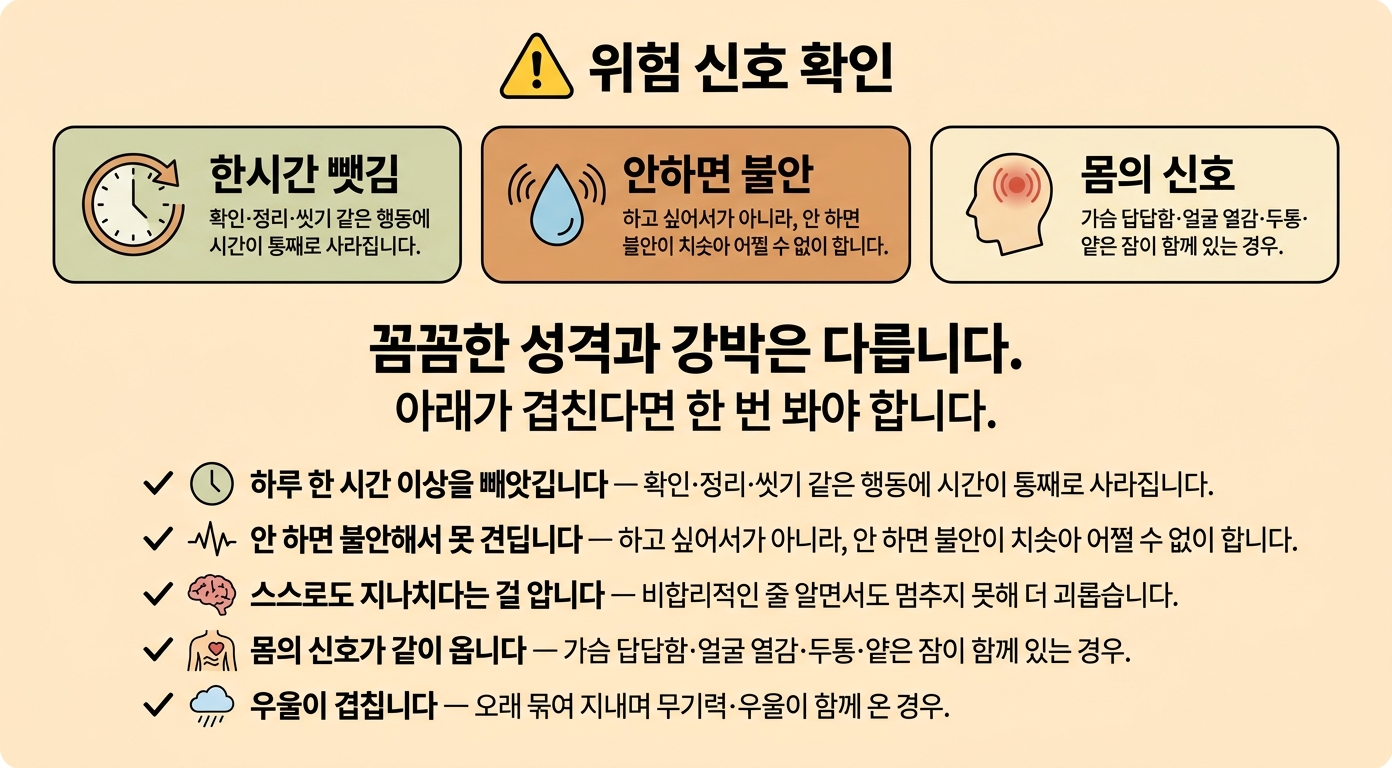 🚨 Warning | When You Should Seek Medical Attention
Being thorough and having compulsion are different.
If the following overlap, you should get checked.
✔ It takes more than an hour a day — Time disappears entirely in checking, organizing, and washing behaviors.
✔ You can't bear it if you don't do it — Not because you want to, but because anxiety spikes unbearably if you don't.
✔ You know yourself it's excessive — You suffer more because you recognize it's irrational yet can't stop.
✔ Physical signals accompany it — Chest tightness, facial flushing, headaches, and shallow sleep occur together.
✔ Depression overlaps — When helplessness and depression come alongside prolonged mental binding.
 🧠 The Why | Why You Need to Release, Not Grip Tighter
Looking at the surface, compulsion appears flawless and solid.
So it seems like gripping tighter would help.
But the inside is different.
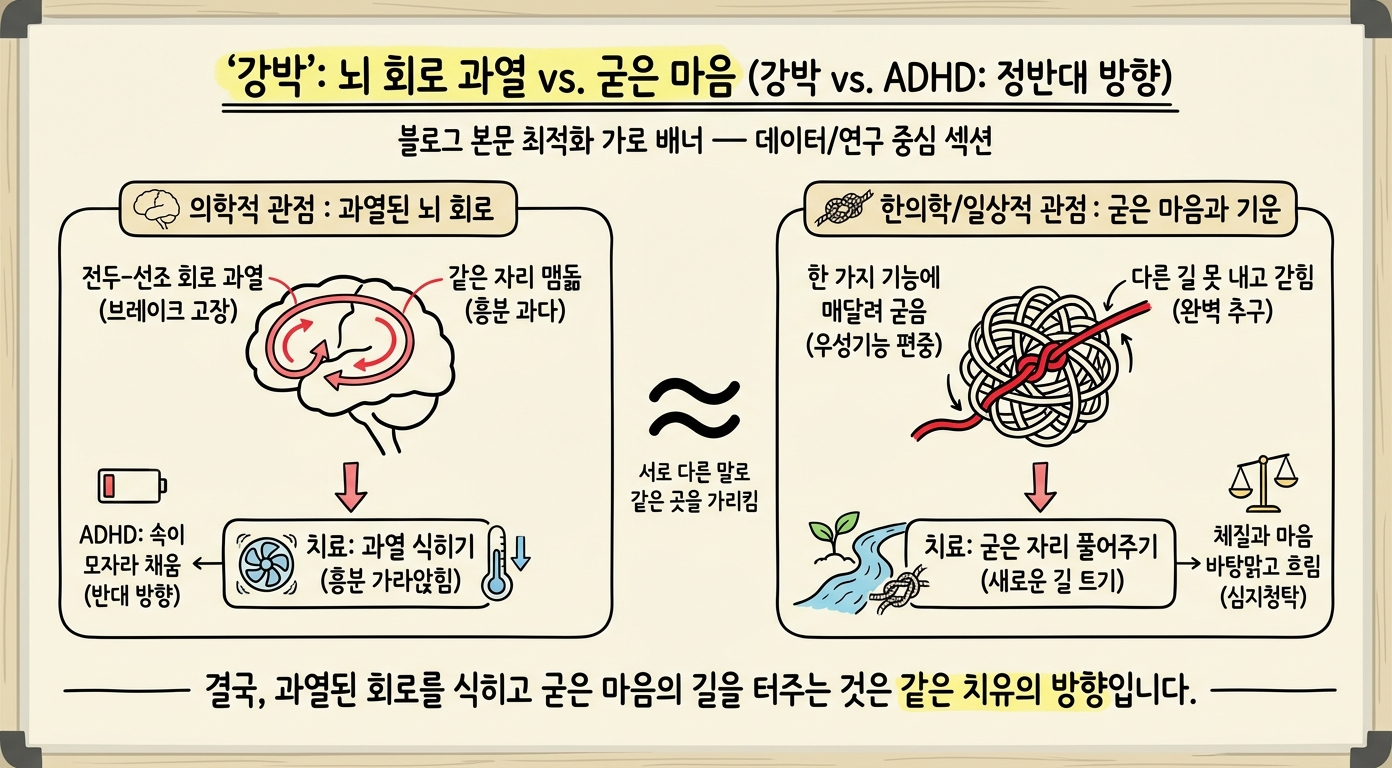
Research shows compulsion as an excessively overheated state in a specific brain circuit (prefrontal-striatal circuit).
One thought and action gets stuck in a loop, circling the same place continuously.
Since treatment targets cooling down the overheating of this circuit, pressing harder and controlling actually makes the circuit overheat further.
This is why it tightens the more you grip.
Here it splits completely opposite from ADHD.
ADHD has an insufficiency inside that needs filling; compulsion has an overheating inside that needs cooling.
Both have a mismatch between outside and inside, but the directions are mirror opposites.
In Korean medicine, we view this from a person's innate constitution.
Compulsion is ultimately the result of the body responding according to each person's constitution and the clarity or turbidity of their mental foundation.
However, compulsion has one characteristic:
It's a pattern where a person fixates on one dominant function they do best, cannot develop other pathways, and becomes rigid in that one place.
They try to perfect what they do well, but become trapped and cannot escape that one function.
While you cannot change your innate constitution, you can change how you use it.
When you open different pathways from a mind rigidly fixed in one place, the tightly bound tension releases and breathing becomes free.
Western medicine cooling the circuit's overheating and Eastern medicine releasing the rigid place point to the same goal in different words.
📊 Proof | Cases and Evidence
A man in his 30s working in an office would check the gas and front door ten times on his way home, having to return home every time.
He knows it's excessive, but says he can't bear the anxiety if he doesn't do it.
This was a case of someone meticulous and responsible being bound by that one advantage and unable to escape.
Compulsion's core pathology is overactivity of the prefrontal-striatal circuit and excess excitatory signaling (glutamate),
with research targeting treatment toward reducing this overheating[1].
Reports also show that ADHD, compulsion, and tics share the same circuit but differ in direction of activation[2].
This represents scattered ADHD and tightly bound compulsion as opposite ends of one circuit.
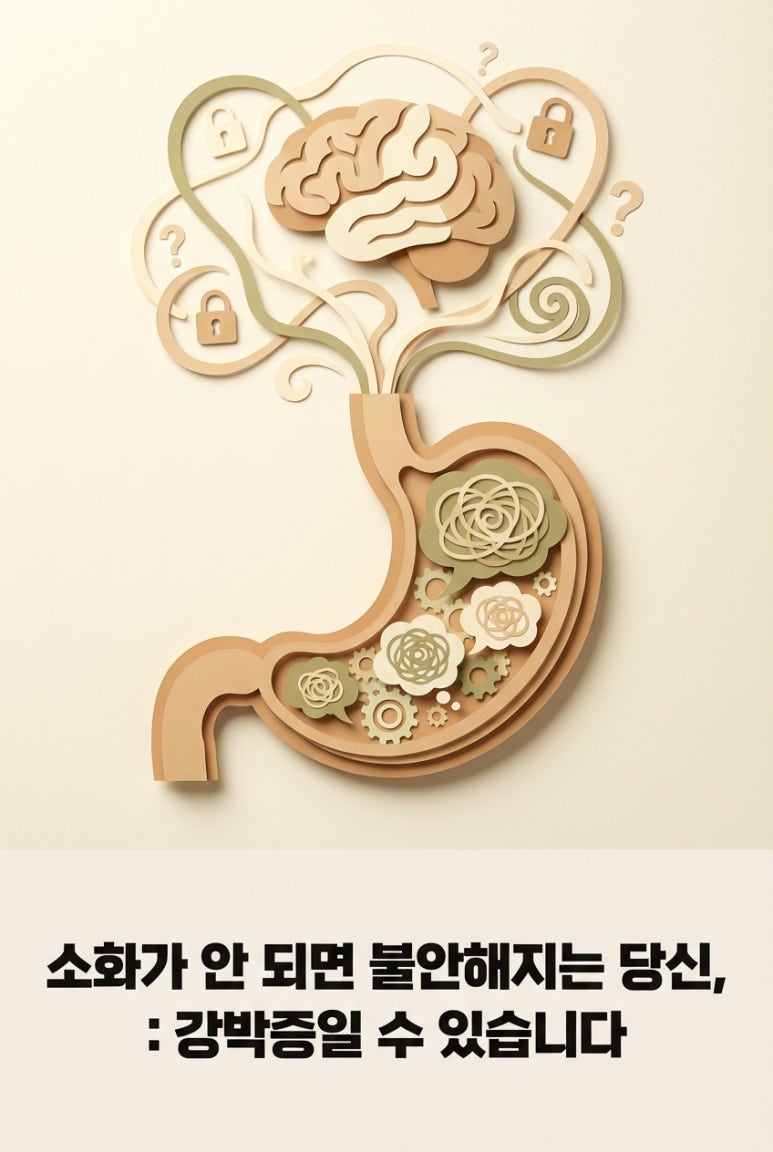
Interestingly, compulsion is not unrelated to the body.
When the gut environment from compulsion patients was transferred to germ-free mice, compulsive and anxious behaviors appeared along with gut and brain inflammation, with accumulated metabolic waste mediating that inflammation[3].
Disruption of the gut-brain-immune axis is also reported in compulsion[4].
When the mind is bound in one place and tension lengthens, that burden accumulates in the gut and body, creating a vicious cycle that amplifies symptoms. 🔚 Closing | How Dongjejang Views This
So the sequence matters.
First, you must release the tension and metabolic waste accumulated in the body from being bound for so long.
Through constitutional detoxification and diet programs, we lighten what's stagnant and cool the overheated body, loosening the body caught in a vicious cycle in the first stage.
Then with prescriptions suited to constitution and mental stability,
we release the root that became rigid in one place—the bias trapped in excelling at one function—and manage it to prevent rebinding.
Since compulsion requires reducing and releasing rather than pressing and adding, it aligns well with the result of detoxification that empties what's accumulated.
Whether inability to stop checking is personality, compulsion, or temporary exhaustion is difficult to assess alone.
If you'd like to examine constitution and body condition together, please feel free to inquire at Dongjejang's constitutional detoxification and diet program.
✍️ Reviewed by Director Choi Jang-hyuk, Dongjejang Korean Medicine Clinic
❓ FAQ
Q. Doesn't compulsion improve if you endure it with willpower?
It's actually the opposite.
Compulsion is an overheated circuit bound in one place, so the more you suppress with willpower, the tighter it becomes.
Rather than enduring and controlling, releasing anxiety and loosening the rigid place is the right approach.
Q. How is this different from ADHD?
They're mirror opposites.
ADHD needs filling of insufficiency inside for stability; compulsion needs cooling of overheating inside for stability.
Both have mismatches between outside and inside, but the management directions are completely opposite.
Q. Why talk about detoxification and diet for compulsion?
When the mind is bound in one place and tension lengthens, that burden accumulates in the gut and body, creating a vicious cycle that amplifies symptoms.
So we view the sequence as first emptying what's accumulated to loosen the body, then releasing the root through constitutional prescriptions and mental stability.
Q. Can I do this while taking medication?
Yes.
Constitutional management and dietary adjustment can proceed alongside medication therapy without conflict.
Please inform your doctor of any medications you're currently taking during your consultation.
📚 References
[WM Western Medicine]
1.Maraone A, et al. Antiglutamatergic agents for obsessive-compulsive disorder — Prefrontal-striatal circuit overactivity and glutamate excess in compulsion and treatment targets to reduce them. DOI
2.Rizzo F, et al. Aripiprazole and Riluzole treatment alters behavior and neurometabolites in young ADHD rats — Metabolic abnormalities in prefrontal-striatal pathway shared by ADHD, compulsion, and tics. DOI
[KM Korean Medicine·Integrative]
3.Zhang YD, et al. Human microbiota from OCD patients drives behavioral symptoms and neuroinflammation via succinic acid in mice — Microbiota transplantation from compulsion patients induces compulsive and anxious behaviors with gut and brain inflammation. DOI
4.Troyer EA, et al. Searching for host immune-microbiome mechanisms in obsessive-compulsive disorder — Gut-brain-immune axis disruption in compulsion. DOI
Mental Health
Compulsion You Want to Stop But Can't: You Need to Release It, Not Grip It Tighter
View Program