Thought It Was a Herniated Disc, but It's Sacroiliac Joint Syndrome? Three Ways to Distinguish

 🧾 Answer First | Key Conclusion
Many people think of herniated discs when experiencing lower back pain.
However, in my clinical practice, I find that sacroiliac joint syndrome is quite common.
It presents with symptoms very similar to herniated discs,
and cases where both herniated discs and sacroiliac joint syndrome coexist are frequent,
so even I as an Oriental medicine doctor sometimes get confused.
Accurately distinguishing between these two conditions is very important.
It is the shortcut to reducing unnecessary treatments and escaping lower back pain.
✅ Action | Immediate Implementation
1️⃣ Identify the exact location of your pain clearly.
Herniated discs often cause pain in the center of the lower back or radiating down the legs.
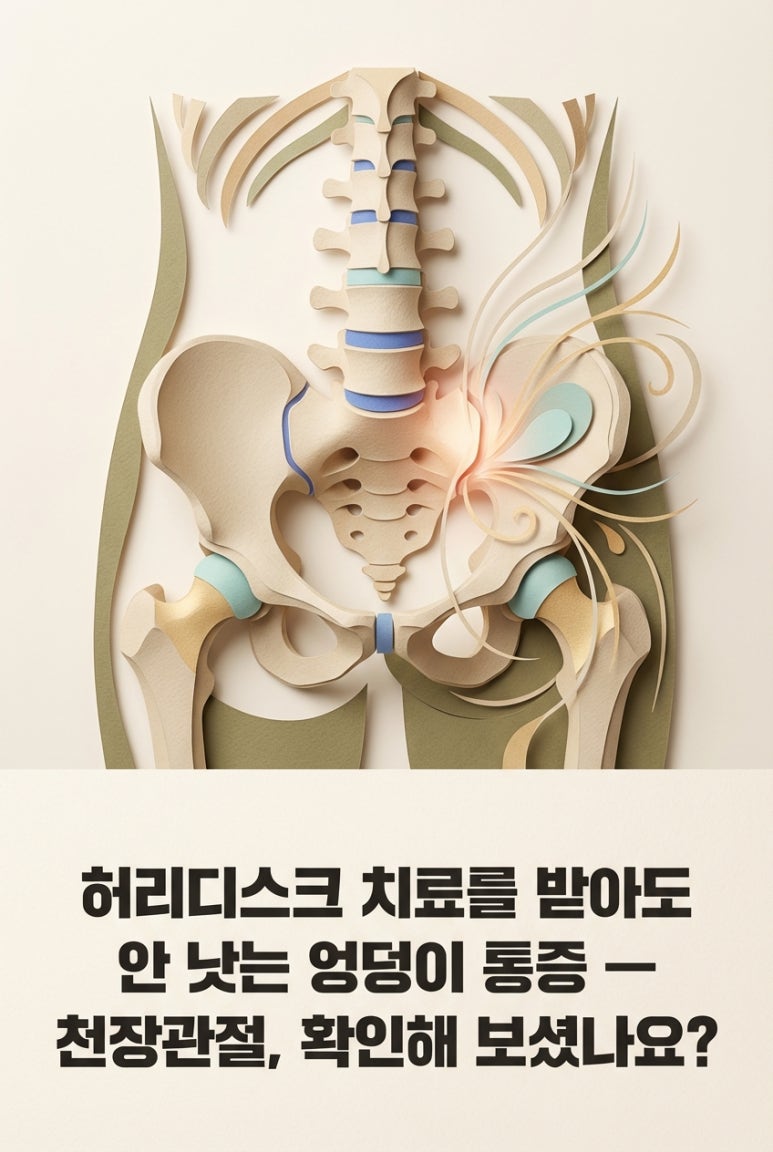
In contrast, sacroiliac joint syndrome causes pain in the upper buttock or around the pelvis.
2️⃣ Observe whether pain worsens in specific postures.
Herniated discs often worsen when bending the lower back.
Sacroiliac joint syndrome causes increased discomfort when standing up from a seated position.
3️⃣ If symptoms persist, consult with a specialist for an accurate diagnosis.
It is important not to rely solely on self-diagnosis.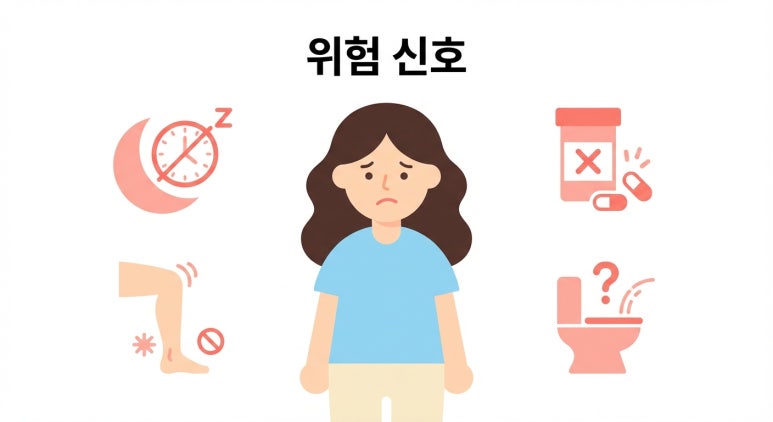 🚨 Warning | Warning Signs You Must Check
✔ Severe nighttime pain and pain that prevents daily activities - unable to sleep or difficult to perform daily activities.
✔ Lower extremity paralysis and sensory abnormalities - weakness in the legs or numbness in sensation appears.
✔ Bowel and bladder dysfunction - if you have difficulty controlling bowel and bladder functions, immediate detailed examination is necessary.
✔ No response to medication treatment - if taking medication does not improve symptoms and pain persists, consider these conditions.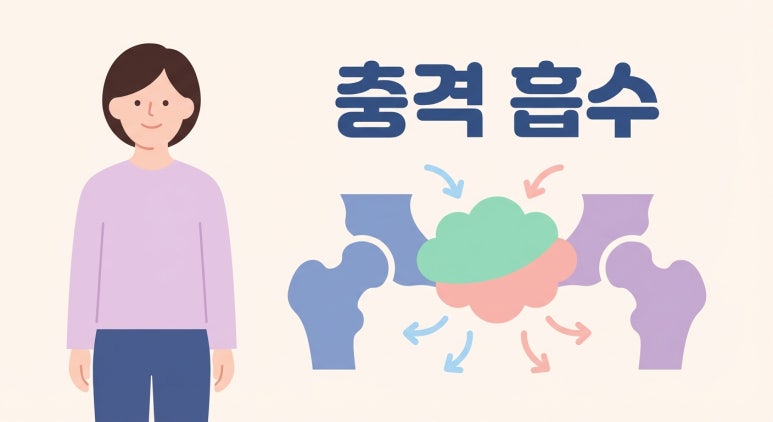 🧠 The Why
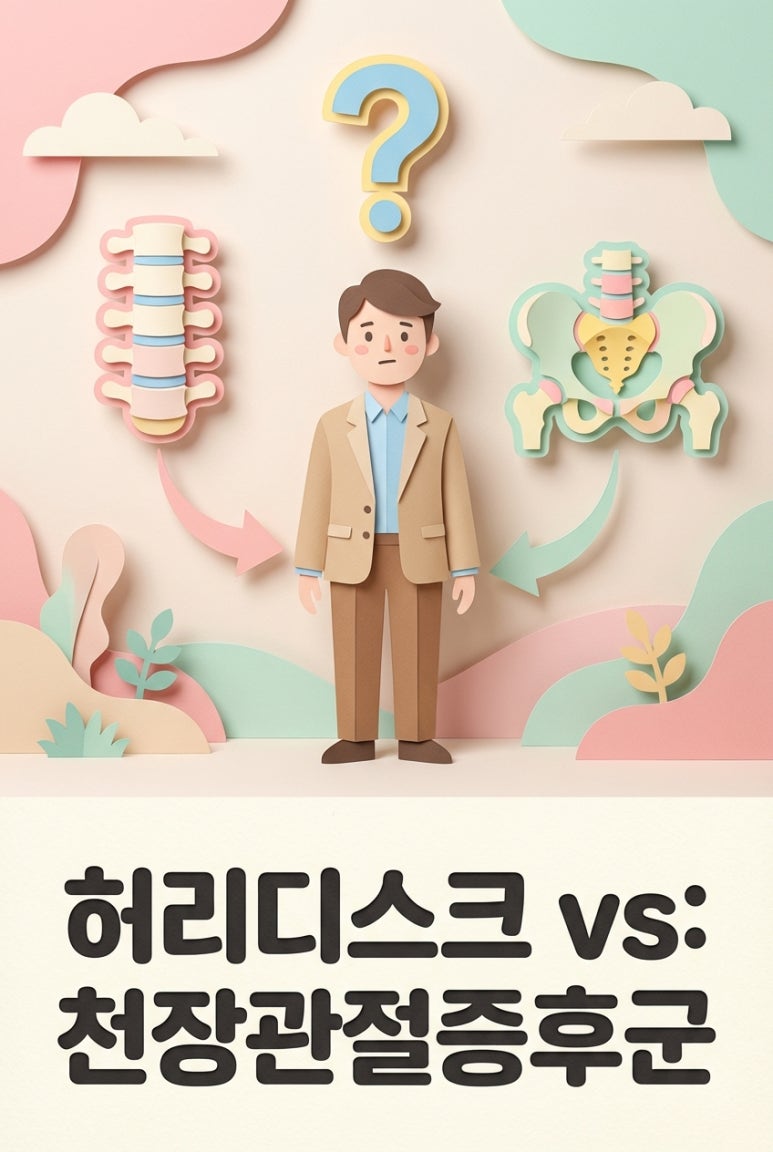
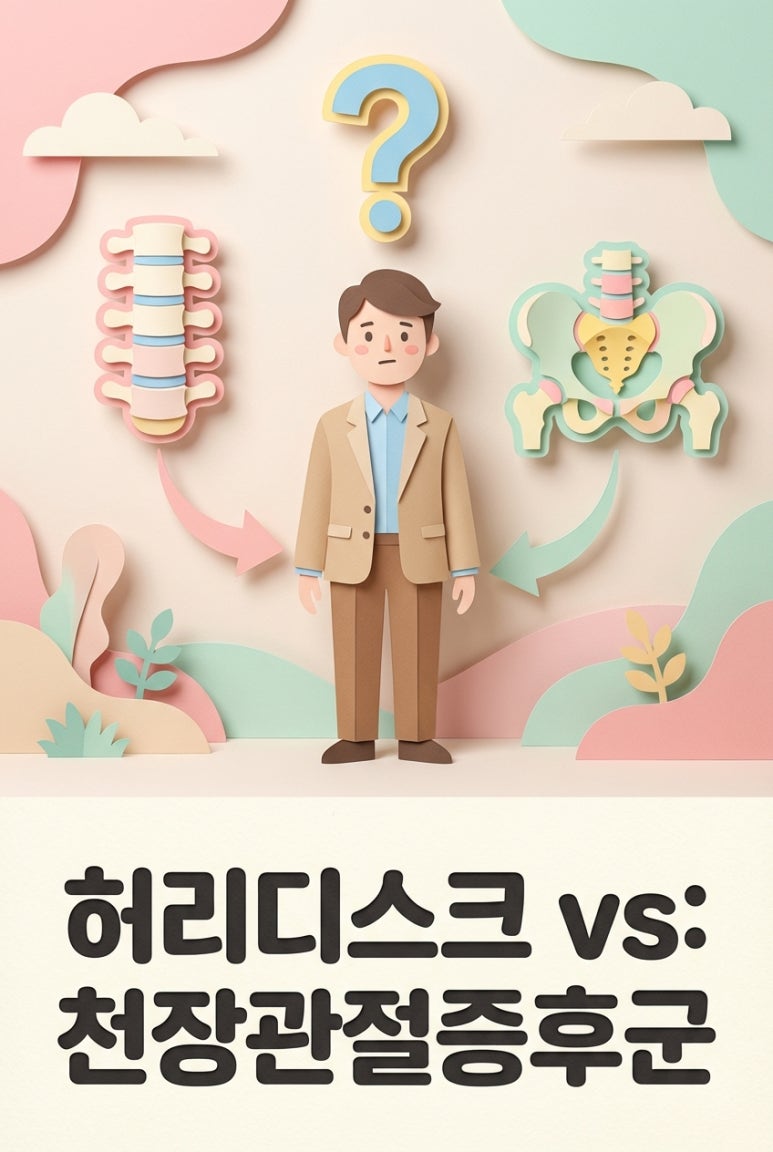
A herniated disc is a condition where the disc protrudes and compresses a nerve.
Sacroiliac joint syndrome, on the other hand, is a joint problem connecting the pelvis and sacrum.
It refers to a condition where inflammation or functional abnormality occurs in the sacroiliac joint[1].
The sacroiliac joint is like a 'shock absorber' in our body.
It plays an important role in distributing impact during walking and movement.
Problems arise when it becomes too loose,
and problems also develop when it becomes too tight.
Interestingly, when this joint develops problems,
pelvic pain similar to lower back pain occurs.
Since the causes are different, treatment methods must also differ.
📊 Proof | Cases and Evidence
This is a case of a woman in her 40s whom I treated in clinical practice.
She had been diagnosed with a herniated disc and underwent treatment for a long time without improvement.
Pain was mainly concentrated in the upper buttock and one leg.
In particular, pain worsened when standing up from a seated position.
Upon detailed diagnosis, she was diagnosed as not having a disc problem.
When she visited an Oriental medicine clinic for examination,
it turned out that the sacroiliac joint had become too loose, causing the problem.
Treatment was provided to strengthen the laxity of the sacroiliac joint[3].
Within a few weeks, the patient was freed from long-standing pain.
This case demonstrates that accurate diagnosis is the key to successful treatment.
🔚 Closing | Summary and Encouragement
Lower back pain can arise from many different causes.
Pain you thought was a disc problem might actually be sacroiliac joint syndrome.
Through accurate diagnosis and treatment, you can restore your quality of life.
After being diagnosed through detailed examination that it is not a herniated disc,
do not continue to suffer from pain of unknown origin in confusion.
At Dongjjedang Oriental Medicine Clinic, we will help you find the right direction for your treatment.
✍️ Reviewed by Choi Jang-hyuk, Director of Dongjjedang Oriental Medicine Clinic
❓ FAQ
Q. How is the pain from herniated disc different from sacroiliac joint syndrome?
Herniated discs are characterized primarily by pain from compressed nerves that radiates down the legs and causes numbness.
Sacroiliac joint syndrome causes a dull ache in the upper buttock or around the pelvis.
Sacroiliac joint syndrome causes pain due to inflammation or instability of the joint itself.
These two types of pain show subtle differences in location and nature.
Q. Can sacroiliac joint syndrome be cured with medication?
Common anti-inflammatory painkillers reduce inflammation and temporarily relieve pain[2].
However, this is only for symptom relief.
They do not address joint instability or surrounding muscle imbalances.
Oriental medicine treatment aims for structural stabilization.
Q. What kind of treatment is provided at an Oriental medicine clinic for sacroiliac joint syndrome?
Oriental medicine clinics provide heated acupuncture, needle-knife therapy, thread embedding, herbal acupuncture, and chiropractic techniques.
These restore the function of the sacroiliac joint and strengthen surrounding muscles.
When stiffness is the problem, needle-knife therapy and chiropractic techniques are used to relax the joint,
and when laxity is the problem, heated acupuncture, herbal acupuncture, and thread embedding are used to strengthen the joint[4].
Treatment is customized to match each patient's individual condition.
📚 References
[Western Medicine (WM)] [1] BMJ Best Practice (2022). "Sacroiliac joint dysfunction."
[2] NICE (2023). "Low back pain and sciatica: assessment and management."
[Oriental Medicine (KM)] [3] Korean Oriental Medicine Association CPG (2021). "Clinical Practice Guidelines for Lower Back Pain in Oriental Medicine."
[4] NIKOM (2020). "Oriental Medicine Treatment of Chronic Lower Back Pain."
Pain
Thought It Was a Herniated Disc, but It's Sacroiliac Joint Syndrome? Three Ways to Distinguish
View Program