
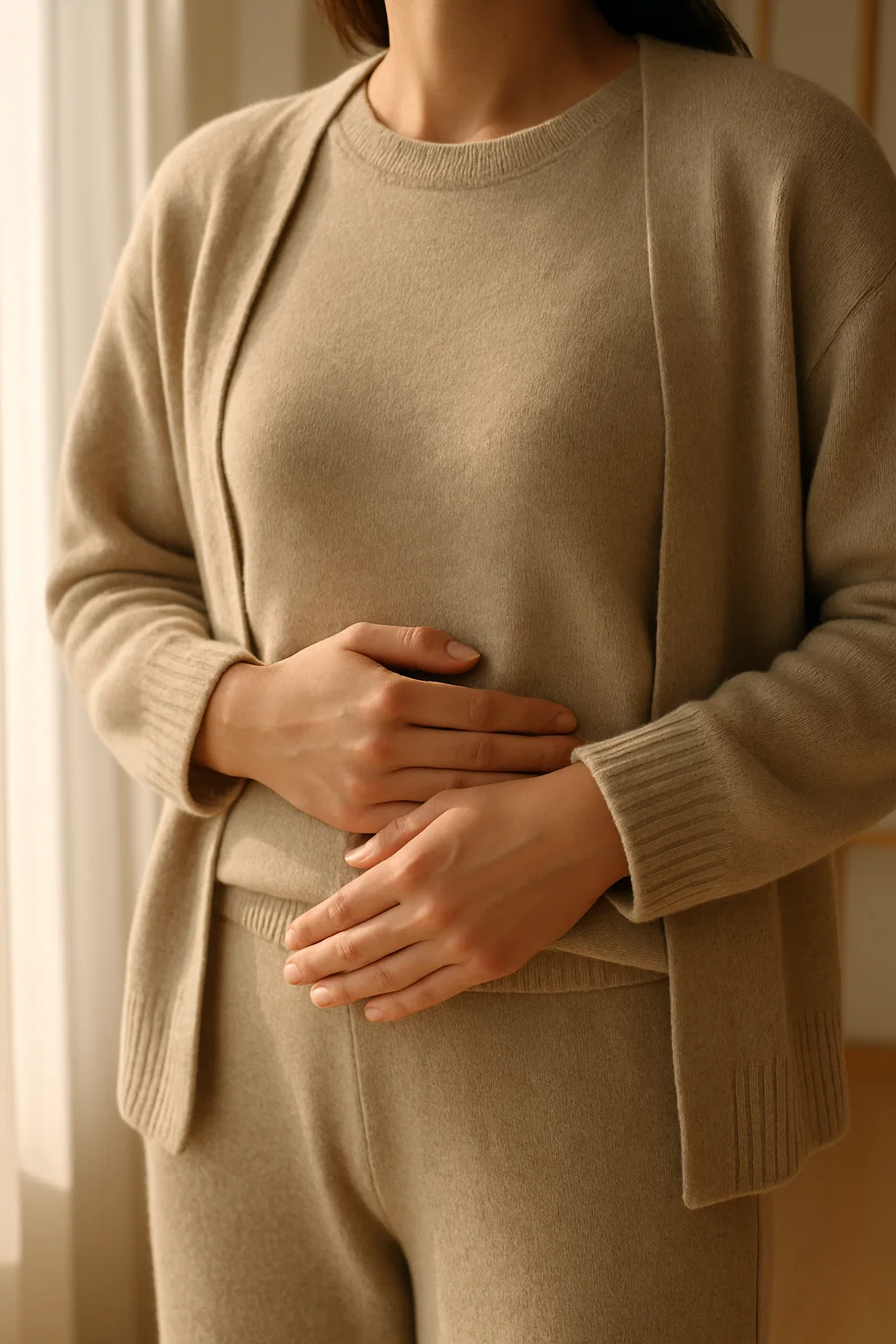
IBS
Irritable Bowel Syndrome
Functional bowel disorder caused by stress and abnormal gut motility

# Possibility / Realistic Goals (1)
# Comorbidities (1)
# Lifestyle Management (2)
Q Whenever there's a presentation or meeting at work, I inevitably get stomach pain and rush to the bathroom. Is there anything I can do right away when I'm stressed?
A. In tense situations, breathing out slowly and deeply, drinking warm water, and keeping your abdomen warm can ease intestinal tension. In the long run, regular meals and sleep along with light exercise are most effective at reducing gut hypersensitivity.
View details →Q What habits can I build to reduce stomach aches, constipation, and diarrhea?
A. Keeping regular meal times, getting enough sleep, daily light exercise, and managing stress are the key habits. Drinking enough water and reducing spicy foods and overeating can make as much difference as medication.
View details →# Safety (2)
Q My gut is sensitive. Won't taking herbal medicine for a long time upset my stomach or burden my liver?
A. The prescription is tailored by the Korean medicine doctor to your constitution and gut condition, minimizing any burden. Properly prescribed herbal medicine is managed so it does not affect liver function, and it is actually formulated to ease a weakened gut.
View details →Q Sometimes there's blood in my stool and I've been losing weight lately. Can I just assume it's IBS and ignore it?
A. No. Blood in stool, weight loss, anemia, pain or diarrhea that wakes you from sleep, and symptoms that started after age 50 can be signals of a condition other than IBS and must be investigated.
View details →# Drug Combination / Interactions (2)
Q I'm currently taking bowel medication for IBS from an internal medicine clinic. Is it okay to take herbal medicine together?
A. Yes, you can take them together if you space them out. We generally advise spacing herbal medicine and conventional medication about 1–2 hours apart, and as symptoms improve the conventional medication is gradually tapered.
View details →Q I buy probiotics and laxatives all the time. Do I have to stop these when I start Korean medicine treatment?
A. You don't need to stop right away. Probiotics are generally fine to continue alongside treatment, and laxatives can be used in parallel for now—gradually reducing them as bowel function improves with treatment.
View details →# Prognosis / Recovery (2)
Q I've been living like this since my 20s—over 10 years. Can I really get better? How long does treatment usually take?
A. Even long-standing cases can improve significantly once bowel function and the autonomic nervous system stabilize. The typical goal is a noticeable reduction in the frequency and intensity of abdominal pain and bowel irregularities within 1–3 months of consistent treatment.
View details →Q It gets better, but then flares right back up whenever I have exams or stress. Can I prevent relapses?
A. IBS has a clear tendency to alternate between improvement and worsening, so management is the key. Rather than fixating on a complete cure, building the gut's stability and your own capacity to regulate stress can lengthen the intervals between flares and lower their intensity.
View details →# Causes Explained (1)
# Food / Triggers (2)
Q I run a shop at Dongincheon Market with irregular meals and live on spicy food and coffee. What foods especially irritate the bowel?
A. Greasy and spicy food, coffee, alcohol, carbonation, and easily fermentable sugars (FODMAPs) like legumes, some fruits, and dairy easily cause gas and abdominal pain. Irregular meals and overeating also have a big effect.
View details →Q I heard a low-FODMAP diet is good, but I'm so busy—do I have to avoid every food for life?
A. A low-FODMAP diet "temporarily" reduces gas-forming sugars to find which foods irritate your bowel. It's not cutting everything forever but a step-by-step diet where you reintroduce foods that suit you after finding the culprits.
View details →# Treatment Schedule (2)
Q I work rotating shifts and can't come in often. Realistically, how many visits do I need?
A. You don't need to come every day. Treatment typically involves acupuncture 1–2 times per week plus daily herbal medicine, and even those with irregular schedules can continue treatment without disrupting daily life.
View details →Q I'm looking for a place to go near Dong-gu, Incheon. How does the first visit work?
A. At the first visit we listen carefully about your abdominal pain, bowel patterns (diarrhea-predominant, constipation-predominant, or mixed), diet, stress, and lifestyle, and examine the condition of your gut. We then determine the treatment plan, herbal prescription, and lifestyle management direction together.
View details →# Treatment Stages (1)
# Effectiveness (2)
Q I've taken anti-diarrheals and probiotics for years—when I stop, the urgency returns. Can I live without medication?
A. Symptom drugs only suppress bowel movement temporarily, while the environment that made the bowel sensitive remains, so it recurs when stopped. By stabilizing the oversensitive bowel function itself, you can aim for a state less dependent on medication.
View details →Q My colonoscopy is clean, but my stomach keeps hurting and feeling bloated. Can things tests can't catch improve with Korean medicine?
A. Symptoms are often severe even with no lesion on endoscopy. Such functional bowel-hypersensitivity, hard to catch on tests, is an area where Korean medicine that regulates bowel movement and sensitivity shows its strength.
View details →IBS is not just a simple symptom
Korean medicine that considers both your constitution and lifestyle rhythm treats the root cause.
From consultation to precise treatment, we provide personalized care.
Prescriptions tailored to your constitution and symptoms treat the root cause
The director personally sees you from first to follow-up visits
We identify the essence through Sasang constitution, pulse and abdominal diagnosis
Treatment based on long clinical experience and evidence
Was this helpful? If you need accurate care for your condition, please contact us below.