
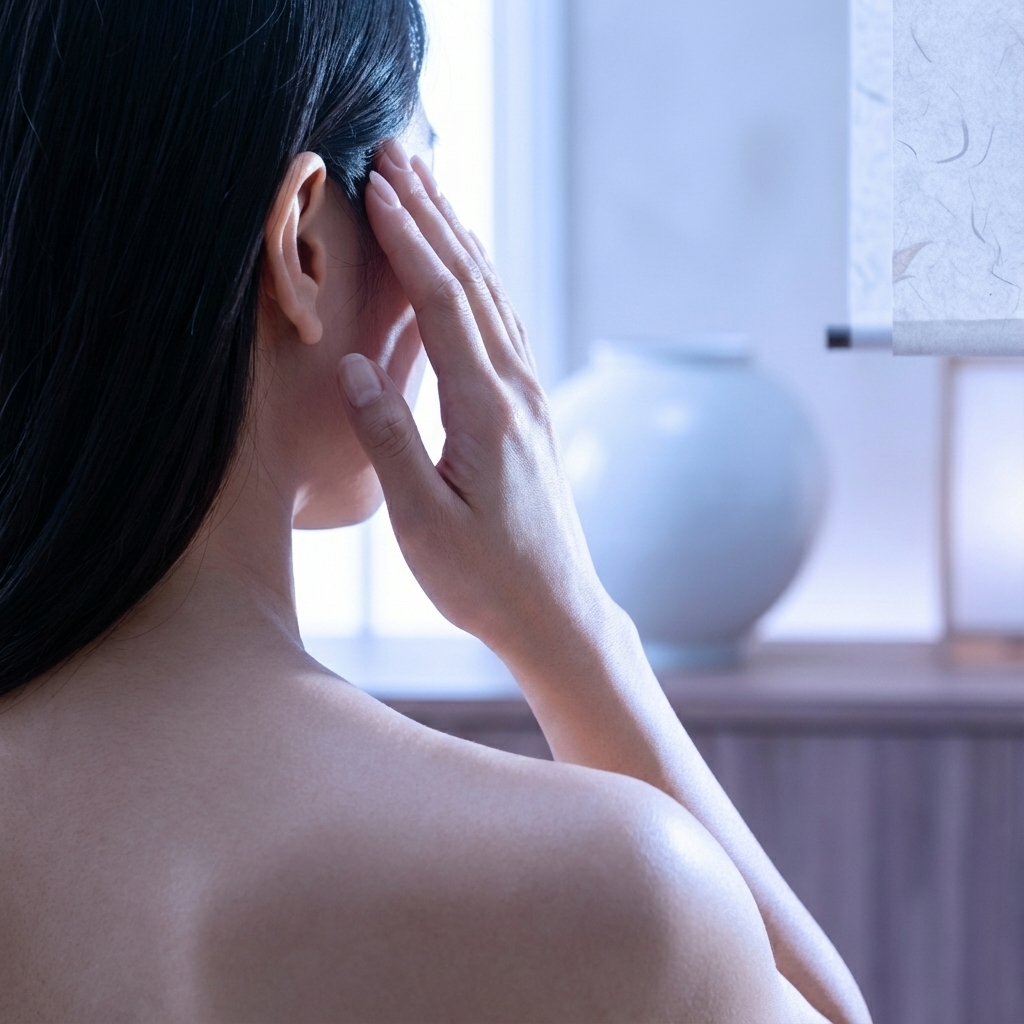

Q I was diagnosed with a cervical disc and I have a headache along with it. How do you tell cervicogenic headache apart from migraine?
A Cervicogenic headache changes with neck movement and tends to radiate to the back of the head, neck, and shoulders. Migraine is characterized by throbbing pain with nausea, and the two can also occur at the same time.
Detailed Answer
Cervicogenic headache is a secondary headache caused by cervical structures (joints, discs, muscles), and the headache changes when you move your neck or take a certain posture. The pain usually starts in the occipital region on one side and spreads to the temporal region and around the eye, and it can be confirmed with a cervical diagnostic block. The cervical condition is checked with MRI or X-ray, and physical therapy, traction, and acupuncture are combined.
Korean Medicine Clinic Perspective
Dongjedang views "neck-and-nape stiffness pain," in which a stiff neck and shoulders compress the vessels and nerves going to the brain, as a common root of headache, and focuses on releasing this tension in the circulation stage. We open the blocked pathways with craniosacral Chuna that gently realigns the skull and cervical spine, along with acupuncture and cupping at the cervical region; during an acute flare-up of a cervical disc, we limit Chuna and treat safely with acupuncture and pharmacopuncture instead.
Related FAQs
-
Q
My MRI is normal, but my headache won't go away. Is it possible to fully recover, or do I have to live with it for life?
#Possibility / Realistic Goals
-
Q
I have frequent headaches, and my anxiety and depression are also worsening. Is there a connection between headaches and mental health?
#Comorbidities
-
Q
I've been told to keep a headache diary. How should I record it?
#Lifestyle Management
-
Q
Is it okay to exercise when I have a headache? I'm worried it might make things worse.
#Lifestyle Management
-
Q
I suddenly got the worst headache I've ever experienced in my life. What should I do in a situation like this?
#Safety