
Hallux Valgus
Hallux Valgus
Hallux valgus, a painful condition where the big toe bends and protrudes.
# Possibility / Realistic Goals (2)
Q I have early-stage hallux valgus. Can I be completely cured if I start treatment now?
A. For mild deformities with an valgus angle of 20° or less, early treatment allows you to expect both pain relief and inhibition of deformity progression. While it is difficult to return the angle itself to 0° without surgery, it is entirely possible to recover to a level where there is no functional discomfort. The prognosis is best when shoe correction, exercise, and Korean medicine treatments are consistently combined.
View details →Q Is it possible to manage severe deformities with Korean medicine treatment without surgery?
A. While surgical correction is the fundamental solution for severe deformities with a hallux valgus angle of 40° or more, pain management and function maintenance are possible through Korean medicine treatment if surgery is not desired or not feasible. It is also realistic to use Korean medicine treatment before surgery to reduce inflammation and improve surgical outcomes, or to utilize it for post-operative rehabilitation. It is important to set realistic expectations.
View details →# Comorbidities (1)
# Lifestyle Management (2)
Q Are there any foot exercises that help with hallux valgus?
A. Exercises that strengthen the adductor muscles of the big toe—such as towel pinching, toe spreading, and strengthening the flexor hallux brevis—are effective in inhibiting the progression of the deformity. Performing these exercises consistently for 10 to 15 minutes a day restores the function of the foot arch and intrinsic muscles, thereby reducing pain. If the pain is severe, it is better to combine strength training after treatment rather than engaging in strenuous exercise.
View details →Q Are insoles or orthotics really effective?
A. Custom insoles that support the arch of the foot help alleviate pain by distributing the load on the metatarsals. Custom-made insoles by foot specialists are more effective than commercially available products, and better results can be expected when combined with treatment. For orthotic devices (toe splints), nighttime use is recommended rather than long-term wear.
View details →# Safety (1)
# Drug Combination / Interactions (1)
# Prognosis / Recovery (2)
Q How much improvement can be achieved with Korean medicine treatment alone, without surgery?
A. For mild to moderate deformities (valgus angle of 40° or less), pain relief and recovery of walking function are possible without surgery. Pain reduction is usually felt within 4 to 8 weeks, and the effect of inhibiting deformity progression is maintained long-term when supported by consistent treatment and lifestyle modifications. For severe deformities (40° or more), it is more realistic to combine Korean medicine treatment during the rehabilitation phase after surgery.
View details →Q Is traditional Korean medicine helpful for rehabilitation after surgery?
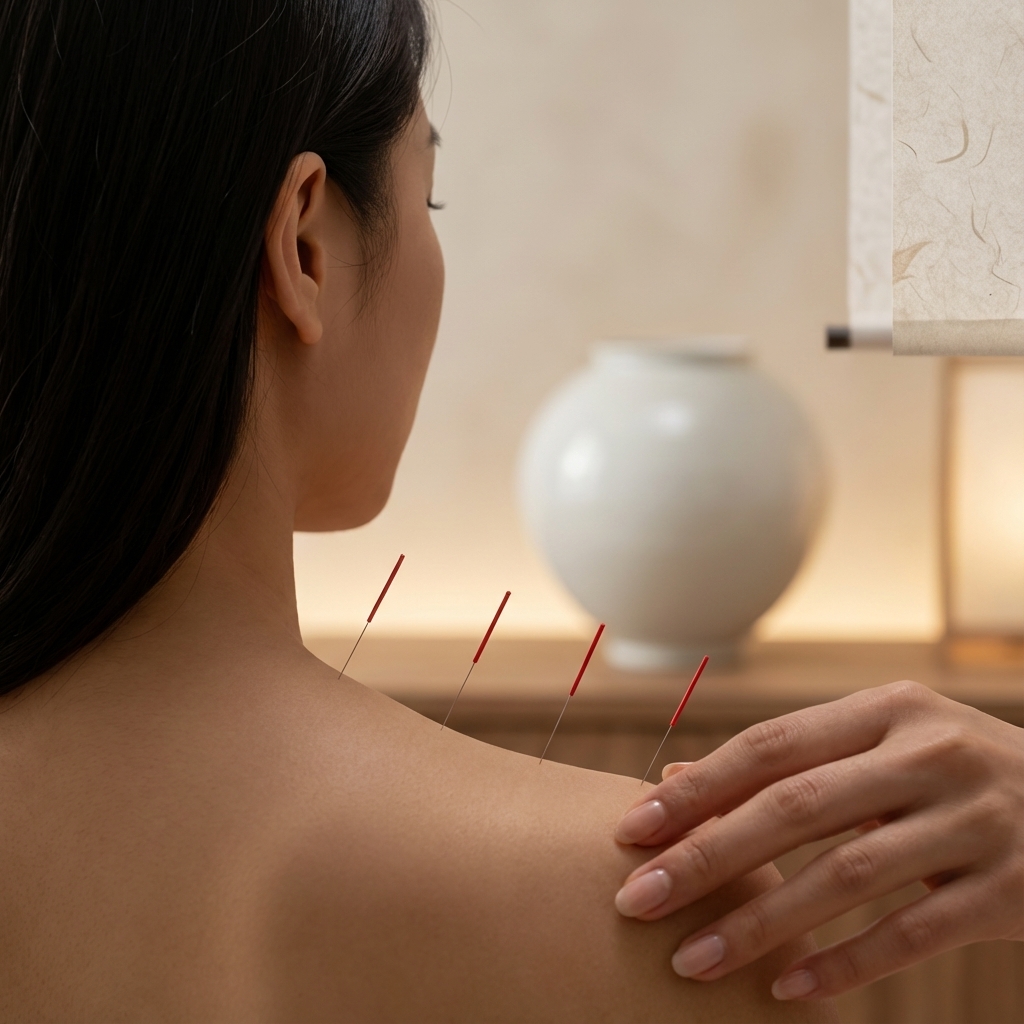
A. Acupuncture and pharmacopuncture are helpful in reducing swelling at the incision site, preventing scar adhesion, and restoring joint range of motion after surgery. Korean medicine rehabilitation can begin 2 to 4 weeks after surgery once the sutures have stabilized. It is used complementarily to shorten the rehabilitation period and reduce complications at the surgical site.
View details →# Causes Explained (2)
Q I am a housewife in my 40s. Why is my big toe gradually bending outward?
A. Hallux valgus is a deformity in which the intrinsic muscles supporting the big toe weaken and the ball of the foot widens, causing the big toe to be pushed toward the little toe. Major causes include wearing tight shoes or high heels, flat feet, and genetic ligament laxity. Once the deformity begins, it gradually worsens due to increased pressure from shoes.
View details →Q My mother had hallux valgus, and now I have it too. Is it hereditary?
A. Hallux valgus is a condition with a distinct family history, where ligament laxity and foot structure are inherited. If parents have the same deformity, their children's probability of developing it is 2 to 3 times higher. Even with a genetic predisposition, progression can be significantly slowed down through proper shoe selection and strengthening foot muscles.
View details →# Food / Triggers (2)
Q Are there any foods that worsen hallux valgus pain?
A. Refined carbohydrates, fried foods, and excessive alcohol consumption, which promote inflammation, can exacerbate inflammation around the joints. Be careful, as foods high in purines that raise uric acid levels can also increase pain in the big toe joint. On the other hand, fish rich in omega-3s and antioxidant vegetables help alleviate inflammation.
View details →Q Which shoes worsen hallux valgus the fastest?
A. High heels with narrow toes and shoes with narrow widths apply continuous lateral pressure to the big toe, accelerating deformation. If the heel is 7 cm or higher, 75% of body weight is concentrated on the ball of the foot, significantly increasing the burden on the joints. For daily wear, shoes with sufficient width and heels of 3 cm or less are recommended.
View details →# Treatment Schedule (1)
# Treatment Stages (2)
Q The pain is so severe that it is difficult to even walk. In what order is the treatment performed?
A. During the acute phase, intensive treatment using acupuncture, bee venom acupuncture, and pharmacopuncture is performed first to reduce swelling and inflammation. Once pain decreases by more than 50%, adhesions are separated using moxibustion needles, and the treatment moves to the joint function recovery phase. Subsequently, the process continues to the recurrence prevention phase through thread embedding and exercise rehabilitation.
View details →Q Should I continue treatment even though the pain has improved to some extent?
A. The point at which pain subsides is the best time to begin treatment for functional recovery and prevention of recurrence. At this stage, combining thread embedding and foot muscle rehabilitation can suppress the progression of deformity and lower the likelihood of recurrence. Rather than stopping completely, monthly maintenance treatment is recommended.
View details →# Effectiveness (2)
Q Can bent toes actually be straightened with Korean traditional medicine treatment?
A. While Korean traditional medicine treatment does not surgically correct the angle of deformity, it is effective in reducing pain and inhibiting the progression of the deformity. If treatment is started early, function and gait improve significantly in cases of mild to moderate deformity. The focus is on relieving daily pain and preventing recurrence rather than on the angle itself.
View details →Q I have worn a brace for a long time but it hasn't been effective. Is Korean traditional medicine treatment different?
A. Braces alone are ineffective because they cannot correct the angle of deformity and fail to resolve the joint adhesions and surrounding muscle imbalances that cause pain. Korean traditional medicine addresses the root cause of pain by directly manipulating the tissues surrounding the joint using moxibustion, acupuncture, and pharmacopuncture. You can expect better results when combined with a brace.
View details →Hallux Valgus is not just a simple symptom
Korean medicine that considers both your constitution and lifestyle rhythm treats the root cause.
From consultation to precise treatment, we provide personalized care.
Prescriptions tailored to your constitution and symptoms treat the root cause
The director personally sees you from first to follow-up visits
We identify the essence through Sasang constitution, pulse and abdominal diagnosis
Treatment based on long clinical experience and evidence
Was this helpful? If you need accurate care for your condition, please contact us below.