

Q In what order is treatment performed when a patient visits a Korean medicine clinic for the first time due to hip pain?
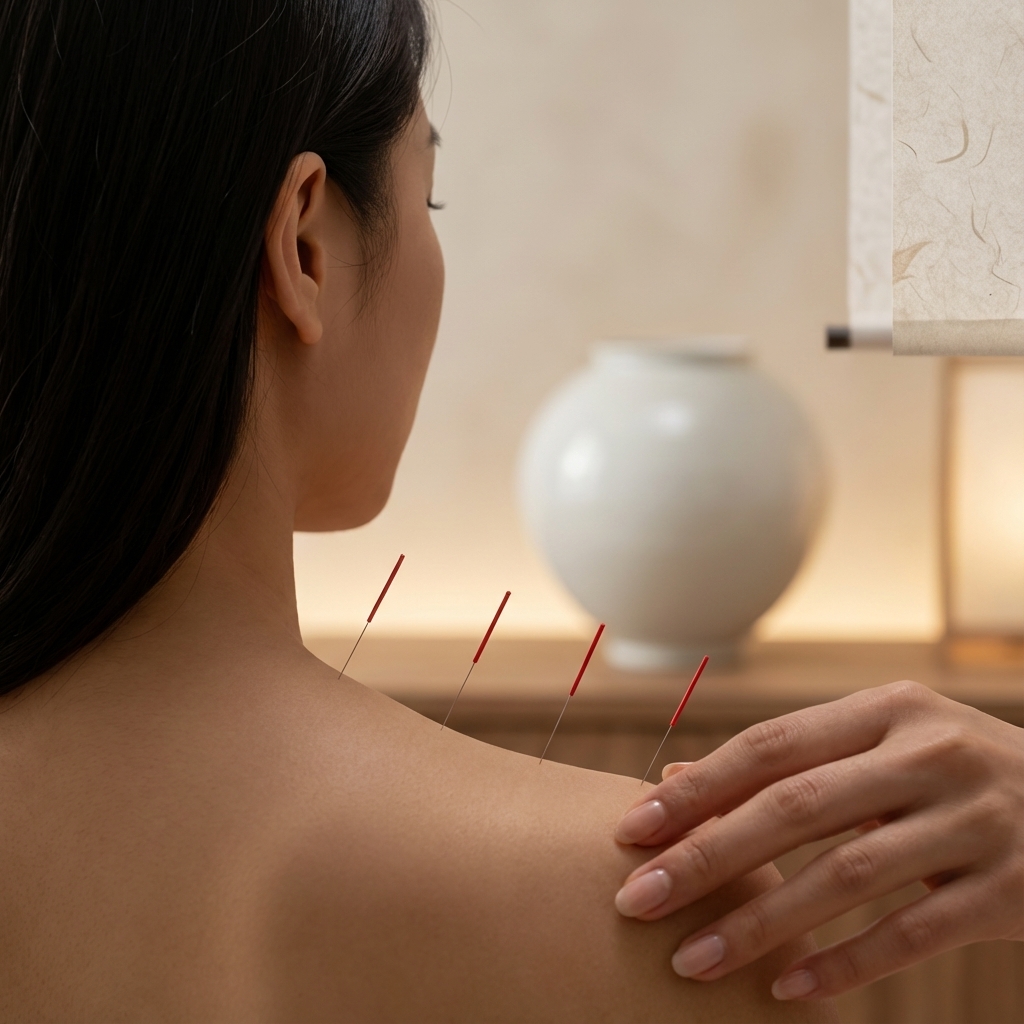
A After identifying the exact cause through medical history taking, physical examination, and imaging interpretation during the initial consultation, treatment proceeds in the order of acute inflammation relief → functional recovery → prevention of recurrence. At each stage, a combination of treatment methods such as acupuncture, pharmacopuncture, moxibustion, and herbal medicine is applied.
Detailed Answer
Stage 1 (Acute Phase, 1–3 weeks): The goal is to suppress pain and inflammation. Local inflammation is reduced using acupuncture and pharmacopuncture, and muscle tension is relieved with heat therapy. In severe cases, the concurrent use of short-term analgesics is recommended.
Stage 2 (Subacute Phase, 3–8 weeks): The goal is adhesion release and functional recovery. Ligament and fascia adhesions are removed using moxibustion, and tissue regeneration is promoted using bee venom acupuncture and thread embedding. Rehabilitation exercises are initiated.
Stage 3 (Recovery Phase, 8 weeks onwards): This stage focuses on preventing recurrence and overall body management. We replenish kidney and spleen deficiency through internal treatment (herbal medicine) and reinforce core strength exercises. We maintain the condition through maintenance therapy at intervals of 2 to 4 weeks.
Korean Medicine Clinic Perspective
In Korean medicine, treatment is designed to follow a flow of first expelling harmful energies and then replenishing the body's vital energy. The sequence involves first removing pathogenic factors within the body—blood stasis, dampness, and cold—and then replenishing the vital energy of the kidneys and spleen. Replenishing while harmful energies are present leads to the error of actually amplifying the pathogenic factors. Following this principle, Dongjedang adheres to a sequence of removing pathogenic factors using needle acupuncture and pharmacopuncture, followed by replenishing vital energy with herbal medicine tailored to the patient's constitution. Bringing imaging findings (X-ray or MRI) during the initial consultation allows for a more accurate treatment plan.
Related FAQs
-
Q
I was advised by the hospital to have artificial joint surgery because my hip joint is severely worn down. Can I postpone the surgery through Korean traditional medicine treatment?
#Possibility / Realistic Goals
-
Q
I am in my 20s or 30s and am worried because my hip hurts. Is Korean traditional medicine effective for young people?
#Possibility / Realistic Goals
-
Q
I have both a herniated disc and hip pain. Can both be treated at the same time?
#Comorbidities
-
Q
Can I continue exercising when I have hip pain? What exercises are helpful?
#Lifestyle Management
-
Q
What precautions should be taken regarding sleeping, sitting posture, and daily habits to reduce hip pain?
#Lifestyle Management