
Q I have heard that shoulder impingement syndrome can lead to a rotator cuff tear. Does the treatment differ when both conditions are present?
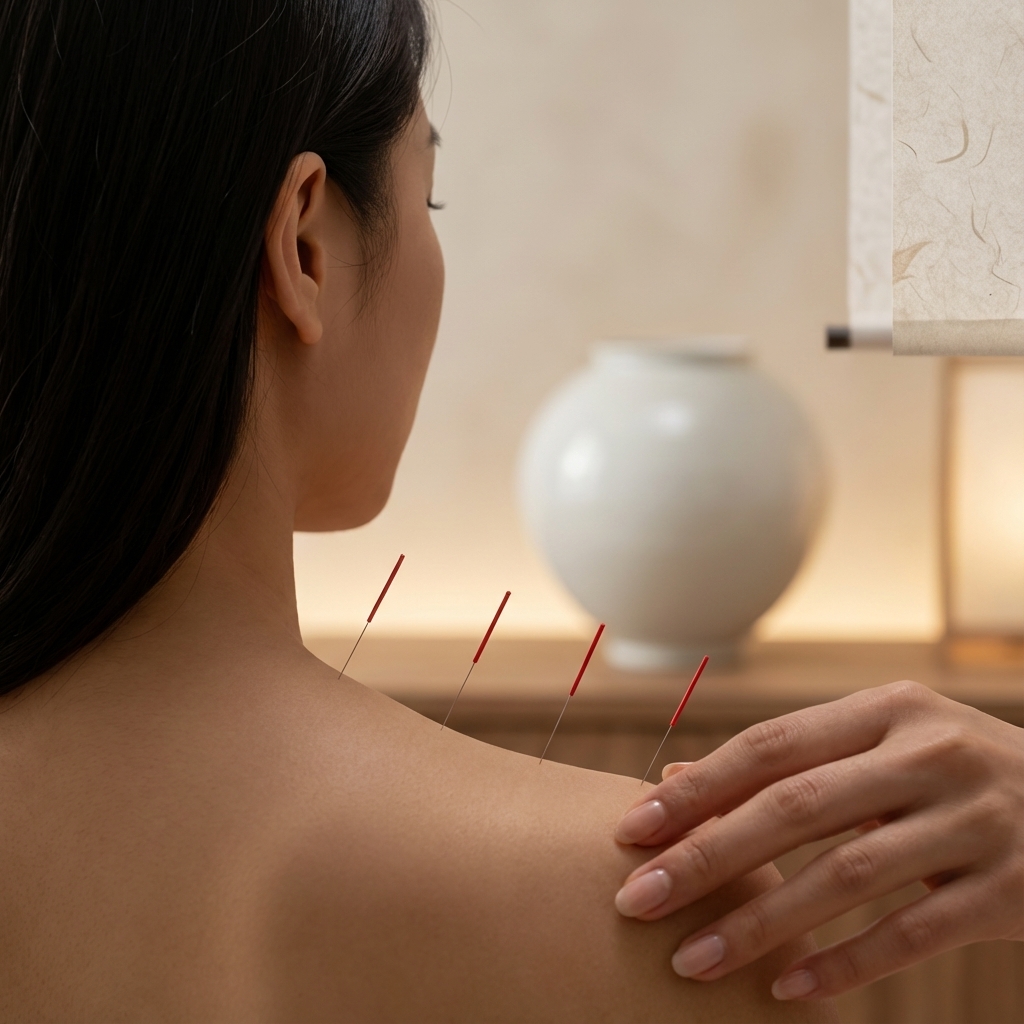
A When shoulder impingement syndrome is accompanied by a partial rotator cuff tear, we simultaneously address the cause of the impingement and regenerate the torn area. We release adhesions using needle acupuncture and induce collagen regeneration in the torn area using thread embedding and fire acupuncture; the intensity and duration of treatment are higher than for simple impingement syndrome.
Detailed Answer
If left untreated, shoulder impingement syndrome can cause repetitive friction on the rotator cuff tendons, progressing from a partial tear to a complete tear. When a partial tear is present, treatment must address two things simultaneously: ① resolving the cause of impingement (subacromial space stenosis) and ② regenerating the torn area. While surgery should be considered first for complete tears (especially those exceeding 50%) due to a low probability of functional recovery, significant functional recovery is possible with conservative treatment for partial tears or mild complete tears. When the two conditions overlap, the treatment period is longer, averaging 4 to 6 months.
Korean Medicine Clinic Perspective
A shoulder accompanied by a rupture is in a state of deep damage to Qi and blood; stagnant blood accumulates at the rupture site, hindering collagen regeneration. Fire acupuncture strongly draws up local Yang energy to stimulate cell regeneration in the damaged tendons, while thread embedding aids in the continuous reformation of collagen structures. By combining this with constitution-tailored herbal medicine that reinforces the functions of the intervertebral muscles and supraspinatus bones to create an internal environment for regeneration, the goal is to prevent the progression of the rupture and restore function through an organic combination of external and internal treatments.
Related FAQs
-
Q
I have had shoulder pain for over 5 years. Can I get better with Korean medicine treatment even in such a long-standing case?
#Possibility / Realistic Goals
-
Q
My mother, in her 70s, has shoulder impingement syndrome. Can she receive traditional Korean medicine treatment despite her advanced age?
#Possibility / Realistic Goals
-
Q
Are there any exercises that help with shoulder impingement syndrome? Conversely, what exercises should be avoided?
#Lifestyle Management
-
Q
How should I sleep if I have shoulder impingement syndrome? It seems to get worse when I lie on the painful shoulder side.
#Lifestyle Management
-
Q
Is the acupuncture procedure dangerous for the shoulder? I have heard that it can damage blood vessels or nerves.
#Safety