
Q How does the treatment for shoulder impingement syndrome proceed in stages? I would like to know what is done when I first visit.
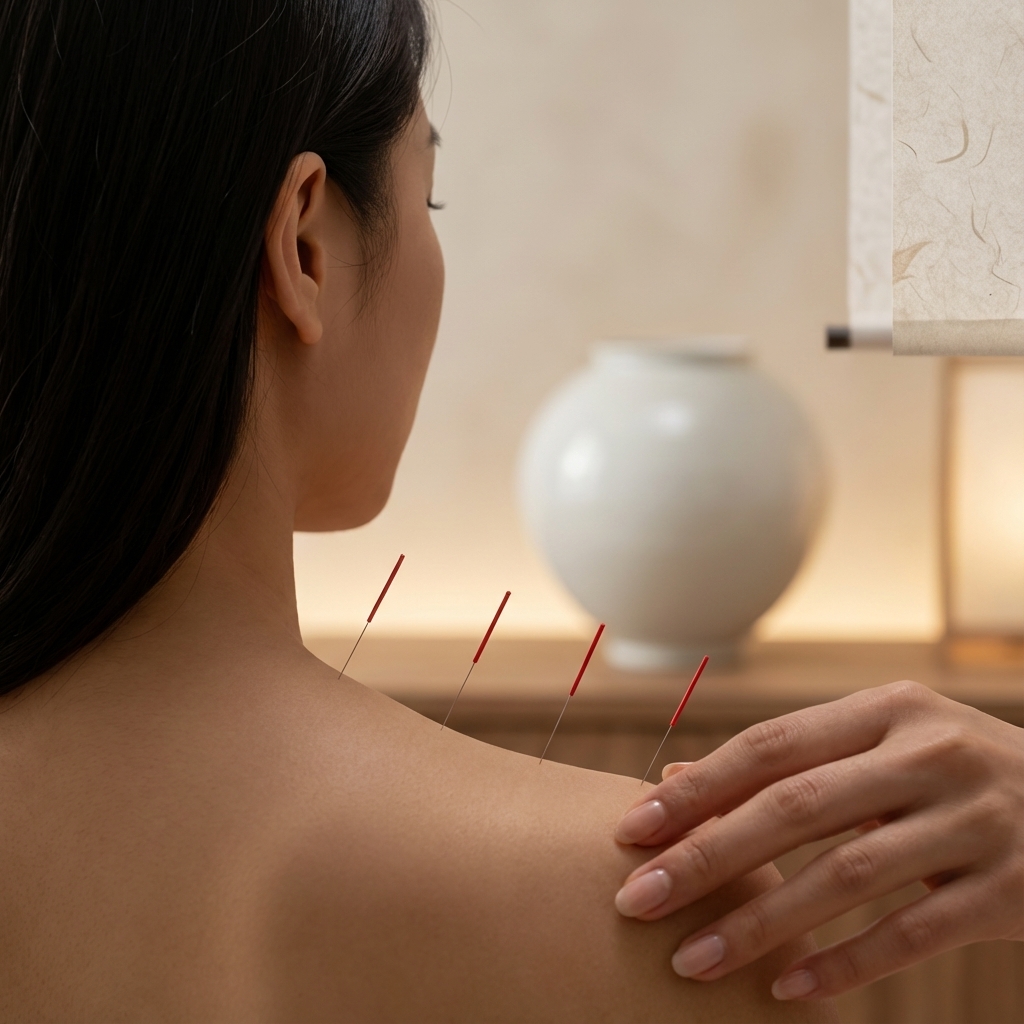
A During the initial consultation, the extent of rotator cuff damage is assessed via ultrasound. The treatment proceeds in the following order: Stage 1: Inflammation relief (acupuncture/pharmacopuncture) → Stage 2: Adhesion lysis (straight needle acupuncture) → Stage 3: Regeneration/strengthening (thread thread lifting/exercise). Treatment response is checked via ultrasound re-evaluation between each stage.
Detailed Answer
Korean traditional medicine treatment for shoulder impingement syndrome proceeds in three main stages. Stage 1 (Weeks 1–3): Following an ultrasound examination, inflammation of the subacromial bursa is reduced and pain is alleviated using acupuncture, pharmacopuncture, and bee venom acupuncture. Stage 2 (Weeks 4–8): Adhesions and fibrosis around the rotator cuff are lysised using straight needle acupuncture, and blood flow is increased using fire needle acupuncture. Stage 3 (Weeks 9 onwards): Collagen regeneration is induced using thread lifting, and shoulder stabilization exercises are prescribed concurrently. At each stage, we use ultrasound to monitor changes in tendon thickness and bursa size to adjust the direction of treatment. From a Korean medicine perspective, this process can be understood as a flow where Stage 1 involves the elimination of negative energy (anti-inflammation and resolution of blood clots), Stage 2 involves the opening of Qi and blood pathways (separation of adhesions and improved circulation), and Stage 3 involves reinforcing the body's recovery capabilities (regeneration and restoration of organ function). Herbal medicine tailored to the individual's constitution improves the internal environment throughout all stages; in particular, it strengthens the function of regulating tendons and bones in Stage 3, ensuring that the tendons remain healthy in the long term.
Related FAQs
-
Q
I have had shoulder pain for over 5 years. Can I get better with Korean medicine treatment even in such a long-standing case?
#Possibility / Realistic Goals
-
Q
My mother, in her 70s, has shoulder impingement syndrome. Can she receive traditional Korean medicine treatment despite her advanced age?
#Possibility / Realistic Goals
-
Q
I have heard that shoulder impingement syndrome can lead to a rotator cuff tear. Does the treatment differ when both conditions are present?
#Comorbidities
-
Q
Are there any exercises that help with shoulder impingement syndrome? Conversely, what exercises should be avoided?
#Lifestyle Management
-
Q
How should I sleep if I have shoulder impingement syndrome? It seems to get worse when I lie on the painful shoulder side.
#Lifestyle Management