
Q I am a male developer in my 40s. I was diagnosed with tennis elbow, but my neck and shoulders are also constantly stiff. Are they related, or did they develop separately?
A It is highly likely that they are related. Nerve irritation in the neck (cervical spine) or tension in the shoulder and back muscles disrupts the muscle usage patterns of the arm, creating an overload on the elbow tendons. Additionally, referred pain from cervical discs can appear in locations similar to those of tennis elbow. If the condition does not improve with treatment of only the elbow, the neck and shoulders must be examined together.
Detailed Answer
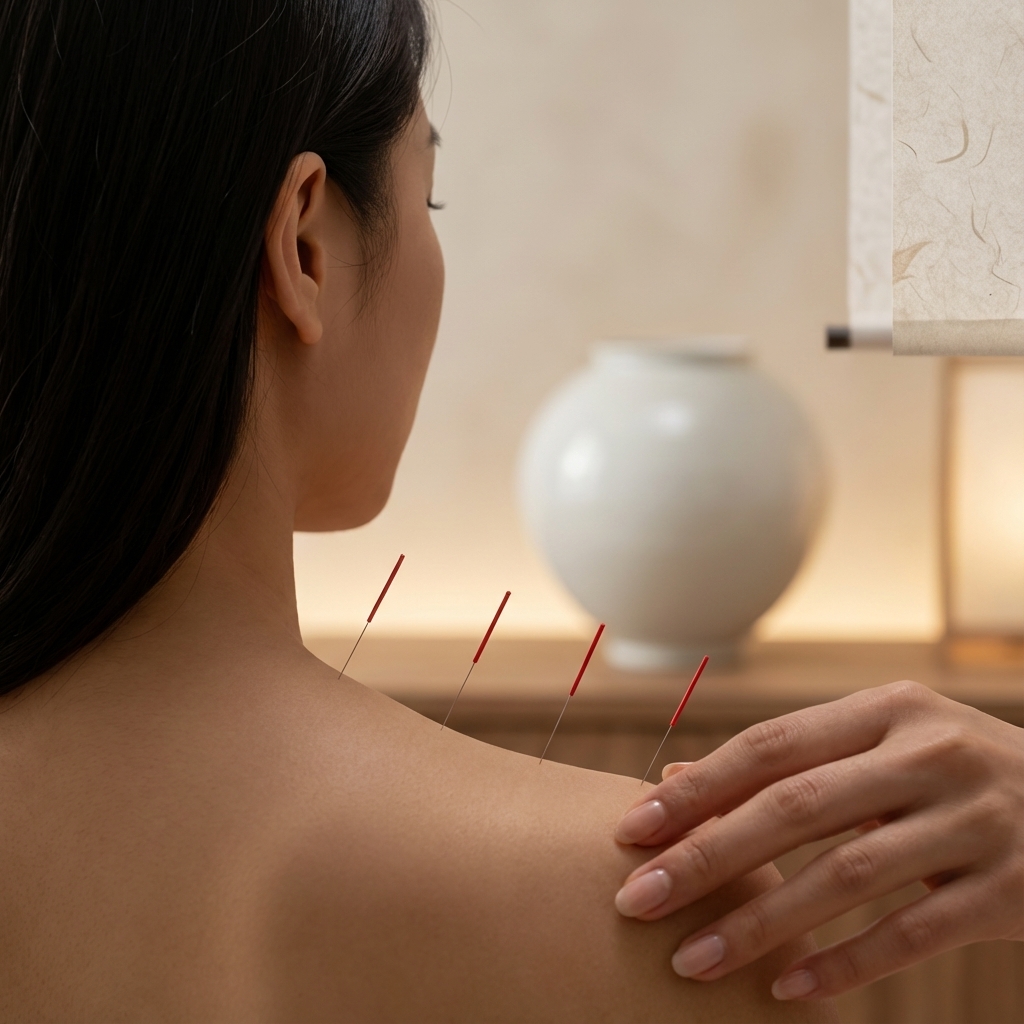
It is very common for neck and shoulder problems to accompany tennis elbow patients. There are two mechanisms. First, when the nerve roots of the 5th to 7th cervical vertebrae are irritated, the function of the arm muscles innervated by those nerves deteriorates, and the pain threshold is lowered, causing the elbow tendons to be easily damaged even with the same amount of work. Second, forward head posture and rounded shoulders weaken the stabilizing muscles of the scapula, and as compensation, the elbow and wrist muscles are forced to work excessively. This accompanying pattern is particularly common among developers who work with a keyboard and mouse for long periods. In fact, referred pain from cervical radiculopathy can appear on the outer side of the elbow, sometimes leading to it being mistaken for tennis elbow; therefore, it is necessary to differentiate whether arm pain changes with neck movement. From the perspective of a Korean medicine clinic, Korean medicine fundamentally views the elbow not as a single point, but as a line known as a meridian. There is a pathway of Qi and blood that passes through the outer side of the elbow, travels from the fingertips down the arm to the shoulder and neck; thus, Qi and blood blocked in the neck and shoulder lead to stagnation in the elbow below. From a Korean medical perspective, constant stiffness in the neck and shoulder accompanied by elbow pain is essentially two expressions of the same problem occurring along a single meridian line. At Dongjedang, we do not confine the treatment of such patients to the localized area of the elbow. We confirm elbow tendon damage using ultrasound and treat it with acupuncture and moxibustion, while simultaneously releasing tension and stiffness in the neck and shoulder along the meridian to resolve the blockage upstream. When internal treatment is added to clear away dampness and blood stasis accumulated from prolonged sitting and to restore Qi and blood circulation, the elbows, neck, and shoulders improve as a single flow rather than separately. They are not two distinct ailments, but a single problem that must be addressed together.
Related FAQs
-
Q
I am a self-employed man in my 50s. The orthopedic clinic even mentioned surgery, but is there really a possibility of recovery through Korean medicine treatment without surgery?
#Possibility / Realistic Goals
-
Q
I am a woman in my 40s who runs a small workshop in Dong-gu, Incheon. I have received steroid injections three times, but the effect is only temporary and the condition keeps recurring. Can this case also be improved with Korean traditional medicine treatment?
#Possibility / Realistic Goals
-
Q
I am a male office worker in my 50s. Please tell me about stretches or exercises that are good for tennis elbow. Something I can do at home every day.
#Lifestyle Management
-
Q
I am a woman in my 30s who runs a cafe. Is ice packs or hot packs better for tennis elbow? I am confused because the information on the internet is inconsistent.
#Lifestyle Management
-
Q
I am a woman in my 50s. I was recommended moxibustion treatment for tennis elbow, but I am scared because I heard the needles are thicker than regular needles. Is it safe? Are there any side effects?
#Safety