
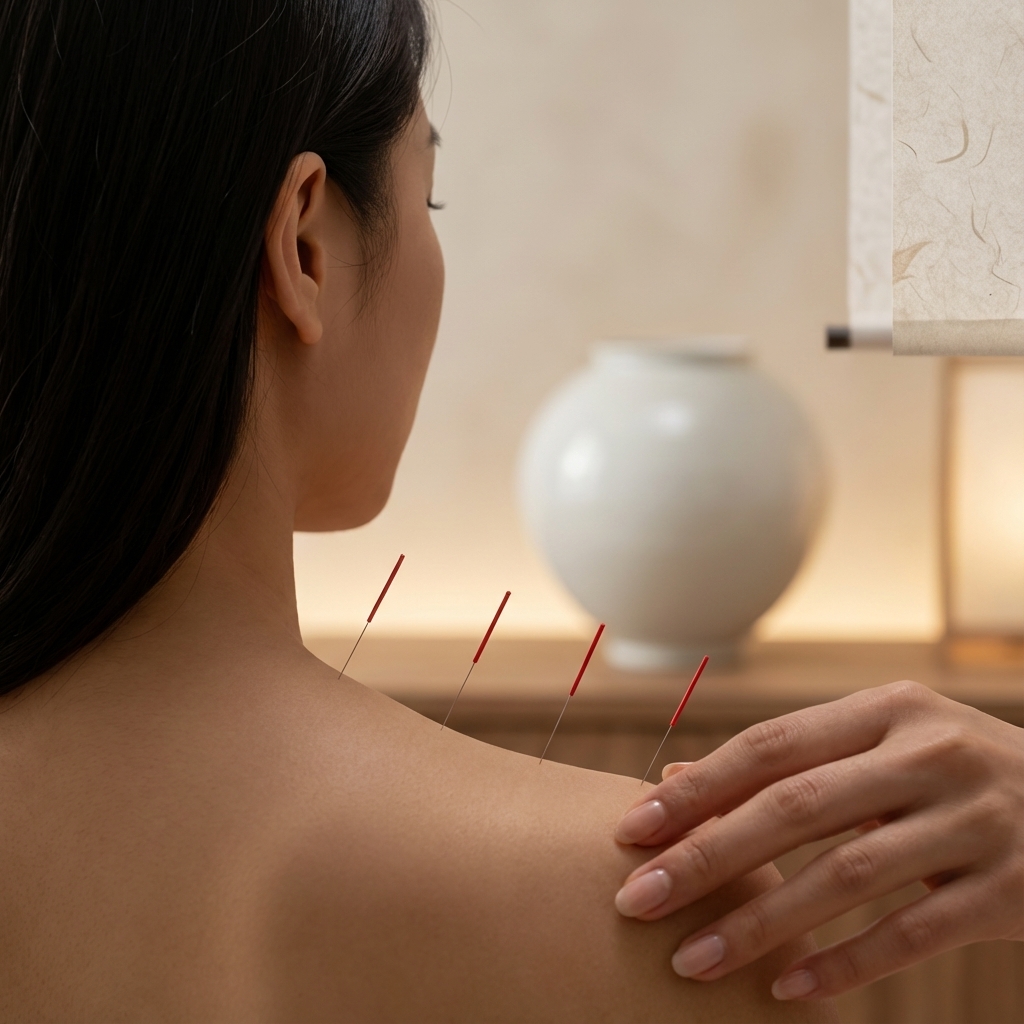

Q I am a 49-year-old bus driver. I am scared to have acupuncture needles inserted into the side of my neck. I heard that major blood vessels and nerves pass through that area; is moxibustion treatment safe?
A The thoracic outlet area next to the neck is a region where nerves and blood vessels are densely concentrated, making precise anatomical knowledge and depth control essential. Utilizing an ultrasound guide significantly enhances safety, as the location of nerves and blood vessels can be verified in real-time during the procedure. We conduct thorough explanations and evaluations before the procedure, and serious side effects are rare, aside from temporary bruising or stiffness.
Detailed Answer
It is true that caution is required for deep invasive procedures in the thoracic outlet area, as the brachial plexus, subclavian artery and vein, and lung apex are located nearby. Therefore, there are two safety standards for procedures in this area. First, depth and angle control by a practitioner who is familiar with the course of anatomical risk structures; and second, video guidance that allows entry while verifying nerves and blood vessels in real-time using ultrasound. Guided procedures allow for the selective treatment of only the target tissue, significantly reducing the risk of complications, and post-procedure bruising and stiffness naturally disappear within a few days. In Korean medicine, this area has been emphasized since ancient medical texts as a crucial point where the energy of the breath and arms gathers, and a location where depth must be avoided. Dongjedang implements this principle in a modern way; before any deep tissue procedure, we use ultrasound to locate the nerve bundles and blood vessels between the scalene muscles and insert fine needles only through a safe opening. The treatment itself also adheres to a procedure where we do not use fine needles from the start but observe the response with standard needles, only escalating the level if adhesion is confirmed. For those who are apprehensive, we explain the procedure while viewing the screen together; for professions that involve continuous use of the neck and shoulders, such as driving, addressing the cause in a safe manner is beneficial in the long run.
Related FAQs
-
Q
I am a 46-year-old welder. I was told at the hospital that if my symptoms persist, surgery should be considered. Is there really a possibility of improvement without surgery through Korean traditional medicine treatment?
#Possibility / Realistic Goals
-
Q
I am a 58-year-old seamstress. I have suffered from arm numbness since my 30s, so it has been over 20 years. Can I get better if I start treatment now, even with such long-standing thoracic outlet syndrome?
#Possibility / Realistic Goals
-
Q
I am a 50-year-old factory worker. My MRI showed a herniated cervical disc, and I am also suspected of having thoracic outlet syndrome. How is treatment handled when both are present? Which side should be examined first?
#Comorbidities
-
Q
I am a 29-year-old marketer. Are there any stretches for thoracic outlet syndrome that I can do in my spare time at work? I am currently receiving treatment, but I would also like to manage it myself.
#Lifestyle Management
-
Q
I am a 55-year-old restaurant owner in Dongincheon. I keep waking up at night because my arm feels numb. I’ve heard it is due to thoracic outlet syndrome; what position should I sleep in to reduce the numbness?
#Lifestyle Management