

Q I am a 29-year-old marketer. Are there any stretches for thoracic outlet syndrome that I can do in my spare time at work? I am currently receiving treatment, but I would also like to manage it myself.
A The key exercises are three things: quadratus muscle stretching, pectoralis minor (door frame) stretching, and scapular retraction. Perform each movement for 20 to 30 seconds, 3 to 4 times a day, within a pain-free range. Stop if any movement causes severe numbness, and avoid stretches that involve excessively bending the neck.
Detailed Answer
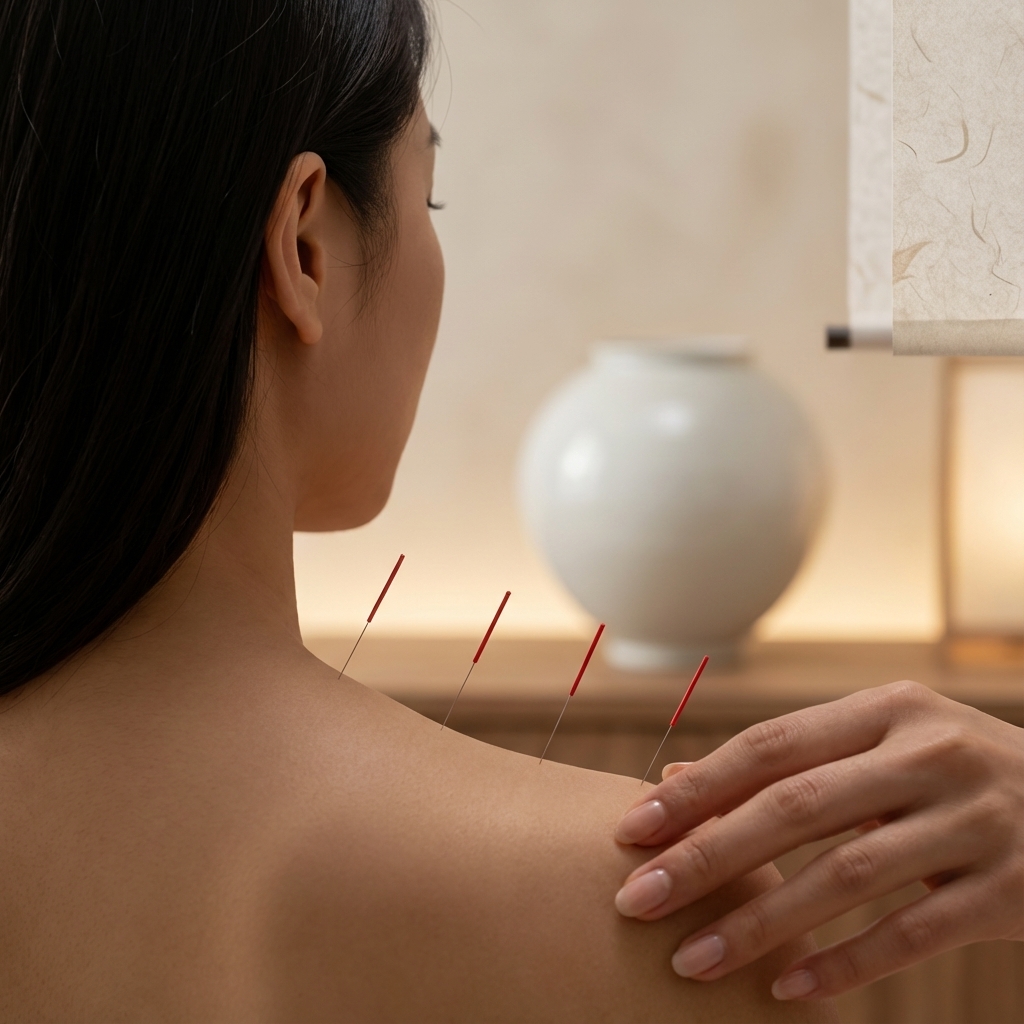
The basic movements you can do in the office are as follows: ① Quadratus Muscle Stretch: Sit in a chair, hold the chair with one hand, and slowly tilt your neck to the opposite side, maintaining the feeling of the side of your neck stretching for 20 to 30 seconds. ② Pectoralis Minor Muscle Stretch: Place your elbow at a 90-degree angle against a door frame, take a step forward, and straighten your chest. ③ Scapular Retraction: Without shrugging your shoulders, bring your shoulder blades back and hold for 5 seconds; repeat 10 times. During periods of heightened sensitivity, gentle repetition is safer than strong stretching, and movements that cause numbness to spread to the hands are a signal to reduce intensity. From the perspective of a Korean medicine clinic, stretching is considered a self-exercise that naturally clears blocked pathways. Movements such as expanding the chest and extending the arms—following the path of energy and blood flow from the chest to the arms—are, in themselves, an extension of treatment that resolves circulatory stagnation. Dongjedang advises that stretching is most effective immediately after loosening hardened scalene and pectoralis minor muscles with acupuncture or fine needles, and recommends a structure where the pathways opened by treatment are maintained through self-exercise. Furthermore, we review dietary habits to reduce waste products accumulated from late-night work and excessive coffee consumption, and if necessary, combine this with herbal medicine to aid circulation, thereby enhancing the efficiency of self-care.
Related FAQs
-
Q
I am a 46-year-old welder. I was told at the hospital that if my symptoms persist, surgery should be considered. Is there really a possibility of improvement without surgery through Korean traditional medicine treatment?
#Possibility / Realistic Goals
-
Q
I am a 58-year-old seamstress. I have suffered from arm numbness since my 30s, so it has been over 20 years. Can I get better if I start treatment now, even with such long-standing thoracic outlet syndrome?
#Possibility / Realistic Goals
-
Q
I am a 50-year-old factory worker. My MRI showed a herniated cervical disc, and I am also suspected of having thoracic outlet syndrome. How is treatment handled when both are present? Which side should be examined first?
#Comorbidities
-
Q
I am a 55-year-old restaurant owner in Dongincheon. I keep waking up at night because my arm feels numb. I’ve heard it is due to thoracic outlet syndrome; what position should I sleep in to reduce the numbness?
#Lifestyle Management
-
Q
I am a 49-year-old bus driver. I am scared to have acupuncture needles inserted into the side of my neck. I heard that major blood vessels and nerves pass through that area; is moxibustion treatment safe?
#Safety