If You're Confused Between Psoriasis and Eczema, Check These 3 Differences

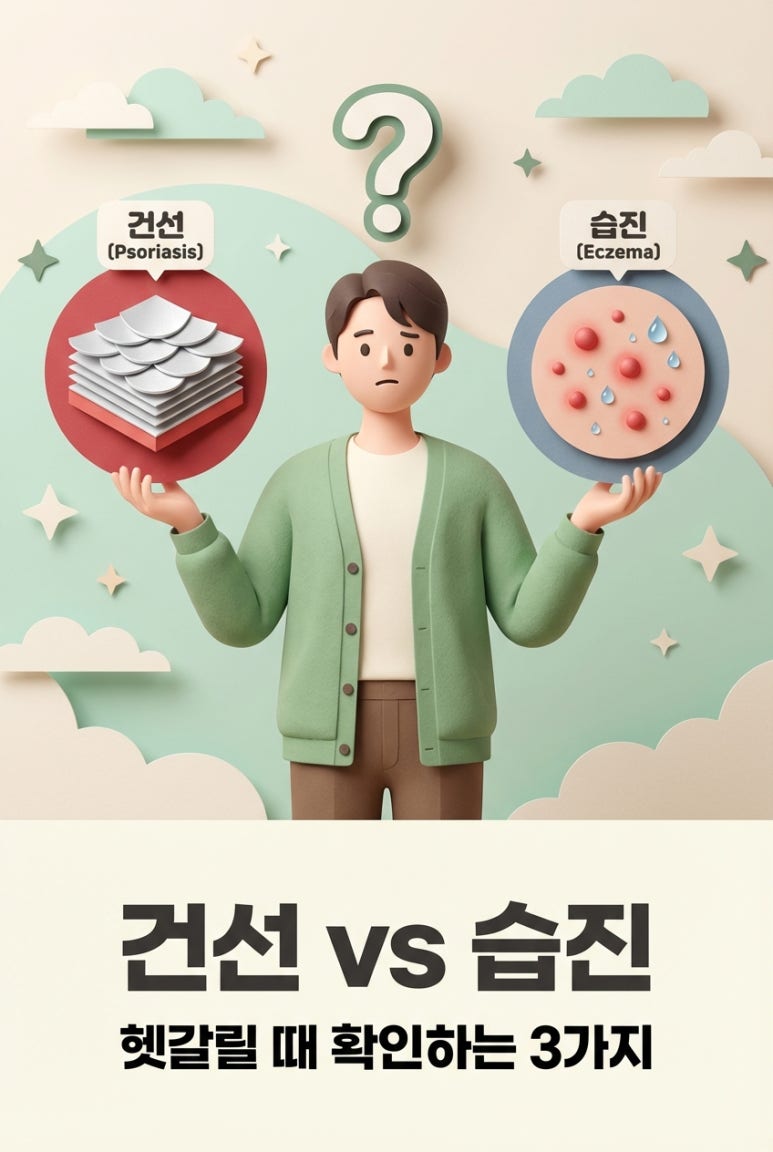 🧾 Answer First | Key Conclusions
When red spots or itching appear on the skin, many people become confused.
Many wonder whether it's psoriasis or eczema.
Even though they may look similar on the surface, psoriasis and eczema are different conditions.
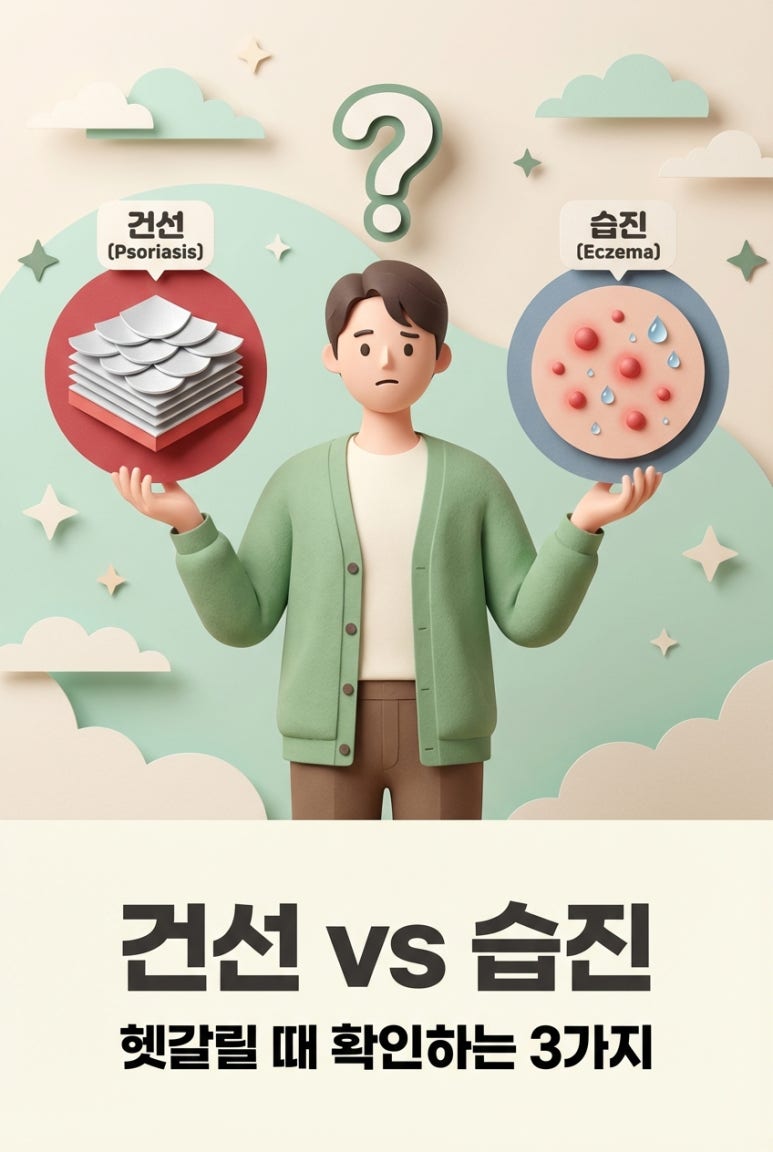
The key to distinguishing between the two conditions lies in three factors: affected area, skin symptoms, and degree of itching.
Understanding these precisely is the first step toward proper treatment.
If you're confused about skin symptoms, let's check them together now.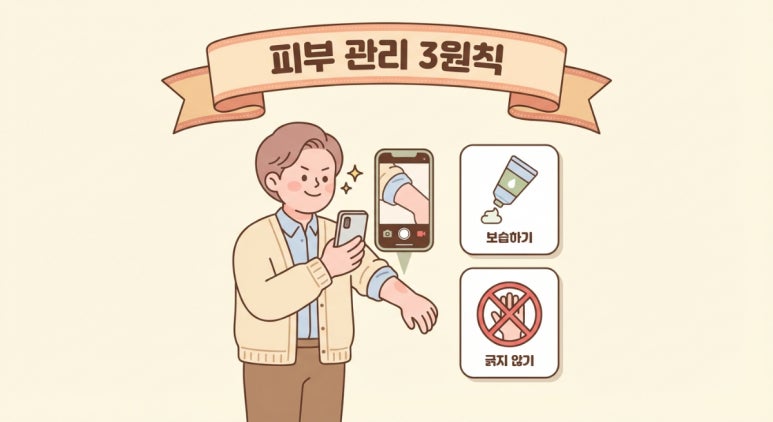 ✅ Action | Immediate Implementation
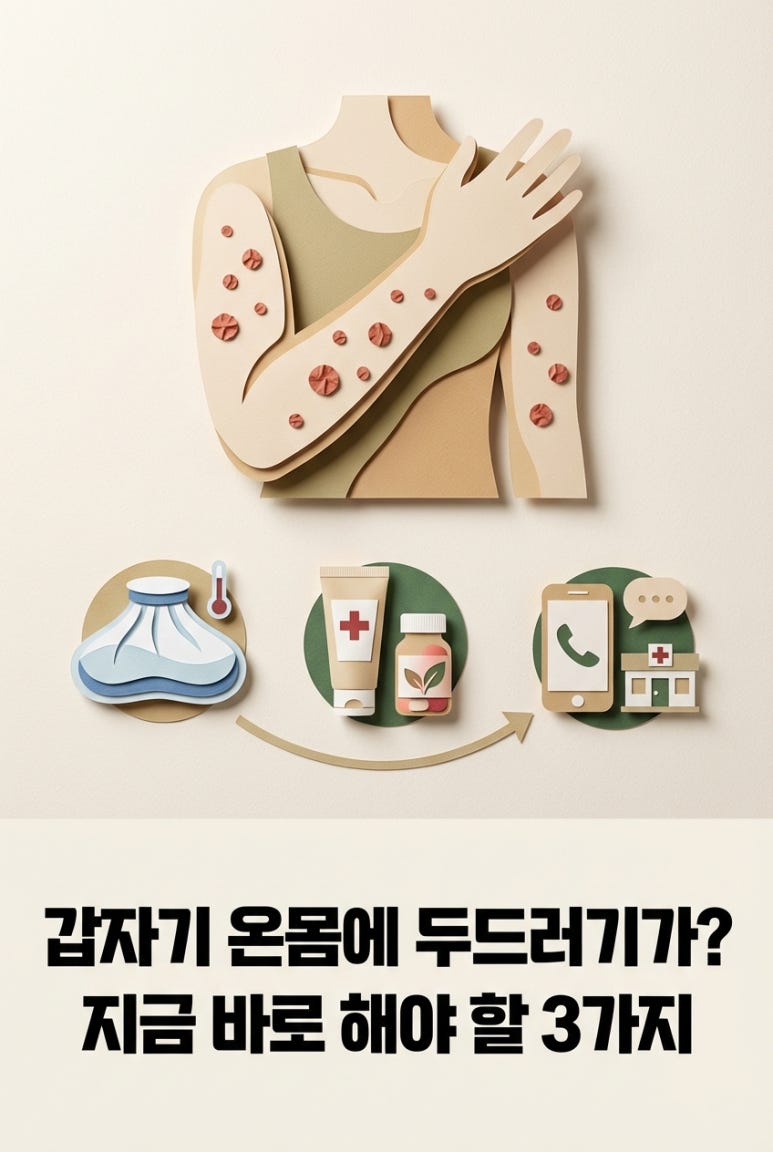
First, if you notice any abnormality in your skin, please follow these three guidelines.
1️⃣ Observe skin changes in detail and record them with photos.
Documenting the progression of symptoms is very helpful for accurate diagnosis.
2️⃣ Never scratch, even if it itches. Scratching damages the skin barrier.
Wounds can form and symptoms can worsen further.
3️⃣ Consistently apply moisturizer to protect your skin barrier.
Dry skin is the main culprit that worsens both psoriasis and eczema.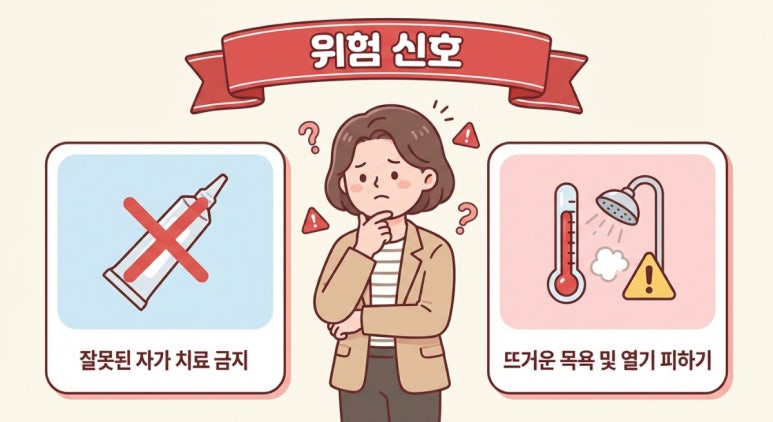 🚨 Warning | Red Flags You Must Check
✔ Self-diagnosis and indiscriminate use of ointments Self-diagnosing and using any ointment is dangerous. In particular, if eczema ointment shows no effect, there is a possibility it may be psoriasis[1].
Using the wrong ointment can worsen symptoms.
It can cause side effects and cause you to miss the treatment window.
✔ Indiscriminate hot baths and saunas Avoid indiscriminately showering with hot water or using saunas. They can dry out the skin and worsen both psoriasis and eczema symptoms.
✔ Persistent unexplained symptoms If unexplained skin symptoms persist, you should immediately seek professional consultation and examination.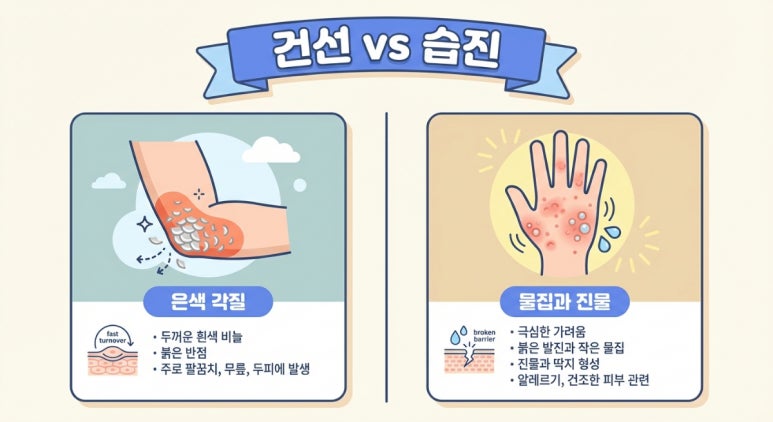 🧠 The Why
Psoriasis and eczema have different causes in themselves.
Psoriasis is a chronic inflammatory disease where the immune system malfunctions and causes skin cells to be produced too rapidly[2].
On the other hand, eczema often occurs when the skin barrier is damaged due to external stimuli, specific allergic reactions, or genetic factors[3].
Because the underlying causes are different, the symptoms that appear on the skin must also differ.
Identifying the exact cause is essential for establishing the correct treatment plan.
📊 Proof | Cases and Evidence
From my clinical experience, psoriasis patients typically complain of red spots with clear boundaries and thick, silvery-white scales in specific areas such as elbows, knees, and scalp. In the early stages, itching tends to be mild, but as the condition progresses, itching may accompany the symptoms.
On the other hand, eczema patients commonly experience severe itching along with blisters or oozing. Affected areas can appear anywhere on the body, such as hands, feet, face, and skin folds, and boundaries are often unclear[4].
Ultimately, in long-standing cases, the skin condition of psoriasis and eczema can appear similar.
Therefore,
By carefully observing the characteristics of symptoms and affected areas, you can greatly help distinguish between the two conditions. 🔚 Closing | Summary and Encouragement
Regain healthy skin through accurate diagnosis.
Psoriasis and eczema may look similar on the surface, but they are completely different conditions.
If you start the wrong treatment based on self-diagnosis, symptoms can worsen and the treatment period may only extend. It is important to seek professional medical institutions such as a dermatology clinic or oriental medicine clinic now and begin the correct treatment suited for you.
In particular, Oriental medicine treatment identifies and treats the root causes of psoriasis and eczema.
Dongjedang Oriental Medicine Clinic will be with you on your path to regaining healthy skin.
✍️ Reviewed by Choi Jang-hyuk, Director of Dongjedang Oriental Medicine Clinic
❓ FAQ
Q. What is the biggest difference between psoriasis and eczema?
Psoriasis is characterized by white, scale-like flakes layering on top of red, thickened skin. Eczema, on the other hand, is marked by severe itching and common appearance of blisters, oozing, and swelling. Psoriasis primarily occurs on elbows, knees, and scalp, while eczema can appear anywhere on the body, such as hands, feet, and face.
Q. What should I do if eczema ointment shows no effect?
If symptoms do not improve or worsen even after using eczema ointment, it may be a different skin condition rather than eczema. Psoriasis, in particular, requires a different treatment approach even though symptoms may appear similar to eczema. Rather than continuing to use ointment based on self-diagnosis, you must seek professional consultation to confirm an accurate diagnosis.
Q. I'm concerned about side effects from psoriasis steroids. Are there other treatment options?
Yes, Oriental medicine treats the root cause of psoriasis by correcting the immune system imbalance. Through acupuncture and herbal medicine, we reduce inflammation in the body and enhance the skin's regenerative capacity. Additionally, we help relieve symptoms without the burden of side effects through lifestyle improvements. I continue to work with patients through consultation and conduct customized treatment tailored to each individual.
📚 References
[Western Medicine (WM)] [1] American Academy of Dermatology Association (2023). "Psoriasis: Diagnosis and treatment" [2] National Psoriasis Foundation (2023). "Understanding Psoriasis" [3] National Institute of Allergy and Infectious Diseases (2022). "Eczema (Atopic Dermatitis)"
[Oriental Medicine (KM)] [4] Journal of Korean Dermatology of Oriental Medicine (2021). "Comparative Research on Pattern Differentiation and Clinical Manifestations of Psoriasis and Eczema in Oriental Medicine"
Skin
If You're Confused Between Psoriasis and Eczema, Check These 3 Differences
View Program