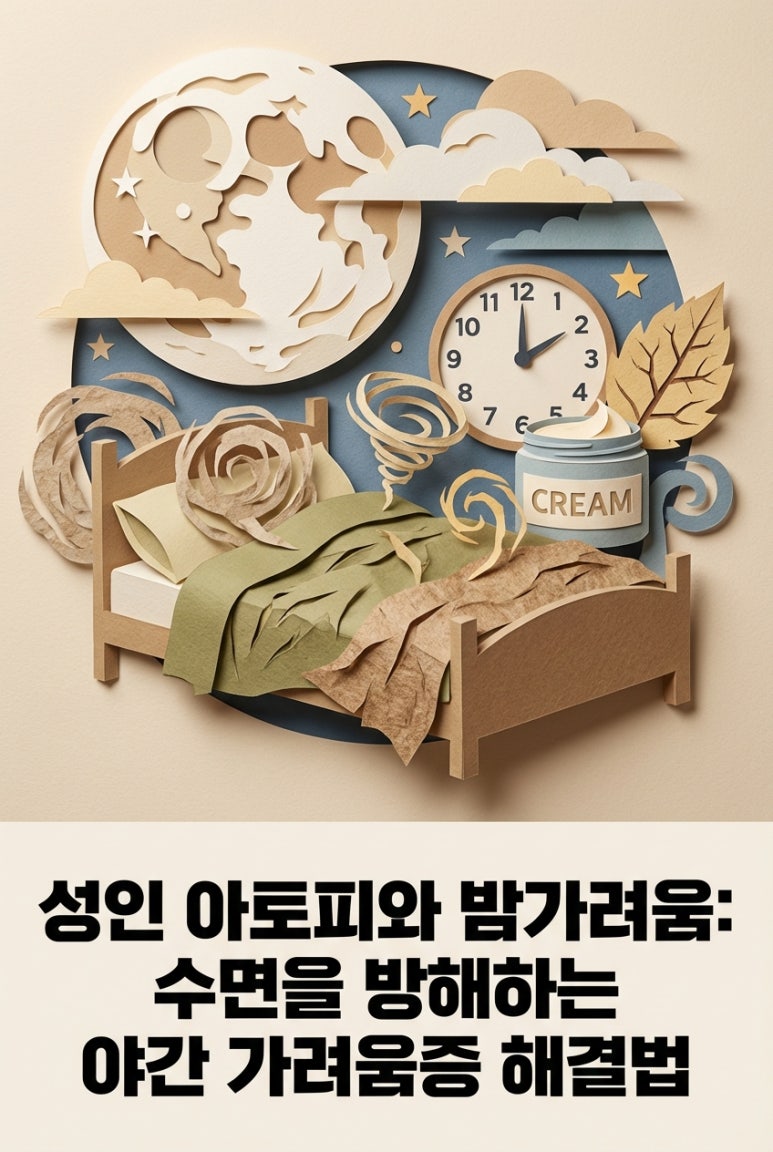
Adult Atopic Dermatitis and Nighttime Itching: Solutions for Night Itching That Disrupts Sleep

 🧾 Answer First | Key Conclusion
As soon as night falls, I itch so intensely that I cannot sleep at all.
I am Director Choi Jang-hyuk of Dongjejang Korean Medicine Clinic.
Itching that worsens at night compared to daytime is not simply a skin problem.
It is deep inflammation caused by internal heat that cannot properly escape from the body.
By following just the three methods I will share with you, you can significantly reduce persistent nighttime itching.
✅ Action | Immediate Implementation
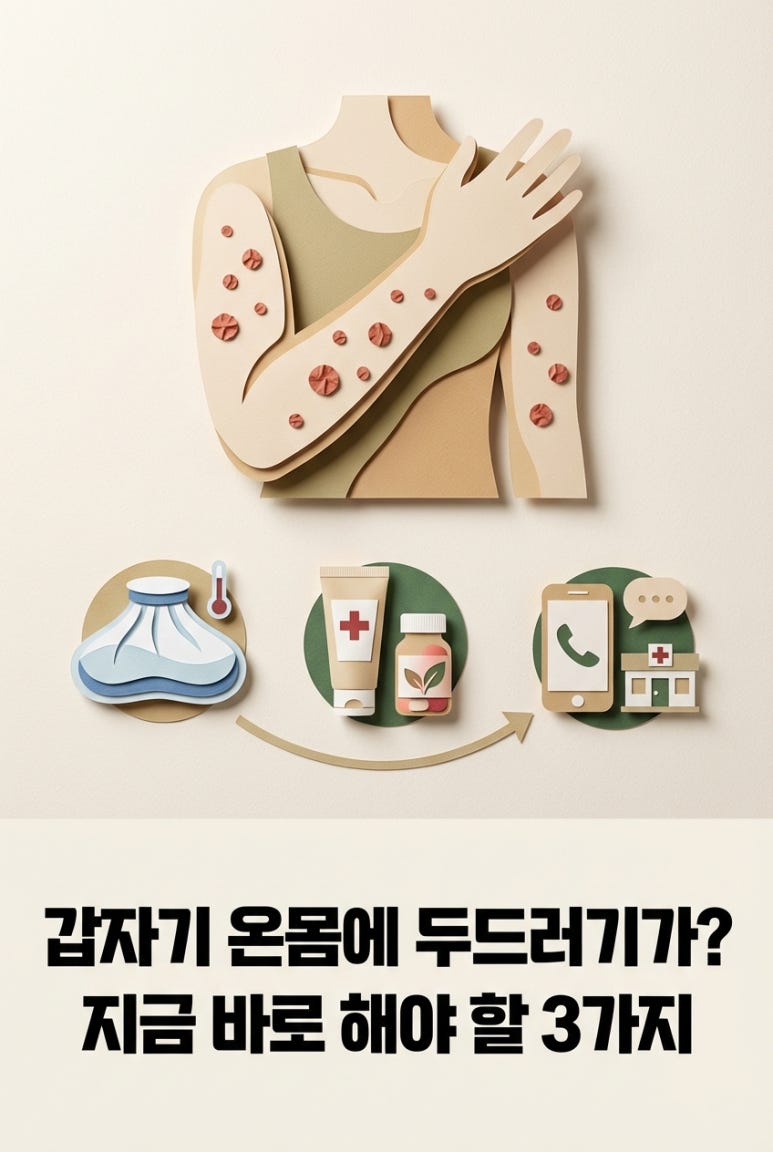
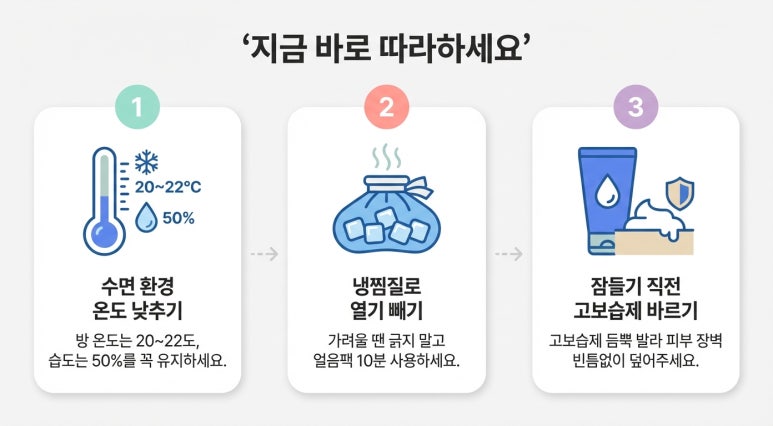
I will share three actions you must implement starting tonight.
Small changes in daily life are the first step to cooling down skin heat.
1️⃣ Lower Sleep Environment Temperature
Keep your room temperature at 20-22 degrees Celsius and humidity at 50%.
A hot and dry room traps skin heat and increases itching.
Cool air lowers your skin temperature.
2️⃣ Remove Heat with Cold Compress
When itching is severe, do not scratch; use an ice pack instead.
Place an ice pack wrapped in thin cloth on the itchy area for 10 minutes.
The cold constricts skin blood vessels and quickly soothes swelling and itching.
3️⃣ Apply High-Moisture Moisturizer Before Bed
Moisturize not only right after showering, but once more before sleep.
Apply high-moisture moisturizer generously to cover the skin barrier completely.
Reducing moisture evaporation is key to reducing itching.
 🚨 Warning | Warning Signs You Must Check
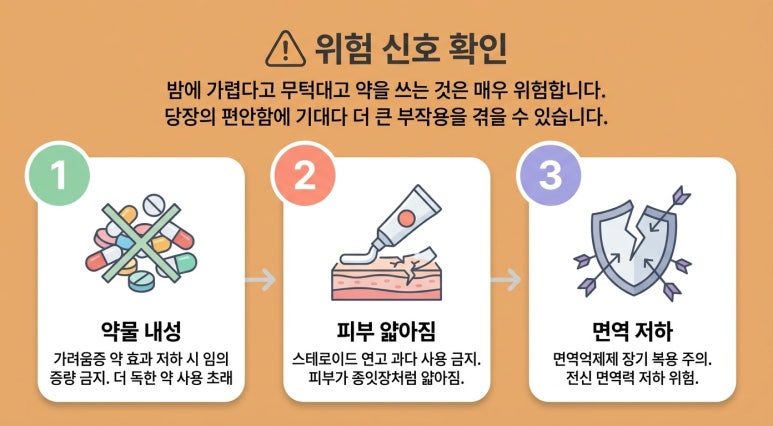
Using medication indiscriminately just because you itch at night is very dangerous.
Relying on immediate comfort can lead to greater side effects.
✔ Antihistamine Overuse and Tolerance
Do not arbitrarily increase your medication dosage if itching medication effectiveness decreases.
Tolerance develops, and later you will need stronger medications.
✔ Caution Against Steroid Ointment Side Effects
Do not apply steroid ointment generously just because you itch at night.
Excessive use can cause side effects that make skin thin like tissue paper[1].
✔ Limitations of Long-term Immunosuppressant Use
Ignoring precautions for immunosuppressant medication use is dangerous.
Long-term use can cause serious side effects of reduced overall immune function, so caution is necessary[2].
 🧠 The Why | Root Cause Analysis
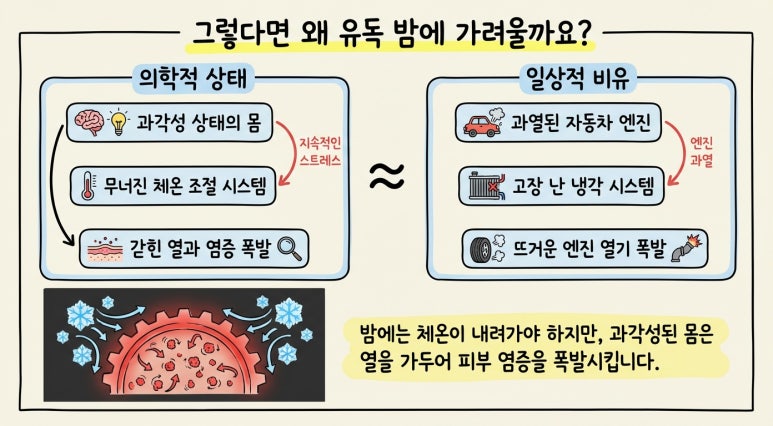
So why is itching particularly severe at night?
A common factor I observed in patients at my clinic was extreme fatigue and stress.
Stress accumulated during the day keeps your body's tension switch constantly on.
Collapsed Thermoregulation System and Trapped Heat
Stress generates unnecessary heat in the body like an overheating car engine.
Normally, body temperature should drop during sleep and the body should rest.
However, in an overaroused state, heat cannot escape outside the skin and becomes trapped inside.
This hot heat stimulates the skin surface, explosively triggering severe itching and inflammation.
📊 Proof | Cases and Evidence
Let me share an actual case of a 30-something office worker patient who visited my clinic.
She scratched her skin every night until it bled and suffered from prolonged insomnia.
Instead of steroids, I prescribed herbal medicine to reduce inflammation and lower internal heat.
As a result of combining herbal treatment tailored to her constitution, nighttime itching decreased by over 80% in just 2 months[3].
This was thanks to successful improvement of her constitution through Korean medicine heat management.
Sleep quality improved greatly, and her skin barrier became stronger.
Based on my observations, Korean medicine treatment helps not only surface symptoms but also fundamental body stabilization[4].
 🔚 Closing | Summary and Encouragement
Nighttime itching is not merely light suffering to endure and bear.
It is a serious overload signal your body is sending.
Try the sleep environment improvements and cold compress treatment I shared today first.
If you continue scratching your skin every night repeatedly, do not delay and seek professional help to resolve the underlying problem in your body.
I hope you recover comfortable, itch-free nights.
✍️ Reviewed by Director Choi Jang-hyuk, Dongjejang Korean Medicine Clinic
❓ FAQ
Q. Why do I continue to itch at night even after taking antihistamines?
Itching that worsens at night is not simply an allergy but inflammation caused by internal heat.
Medication merely temporarily blocks surface itching signals but does not solve the real cause: accumulated stress and heat discharge problems.
This is why medication effectiveness feels limited.
Q. Can I shower with hot water when itching severely at night?
Absolutely not.
Hot water may feel refreshing momentarily, but it raises skin surface temperature.
Eventually, moisture dries quickly and itching becomes much worse.
You must always wash gently with lukewarm water and apply moisturizer generously.
Q. Can herbal medicine really improve nighttime itching?
Yes, herbal medicine treatment that reduces heat and supports immunity is very effective.
It cools bad heat that accumulates in the skin and reduces inflammation.
Through this, it greatly helps fundamentally cure nighttime itching.
📚 References
Western Medicine
[1] NICE (2023). "Atopic eczema in under 12s and adults: management"
[2] BMJ Best Practice (2022). "Atopic dermatitis - Management"
Korean Medicine
[3] Korean Association of Oriental Medicine CPG (2021). "Korean Medicine Clinical Practice Guidelines for Atopic Dermatitis"
[4] NIKOM (2020). "Pattern Differentiation and Treatment of Adult Atopic Dermatitis in Korean Medicine"
Skin
Adult Atopic Dermatitis and Nighttime Itching: Solutions for Night Itching That Disrupts Sleep
View Program