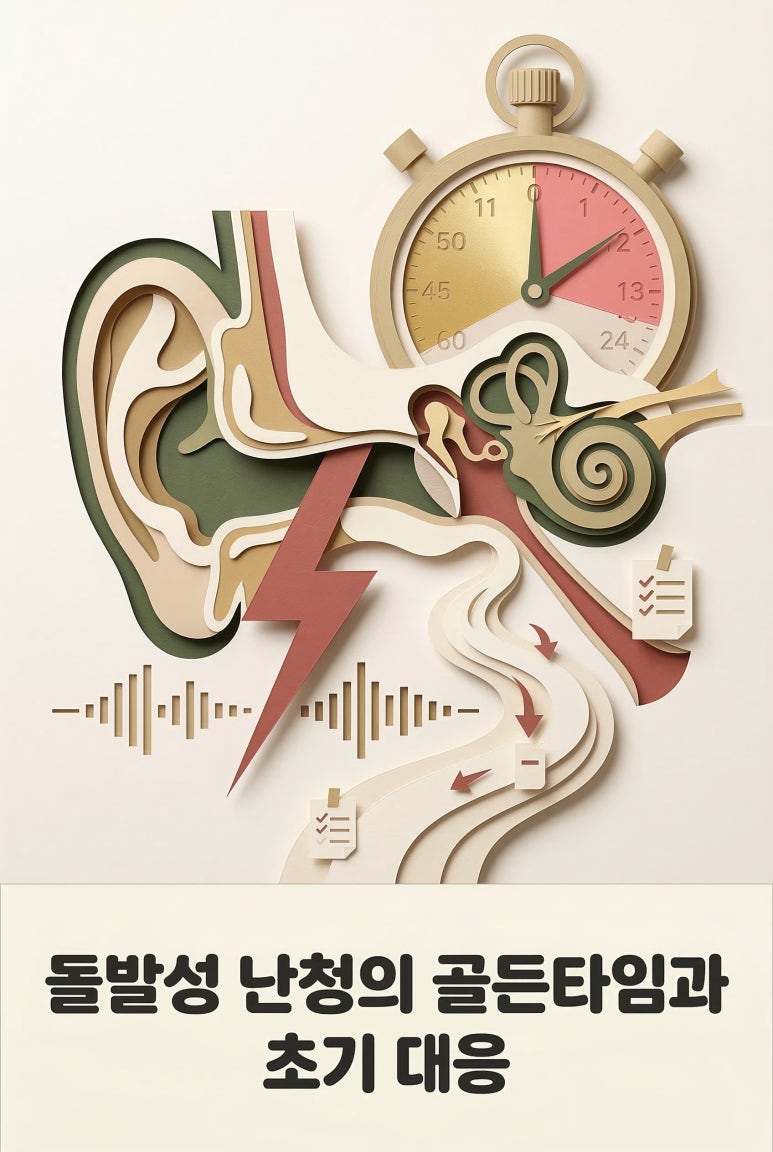

Recurrent BPPV: The Real Reason It Keeps Coming Back Even After Treatment

 🧾 Answer First | Core Conclusion
Benign paroxysmal positional vertigo (BPPV) where the ceiling spins when you turn your head.
Once you receive canalith repositioning procedure (CRP), it stops almost miraculously that day.
But many people experience it again after a few months.
I am Dr. Choi Jang-hyuk, director of Dongjjedang Korean Medicine Clinic.
The problem of recurrent BPPV is not just one fallen otolith,
but rather a weakened body that keeps losing otoliths, and anxiety that feeds off dizziness and dizziness that feeds off anxiety.
Repositioning treatment is urgent and accurate.
However, that alone cannot prevent recurrence.
Let me break this down into two stages.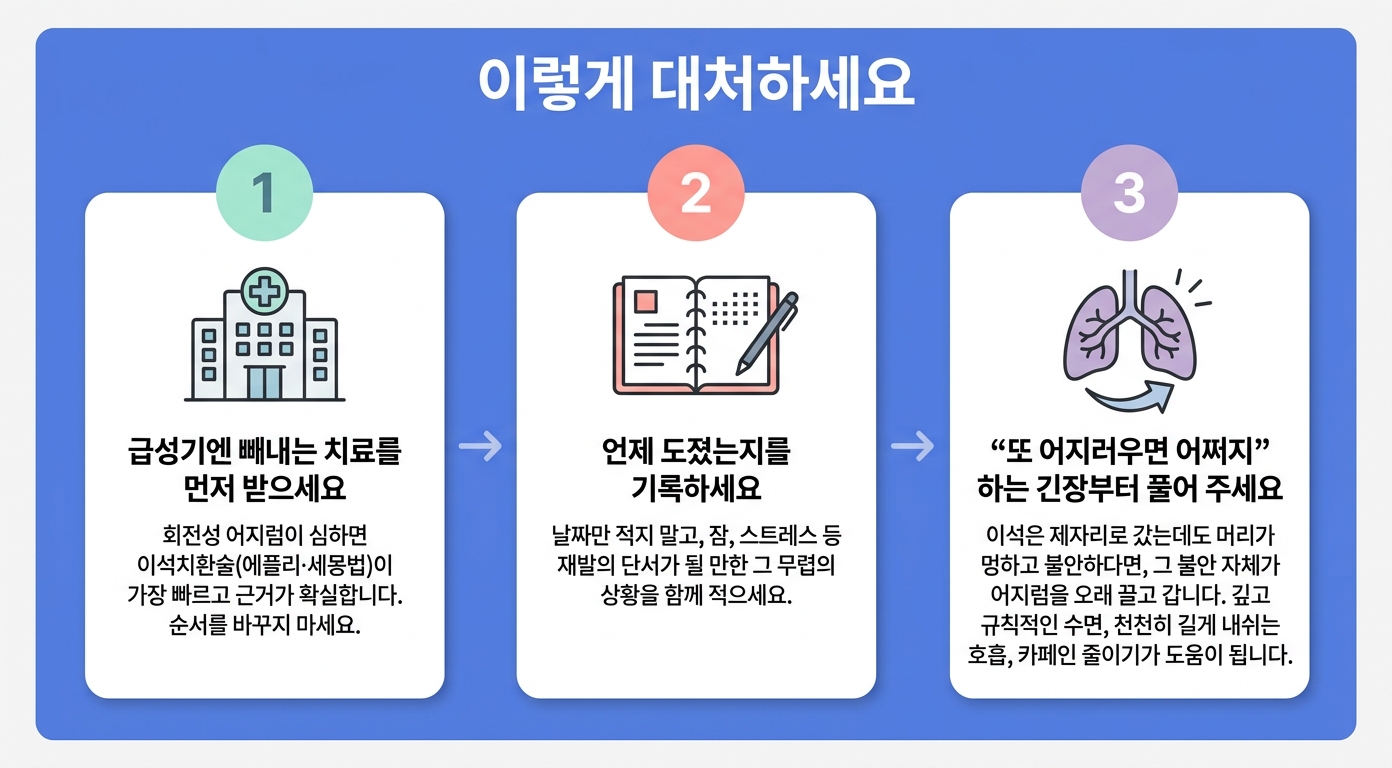 ✅ Action | Immediate Steps
1️⃣ In the acute phase, receive repositioning treatment first
When rotatory dizziness is severe, canalith repositioning procedure (Epley or Semont maneuver) is the fastest and most evidence-based treatment.
Managing it with Korean medicine comes next. Do not reverse the order.
2️⃣ Keep a record of when it recurred
Don't just write the date; also note what was happening around that time.
Whether it was after several nights of sleep deprivation or during a period of high stress becomes a clue to recurrence.
3️⃣ First, ease the tension of "What if I get dizzy again?"
Even if the otoliths are back in place but your head feels foggy and anxious, that anxiety itself prolongs the dizziness.
Deep and regular sleep, slow and long exhalation breathing, and reducing caffeine help loosen this cycle.
If you experience recurrence again within six months despite these three steps, it is time to address both the body that loses otoliths and the mind that holds onto fear.
Rather than struggling alone, it is faster to identify the cause together.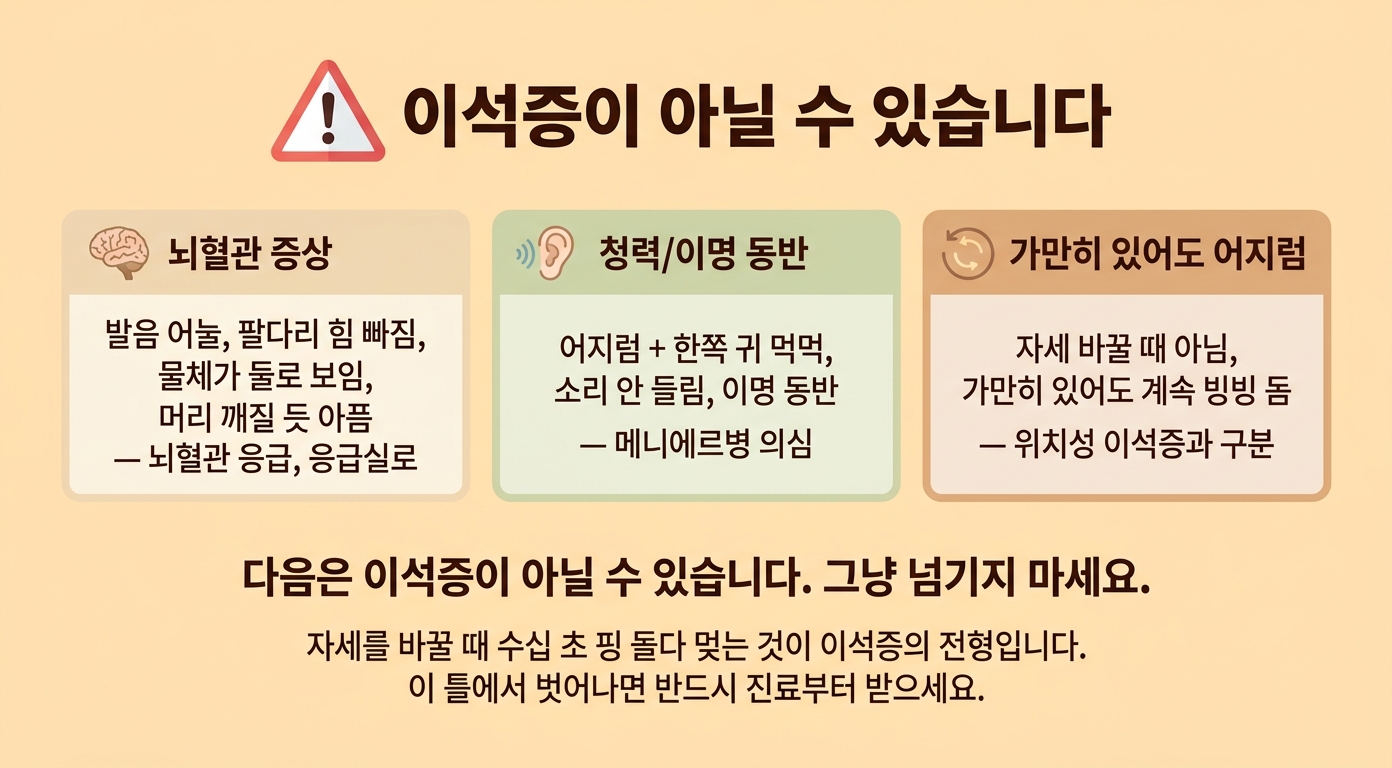 🚨 Warning | Warning Signs You Must Check
The following may not be BPPV.
Do not overlook these symptoms.
✔ Slurred speech, weakness in one arm or leg, double vision, or severe head pain as if it might split — this could be a cerebrovascular emergency. Go to the emergency room of a major hospital immediately.
✔ Dizziness accompanied by ear fullness on one side, hearing loss, and tinnitus — Meniere's disease should be suspected. The treatment approach differs from BPPV.
✔ Continuous spinning even when you stay still, not just when changing position — this needs to be distinguished from positional BPPV.
BPPV typically causes spinning for dozens of seconds when changing position and then stops.
If symptoms deviate from this pattern, be sure to get examined.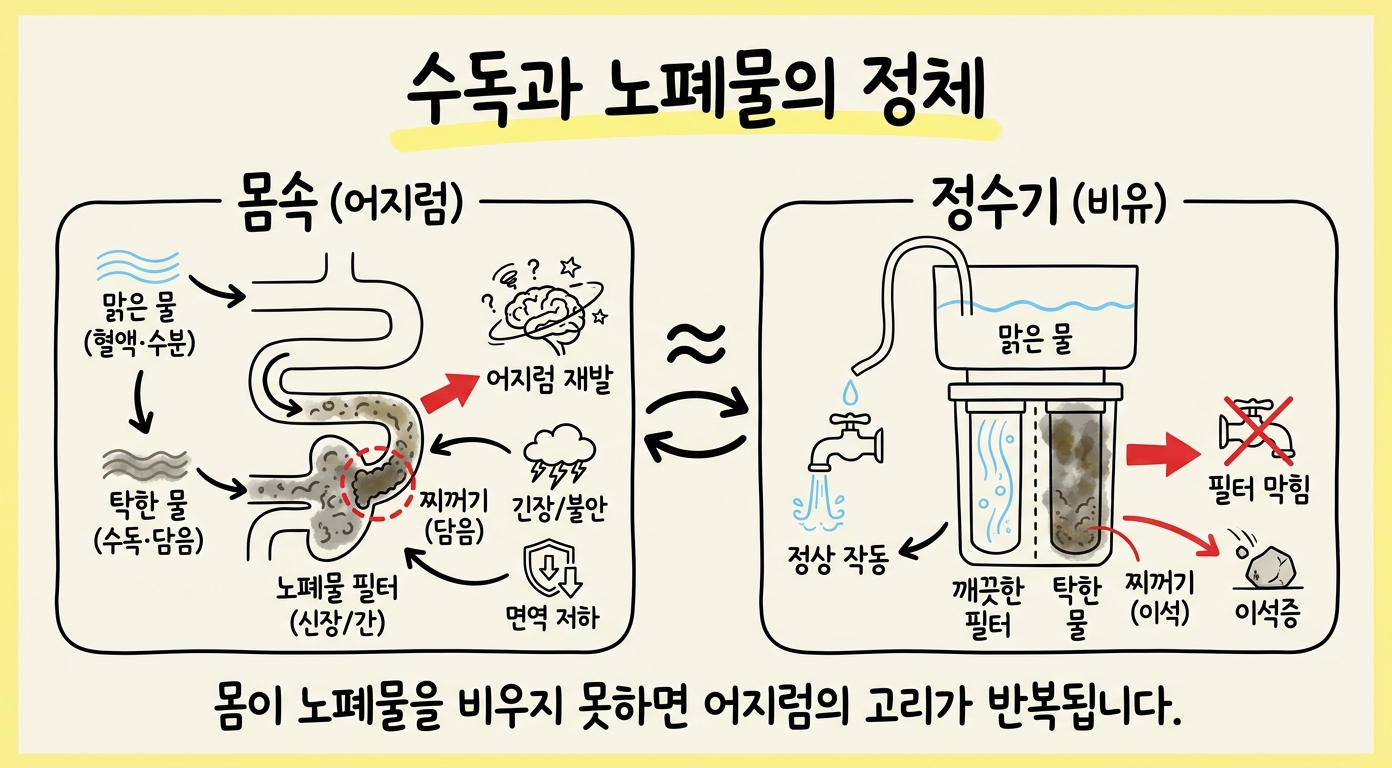 🧠 The Why | Root Cause Analysis
Let me compare BPPV to a water purifier.
The fallen otolith is debris stuck in the filter.
The repositioning procedure is shaking out that debris.
But if the water itself keeps becoming turbid, no matter how much you clean the filter, it will clog again in a few days.
In the body, what corresponds to this "turbid water" is what Korean medicine calls water stagnation and phlegm—the accumulation of fluids and waste products that fail to drain on time.
Ancient medical texts say that without phlegm, there is no dizziness, meaning stagnation underlies all dizziness.
When you remove it, symptoms subside temporarily.
This is why detoxification works.
However, the body's inability to expel waste occurs because the body itself has become weak and exhausted.
Recurrence is common in those with high cholesterol, hypertension, or diabetes where blood vessels and metabolism have deteriorated, as well as in those with sleep deprivation, for the same reason.
But some people improve temporarily even with tonifying medicine, only to become weak again.
Here we need to consider one more factor.
Dizziness and anxiety feed each other.
After experiencing severe dizziness once, you become tense wondering "Will it happen again?" and that tension disrupts sleep and makes the body weak again.
It is difficult to say which comes first.
However, when the two become locked in a single cycle, repositioning treatment alone cannot break that cycle.
Lee Je-ma viewed a person's illness from the position they occupy in life.
A situation where one cannot let go of prolonged tension, a state where the mind becomes rigid and stuck in one direction—these keep the cycle turning.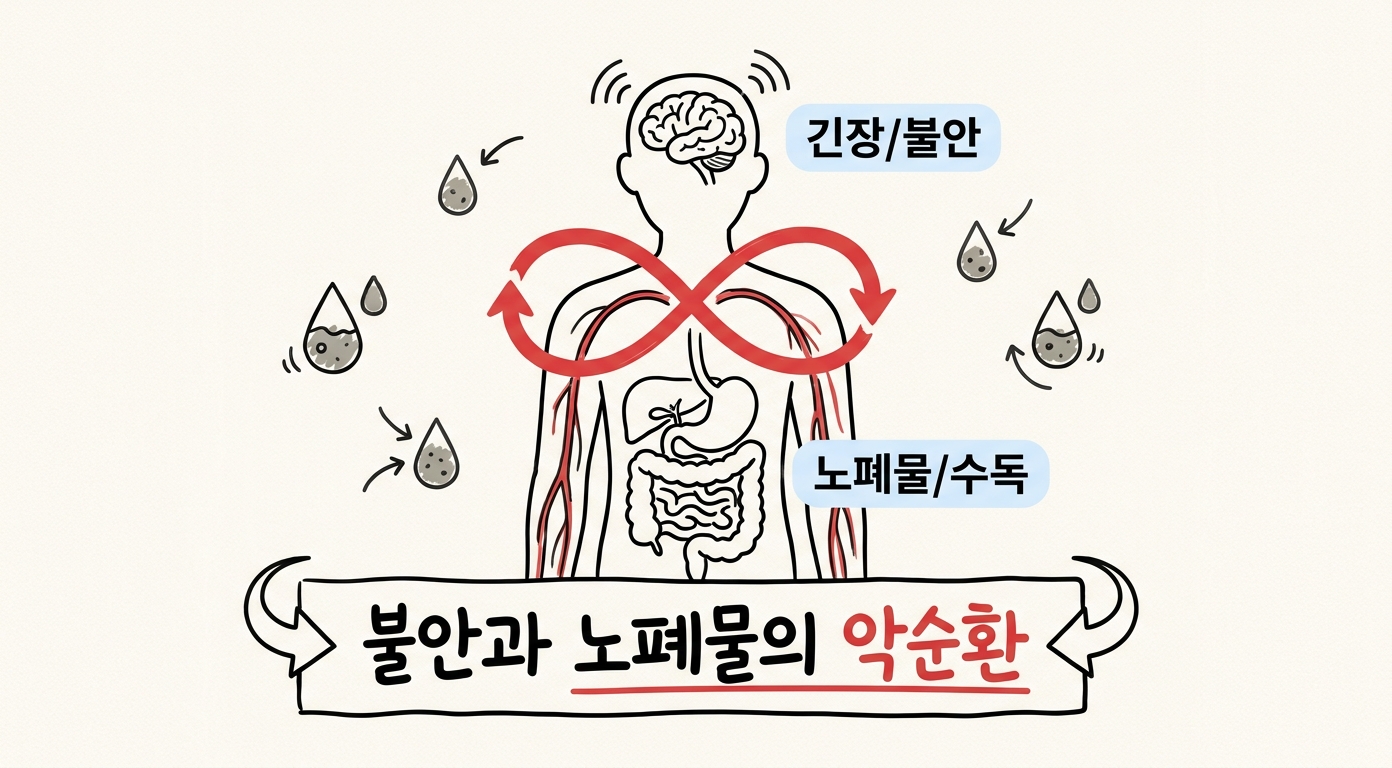 📊 Proof | Cases and Evidence
BPPV recurrence is common.
The rate of recurrence within one year after treatment is reported as 13.7-48%, and up to 65% when followed for two years or longer (Sfakianaki 2021, J Clin Med).
What deserves attention is the connection with mental state.
Patients with accompanying anxiety or depression showed significantly higher recurrence within six months even after successful CRP compared to those without such symptoms (Wei 2018, Front Neurol).
However, this shows correlation, not proof that anxiety causes BPPV.
It is also possible that anxiety develops as a result of repeatedly experiencing dizziness.
In fact, 71% of patients experienced symptoms in some form again within one year after CRP,
and the anxiety caused by BPPV led to chronic floating dizziness (PPPD) (Acle-Cervera 2025, Eur Arch Otorhinolaryngol).
In factors predicting recurrence in middle-aged and older patients, anxiety and insomnia are included alongside age and metabolic markers (Tang 2024, Front Neurol).
Regardless of which is the cause, it is clear that dizziness and mind become locked in a single cycle that drives recurrence.
A patient in their 50s I treated went to the emergency room three to four times a year with BPPV.
I first asked when it recurred.
It was always right after work piled up all at once and they stayed up several nights, while being under intense tension about "What if I collapse again?"
We extinguished the acute crisis with repositioning treatment, lifted the weakened body, and simultaneously loosened the cycle of tension.
That person did not become a different person.
Their body and mind simply became less shaken in the same circumstances. 🔚 Closing | Summary and Encouragement
BPPV requires repositioning treatment.
It is precise and fast.
But if recurrence happens repeatedly every few months, repositioning alone is not enough.
① Remove accumulated waste according to your constitution to manage current dizziness, and
② Loosen the cycle of anxiety intertwined with a weakened body so you don't get shaken again—two stages are necessary.
A discussion of chronic BPPV as a signal from the entire body is covered in depth in an article addressing sleep deprivation and chronic BPPV.
You don't have to bear dizziness that recurs even after treatment alone.
If you would like to examine constitution and lifestyle together, please feel free to contact Dongjjedang Korean Medicine Clinic's Head and Face Clinic.
✍️ Reviewed by Dr. Choi Jang-hyuk, Director of Dongjjedang Korean Medicine Clinic
❓ FAQ
Q. Is BPPV cured with one treatment?
No.
Recurrence is common.
The recurrence rate within one year after treatment is reported as 13.7~48% (Sfakianaki 2021).
Rather than viewing it as a condition that is cured in one go, it is better to manage the body's tendency to have recurrence.
Q. The otoliths are back in place, so why do I continue to feel dizzy and anxious?
Residual dizziness after the otoliths have been repositioned is common.
In this case, the tension of "What if I get dizzy again?" prolongs the symptoms and can lead to chronic floating dizziness (PPPD) (Acle-Cervera 2025).
If it persists for more than a few days, I recommend getting examined.
Q. Can herbal medicine reduce BPPV recurrence?
What determines recurrence is not the fallen otolith but the overall state of the body and mental tension.
By lifting a weakened body according to your constitution and managing the dizziness-anxiety cycle together, you can slow down the recurrence cycle.
Combining with acute-phase repositioning therapy is ideal.
📚 References
[Western Medicine (WM)]
- Sfakianaki I, et al. (2021). Risk Factors for Recurrence of BPPV. J Clin Med. https://doi.org/10.3390/jcm10194372
- Wei W, et al. (2018). Anxiety and Depression Symptoms Affect Treatment Efficacy and Recurrence of BPPV. Front Neurol. https://doi.org/10.3389/fneur.2018.00178
- Acle-Cervera L, et al. (2025). Life after BPPV: one-year analysis of recurrence and functional vestibular symptoms. Eur Arch Otorhinolaryngol. https://doi.org/10.1007/s00405-024-09094-x
- Tang B, et al. (2024). Nomogram for recurrence risk of BPPV. Front Neurol. https://doi.org/10.3389/fneur.2024.1483233
[Korean Medicine (KM)]
- Xia Y, et al. (2024). Acupuncture for Residual Dizziness after Repositioning in BPPV. Med Acupunct. https://doi.org/10.1089/acu.2023.0135
- Xie KH, et al. (2022). Elevated RDW predicts residual dizziness in BPPV. Front Neurol. https://doi.org/10.3389/fneur.2022.857133
Head & Face
Recurrent BPPV: The Real Reason It Keeps Coming Back Even After Treatment
View Program