Flat Warts vs Molluscum Contagiosum vs Skin Tags — They May Look Similar, But Their Causes Are Different

 🧾 Answer First | Key Conclusion
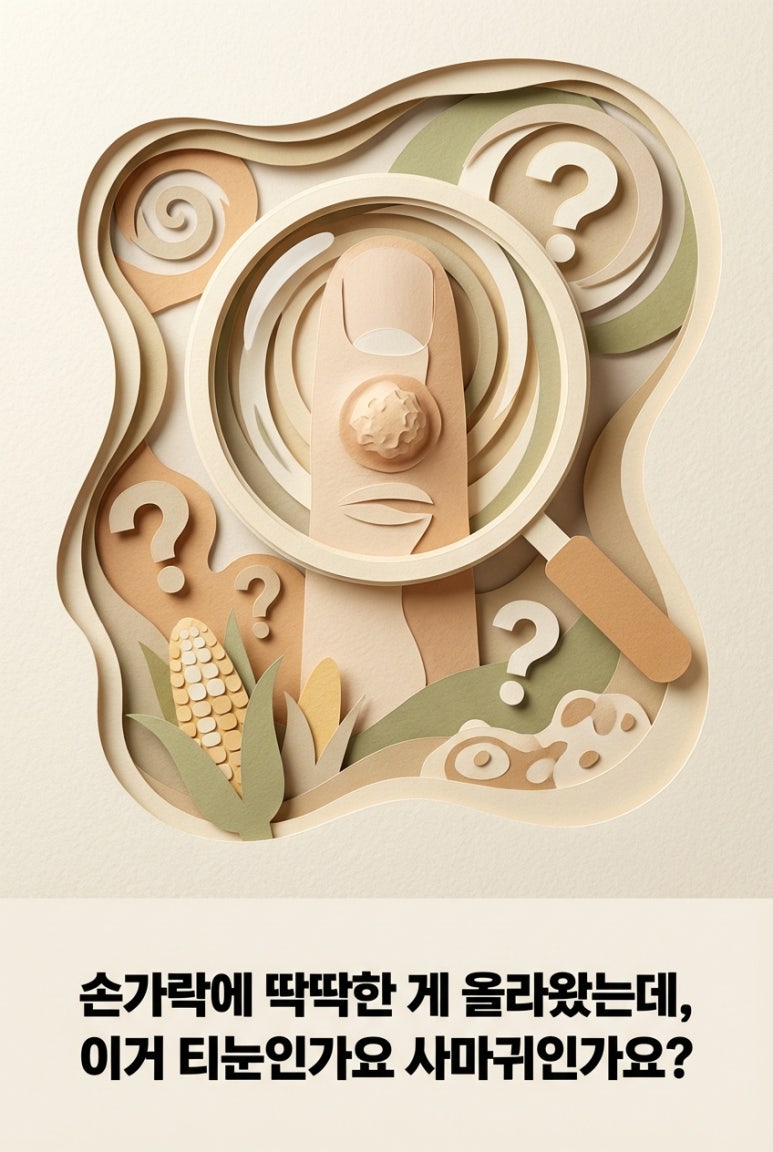
Small bumps have started appearing on your skin one by one.
When you touch them, they're raised and protruding, and since they appeared out of nowhere, it's concerning.
You're probably frustrated wondering whether it's a wart, molluscum contagiosum, or a skin tag — even when looking at photos online, they all seem to look alike.
By checking just 3 things — appearance, texture, and whether it's contagious — you can distinguish them with about 80% accuracy at home.
From now on, I'll compare flat warts, molluscum contagiosum, and skin tags for you,
and teach you 3 self-check methods you can use right away.
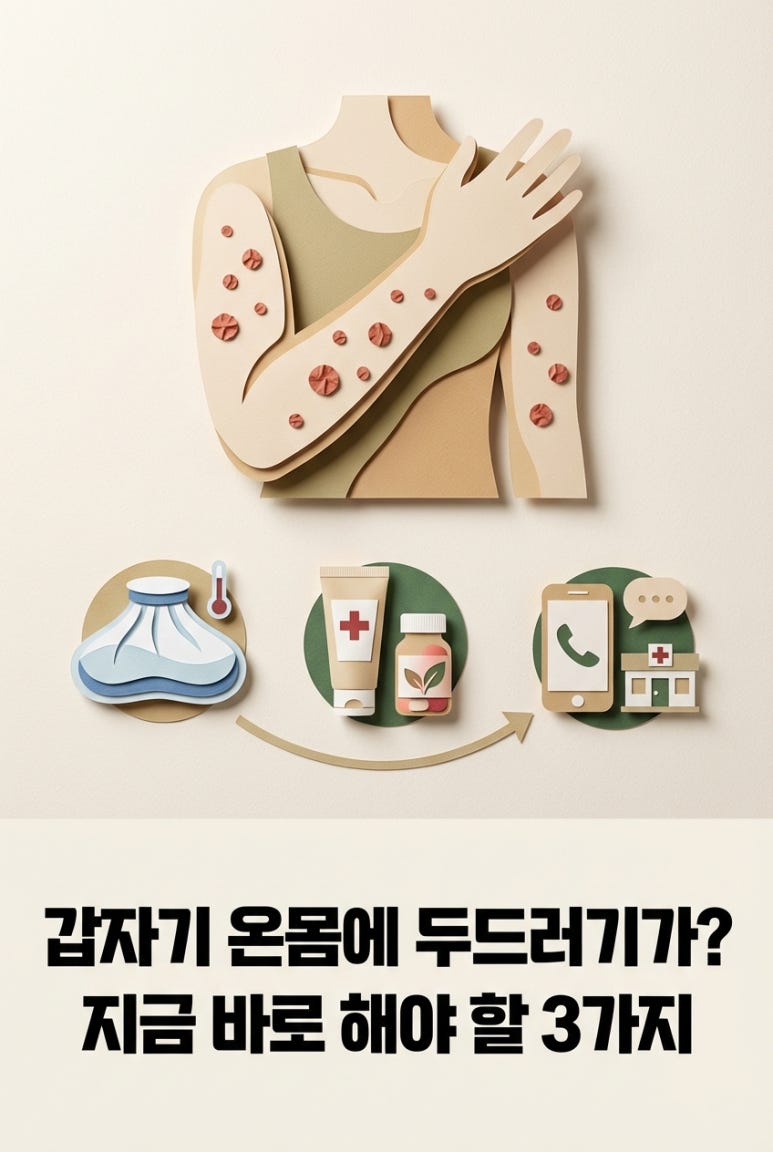
✅ Action | Immediate Steps
1️⃣ Look at the appearance first — takes 3 seconds
Stand in front of a mirror and examine what the bumps look like.
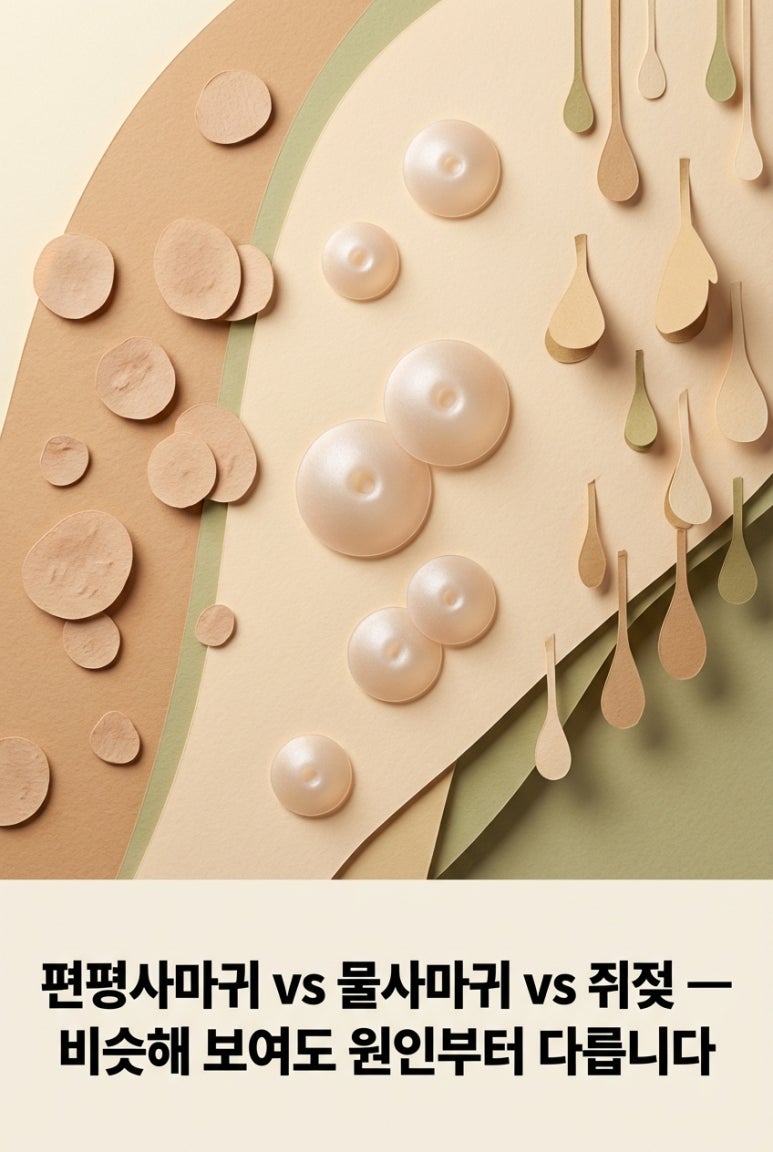
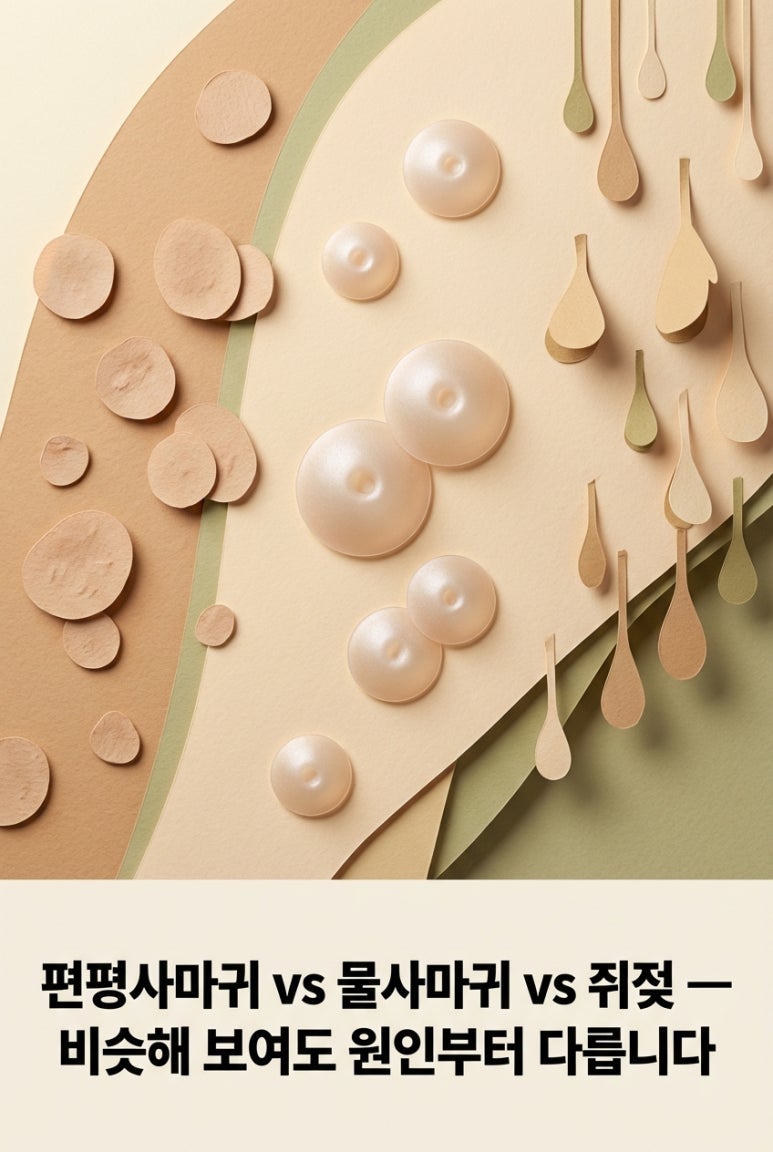
If it's flat and sits flush against the skin, it's a flat wart.
It's small like millet, smooth, and skin-colored or slightly brownish.
Multiple bumps are often scattered across the face or backs of hands.
If it's round and raised with a depression in the center, it's molluscum contagiosum.
It appears semi-transparent or has a pearlescent shine, and white particles come out when squeezed.
It typically appears on children's torsos, arms, and legs.
If it has a stem and dangles from the skin, it's a skin tag.
It's flesh-colored, soft, and feels spongy.
It commonly develops on the neck, armpits, and groin — areas where skin folds.
2️⃣ Check if it's contagious
Flat warts and molluscum contagiosum are viral infections, so they are contagious.
Check if any family members have similar symptoms.
You should also verify if there were contact routes such as shared towels, razors, or swimming pools.
In contrast, skin tags are not related to viruses, so they are not contagious.
You don't need to worry about them spreading.
3️⃣ Observe for 2 weeks and then make a decision
If the number increases or the size grows within 2 weeks, visit a clinic.
Especially if it spread to surrounding areas after scratching, there's a high possibility it's a flat wart.
Don't irritate it further and get a professional diagnosis as soon as possible.
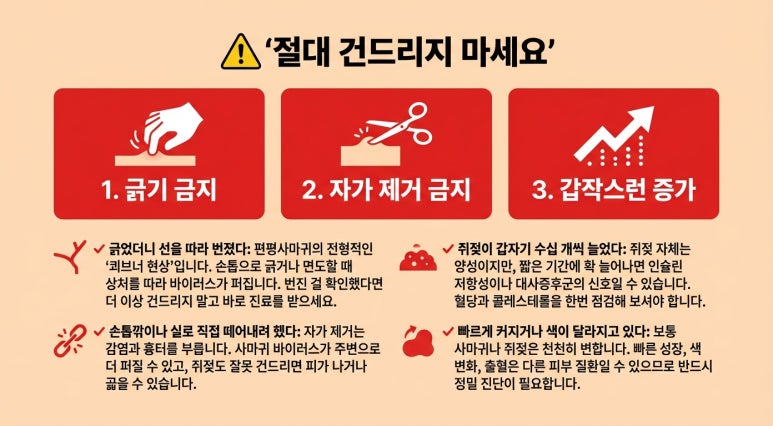
🚨 Warning | Red Flags You Must Check
✔ It spread in a line after scratching
This is a classic 'Koebner phenomenon' of flat warts.
When scratched with fingernails or during shaving, the virus spreads along the wound.
If you notice spreading, stop touching it and seek medical care immediately.
✔ You attempted to remove it yourself with nail clippers or thread
Self-removal causes infection and scarring.
The wart virus can spread further to surrounding areas, and skin tags can bleed or become infected if mishandled.
✔ Skin tags suddenly multiplied to dozens
While skin tags themselves are benign, rapid multiplication over a short period may signal insulin resistance or metabolic syndrome[3].
You should have your blood sugar and cholesterol checked.
✔ It's growing rapidly or changing color
Usually, warts and skin tags change slowly.
Rapid growth, color changes, and bleeding may indicate other skin conditions and require a detailed diagnosis.
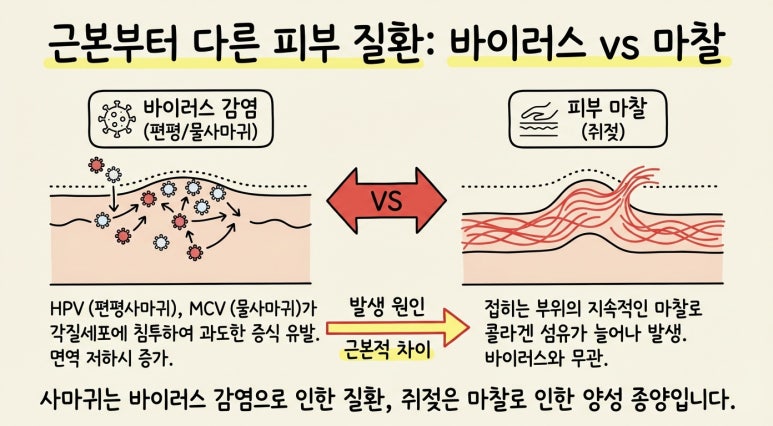 🧠 The Why | Root Causes Explained
These three conditions have fundamentally different causes.
Flat warts form when HPV (human papillomavirus) types 3 and 10 penetrate skin keratinocytes.
The virus settles in the skin and excessively accumulates dead skin cells on top.
If your immune system is strong, your body naturally pushes it out, but when immunity weakens due to fatigue or stress, one becomes two, two becomes three.
Molluscum contagiosum is not caused by HPV but by a completely different virus called molluscipoxvirus (MCV).
It spreads when skin touches skin or objects are shared, and it's particularly common in children whose immune systems are still developing.
Fortunately, most cases disappear on their own within 6-12 months once immunity develops[2].
Skin tags are completely unrelated to viruses.
When skin continuously folds and experiences friction, collagen fibers stretch, forming a benign tumor.
It's more common in people who frequently wear necklaces or have areas of skin folding, and tends to increase with age.
In traditional Korean medicine, warts are called '우(疣)', caused when wind-heat enters the skin or when liver blood becomes insufficient to properly nourish the skin.
Skin tags are interpreted as an accumulation of phlegm-fluid and damp-heat in the skin, and are relatively more common in people with the Tae-eum constitutional type[5].
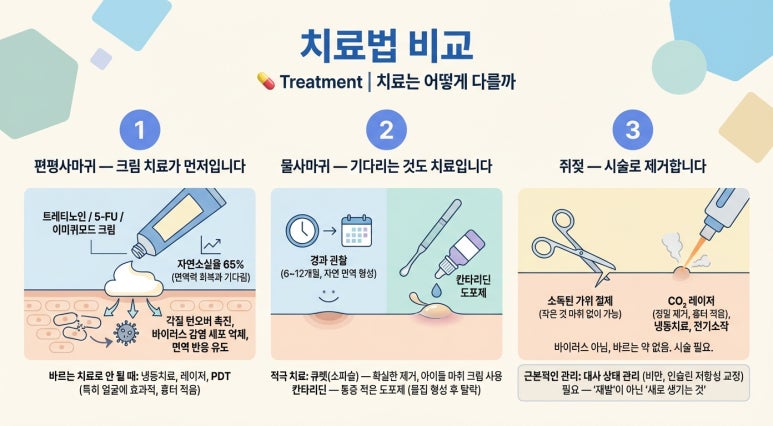 💊 Treatment | How Treatment Differs
Since the causes are different, treatment methods are completely different.
Knowing what treatments you'll receive at the clinic will help you prepare mentally before your visit.
Flat warts — Topical cream treatment comes first
Because they often appear on the face, low-scar topical treatments are tried first.
Tretinoin cream (retinoid) is most commonly used, accelerating keratin turnover to push out virus-infected cells.
5-FU cream directly inhibits the proliferation of virus-infected cells, while imiquimod cream enhances skin's immune response to eliminate HPV.
When topical treatment doesn't work, cryotherapy (liquid nitrogen), laser, or photodynamic therapy (PDT) is considered.
PDT is particularly effective for multiple lesions scattered across the face and is a cosmetically favorable method with minimal scarring.
Since the spontaneous clearance rate is 65%, waiting while recovering immunity is also a viable strategy[1].
Molluscum contagiosum — Waiting is also a treatment
In children, 'watchful waiting' is often the first choice.
Within 6-12 months, immunity develops and it typically disappears on its own, so there's no need for painful procedures[2].
However, if it spreads rapidly or causes cosmetic concerns, active treatment is pursued.
Curettage using a curette tool is most definitive, and numbing cream is applied first in children.
Cryotherapy is also possible, but children may find the pain difficult to tolerate.
Cantharidin, a topical agent, causes less pain and is commonly used in pediatric cases — when applied, it causes blistering and the lesion falls off with it.
Skin tags — Removed through procedures
Skin tags are not viral, so there are no topical medications.
Removal requires a procedure.
The simplest method is cutting the stem with sterile scissors, and small ones can be done without anesthesia.
For multiple lesions at once, cryotherapy or electrocautery is efficient.
CO₂ laser allows precise removal with minimal scarring.
However, skin tags are about "new growth" rather than "recurrence," so if obesity or insulin resistance isn't corrected, they can continue developing in other areas.
Metabolic management should be part of the fundamental treatment.
📊 Proof | Cases and Evidence
The spontaneous clearance rate for flat warts is approximately 65%.
In most cases, the body's immune response eliminates the virus within 2 years[1].
Molluscum contagiosum clears even faster, often disappearing on its own within 6-12 months[2].
In contrast, skin tags don't disappear on their own once they appear.
The association between skin tags and metabolic disease is also noteworthy.
One study found insulin resistance in 88% of skin tag patients,
and associations with prediabetes have also been reported[3].
Let me share a clinical case I've experienced.
A man in his 20s came in saying "dozens of millet-sized bumps appeared on my face."
Upon examination, I found flat, smooth, skin-colored papules scattered across his forehead and cheeks, with evidence of spreading in a line along his shaving marks.
Confirmed as flat warts, and with immune-strengthening treatment tailored to his constitution, most disappeared within 8 weeks.
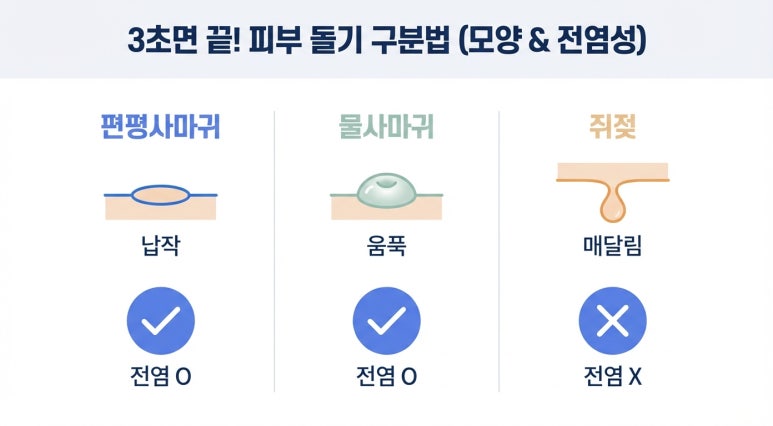
🔚 Closing | Summary and Encouragement
Flat means flat wart, depression in center means molluscum contagiosum, dangling means skin tag.
If it's contagious, it's viral; if not, it's a skin tag.
While self-diagnosis can point you in the right direction, if it's spreading or multiplying, don't try to solve it alone.
Examining constitution and immune status together allows for treatment without recurrence.
Please feel free to contact us if you have any questions.
✍️ Reviewed by Director Choi Jang-hyuk of Dongjjedang Korean Medicine Clinic
❓ FAQ
Q. Do warts really spread if you scratch them?
Yes, flat warts spread when scratched.
This is due to the 'Koebner phenomenon,' where the virus spreads along the wound.
Shaving or scrubbing the area can also spread warts for the same reason, so avoid irritating the affected area as much as possible.
Molluscum contagiosum can also spread to surrounding areas if squeezed or scratched.
Q. Can a child with molluscum contagiosum go to the swimming pool?
Molluscum contagiosum spreads through skin-to-skin contact or sharing objects.
The problem is less about the pool water itself and more about shared towels or kickboards.
Avoid swimming pools until the lesions clear if possible, and always use your own towel.
Q. Can skin tags be treated at a Korean medicine clinic?
Yes, skin tags can be treated at Korean medicine clinics.
Removal through herbal acupuncture or moxibustion, combined with constitutional treatment for phlegm-fluid and damp-heat, can reduce recurrence.
Especially if many suddenly appear, it's important to check metabolic status together.
Q. Can all three be treated with cryotherapy?
Cryotherapy can be used for all three, but it may not be the best option for each.
For flat warts, which commonly appear on the face, topical medications are used first due to risk of pigmentation.
Molluscum contagiosum in children may be difficult to tolerate due to pain.
Cryotherapy works well for skin tags, but electrocautery is more efficient if there are many.
The appropriate treatment is determined by considering location, number, and age.
📚 References
[Western Medicine (WM)]
[1] Sterling JC et al. (2014). "British Association of Dermatologists' guidelines for the management of cutaneous warts." British Journal of Dermatology, 171(4), 696-712.
[2] Chen X et al. (2021). "Molluscum contagiosum: an update and review of new perspectives." Dermatology, 237(2), 168-175.
[3] Barbato MT et al. (2012). "Association of acrochordon with colonic polyps." Anais Brasileiros de Dermatologia, 87(5), 718-724.
-[4] Korean Dermatological Association (2020). Dermatology Textbook 7th Edition. "Viral Skin Diseases" / "Skin Fibromas"
[Korean Medicine (KM)]
- [5] Korean Medicine Association Korean Medicine Dermatology and Surgery Society (2019). Korean Medicine Dermatology and Surgery. "Pattern Differentiation and Treatment of 우(疣)"
Skin
Flat Warts vs Molluscum Contagiosum vs Skin Tags — They May Look Similar, But Their Causes Are Different
View Program