
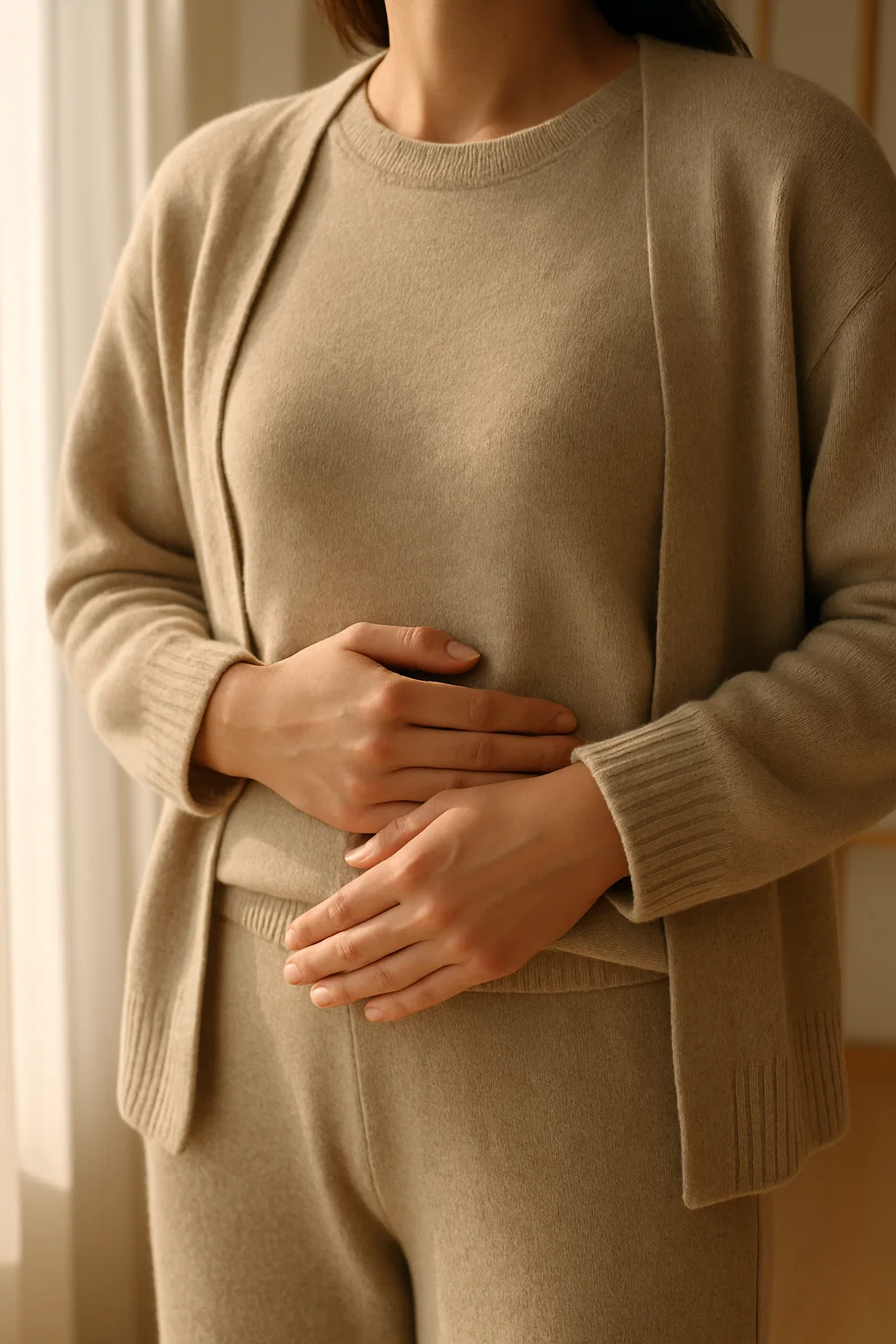
Epigastric Fullness and Bloating
Epigastric Fullness
When tests come back normal but the upper abdomen still feels tight and heavy — causes to look at and how to manage it
# Possibility / Realistic Goals (3)
Q The hospital only told me it was "nerves." If nothing shows on tests, does that mean I am just being sensitive?
A. A symptom does not disappear because tests cannot see it. This is not oversensitivity — current tests look at injury to the lining, while your discomfort lies in movement. The cause simply sits elsewhere, and there are clear ways to manage it.
View details →Q Since the tightness never stops, I worry it may be something serious. When should I look further?
A. Most bloating is a problem of movement, but a few signals call for ruling out other causes first. Unintended weight loss, difficulty swallowing, or black stools are among them. Without such signals, it is more useful to review daily habits and the rhythm of the stomach than to worry.
View details →Q I have lived with bloating for more than ten years. I am in my sixties — can it still improve?
A. Being long-standing does not make it irreversible. A longer period of stiffness simply means recovery takes more time; the stomach responds regardless of age. That said, if the symptom is genuinely new at this age, testing comes first.
View details →# Comorbidities (1)
# Lifestyle Management (2)
Q Is there anything I can try at home right away?
A. Cut each meal to about two-thirds and eat more often. Even with the same daily total, taking in only what the stomach can handle leaves you far less bloated. Adding a light 15 to 20 minute walk after meals physically helps the stomach move.
View details →Q I sit at a desk all day. Does posture affect digestion too?
A. A rounded back presses on the area below the breastbone and leaves the stomach less room to expand. That is why we say straightening your back also straightens the stomach. Standing up once an hour to open the chest and breathe out slowly already reduces post-meal discomfort.
View details →# Safety (2)
Q How do I tell whether I can manage this with Korean medicine or should be tested at a hospital first?
A. If any of the following are present, testing comes before Korean medicine care: unintended weight loss, difficulty swallowing, black stools or vomiting blood, anemia, and indigestion that appears for the first time in middle age or later. Korean medicine care is for those without these signals whose tests came back normal.
View details →Q My stomach is weak and everything feels burdensome. Could herbal medicine put even more strain on it?
A. The weaker the stomach, the gentler the starting formulation and dose. If you feel discomfort after taking it, tell us and we adjust the concentration, timing, and frequency. Building up gradually while watching your response is the rule.
View details →# Drug Combination / Interactions (1)
# Prognosis / Recovery (1)
# Causes Explained (3)
Q My endoscopy and blood tests were both clean, yet my upper abdomen always feels tight. What is actually happening?
A. Even without ulcers or inflammation, bloating occurs when the movement of the stomach becomes stiff. Either food empties too slowly, or the stomach fails to relax smoothly as food arrives. Because this is a problem of movement rather than structure, imaging rarely shows it.
View details →Q I work an office job in Dong-gu, Incheon. Every afternoon when reports pile up, my upper abdomen locks up. Why does tension make me feel this way?
A. The stomach and the brain are wired together, so tension stops stomach movement first. Eating in a hurry while tense means food arrives before the stomach has received its "time to work" signal, so it simply sits there. This is not a matter of temperament — your days are built in a way that stiffens the stomach.
View details →Q I have been bloated for years and I also cannot lose weight. Are the two related?
A. They often grow from the same root rather than being separate problems. When surplus accumulates, the stomach becomes heavy and constantly bloated, and that surplus also stays in the body. Clearing it lightens the stomach and settles weight along the same line.
View details →# Food / Triggers (2)
Q Which foods make it worse? Is there anything I should avoid?
A. Fatty food, flour-based and sweet food, overeating, and late dinners are the main ones. They stay in the stomach longer and slow emptying further. Still, how much you put in at once matters more than what you cut out.
View details →Q I drink iced coffee every morning. Could that be related?
A. Cold slows stomach movement further. Cold drinks and coffee on an empty stomach irritate and dull it at the same time. The same coffee is far easier on you warm and after a meal.
View details →# Treatment Schedule (1)
# Treatment Stages (1)
# Effectiveness (1)
Epigastric Fullness and Bloating is not just a simple symptom
Korean medicine that considers both your constitution and lifestyle rhythm treats the root cause.
From consultation to precise treatment, we provide personalized care.
Prescriptions tailored to your constitution and symptoms treat the root cause
The director personally sees you from first to follow-up visits
We identify the essence through Sasang constitution, pulse and abdominal diagnosis
Treatment based on long clinical experience and evidence
Was this helpful? If you need accurate care for your condition, please contact us below.