
Ankle Osteoarthritis
Ankle Osteoarthritis
Ankle osteoarthritis with aching joints lasting more than 2 weeks due to wear and tear

# Possibility / Realistic Goals (2)
Q I was recommended surgery by an orthopedic surgeon; can I manage with only Korean medicine treatment without surgery?
A. In cases of moderate or mild severity, it is sometimes possible to postpone or avoid surgery for several years solely through conservative treatment at a Korean medicine clinic. However, there are limitations to conservative treatment when there is almost no joint space or when there is severe deformity or instability; in such cases, combining surgery with Korean medicine treatment is realistic. If there is no improvement in symptoms with conservative treatment for more than three months, a re-evaluation for surgery is required.
View details →Q Can an elderly person in their 70s receive treatment for ankle osteoarthritis at a Korean medicine clinic? I am worried because of my advanced age.
A. Treatment at a Korean medicine clinic is safely applicable even to the elderly. By adjusting stimulation intensity and formulating prescriptions that account for the elderly's kidney deficiency, you can expect pain reduction and improved walking function while minimizing side effects. In fact, conservative Korean medicine treatment is often more suitable for elderly patients than surgery because it involves less burden of general anesthesia and recovery.
View details →# Comorbidities (1)
# Lifestyle Management (2)
Q How should I exercise if I have ankle osteoarthritis? Is walking also bad?
A. For ankle osteoarthritis, low-impact activities such as swimming, cycling, and water walking are recommended. Walking on flat ground also helps maintain joint function within an appropriate speed and distance range. High-impact activities such as running, jumping, and walking on inclines should be avoided or minimized, as they accelerate joint wear and tear. Strengthening exercises for the calf and ankle muscles are effective in reducing pain by increasing joint stability.
View details →Q Is shoe selection important for ankle arthritis? What kind of shoes should be worn?
A. For ankle osteoarthritis, shoes with thick midsoles that provide good shock absorption and stable ankle support are suitable. Shoes with no or low heels and a wide toe box are advantageous for joint alignment, and adding cushioned insoles is helpful. Slippers, flip-flops, and high heels increase ankle instability and ground impact, worsening symptoms.
View details →# Safety (1)
# Drug Combination / Interactions (1)
# Prognosis / Recovery (2)
Q I was told that I have early-stage ankle osteoarthritis. How much can I improve with treatment at a Korean medicine clinic?
A. Early-stage ankle osteoarthritis responds well to treatment because cartilage damage is mild and the joint space is preserved. You can expect a reduction in pain and swelling, as well as a recovery of the joint's range of motion. Furthermore, combining consistent treatment with lifestyle management can significantly slow down the progression of the condition. While individual differences exist, discomfort during daily walking is often significantly reduced after 4 to 8 weeks of treatment.
View details →Q You mentioned end-stage osteoarthritis. Is there anything I can do at a Korean medicine clinic other than surgery?
A. Even in the end stage, pain relief and the maintenance of function are possible. Acupuncture, moxibustion, and pharmacopuncture treatments are effective before deciding on surgery or during the rehabilitation phase after surgery. However, if the joint space is almost completely lost, fundamental structural restoration is difficult, and realistic goals are pain control, maintenance of walking function, and delaying the timing of surgery. In some cases, surgery can be postponed if symptoms improve through conservative treatment before surgery.
View details →# Causes Explained (2)
Q I am a woman in my mid-50s, and my ankles feel cold and stiff when I move them. Why does ankle osteoarthritis occur?
A. Ankle osteoarthritis is a condition in which the cartilage surrounding the ankle joint wears down, causing pain and inflammation as the bones rub against each other directly. Major causes include repeated impacts, sequelae from past fractures or sprains, and a decrease in cartilage regenerative capacity due to aging. In particular, since the ankle is a joint that bears concentrated body weight, progressive cartilage damage significantly impedes daily walking.
View details →Q I suffered an ankle fracture 20 years ago, and recently my ankle has been hurting and swelling. Could the past trauma be the cause?
A. Yes, past fractures or ligament tears alter the alignment of the ankle joint and are one of the most common causes of secondary osteoarthritis that persist decades later. Cartilage wear accelerates if cartilage damage occurred at the time of injury or if joint instability persists. Early evaluation is crucial for old post-traumatic ankle pain, as joint deformation progresses if left untreated.
View details →# Food / Triggers (2)
Q Are there any foods that are good for ankle arthritis or foods that should be avoided? Can diet help?
A. Freshwater fish rich in Omega-3, blueberries and broccoli rich in antioxidants, and foods containing calcium and Vitamin D necessary for bone health help alleviate joint inflammation. On the other hand, high-carbohydrate foods, processed foods, trans fats, and excessive alcohol increase systemic inflammatory responses, worsening joint pain. Maintaining a normal weight is directly important for reducing the load on the ankles.
View details →Q I work standing all day at Dongincheon Market; does this type of job worsen ankle arthritis?
A. Prolonged standing and repetitive ankle loading are major occupational risk factors that accelerate cartilage damage. The rate of cartilage wear is accelerated when combined with hard floors, improper footwear, and postures that concentrate weight bearing. While complete rest is difficult due to the nature of the job, the load can be distributed through the use of cushioned insoles, regular stretching, and appropriate rest.
View details →# Treatment Schedule (1)
# Treatment Stages (2)
Q What is the sequence of treatment when first starting ankle osteoarthritis?
A. After identifying the severity and differential diagnosis through medical history taking, physical examination, and imaging review during the initial consultation, acupuncture, moxibustion, and pharmacopuncture treatments are initiated with the primary goal of reducing pain and inflammation. Weeks 1 and 2 focus on acute phase management, after which the treatment moves to a stage of restoring joint range of motion and strengthening surrounding muscles and tendons. Herbal medicine is administered concurrently from the beginning to improve the systemic Qi and blood balance.
View details →Q The pain has subsided to some extent; should I continue treatment? How should maintenance be performed?
A. Even if pain has decreased, maintenance treatment is crucial for restoring joint function and preventing recurrence. You should check the condition of your joints through visits every 2 to 4 weeks, and resume intensive treatment if symptoms worsen due to seasonal changes or overactivity. Combining self-exercise, weight management, and dietary management allows you to safely extend the treatment intervals.
View details →# Effectiveness (2)
Q Is acupuncture actually effective for ankle osteoarthritis? I don't think acupuncture can do anything about cartilage wear.
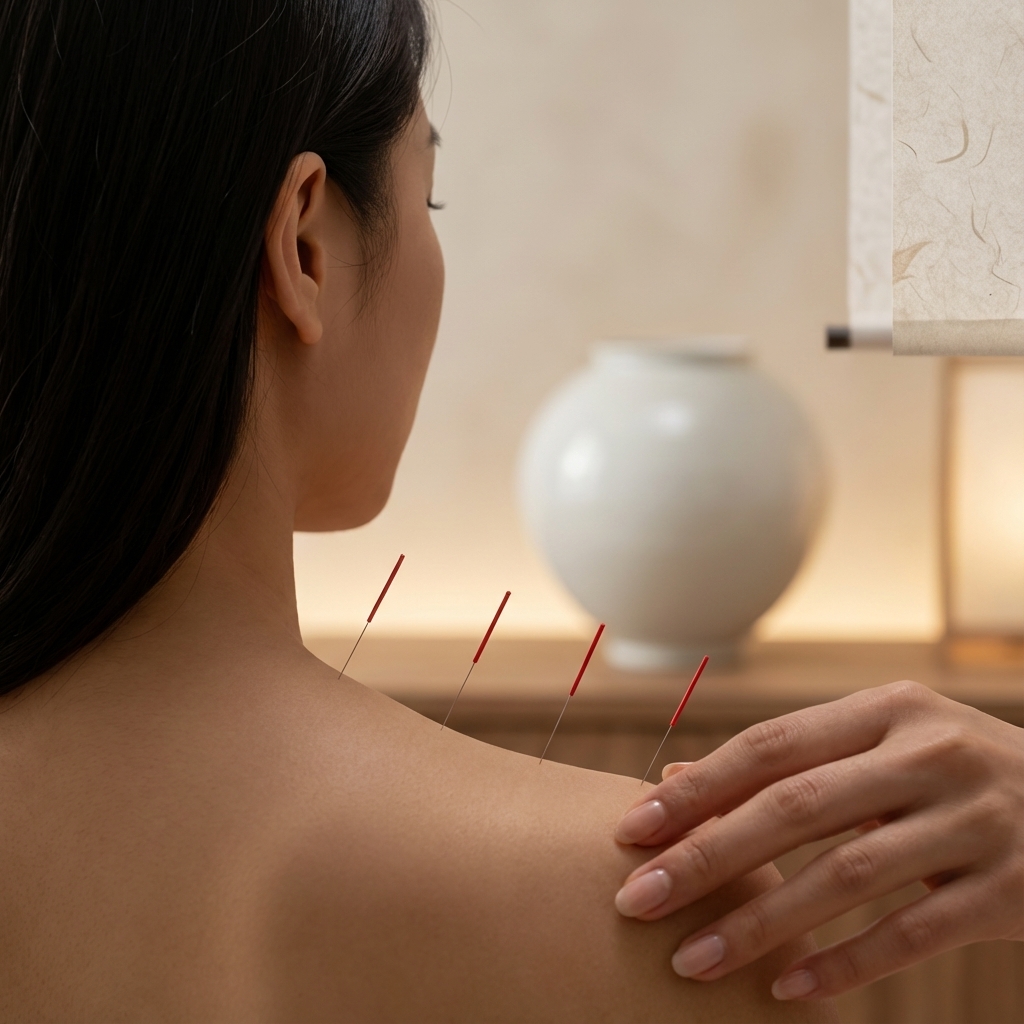
A. Although acupuncture does not directly regenerate cartilage, there are studies showing that it has significant effects on pain relief and functional recovery by regulating pain signals around the ankle, reducing inflammatory cytokines, and improving blood flow. In particular, needle acupuncture helps restore joint range of motion by physically separating adhered ligaments and joint capsules. When combined with herbal medicine, the anti-inflammatory effects complement each other.
View details →Q How does herbal medicine help with ankle arthritis? I am curious if it actually acts on the bones or cartilage.
A. Herbal medicine acts in multiple ways, including suppressing inflammation within the joints, activating cartilage-protecting enzymes, and improving reduced bone metabolism caused by kidney deficiency. Medicinal herbs such as *Achyranthes root*, *Aralia cordata*, and *Du Zhong* have accumulated research on their anti-inflammatory and antioxidant properties, and prescriptions tailored to one's constitution improve systemic qi and blood circulation to promote nutrient supply around the joints. However, it is difficult to completely regenerate cartilage with herbal medicine alone; the effects are maximized when combined with external treatments.
View details →Ankle Osteoarthritis is not just a simple symptom
Korean medicine that considers both your constitution and lifestyle rhythm treats the root cause.
From consultation to precise treatment, we provide personalized care.
Prescriptions tailored to your constitution and symptoms treat the root cause
The director personally sees you from first to follow-up visits
We identify the essence through Sasang constitution, pulse and abdominal diagnosis
Treatment based on long clinical experience and evidence
Was this helpful? If you need accurate care for your condition, please contact us below.