
Ankylosing Spondylitis
Ankylosing Spondylitis
Ankylosing spondylitis where the lower back is stiff in the morning and relaxes with movement
# Possibility / Realistic Goals (2)
Q Can I continue working even with ankylosing spondylitis? I have an office job and have to sit all day.
A. A significant number of patients with ankylosing spondylitis maintain a normal work life through appropriate treatment and self-management. For office workers, standing and stretching for 5 minutes every hour, using a back support, and adjusting monitor height are key to preventing symptom exacerbation. The better active inflammation is controlled, the faster work performance and quality of life recover. Starting treatment early is the most important variable for maintaining long-term occupational function.
View details →Q I am a female patient with ankylosing spondylitis and am planning to get pregnant. How should I manage treatment during pregnancy?
A. Female patients with ankylosing spondylitis can become pregnant under proper management, and symptom improvement during pregnancy is reported in approximately 50–60% of cases. However, since certain medications (some NSAIDs, sulfasalazine) require caution depending on the stage of pregnancy, consultation with a rheumatologist is essential. Regarding Korean traditional medicine treatments, there are medicinal herbs whose use is restricted during pregnancy, so you must inform your doctor of your pregnancy in advance.
View details →# Comorbidities (1)
# Lifestyle Management (2)
Q I have ankylosing spondylitis. What kind of exercise is good? Is it okay to lift heavy objects or run?
A. Swimming, aqua exercises, yoga, Pilates, and walking are most recommended for ankylosing spondylitis. The key is to consistently perform extension and rotation exercises every day to maintain spinal and thoracic flexibility. High-impact running or contact sports should be avoided during acute exacerbations, but light exercise is acceptable during remission. Lifting heavy objects with proper posture while wearing an abdominal support belt reduces the load on the spine.
View details →Q Do patients with ankylosing spondylitis need to pay attention to their sleeping posture? Is the choice of pillow or mattress important?
A. For patients with ankylosing spondylitis, sleeping posture and bedding play a crucial role in maintaining proper posture. It is recommended to avoid sleeping on your stomach without a pillow or with a low pillow on a hard, flat mattress, and instead sleep on your back. Placing a cushion under your knees reduces strain on the lower back, and adjust the pillow height so that the cervical spine maintains a neutral position. Performing light extension exercises in bed for 3 to 5 minutes before getting out of bed in the morning helps alleviate stiffness.
View details →# Safety (1)
# Drug Combination / Interactions (1)
# Prognosis / Recovery (2)
Q Does ankylosing spondylitis progress to the "bamboo spine" stage? Does it become completely stiff?
A. Not all cases of ankylosing spondylitis progress to the bamboo spine stage. With early diagnosis and appropriate treatment, structural damage can be significantly delayed or prevented. Since the introduction of biological agents, the rate of complete spinal ankylosis has decreased significantly. Consistent exercise, quitting smoking, and medication are the three key factors determining the prognosis.
View details →Q Is remission possible for ankylosing spondylitis? Even if a complete cure is difficult, is it possible to return to daily life?
A. While a complete cure for ankylosing spondylitis is difficult, achieving remission (a state with minimal active inflammation) is entirely possible. Many patients maintain their daily and social lives without pain by combining biological agents with Korean medicine treatments and exercising consistently. Even after remission, continuous management is necessary to prevent recurrence, as stress and infection can act as triggers.
View details →# Causes Explained (2)
Q I am a man in my early 30s, and my lower back is very stiff in the mornings. Why does ankylosing spondylitis occur?
A. Ankylosing spondylitis is an autoimmune inflammatory disease in which the immune system attacks one's own spinal joints. The risk of developing it is higher in individuals who test positive for the HLA-B27 gene, and abnormalities in the gut microbiome or infections can act as triggers. It typically begins in young men in their teens to thirties and is characterized by morning stiffness lasting for more than an hour. Early detection and management significantly influence the long-term prognosis.
View details →Q I am a woman in my 20s living in Dongincheon. I have persistent sacroiliac joint pain; is this related to ankylosing spondylitis?
A. Sacroiliac joint pain is one of the earliest symptoms of ankylosing spondylitis. The typical course involves inflammation starting in the sacroiliac joint and gradually spreading upward to the lumbar and thoracic spine. Since symptoms in women are often milder or atypical than in men, leading to delayed diagnosis, professional medical attention is necessary. We recommend undergoing differential diagnosis via MRI, X-ray, and blood tests (HLA-B27, CRP).
View details →# Food / Triggers (2)
Q Are there any foods that should be avoided with ankylosing spondylitis? I feel like eating flour makes me feel worse.
A. Dietary management is important for ankylosing spondylitis because it is closely linked to the gut-immune axis. Refined flour, sugar, and processed foods can increase intestinal permeability and worsen systemic inflammation. On the other hand, oily fish rich in omega-3, vegetables, and fermented foods (probiotics) are beneficial for gut health and anti-inflammation. Rather than complete dietary restriction, it is more realistic to reduce inflammatory foods and increase an anti-inflammatory diet.
View details →Q I am a welder in my 40s working in Dong-gu, Incheon. Does a cold working environment worsen ankylosing spondylitis?
A. Cold and damp environments can significantly worsen the symptoms of ankylosing spondylitis. At low temperatures, muscles and ligaments contract more, and reduced blood circulation slows down the removal of inflammatory mediators. Maintaining the same posture for long periods (such as welding) is also a major contributing factor that intensifies spinal muscle stiffness. Periodic stretching during work, keeping warm, and heat therapy after work are helpful.
View details →# Treatment Schedule (1)
# Treatment Stages (2)
Q What is the sequence of treatment when a patient visits a Korean medicine clinic for the first time for ankylosing spondylitis?
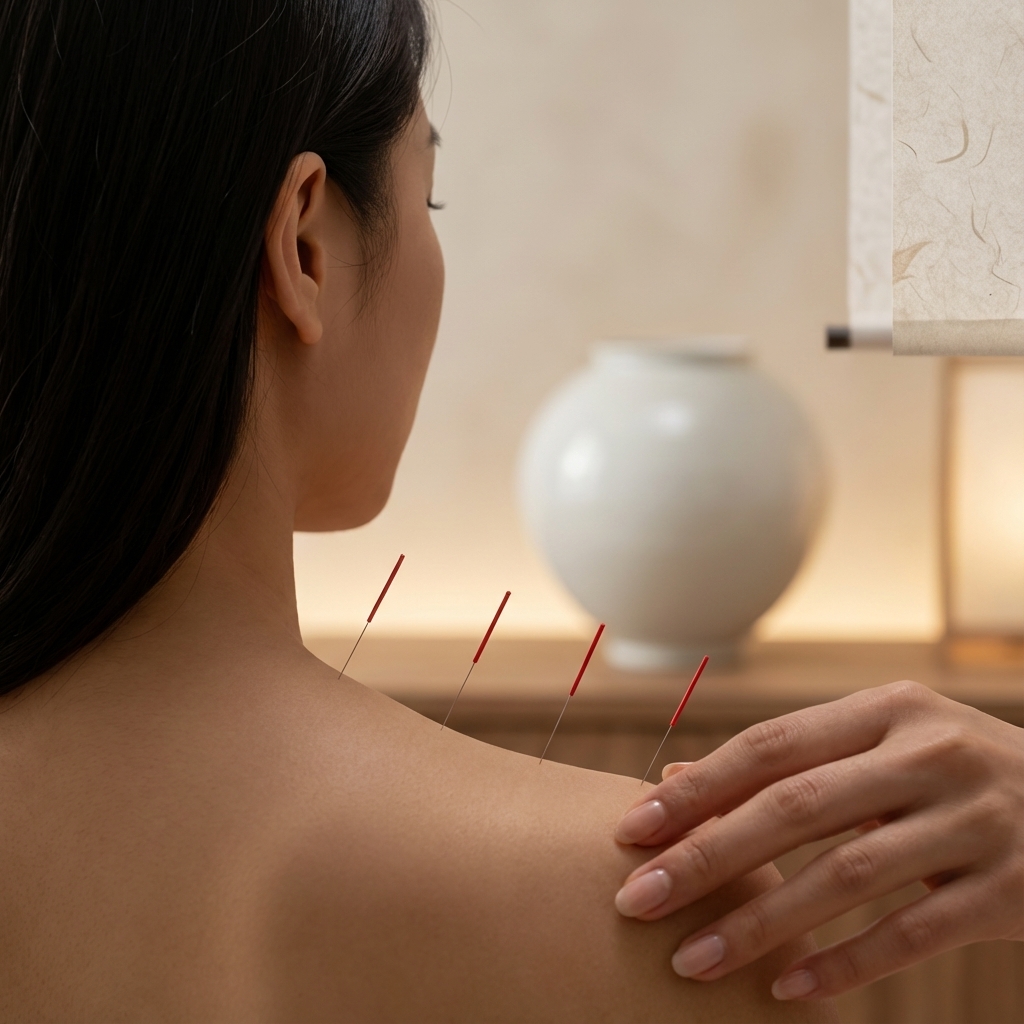
A. During the first visit, we assess the patient's medical history, imaging results, and current medications, followed by a differential diagnosis. Subsequently, we begin acupuncture and moxibustion treatments to alleviate acute pain and stiffness. After 2 to 3 weeks, we evaluate the response to determine whether to add treatments such as fire acupuncture, thread embedding, or pharmacopuncture. The herbal medicine prescription is finalized based on symptom patterns observed during the initial 2 to 4 weeks, and exercise and dietary guidelines are also provided.
View details →Q My pain from ankylosing spondylitis has decreased significantly. Can I stop treatment now? Why is maintenance therapy necessary?
A. If you suddenly stop treatment because the pain has subsided, recurrence often occurs within a few months. In ankylosing spondylitis, even if active inflammation feels gone, structural damage can continue asymptomatically. Maintenance therapy is necessary to prevent the reactivation of inflammation and to maintain the function and flexibility that have already been recovered. It can be adequately managed with visits once or twice a month after the symptoms have disappeared.
View details →# Effectiveness (2)
Q I have been diagnosed with ankylosing spondylitis and am currently receiving biological agents. Would treatment at a Korean medicine clinic be additionally helpful?
A. Combining Korean medicine treatment with biological agents to suppress inflammation can create synergistic effects in pain reduction, functional recovery, and improvement of quality of life. Acupuncture and moxibustion relieve muscle stiffness and adhesions around the spine to expand range of motion, while herbal medicine improves the systemic inflammatory environment by regulating immunity and enhancing gut health. However, it is safer to proceed with the treatment plan in consultation with your attending rheumatologist.
View details →Q My lower back is stiff for 1 to 2 hours every morning. Can treatment at a Korean medicine clinic reduce this morning stiffness?
A. Morning stiffness is a key indicator of the activity level of ankylosing spondylitis. In many cases, the duration of stiffness decreases gradually when blood circulation in the muscles and ligaments surrounding the spine is improved through acupuncture and moxibustion treatment. Herbal medicine treatment can alleviate the intensity of stiffness itself by contributing to lowering systemic inflammation levels. The effects are even faster when combined with regular exercise.
View details →Ankylosing Spondylitis is not just a simple symptom
Korean medicine that considers both your constitution and lifestyle rhythm treats the root cause.
From consultation to precise treatment, we provide personalized care.
Prescriptions tailored to your constitution and symptoms treat the root cause
The director personally sees you from first to follow-up visits
We identify the essence through Sasang constitution, pulse and abdominal diagnosis
Treatment based on long clinical experience and evidence
Was this helpful? If you need accurate care for your condition, please contact us below.