
Q I am an office worker in my 40s commuting from Dongincheon. How often do I need to come in for tennis elbow treatment? It is very difficult to find time on weekdays.
A Generally, we recommend a schedule of twice a week for the first 2 to 4 weeks, gradually reducing it to once a week as the condition improves. For office workers, it is often possible to manage the condition by combining intensive treatment once a week with self-exercise. During the initial consultation, we will check the condition of the tendons via ultrasound and develop a realistic treatment plan that fits your work schedule.
Detailed Answer
The frequency of tennis elbow treatment varies depending on the degree of injury and daily activity load. When pain is severe and daily movements are restricted, it is efficient to shorten the treatment interval to about twice a week to break the cycle of pain. Once the pain begins to subside, we widen the interval to once a week to solidify tendon regeneration. Since treatments that induce a tissue response, such as needle acupuncture or thread lifting, require a procedure interval of at least 1 to 2 weeks, you can schedule your appointments based on the treatment dates rather than needing to visit frequently. Since the gaps between treatments are filled by self-stretching, eccentric exercises, and posture correction, the sum of treatment and self-care is more important than the number of visits.
Perspective of a Korean Medicine Clinic
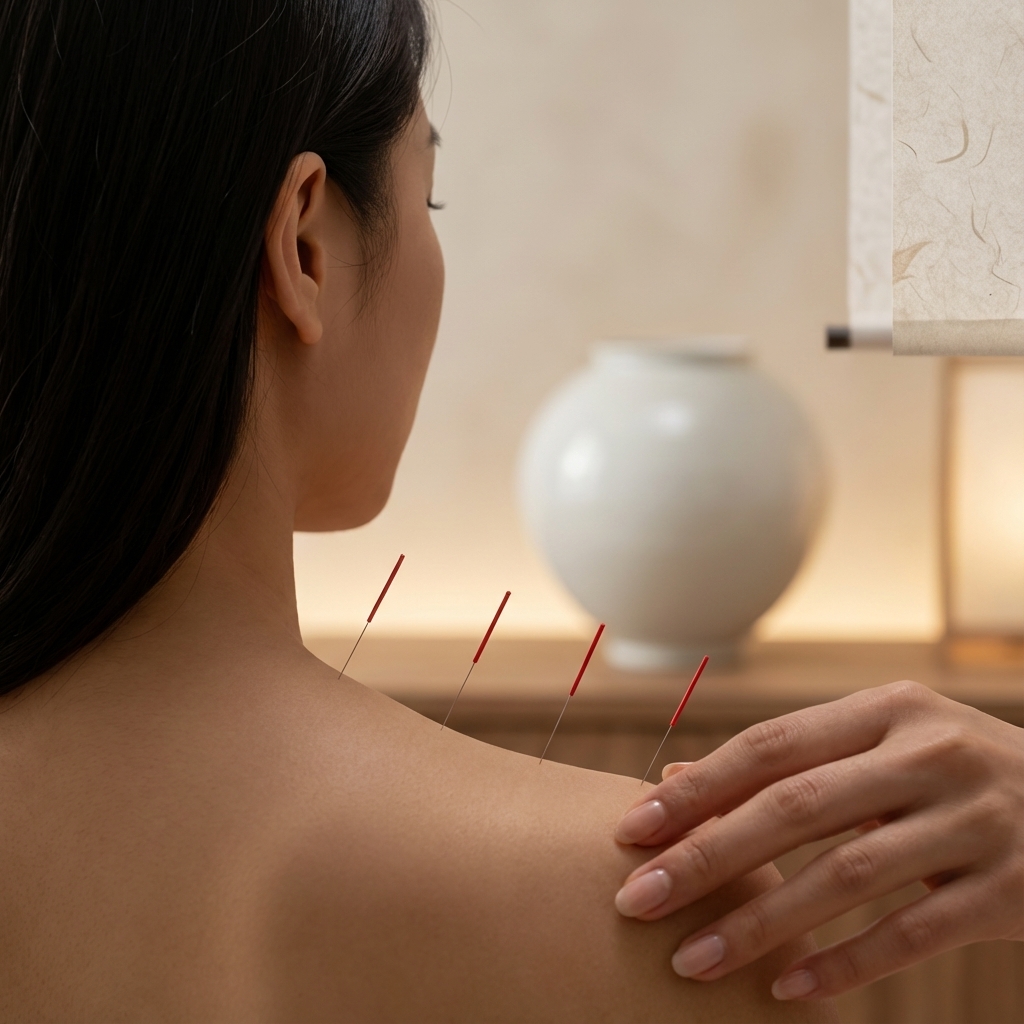
As Korean medicine treatment is a process of restoring the flow of Qi and blood, maintaining stimulation at a consistent rhythm is more effective than receiving treatments sporadically in bursts. However, Dongjedang operates on a dual structure of external and internal treatment, offering greater flexibility for busy patients. During in-clinic visits, intensive external treatment is performed using ultrasound-guided acupuncture, moxibustion, and pharmacopuncture to precisely treat the injured area. On days when patients cannot visit, prescribed herbal medicine continues the treatment by clearing blood stasis and dampness from the body and replenishing liver blood. If you schedule fixed days on weekday evenings or Saturdays to fit your commute route, the treatment rhythm will not be interrupted. Designing a rhythm compatible with work life, rather than simply completing a certain number of sessions, is a realistic way to prevent the condition from becoming chronic.
Related FAQs
-
Q
I am a self-employed man in my 50s. The orthopedic clinic even mentioned surgery, but is there really a possibility of recovery through Korean medicine treatment without surgery?
#Possibility / Realistic Goals
-
Q
I am a woman in my 40s who runs a small workshop in Dong-gu, Incheon. I have received steroid injections three times, but the effect is only temporary and the condition keeps recurring. Can this case also be improved with Korean traditional medicine treatment?
#Possibility / Realistic Goals
-
Q
I am a male developer in my 40s. I was diagnosed with tennis elbow, but my neck and shoulders are also constantly stiff. Are they related, or did they develop separately?
#Comorbidities
-
Q
I am a male office worker in my 50s. Please tell me about stretches or exercises that are good for tennis elbow. Something I can do at home every day.
#Lifestyle Management
-
Q
I am a woman in my 30s who runs a cafe. Is ice packs or hot packs better for tennis elbow? I am confused because the information on the internet is inconsistent.
#Lifestyle Management