
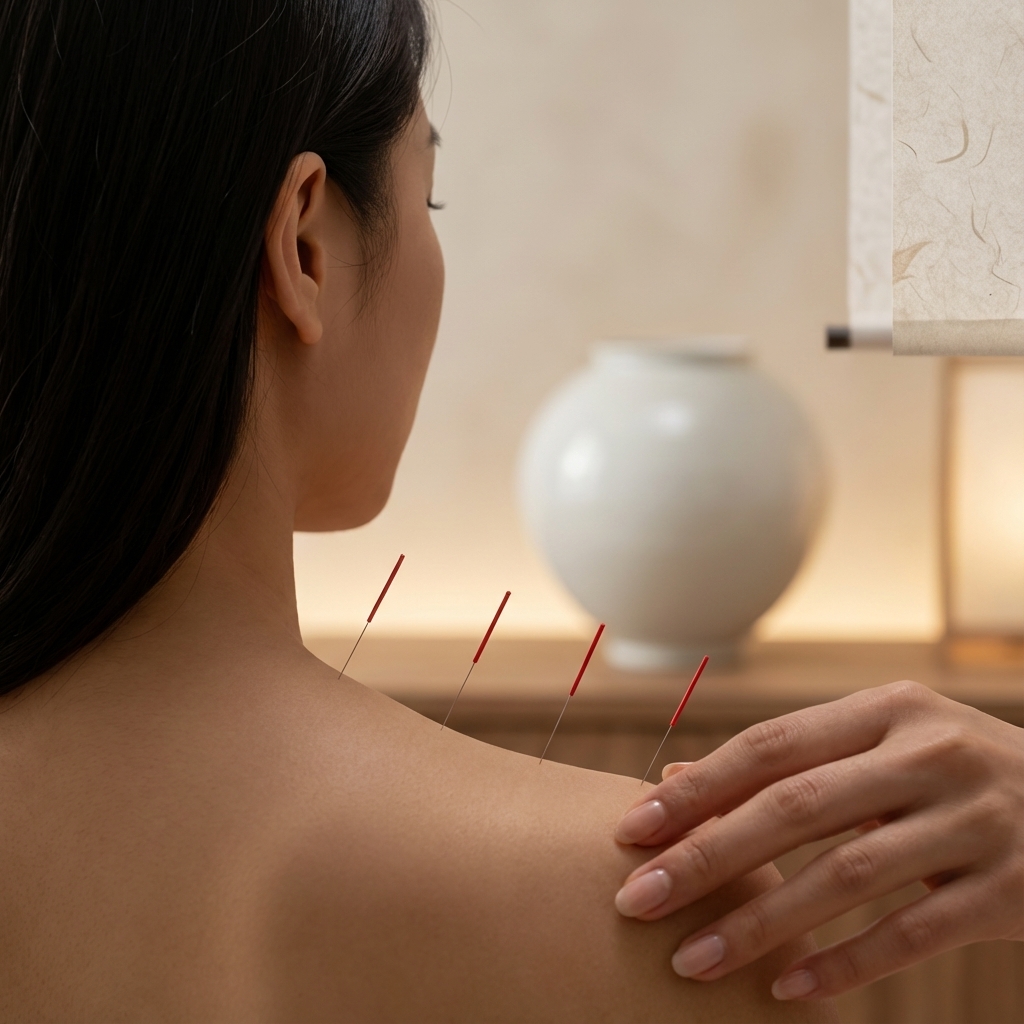

Q I am a 42-year-old hairdresser. I work with my arms raised all day, so I suffer from severe numbness in my arms. Honestly, I doubt whether acupuncture can relieve the pressure on my nerves. Is acupuncture really effective for thoracic outlet syndrome?
A Most cases of thoracic outlet syndrome involve excessive tension in muscles, such as the scalene muscles and pectoralis minor, compressing the nerves. Therefore, directly releasing the tension in these muscles with acupuncture reduces the pressure and alleviates the numbness. Unless there is a structural cause involving bone compression, conservative treatment is the primary choice, and acupuncture is one of the key tools for this.
Detailed Answer
The primary principle of treating thoracic outlet syndrome is conservative treatment. Since the main culprits compressing the nerves are usually shortened and tense scalene muscles and pectoralis minor, any treatment that reduces the tension in these muscles is effective. Research has reported that acupuncture treatment works by directly stimulating trigger points in hypertonic muscles to relax muscle tension and improve local blood flow; it produces synergistic effects when combined with physical therapy and stretching. However, structural causes such as cervical rib compression or vascular occlusion require separate evaluation. From the perspective of a Korean medicine clinic, the shoulders of a beautician stiffened by holding their arms in an elevated position represent a typical condition where Qi and blood circulation is blocked and tight. When the pathway for Qi and blood flow from the chest to the arms is blocked, the blockage causes numbness and pain. Dongjedang approaches this condition step-by-step. First, tension in the scalene and pectoralis minor muscles is released using acupuncture. If adhesions have formed due to long-standing conditions, they are separated using a needle guided by ultrasound. If ligament or fascia regeneration is required, fire acupuncture or thread embedding is used, and if inflammation is present, bee venom acupuncture or pharmacopuncture is added. By combining this with internal treatment to eliminate occupational fatigue, dampness, and blood stasis, and thereby restoring organ function, you can create a state where recurrence is minimal while continuing to work.
Related FAQs
-
Q
I am a 46-year-old welder. I was told at the hospital that if my symptoms persist, surgery should be considered. Is there really a possibility of improvement without surgery through Korean traditional medicine treatment?
#Possibility / Realistic Goals
-
Q
I am a 58-year-old seamstress. I have suffered from arm numbness since my 30s, so it has been over 20 years. Can I get better if I start treatment now, even with such long-standing thoracic outlet syndrome?
#Possibility / Realistic Goals
-
Q
I am a 50-year-old factory worker. My MRI showed a herniated cervical disc, and I am also suspected of having thoracic outlet syndrome. How is treatment handled when both are present? Which side should be examined first?
#Comorbidities
-
Q
I am a 29-year-old marketer. Are there any stretches for thoracic outlet syndrome that I can do in my spare time at work? I am currently receiving treatment, but I would also like to manage it myself.
#Lifestyle Management
-
Q
I am a 55-year-old restaurant owner in Dongincheon. I keep waking up at night because my arm feels numb. I’ve heard it is due to thoracic outlet syndrome; what position should I sleep in to reduce the numbness?
#Lifestyle Management