
Q I am a delivery driver in my 40s. I was slightly rear-ended while waiting at a traffic light. I was fine at the time, but starting two days later, I can't turn my neck. It wasn't even a hard collision, so why is this happening?
A Whiplash injury is a condition in which the neck is rapidly thrown back and twisted like a whip at the moment of impact, causing micro-damage to muscles, ligaments, and joint capsules. It can occur even in low-speed rear-end collisions; it is common for pain to be minimal immediately after the injury, but to develop pain and limited range of motion 24 to 72 hours later as the inflammatory response intensifies.
Detailed Answer
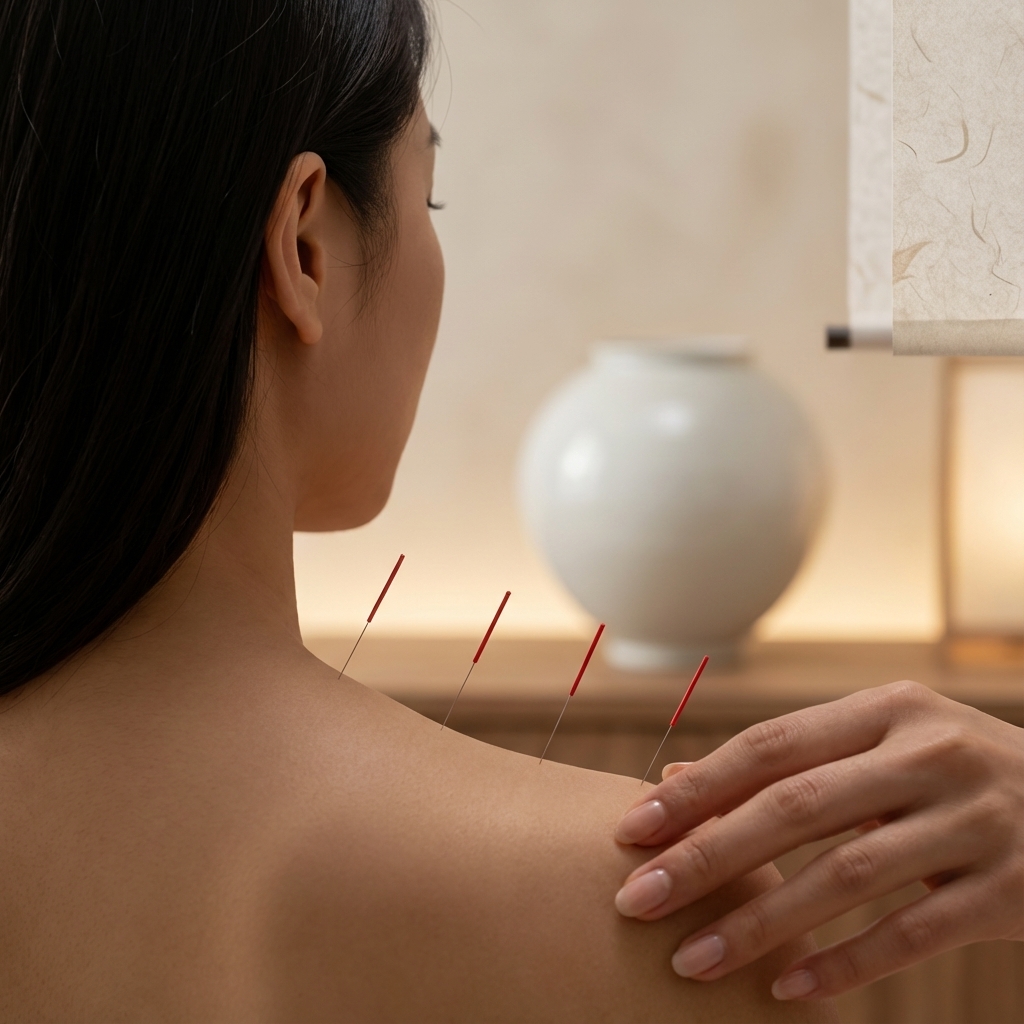
Whiplash injury refers to damage to the soft tissues surrounding the cervical spine caused by a whipping motion in which the head is hyperextended backward and then hyperflexed forward due to inertia at the moment of impact. Even in low-speed rear-end collisions of 10 to 15 km/h, the head is subjected to acceleration forces equivalent to several times body weight, which can cause micro-tears in muscles, ligaments, facet joints, and disc fibers. It is typical for the condition to exhibit a delayed onset, where pain is almost non-existent immediately after injury due to the time lag between adrenaline and inflammatory responses, but pain, stiffness, and headaches begin in earnest over 24 to 72 hours as inflammatory substances accumulate. Therefore, the absence of symptoms immediately after an accident does not mean there is no injury. In Korean medicine, whiplash injury is viewed as a state where stagnant blood and blocked energy resulting from trauma are accumulating in the meridians. The meridian flowing from the neck to the back passes through the back of the neck; if the flow of Qi and blood in this meridian is blocked by impact, pain spreads beyond the injured area to the back of the head, shoulders, and back. Since the liver governs muscles and ligaments, while the kidneys govern tendons and bone marrow, clinical approaches divide the condition into two types: one where muscles and ligaments are damaged by stagnant blood caused by trauma, and another where bones and joints are weakened due to weakened kidney energy. At Dongjedang, we apply a stepwise external treatment approach. After confirming damaged ligaments and joints via ultrasound, we begin with acupuncture, using moxibustion to release adhesions and strengthen ligaments when necessary. During periods of severe inflammation, we utilize bee venom and pharmacopuncture to aid in anti-inflammatory effects. Simultaneously, we boost the body's recovery capacity through detoxification-centered internal treatment to flush out stagnant dead blood and waste products. Our goal is not merely to alleviate localized pain, but to achieve a state free from recurrence.
Related FAQs
-
Q
I am a job seeker in my 20s. It has been three months since the accident, and I am anxious because there are many posts online saying that it lasts a lifetime. Is it really possible to fully recover?
#Possibility / Realistic Goals
-
Q
I am a logistics center employee in my 30s. I even had an MRI after the accident, and while it says there are no abnormalities, the pain persists. Is treatment possible even though the test results are normal?
#Possibility / Realistic Goals
-
Q
I am an elementary school teacher in my 40s. After the accident, I developed not only neck pain but also shoulder stiffness, numbness in my arms, and occasional tinnitus. Do I need to visit separate hospitals for each condition, or is it originating from my neck?
#Comorbidities
-
Q
I am a bus driver in my 50s. I have been wearing a neck brace since an accident, but is it better to keep wearing it? I am not sure how long I need to wear it.
#Lifestyle Management
-
Q
I am a nurse in my 30s. Since the accident, my neck feels stiffer when I wake up. What should I do regarding my pillow or sleeping position?
#Lifestyle Management