
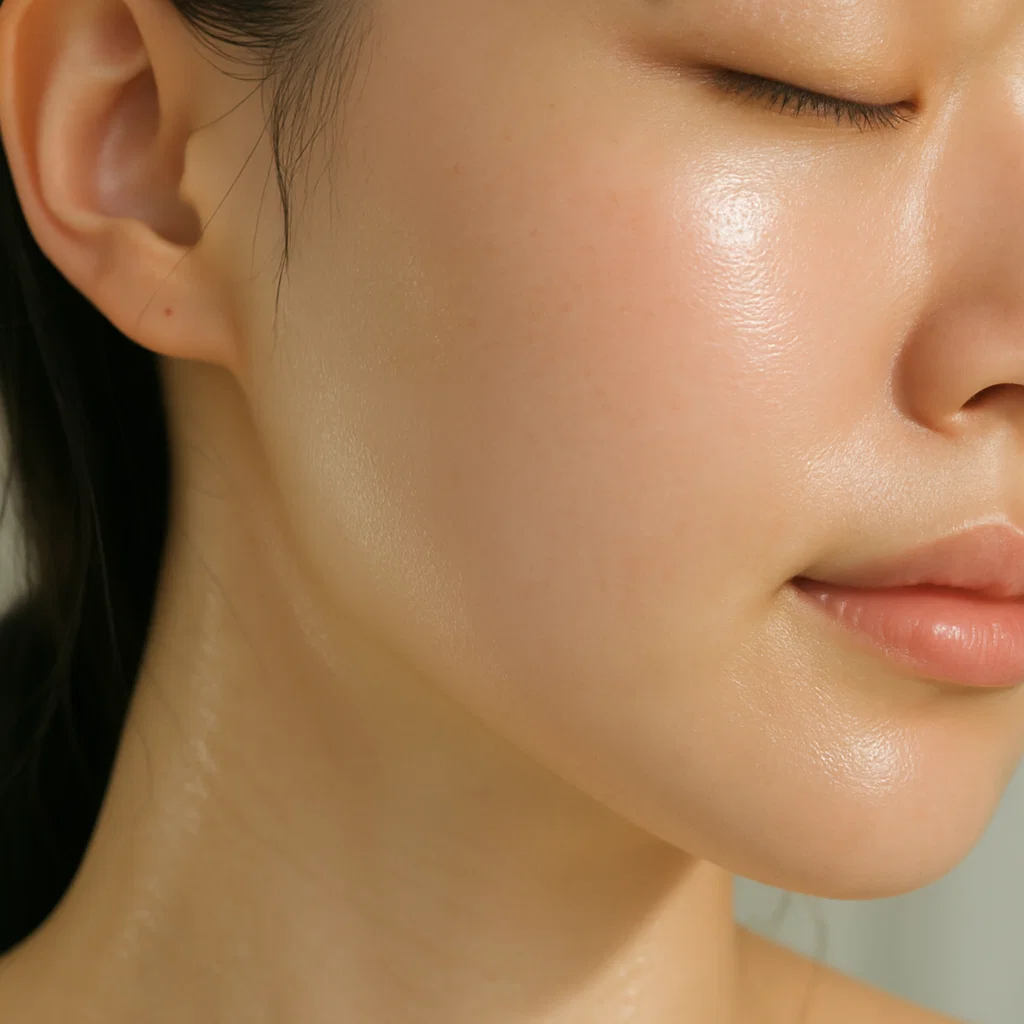
Q Why do my face—especially my nose and cheeks—turn red so easily and so often?
A The central face is rich in blood vessels and has thin skin, making it sensitive to stimulation. With rosacea, the blood vessels in this area dilate easily, so redness lingers and the face flushes even with minor triggers.
Detailed Answer
The nose, cheeks, and center of the forehead have abundant capillaries and thin skin, so they react sensitively to temperature and emotional changes. In rosacea, the function that constricts and relaxes the blood vessels becomes disrupted, so once the skin turns red it does not subside easily, and over time the broken capillaries may become permanently visible.
Korean Medicine Clinic Perspective
In Korean medicine, the face is where all the yang energy (yang-gi) gathers, so when heat shifts toward the upper body, it shows up first as redness on the face. Dongjedang approaches this using the principle of su-seung-hwa-gang (water rising, fire descending)—drawing the upward-floating heat back down to even out circulation—aiming to correct the very imbalance that makes only the face flush.
Related FAQs
-
Q
It's hard for me to come in often because of work. Is a remote (non-face-to-face) consultation possible?
#Possibility / Realistic Goals
-
Q
I'm confused about whether I have rosacea or seborrheic dermatitis, and I've been told I have both. Can they get better together?
#Comorbidities
-
Q
I thought it was acne and kept squeezing and treating it, but it didn't heal and got even redder. How is rosacea different from acne?
#Comorbidities
-
Q
Is there anything I can do right away when my face suddenly flares up?
#Lifestyle Management
-
Q
How should I handle daily cleansing and skincare for rosacea-prone skin?
#Lifestyle Management