
For Those Who Always Prepare for the Worst — Anxiety is Not a Weakness, But a Shadow of Your Strength

 🧾 Answer First | Core Conclusion
Always thinking of the worst-case scenario first, feeling your chest tighten,
and hearing "nothing is wrong" even after medical tests.
I am Dr. Choi Jang-hyuk, director of Dongjedang Korean Medicine Clinic.
I want to tell you something first.
Your anxiety doesn't exist because you are weak.
That ability to observe more carefully than anyone else is simply turned on too intensely right now.
The better an observer you are, the more sensitive your alarm becomes.
Let me address three ways to turn off that alarm.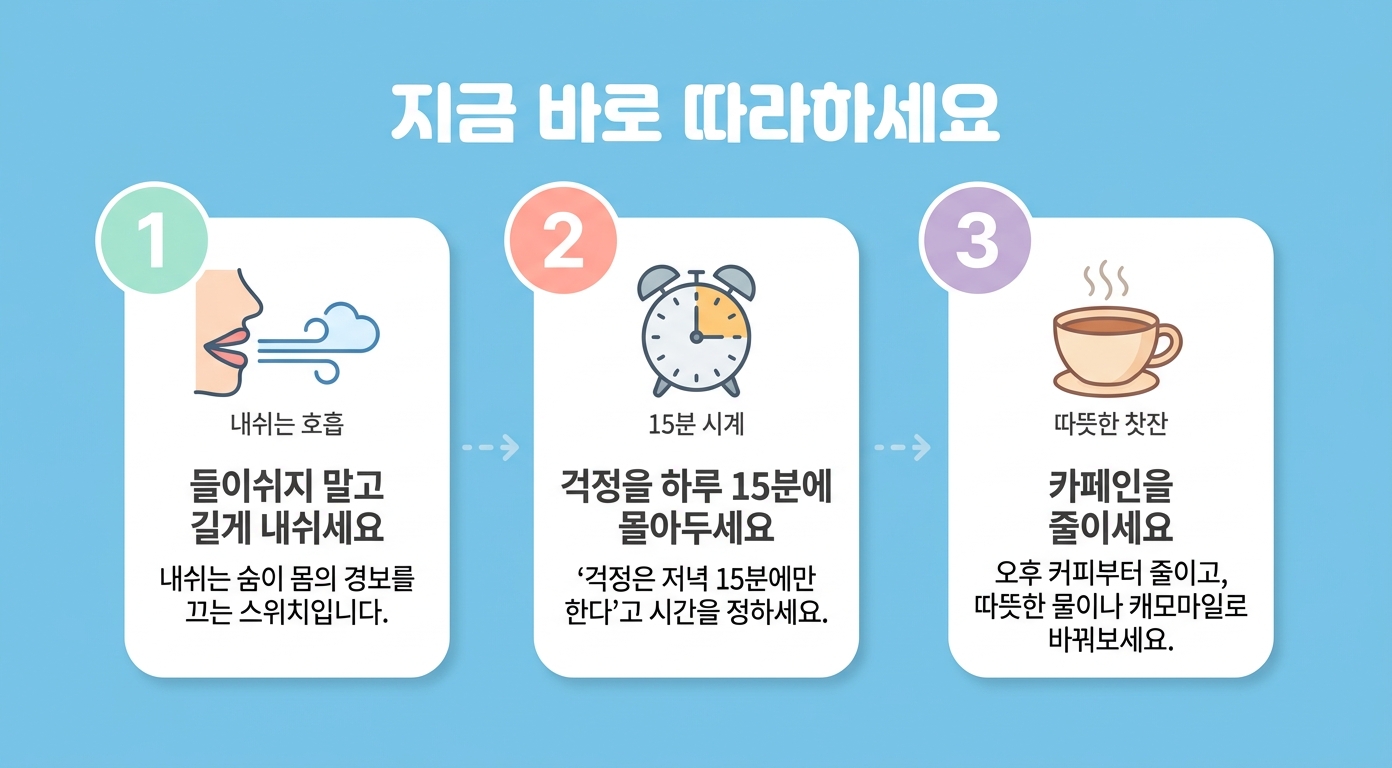 ✅ Action | Immediate Practice
1️⃣ Don't inhale deeply; exhale slowly for a long time
When anxious, you tend to try breathing in deeply.
The tighter your chest becomes. Do the opposite.
Exhale slowly through your mouth, like a sigh. Your exhale is the switch that turns off your body's alarm.
2️⃣ Concentrate your worries into 15 minutes a day
If worry leaks out all day long, your alarm never gets a break.
Set a time: "I will worry only for 15 minutes in the evening."
When worry comes to mind during the day, postpone it by saying "I'll do it at that time."
This is practicing to contain your worry, not eliminate it.
3️⃣ Reduce caffeine
Coffee pours fuel on an already activated alarm.
It intensifies feelings of heart palpitations and trembling hands.
Start by reducing afternoon coffee and switch to warm water or chamomile tea.
If your alarm doesn't turn off even after trying these three things for 2 weeks, it's time to examine which direction your vigilance is turned toward.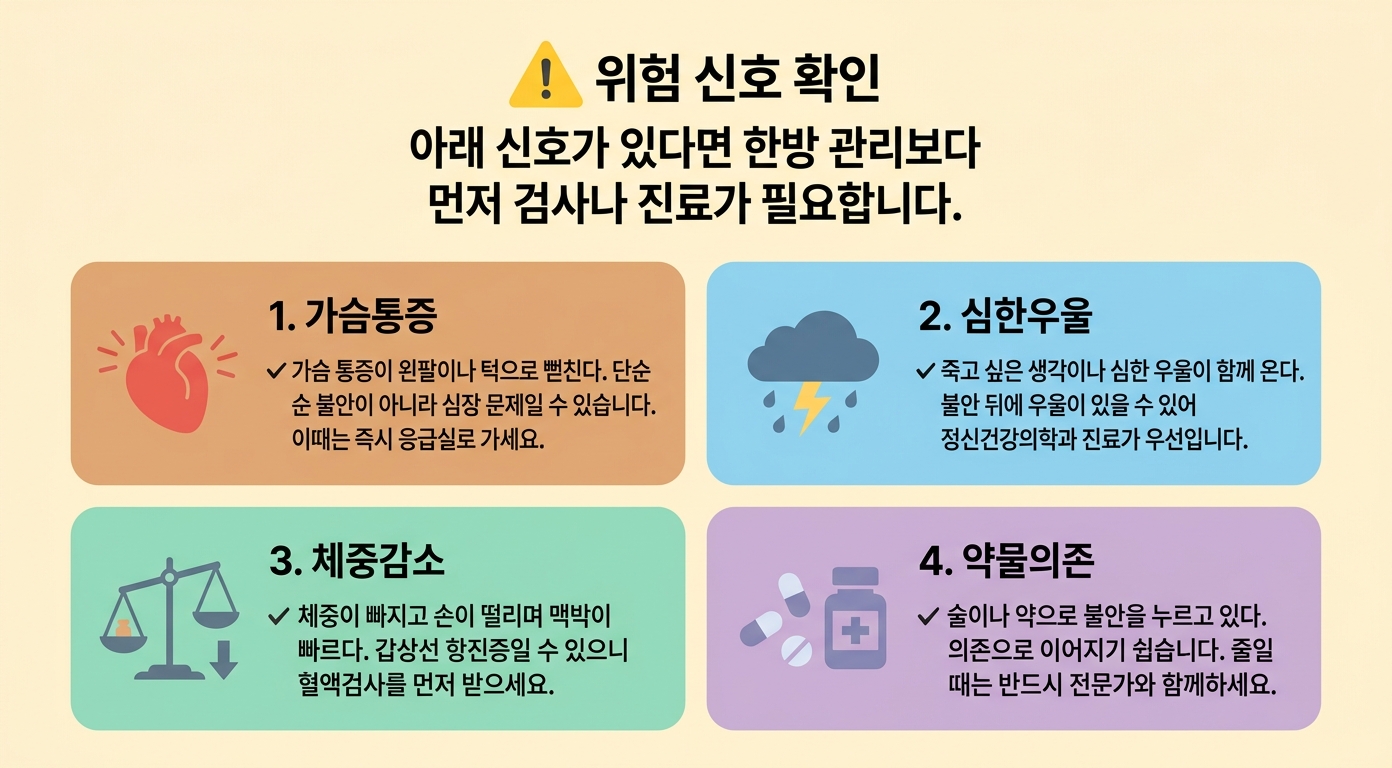 🚨 Warning | Critical Warning Signs You Must Check
If you experience the following signs, you need medical examination or consultation before Korean medicine management.
✔ Chest pain radiates to your left arm or jaw
This may not be simple anxiety but a heart problem. Go to the emergency room immediately.
✔ Thoughts of death or severe depression accompany your anxiety
There may be depression behind the anxiety, so consultation with a psychiatrist should come first.
✔ You are losing weight, your hands shake, and your pulse is rapid
This could be hyperthyroidism, so get a blood test first.
✔ You are suppressing anxiety with alcohol or medication
This easily leads to dependence. When reducing, you must always work with a professional.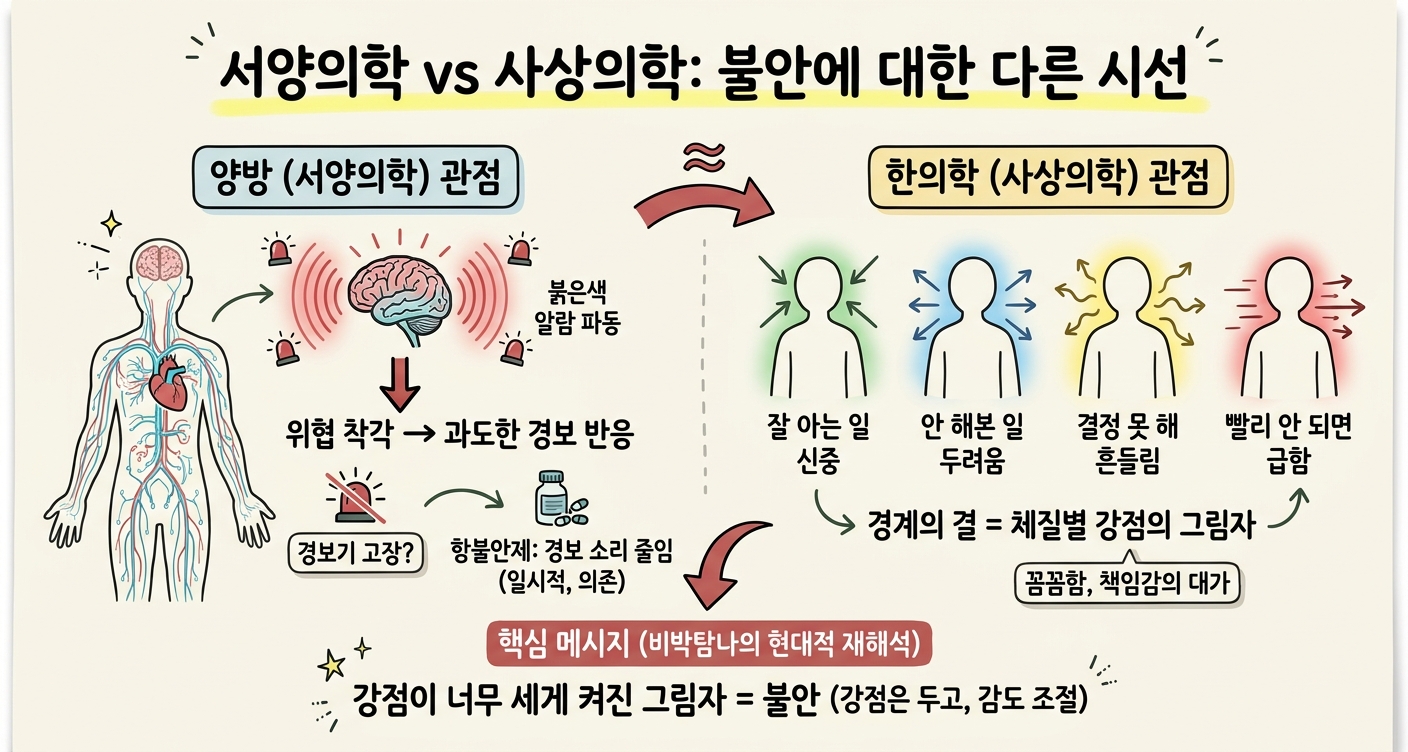 🧠 The Why | Understanding the Cause
Explanation | Western Medical Perspective
Western medicine views anxiety as a state where an alarm doesn't turn off.
The brain mistakes minor everyday stimuli for threats and continuously sends "be prepared" warnings to the body.
This causes your heart to race and breathing to become shallow.
Anti-anxiety medications reduce that alarm sound.
However, they don't fix the sensitivity of the alarm itself, so when you reduce the medication, it goes off again, and long-term use creates dependence.
But Western medicine stops there. It doesn't ask "why is this particular person's alarm so sensitive?"
Explanation | Korean Medicine Perspective
Sasang Medicine looks ahead of that.
Each person has a different direction of fear they naturally carry.
Someone becomes more cautious the better they know a task, someone fears unfamiliar work, someone wavers unable to make decisions, someone becomes impatient when things don't progress quickly.
The grain of vigilance differs by constitution.
Here's the key point.
This vigilance is the price that person's greatest strength pays.
A person with strong observational ability startles more easily, and one who takes responsibility heavily has a tighter chest.
Anxiety is not a weakness appearing from nowhere—it is the shadow of an original strength turned on too intensely.
That's why anxious people are usually competent at work and have strong sense of responsibility.
How the direction of this fear intertwines with that person's character,
and why it is not a weakness, is covered more deeply in a modern reinterpretation of bibaktamna.
So constitutional treatment doesn't destroy the alarm.
Destroying it would also erase that strength of careful observation.
Instead, it restores the overly sensitive detection level to suit that person.
It keeps the strength intact and only softens the shadow.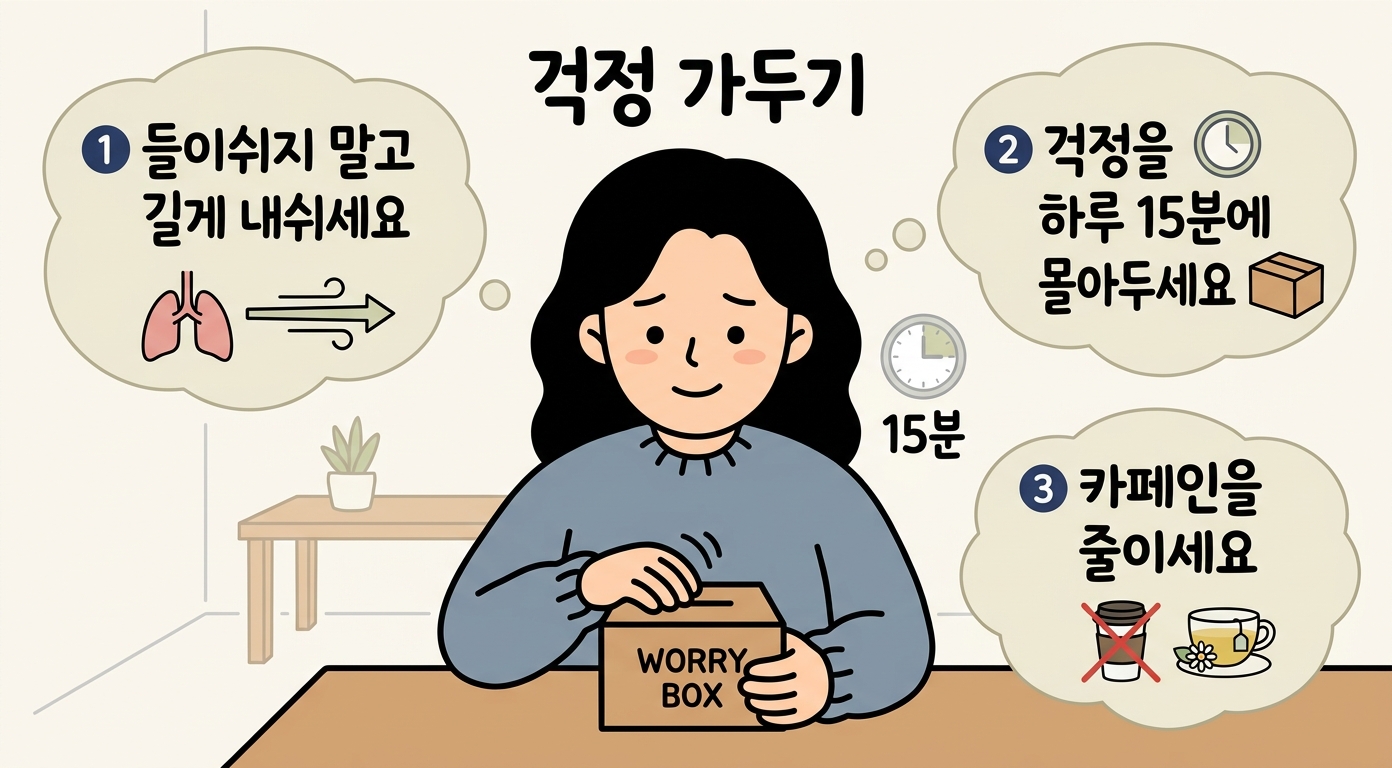 📊 Proof | Cases and Evidence
There was a man in his 40s working at a company.
He was someone who did his work flawlessly.
He always envisioned worst-case scenarios in advance and prepared for them, which is why he made almost no mistakes.
But that preparedness never turned off 24 hours a day, so his chest was always tight.
His heart tests and stomach tests were all normal.
Rather than asking "when did you start feeling anxious," I asked "what do you mostly worry about?"
Even about work he already knew well, he couldn't let go of "what if something goes wrong?"
That's where his vigilance was directed.
That meticulousness was a strength at work, but an unrelenting alarm in his body.
We decided to keep the strength intact and lower only the alarm's sensitivity. His chest tightness decreased.
His working ability didn't diminish; the same ability stopped tormenting him.
Another case involving chest tightness and breathing difficulties is covered in anxiety disorder and chest discomfort of a mid-level manager in his 40s.
Modern psychology also explains in the same direction that anxious people overestimate threats and cannot tolerate uncertainty.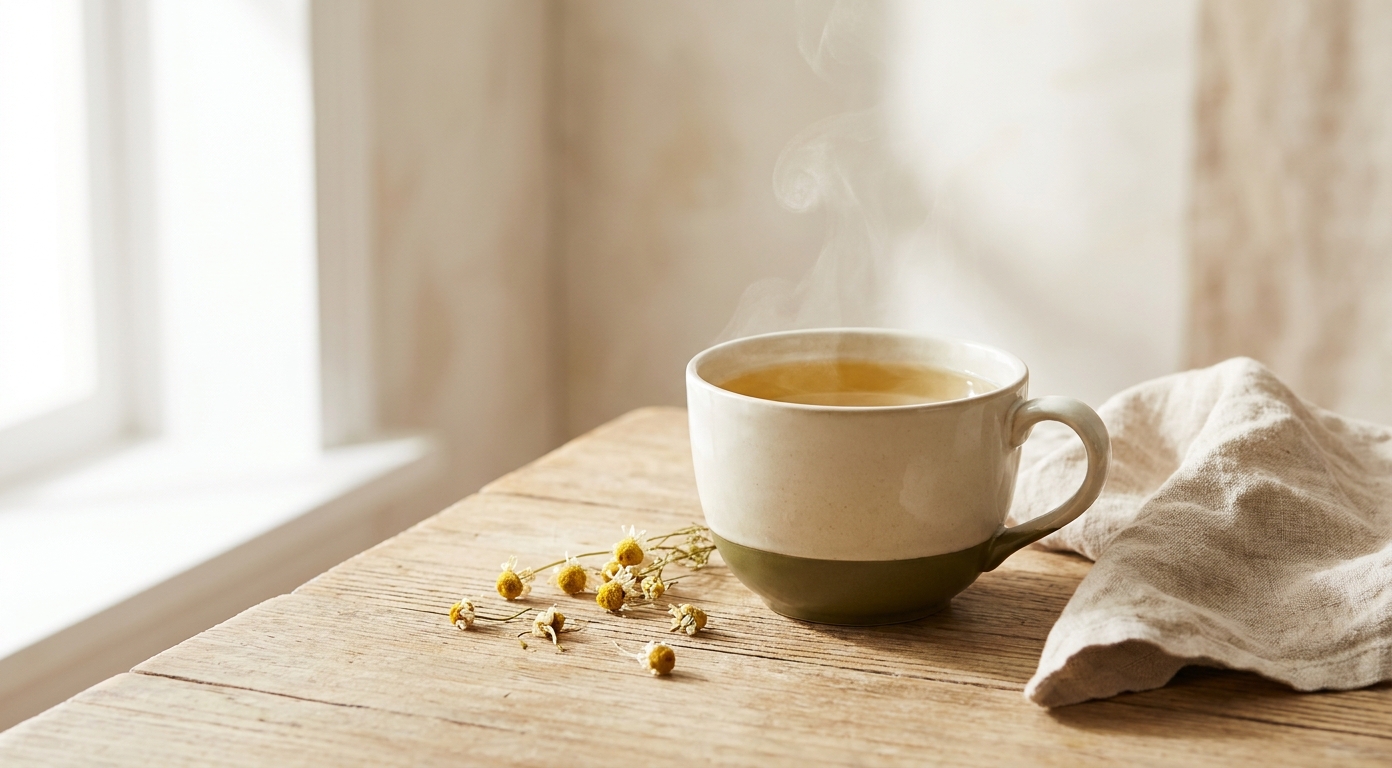 🔚 Closing | Summary and Encouragement
Anxiety is not a weakness.
It's your exceptional observational ability turned on too intensely.
When you learn to manage that power rather than turn it off, it becomes your ally again.
And when this alarm explodes suddenly all at once, it becomes panic.
I'll continue that discussion in the next article.
If you'd like to examine your mind together, explore our mental health program,
and if you'd like to explore the roots of tension accumulated in your body, check out our constitutional detox program
and feel free to inquire.
✍️ Reviewed by Dr. Choi Jang-hyuk, Director of Dongjedang Korean Medicine Clinic
❓ FAQ
Q. Tests are normal, so why am I always anxious?
Even without physical disease, anxiety develops when the brain's alarm system becomes excessively activated.
Since the state involves perceiving non-threats as threats, heart and stomach tests won't detect it.
Normal test results don't automatically mean you're fine.
Q. Is it okay to keep taking anti-anxiety medication?
Anti-anxiety medication only reduces the alarm sound; it doesn't eliminate the reason the alarm became sensitive.
Long-term use creates dependence, and when you reduce it, anxiety comes back.
However, stopping abruptly is dangerous, so adjustment must be done with a professional.
Q. Is my anxiety just my personality?
Rather than personality, it's your naturally careful and conscientious temperament turned on excessively.
The same temperament serves as a strength in the workplace. It's more accurate to see it as a shadow of strength, not a weakness.
Q. Why do you recommend constitutional treatment or detox for anxiety?
Constitutional treatment examines which direction your vigilance has become excessive and restores the sensitivity level.
When the process of reducing accumulated physical tension and internal burden proceeds together, the sensitized alarm settles more effectively.
📚 Reference Materials
[Western Medicine (WM)]
[1] Hyperarousal and threat overestimation model of Generalized Anxiety Disorder (GAD)
[2] Cognitive model of Intolerance of Uncertainty
[3] Tolerance and dependence of benzodiazepine anti-anxiety medications
[Korean Medicine (KM)]
[4] Korean Academy of Korean Neuropsychiatry. 『Standard Clinical Practice Guidelines for Anxiety Disorders』 (Gammi Soyou-san, Gwibui-tang, Bunsim-gi-eum, etc.)
[5] Lee Je-ma. 『Donguisusebowon』 — Constitutional constancy of spirit (恒心): timidity, fear, anxiety-prone mind, and urgency
[6] Choi Jang-hyuk. 「Modern Reinterpretation of Bibaktamna (鄙薄貪懦) — Structural Analogy between Sasang Psychopathology and DSM-5 Personality Disorders」 Sowon-jae 2026
Mental Health
For Those Who Always Prepare for the Worst — Anxiety is Not a Weakness, But a Shadow of Your Strength
View Program