"I'm afraid to lift even a cup of water" | Elbow pain in a grandmother taking care of her grandchild
 What Two Arms That Cannot Hold Speak
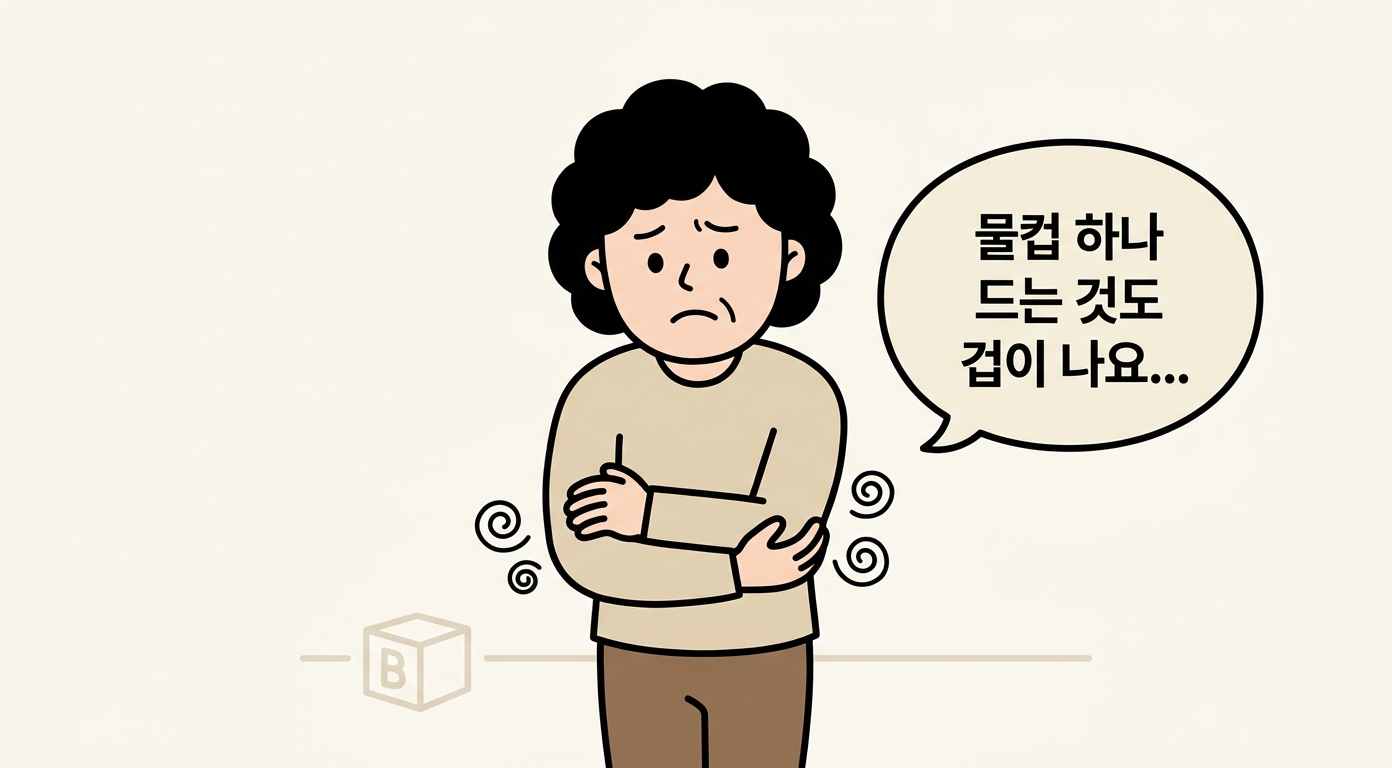
"I'm afraid to lift even a glass of water.
There's a sharp twinge on the outside of my elbow and the strength just drains out."
"When I try to lift my grandson, my arm shakes — I'm scared I might drop him."
These were the words of Soon-ok (pseudonym), a woman in her late fifties, the first time she came to see me.
Soon-ok was caring for her four-year-old grandson in place of her working son and daughter-in-law.
Her days were filled from early morning with getting her grandson ready for daycare, laundry and grocery shopping during the day, playing with him after pickup in the afternoon, and preparing dinner.
There was almost no time for herself.
A year ago, when her grandson started walking, the number of times she had to lift him increased sharply.
At first she brushed it off as a little soreness — but six months ago, even wringing out a towel became painful.
She went to two orthopedic clinics, took anti-inflammatory medication, received physical therapy, and lived with pain patches.
Taking the medication helped for a few days, but the moment she lifted her grandson, she was back to square one without fail.
"The X-rays show no bone abnormality, but I can't understand why it hurts so much."
Soon-ok's eyes held an emotion deeper than pain.
The guilt of not being able to tell her son she was hurting, the self-reproach of not being able to hold her grandson properly.
"At my age I should just put up with this" — and yet every night her elbow ached and disrupted her sleep.
I didn't just look at Soon-ok's elbow.
Every time I hear stories like this, I feel deeply for the patient's pain.
 A Rope on the Verge of Snapping — What Is Happening Inside
So why did Soon-ok's elbow refuse to improve?
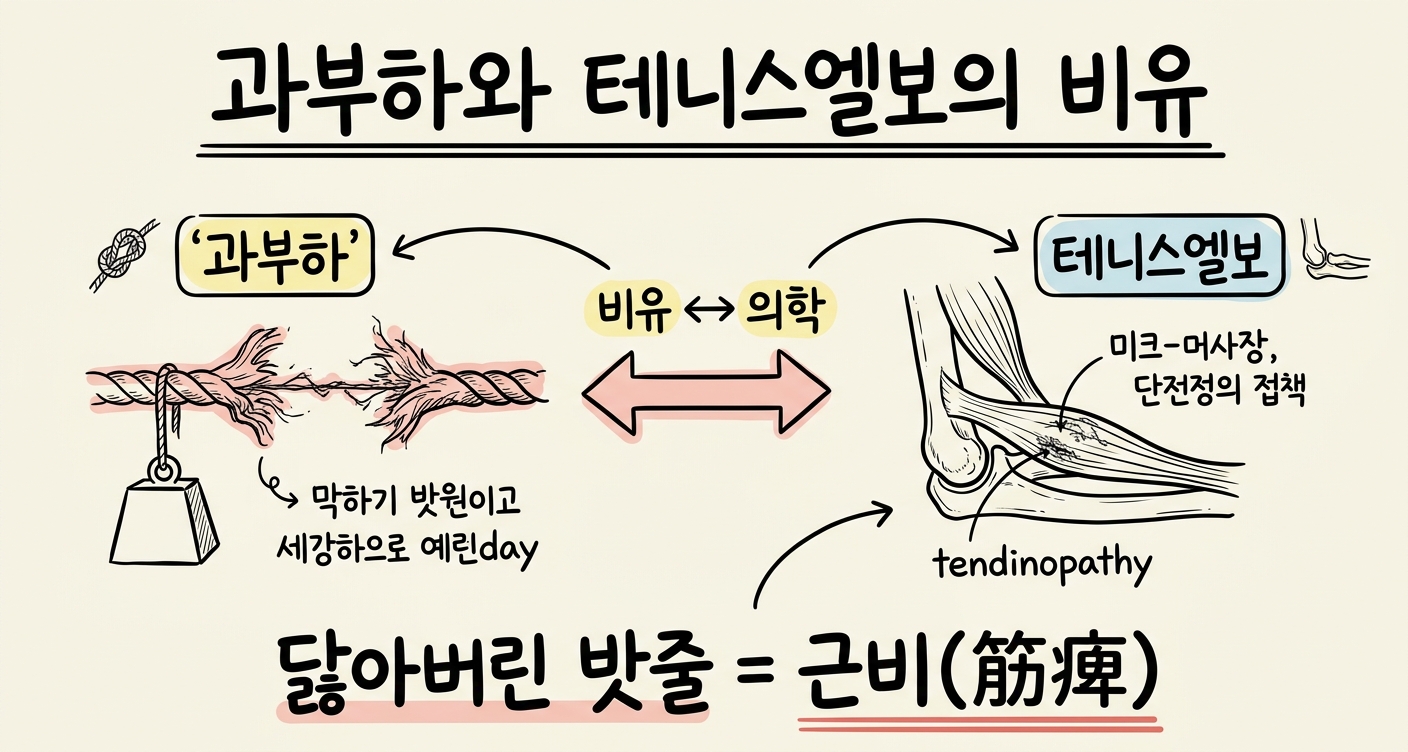
In Korean medicine, this type of symptom is called 근비(筋痺).
It refers to pain and stiffness caused by 기혈(氣血) failing to circulate properly through the tendons.
When repetitive strain accumulates in the tendon on the outer side of the elbow, microscopic damage piles up in layers.
Imagine a rope that has been carrying a heavy load every day.
Each fiber frays and snaps — but there is no time to let the rope rest.
Soon-ok's tendons were exactly that rope.
In modern medicine, this condition is called lateral epicondylitis — commonly known as "tennis elbow."
It is the chronic microscopic damage to the tendon attached to the outer elbow bone — a condition called tendinopathy (건병증).
You don't have to play tennis; anyone who repeatedly bends the wrist back or grips objects can develop it.
Yet some people with the same demands recover quickly, while others like Soon-ok still haven't healed after months.
This is where Korean medicine focuses on 간주근(肝主筋) — the liver's governance of the sinews.
The liver's 기혈(氣血) supplies nourishment to muscles and tendons throughout the body, but when overwork, sleep deprivation, and nutritional deficiency overlap, this supply diminishes.It is like a car that runs every day without maintenance or refueling.
No matter how strong the engine, it will eventually stop without fuel.
Soon-ok's body had no capacity left even to repair the tendon.
**So How Can This Frayed Rope Be Restored?**
The first thing to examine is the repetitive movement.
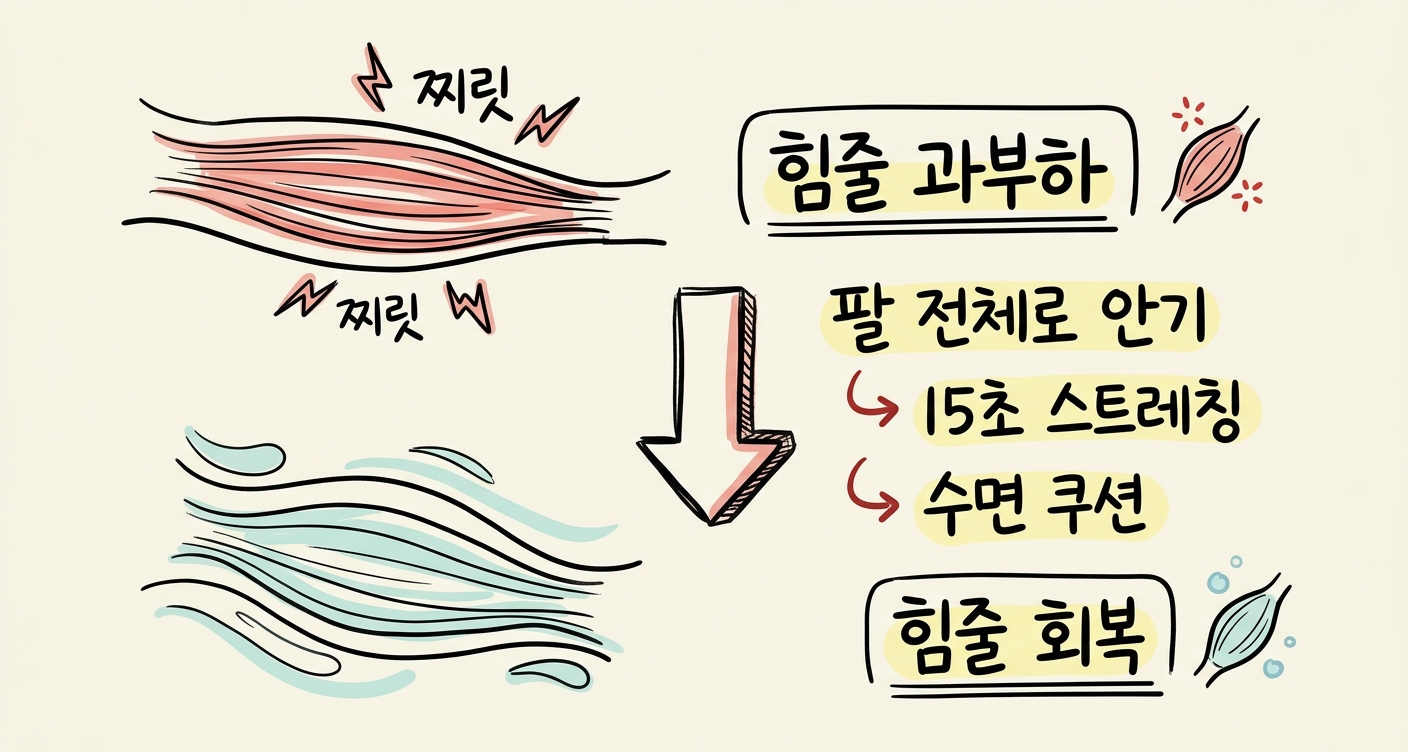
When lifting a grandson, using the entire arm as a cradle rather than applying force at the wrist reduces the burden on the elbow.
When lifting heavy objects, simply reversing the grip so the palm faces upward changes the force placed on the tendon.
Next is rest.
For someone like Soon-ok who cannot stop caregiving, even a short window in the day to put the arm down must be created.
Gently bending the wrist downward and holding for 15 seconds is a simple stretch that relieves tendon tension.
Sleep must not be overlooked either.
Tendon repair happens mostly during sleep — but when the elbow aches and disrupts sleep every night, the opportunity for recovery disappears.
Placing a thin cushion under the forearm to sleep with the elbow slightly bent can significantly reduce nighttime pain.
In Korean medicine, the acupuncture points 합곡(合谷) and 곡지(曲池) are frequently used.
Gently pressing the hollow between the thumb and index finger, and the outer crease at the tip of the bent elbow, helps support the flow of 기혈(氣血).
However, if the pain suddenly worsens, or new symptoms such as finger numbness or loss of strength appear, there may be a hidden cause — please seek medical attention.
 Toward the Day She Can Hold Him Again
I spoke to Soon-ok honestly.
Not simply suppressing symptoms, but restoring the body's overall 기혈(氣血) and creating an environment in which the tendon can heal itself.
Before treating just the elbow, the priority was to revive the body's overall recovery capacity, worn down by overwork.
Three months later, Soon-ok was able to smile while lifting her grandson.
Please listen to the signals your body is sending.
Pain is not weakness — it is the body's voice asking for help.
Your body has a remarkable capacity for recovery.
My role is to be a companion in finding the key to that recovery together.
Even if not with me — please find a healthcare provider who cares for not just the elbow, but the whole body.
✍️ Reviewed by Dr. Choi Jang-Hyuk, Director of Dongjedang Korean Medicine Clinic
Pain
"I'm afraid to lift even a cup of water" | Elbow pain in a grandmother taking care of her grandchild
View Program