
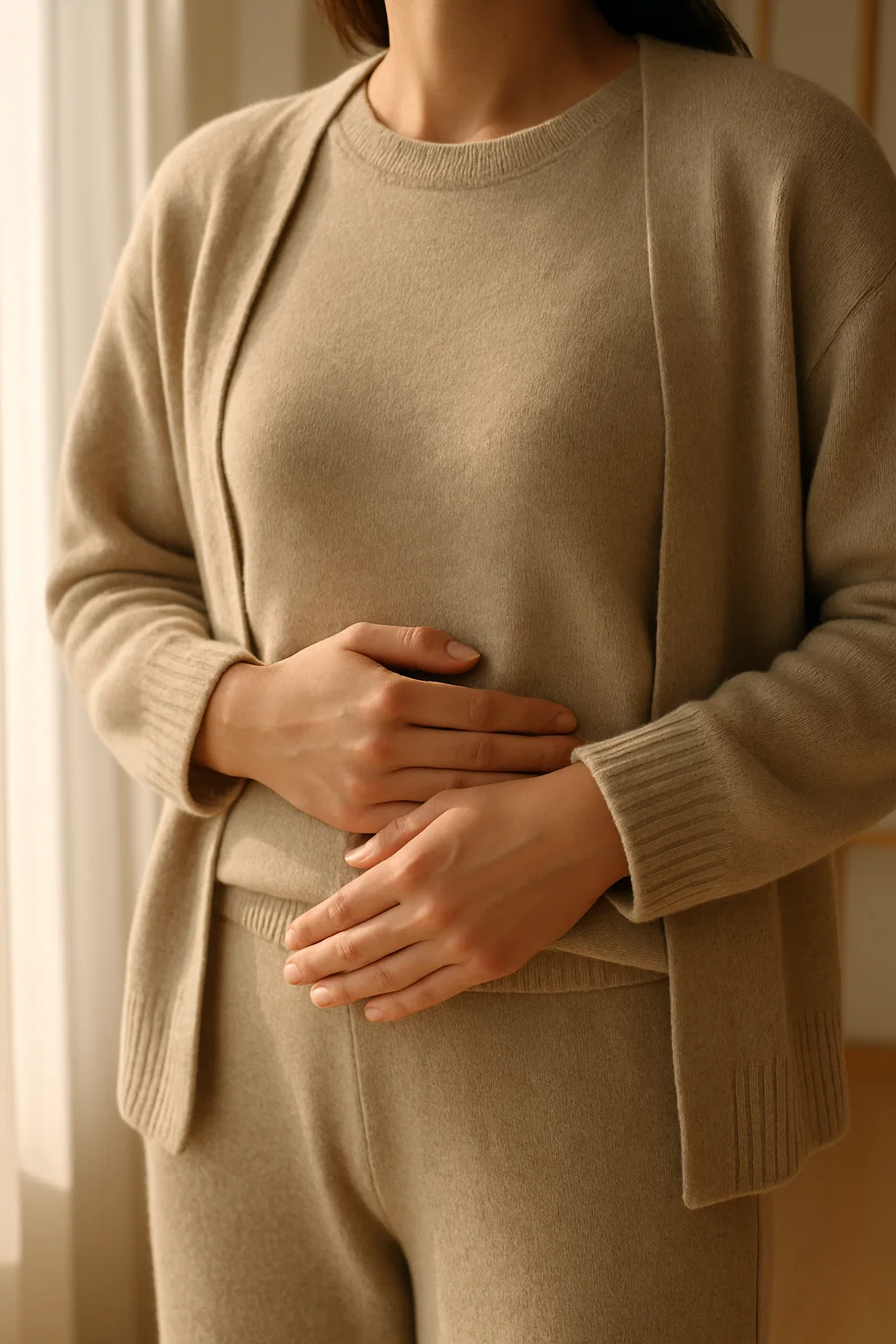
Epigastric Pain and Upper Abdominal Pain
Epigastric Pain
When the upper abdomen often burns or cramps — what to rule out and how Korean medicine manages it

# Possibility / Realistic Goals (3)
Q My endoscopy showed only "mild chronic gastritis". Can something that mild really hurt this much?
A. The degree of gastritis and the severity of pain are not proportional. Even with mild changes to the lining, pain is felt clearly when stomach movement is sluggish and sensitivity is heightened. A mild finding does not mean mild pain.
View details →Q The pain has lasted so long that I fear stomach or pancreatic cancer. How do I tell?
A. The criteria are accompanying symptoms and the speed of change rather than the intensity of pain. Weight falling on its own, difficulty swallowing, black stools, or pain boring through to the back all call for testing first. Without those, pain that rises and falls with meals and stress is more likely functional.
View details →Q It improves, then returns a few months later. Will this cycle ever end?
A. Recurrence means the conditions that produced the pain are still in place. Suppressing pain with medication only when it flares leaves those conditions untouched, waiting for the next trigger. Finding what pulled the trigger lets you widen the intervals.
View details →# Comorbidities (1)
# Lifestyle Management (2)
Q Is there anything I can do at home when the pain is frequent?
A. On waking, drink a glass of warm water at roughly body temperature, slowly. It helps wake a stomach that has stiffened overnight. After meals, avoid lying down and walk lightly for about twenty minutes — pain and bloating ease together.
View details →Q The pain flares in weeks when I am short of sleep. Does sleep matter too?
A. Lack of sleep raises pain sensitivity and slows the stomach's recovery. The same stimulus simply hurts more. That is why sleep matters as much as diet during painful periods.
View details →# Safety (2)
Q When should epigastric pain send me straight to hospital?
A. Sudden unbearable pain, pain with cold sweats or breathlessness, and pain boring into the back require emergency care immediately. The same applies with black stools, vomiting blood, jaundice or high fever. If weight is falling on its own or swallowing is difficult, arrange testing promptly.
View details →Q I take a painkiller every time it hurts. Is it fine to keep doing that?
A. Common anti-inflammatory painkillers burden the stomach lining, so they call for caution when you already have epigastric pain. If pain is frequent enough that you take them constantly, that alone may be feeding the problem. Please tell us exactly what you are taking.
View details →# Drug Combination / Interactions (1)
# Prognosis / Recovery (1)
# Causes Explained (3)
Q I often get a burning pain below the breastbone. Where does pain in this area come from?
A. The upper abdomen is where pain from the stomach and duodenum, the gallbladder and pancreas, and rarely even the heart, can all be felt. So the same epigastric pain may have very different starting points. Separating how it hurts and when it hurts is the first step in narrowing the cause.
View details →Q You asked whether it hurts on an empty stomach or after eating. Why does that matter?
A. Because when the pain arrives is the single biggest clue to its cause. Pain that comes on an empty stomach or at dawn and eases after eating is approached differently from pain that intensifies 30 to 60 minutes after a meal. The same location with different timing means we look in different places.
View details →Q I am in my fifties and have worked in Dong-gu, Incheon for over twenty years. Whenever work gets stressful, my upper abdomen aches like a stone. Why?
A. Tension stops stomach movement first and sharpens its sensitivity. When overtime and irregular meals pile on, the stomach keeps working under constant pressure with no chance to recover. This is not about character or willpower — your stomach is placed in those conditions.
View details →# Food / Triggers (2)
Q It is much worse on days I eat certain things. What should I cut first?
A. Alcohol, spicy food, fatty food and coffee on an empty stomach are the main ones. They irritate the lining directly or linger in the stomach and amplify the pain. Rather than cutting everything, reducing them during flare-prone periods already makes a difference.
View details →Q I often skip meals and eat a large dinner. Is that related to the pain?
A. When meal intervals are erratic, the stomach cannot predict when it will work. Long fasting followed by a large single meal aggravates both empty-stomach pain and post-meal pain. Regularity often matters more than quantity.
View details →# Treatment Schedule (1)
# Treatment Stages (1)
# Effectiveness (1)
Epigastric Pain and Upper Abdominal Pain is not just a simple symptom
Korean medicine that considers both your constitution and lifestyle rhythm treats the root cause.
From consultation to precise treatment, we provide personalized care.
Prescriptions tailored to your constitution and symptoms treat the root cause
The director personally sees you from first to follow-up visits
We identify the essence through Sasang constitution, pulse and abdominal diagnosis
Treatment based on long clinical experience and evidence
Was this helpful? If you need accurate care for your condition, please contact us below.