
Q I am an office worker in my 30s, and while preparing for a marathon, I suddenly started experiencing a sharp, tingling pain on the outer side of my knee. Why does Iliotibial Band Syndrome occur?
A The iliotibial band is a thick band of connective tissue that extends from the pelvis to the outer side of the knee. Inflammation develops when friction accumulates with the lateral protrusion of the femur during repetitive bending and straightening movements of the knee, such as running or cycling. It occurs particularly frequently when training volume is suddenly increased or when there is a high proportion of uphill and downhill sections.
Detailed Answer
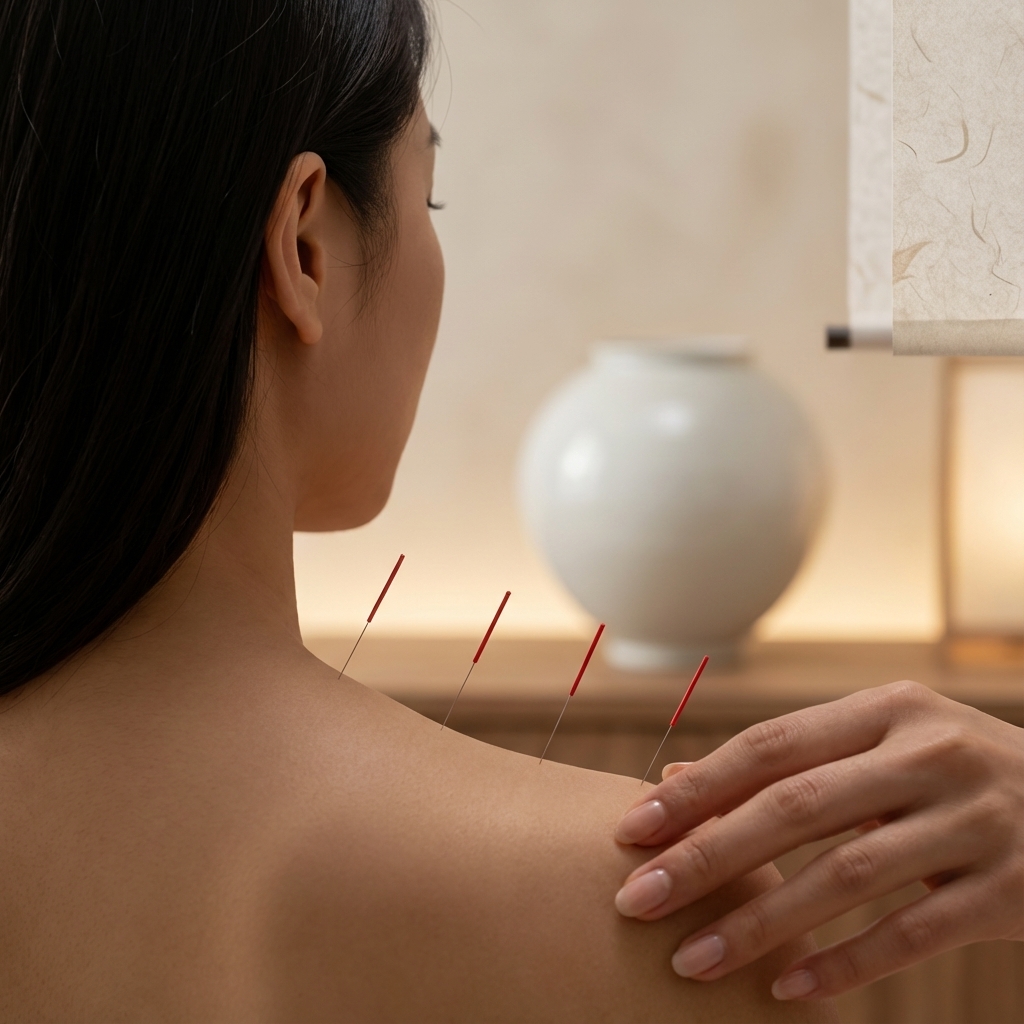
The iliotibial band (IT band) is a thick fibrous band that originates from the tensor fascia lata muscle and extends to the lateral tuberosity of the tibia. Repetitive friction with the lateral epicondyle of the femur occurs around 30° of knee flexion, causing inflammation to accumulate in the subiliotibial bursa and adjacent tissues. Major triggering factors include a sudden increase in running training volume, excessive uphill training, foot pronation, and weakness of the hip abductor muscles. Lower extremity alignment abnormalities, such as bow legs or tibial internal rotation, are also cited as risk factors. In Korean medicine, the outer side of the knee, where the iliotibial band passes, corresponds to the pathway of Qi and blood flowing along the side of the leg. If Qi and blood become stagnant in this pathway, lateral knee pain and stiffness occur. Korean medicine views liver function as governing all muscles and ligaments; if the blood that nourishes the muscles is depleted due to excessive training, the ligaments fail to receive nourishment, leading to recurring adhesions and spasms. Dongjedang views this as muscle and ligament overwork and circulatory disorders. We treat the root cause by directly separating the adhesions using a needle called a Dochim, followed by restoring Qi and blood circulation in the lateral pathway with acupuncture and pharmacopuncture.
Related FAQs
-
Q
Do I have to give up running completely? Do you have a realistic goal to run marathons again?
#Possibility / Realistic Goals
-
Q
I am 55 years old. Is treatment effective at this age? Aren't there limitations due to aging?
#Possibility / Realistic Goals
-
Q
Can knee cartilage or other joints be damaged along with iliotibial band syndrome?
#Comorbidities
-
Q
Can I continue exercising during treatment? Which exercises are okay, and which should be avoided?
#Lifestyle Management
-
Q
I am in my 30s and active in a marathon club in Dong-gu, Incheon. Are there any management methods I can do at home besides foam rollers and stretching?
#Lifestyle Management