
Q Please explain in more detail how Dochim treatment works for meniscal tears.
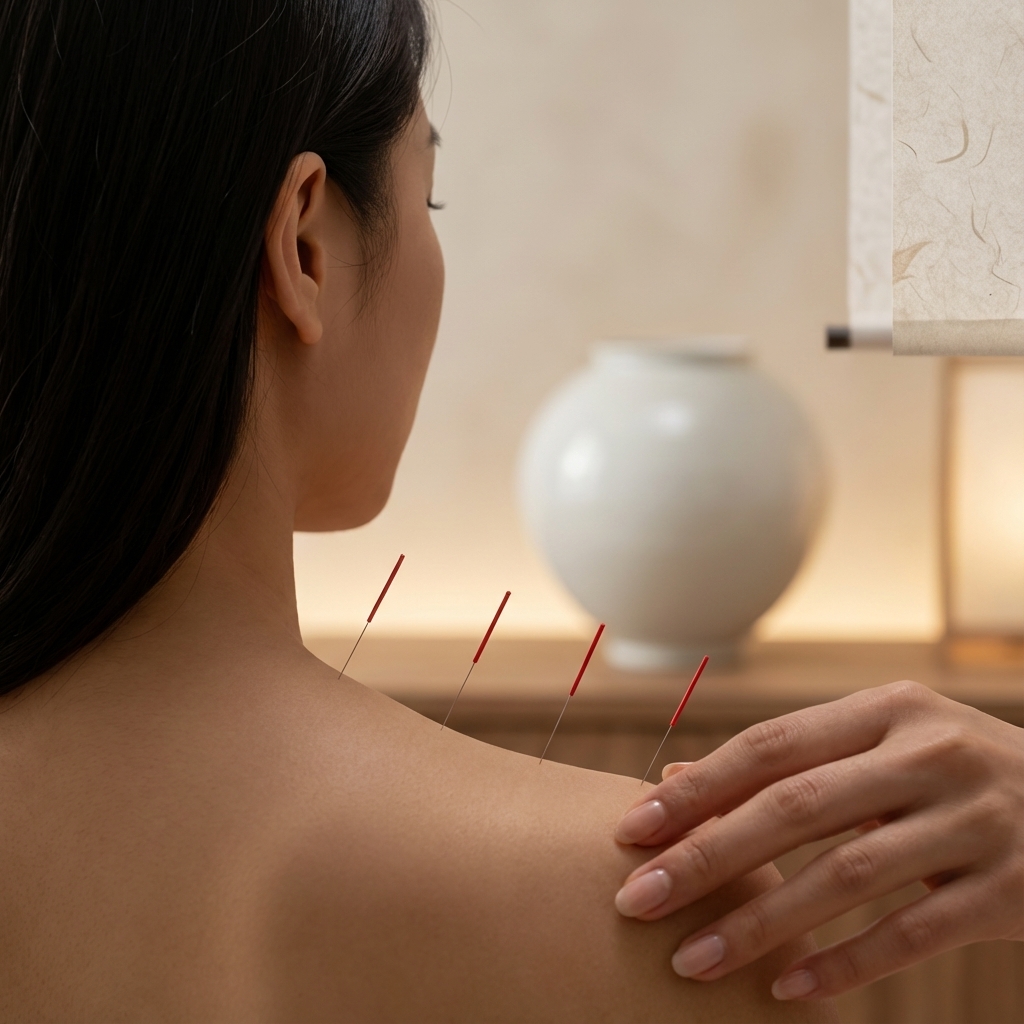
A Dochim is a special needle with a sharp tip that physically separates fibrous tissues adhered around the joint and stimulates ligament and tendon attachment sites to induce a tissue regeneration response. It acts directly on the hardened joint capsule, medial collateral ligament, and adhesions in the tissues surrounding the meniscus to alleviate pain and functional limitations.
Detailed Answer
Dochim is a needle with a flat blade tip measuring 0.5 to 1 mm in diameter that acts through a mechanism similar to percutaneous needle release. Key sites of action in meniscal lesions: ① Medial collateral ligament attachment site (degenerative fibrotic site), ② Posteromedial adhesion point of the joint capsule, ③ Relief of tension at the insertion sites of the semitendinosus and gracilis muscles. Basic research indicates that local bleeding following the needle acupuncture induces tissue regeneration factors (TGF-β, IGF-1). Generally, effectiveness is evaluated after 4 to 6 treatments, performed once a week. Stiffness at the treatment site for 1 to 2 days after the procedure is a normal reaction. The needle acupuncture is a tool that implements the principle of Oriental medicine—clearing blockages—through a modern treatment method. Adhering tissues are tightly clumped together, unable to allow circulation to flow; when the needle separates these clumps, the flow of circulation is restored, allowing nutrients to be supplied to the tissues again. At Dongjedang, we utilize ultrasound imaging as an auxiliary tool to confirm the location of the lesion, after which we precisely determine the depth and direction of needle insertion. Adding pharmacopuncture or bee venom acupuncture after needle acupuncture accelerates the onset of anti-inflammatory and regenerative effects.
Related FAQs
-
Q
I am a man in my 60s, and MRI results indicate significant wear on my meniscus. Is it actually possible to see improvement with Korean traditional medicine treatment at this age?
#Possibility / Realistic Goals
-
Q
I am an athlete in my 20s who wants to undergo meniscal repair surgery, but I am afraid of the operation. Is it possible to return to sports with only Korean traditional medicine treatment?
#Possibility / Realistic Goals
-
Q
It is said that knee osteoarthritis can occur along with meniscal tears. Can both be treated together?
#Comorbidities
-
Q
I am currently undergoing treatment for a meniscus tear. Is it okay to continue exercising? I would like to know which exercises are good and bad for my knees.
#Lifestyle Management
-
Q
Since my meniscus injury, my knee feels unstable and heavy. I am curious about lifestyle habits that can protect my knee in daily life.
#Lifestyle Management