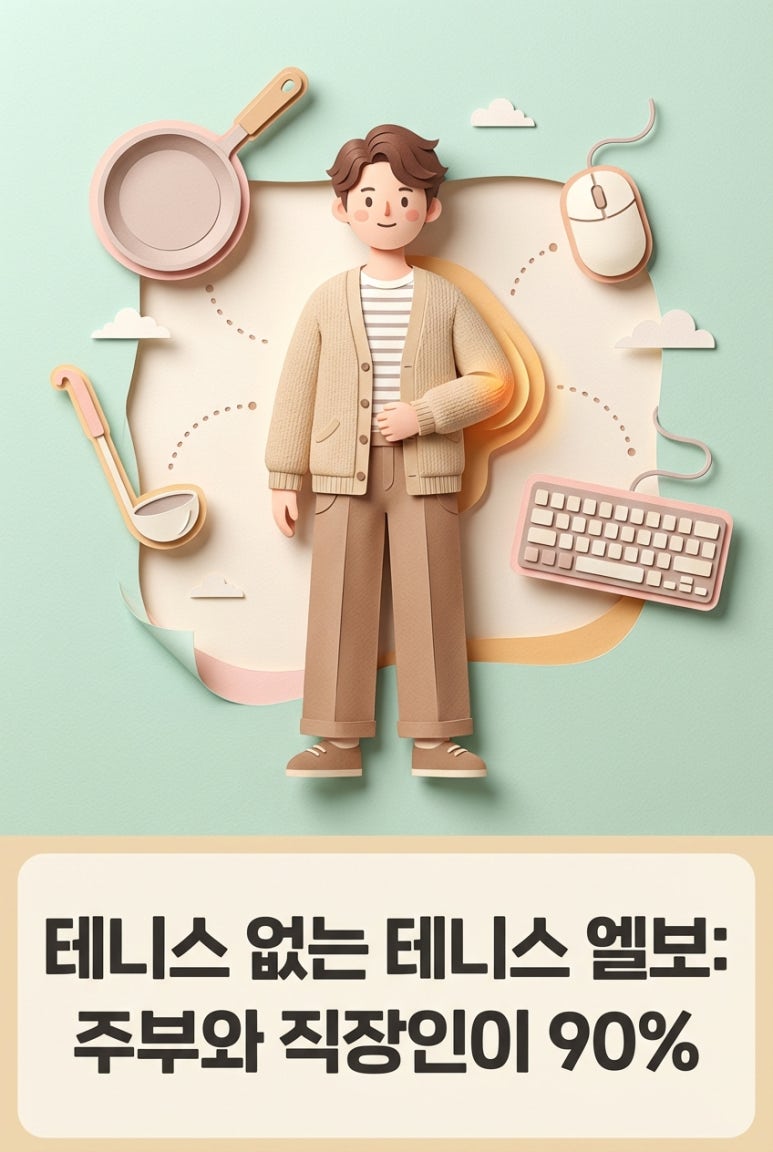
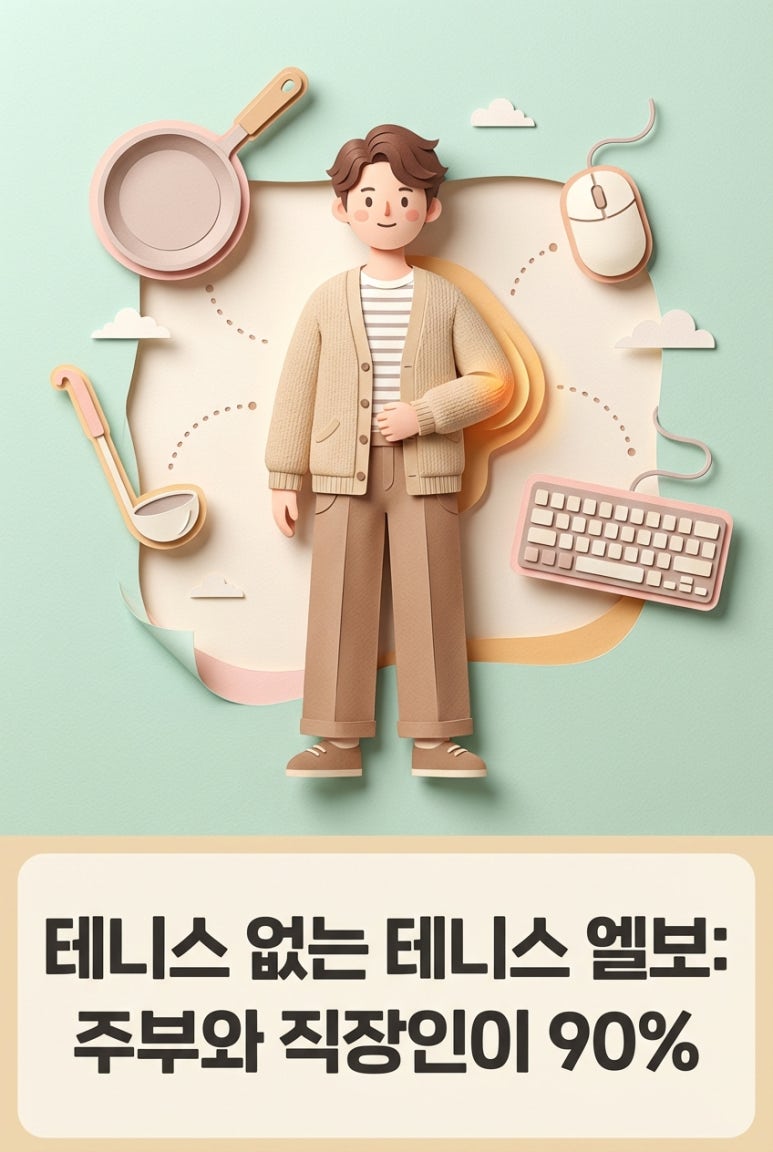
Tennis Elbow Without Tennis: Why 90% Are Housewives and Office Workers
 I am Choi Jang-hyuk, director of Dongjejdang Korean Medicine Clinic.
Today, I want to talk about elbow pain! A condition that troubles both me as a director and my patients alike.
Many people think tennis elbow only develops if you play tennis because of the nickname.
"You have tennis elbow." "But I don't play tennis."
This is a very routine conversation in my clinic.
There is an interesting anecdote about the nickname for this lateral epicondylitis.
This condition was first described in 1873 by German physician Runge as "Writer's Cramp,"
and later acquired its current nickname as tennis players began experiencing it frequently.
It seems the 19th century was truly a romantic era.
However, according to epidemiological data, over 90% of patients have no connection to sports activities,
and the condition primarily occurs in occupational groups requiring repetitive use of wrist extensor muscles or among housewives.
After all, wouldn't "housewife's elbow" have been a more appropriate nickname than tennis elbow?
The annual incidence rate reaches 1% to 3% of the general population,
and it tends to peak especially among the economically active population between their 30s and 50s.
According to the latest 2025 epidemiological research, there is no significant gender difference,
but the prevalence rate rises to as high as 7% in manual laborers and industries with repetitive manual work.
However, among the patients I have seen in a Korean medicine clinic, over 90% were housewives and office workers.
This is an overuse syndrome that occurs from repetitive use of the arms and wrists in daily life. In other words, it is a condition caused by overusing a specific area.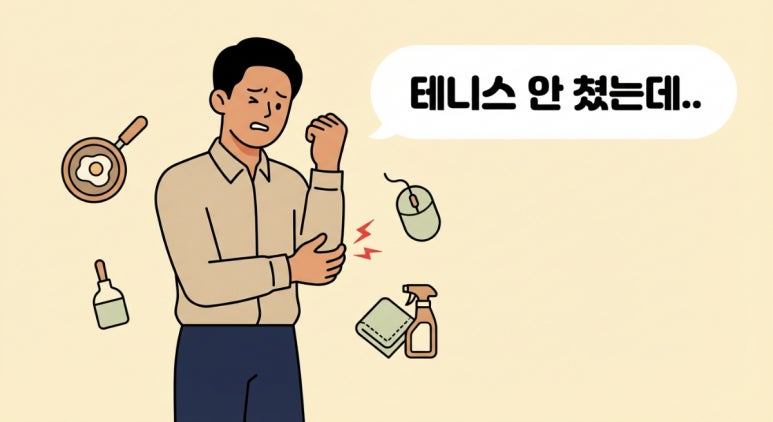 📊 Case | Examples
A 50-year-old housewife patient suffered from right elbow pain for several months.
She had never played tennis, but found it difficult to rotate her wrist or lift objects.
Pain was especially severe when doing kitchen work and lifting heavy pots, and she even dropped items.
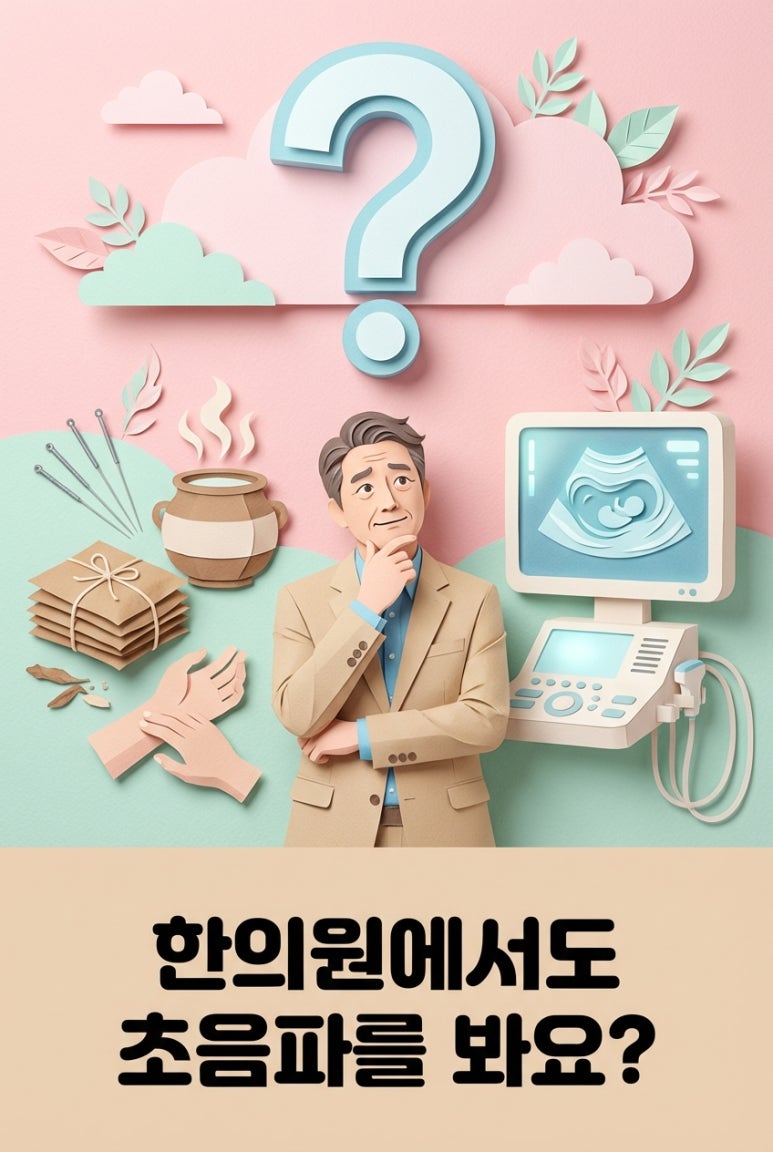
Through detailed history taking and simple physical examination, partial tear was suspected, and ultrasound revealed
excessive fibrosis and calcification that did not match her symptoms.
When asked, she said she would get injections and take painkillers whenever it hurt.
This complicates treatment significantly.
First, adhesiolysis of the fibrosed and calcified areas must be performed using dry needling and herbal acupuncture,
and then the weakened area must be reinforced with heat-mediated acupuncture, thread embedding, and herbal acupuncture to prevent recurrence.
Treatment that could have been simple and easy in the early stages of pain becomes this complex.
This is why office workers and housewives who cannot rest when in pain experience this condition so frequently.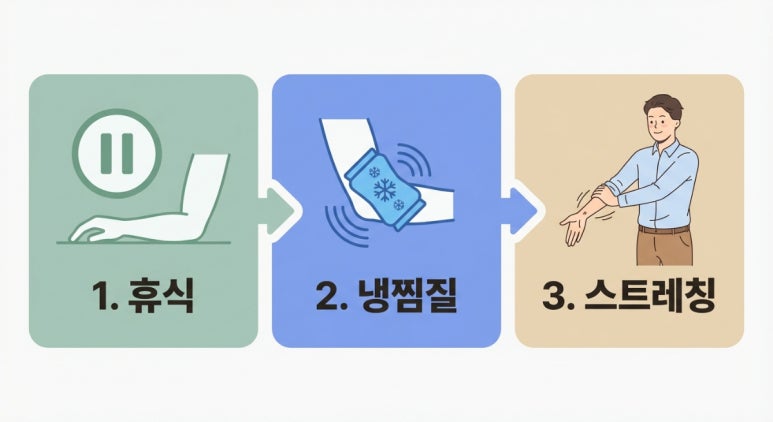 ✅ Action
If you suddenly feel elbow pain, implement these three things immediately.
1️⃣ First, it is important to give your elbow and wrist sufficient rest.
Minimize repetitive movements that cause pain, and if possible, stop the activity temporarily.
2️⃣ Second, apply cold compress to the painful area for about 15 minutes to reduce inflammation.
This is especially effective when there is swelling and heat sensation.
3️⃣ Third, perform stretching by bending your wrist backward to gently stretch the muscles below the elbow.
It is important to proceed slowly within a pain-free range.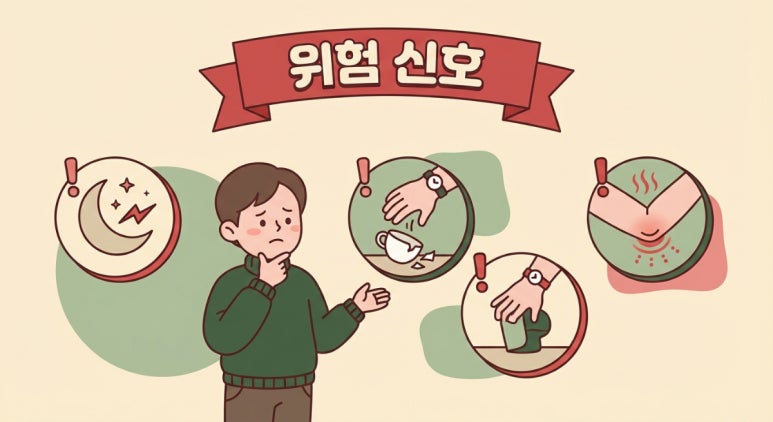 🚨 Warning | Signals You Must Check
✔ Nighttime pain If elbow pain worsens at night, be careful.
✔ Functional impairment The same applies if pain worsens to the point of difficulty lifting objects.
✔ Inflammatory response If your elbow becomes swollen or you feel heat, professional examination is necessary.
✔ Drug resistance If symptoms do not improve even after taking anti-inflammatory medication, seek examination.
Neglecting acute pain has allowed it to develop into chronic pain, a situation not resolved by rest alone.
In such cases, unfortunately, you must seek care at a Korean medicine clinic or hospital.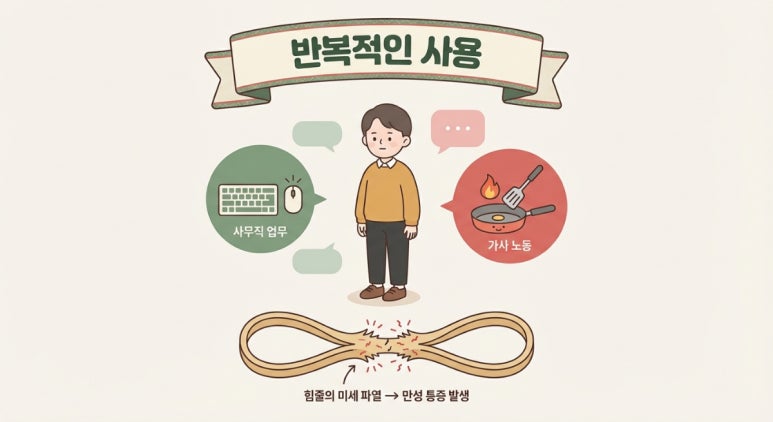 🧠 The Why
Tennis elbow is common among housewives and office workers because they overuse their elbows and wrists.
Repetitive arm use in housewives from cooking, cleaning, and childcare is the main cause.
Office workers experience strain on elbow tendons from keyboard and mouse use or carrying heavy documents.
Repeated minor impacts cause microscopic damage to the elbow tendon and trigger inflammation [1].
While adequate rest is needed at this point, if pain medication is used to temporarily suppress pain and the activity continues,
inflammation leads to fibrosis, fibrosis leads to calcification, and calcification leads to partial tear, creating chronic recurrent tennis elbow.
This is similar to an old rubber band repeatedly stretching and contracting until it breaks.
🔚 Closing
Tennis elbow is certainly not exclusive to tennis players.
Rather, it is a condition that housewives and office workers inevitably experience due to poor posture in daily life and lack of proper rest and treatment.
It is important to pay attention to elbow pain in its early stages and respond appropriately.
If you feel elbow pain, do not hesitate to consult with a Korean medicine clinic.
I support your healthy daily life.
✍️ Written/Reviewed by Choi Jang-hyuk, Director of Dongjejdang Korean Medicine Clinic
❓ FAQ
Q. Do you have to play tennis to develop tennis elbow?
No, tennis elbow can develop regardless of tennis. As I mentioned earlier, it is a condition that commonly appears in housewives and office workers who repeatedly use their arms and wrists. Strenuous movements in daily life can be the cause.
Q. Is it okay to just use patches or painkillers for elbow pain?
Patches can help with temporary pain relief. However, they are not a fundamental solution. Regular painkillers or patches only make you forget the symptoms momentarily. Without addressing the underlying cause, pain can recur or become chronic.
Q. How do Korean medicine clinics treat tennis elbow?
Korean medicine clinics help relieve pain and promote tendon recovery. Acupuncture and herbal acupuncture reduce inflammation and improve qi and blood circulation. In severe cases, dry needling and heat-mediated acupuncture are used. Of course, herbal medicine to promote damaged tissue regeneration is also prescribed. Correcting posture and lifestyle habits is equally important for preventing recurrence.
📚 References
[Western Medicine (WM)] [1] American Academy of Orthopaedic Surgeons (AAOS). (2020). "Lateral Epicondylitis (Tennis Elbow)."
[Korean Medicine (KM)] [2] Korean Association of Oriental Medicine. (2022). "Clinical Practice Guideline for Elbow Pain in Korean Medicine (Lateral Epicondylitis in Korean Medicine)."
Pain
Tennis Elbow Without Tennis: Why 90% Are Housewives and Office Workers
View Program