
Heart Palpitations
Palpitations
When you can feel your own heartbeat — pounding, racing, or skipped beats — and want to know what is behind it.

# Possibility / Realistic Goals (3)
Q Every so often my pulse feels like it trips or skips a beat. Is this an arrhythmia? (47, teacher)
A. That "tripping" sensation may be an ectopic beat, which is common even in healthy people. However, symptoms alone cannot confirm an arrhythmia — an ECG is needed. If it is frequent or comes with dizziness, testing is recommended.
View details →Q My ECG and blood tests are all normal, but I still get palpitations. It feels like nobody believes me. (36, office worker)
A. Normal tests do not mean "no symptoms" — they mean dangerous causes have been ruled out. Brief palpitations often do not appear during the moment of testing. At this stage the approach shifts from removing a cause to adjusting a repeating bodily response.
View details →Q Is a Korean medicine clinic an appropriate place for palpitations? If it is a heart problem, surely herbal treatment cannot help? (41, homemaker)
A. Structural heart disease should be treated by cardiology first. But when tests are unremarkable, or when palpitations, insomnia and tension persist during treatment, Korean medicine can help. Deciding which case applies is the purpose of the first consultation.
View details →# Comorbidities (1)
# Lifestyle Management (2)
Q What should I do the moment palpitations start? Is there anything that helps right then? (31, graduate student)
A. Slow, extended exhalation is the most immediate method. Breathe in for four seconds and out for six to eight, repeated for a few minutes, and the heart rate often settles. Alongside that, protecting your sleep is the key to reducing how often it returns.
View details →Q The palpitations have made me afraid to exercise. Is it better to keep resting? (44, office worker)
A. If tests are normal, avoiding exercise actually works against you — regular aerobic activity lowers resting heart rate. However, if you have ever had palpitations, dizziness or chest pain during exercise, you must be tested first.
View details →# Safety (2)
Q How do I tell whether palpitations can simply be ignored or are an emergency? (52, employee)
A. Seek care immediately if palpitations come with fainting or blacking out, chest pain, or severe shortness of breath. The same applies if a very fast or irregular pulse lasts several minutes or more, if it starts during exercise, or if you have a family history of heart disease.
View details →Q I take diet supplements and energy drinks together. Could that be causing the palpitations? (28, job seeker)
A. It is quite likely. Energy drinks and diet supplements often contain overlapping stimulants, so the total intake is far higher than expected. If the palpitations began around the time you started them, stopping first and watching for change is the logical order.
View details →# Drug Combination / Interactions (1)
# Prognosis / Recovery (1)
# Causes Explained (3)
Q I never used to notice my heartbeat, but lately I can just hear it. Why am I suddenly aware of it? (39, office worker)
A. Your heart always beats, but the brain normally filters out the signal. Palpitations occur when the heart genuinely beats harder or faster, or when the brain becomes so sensitive that it stops filtering. Both are possible, so telling them apart is the first step.
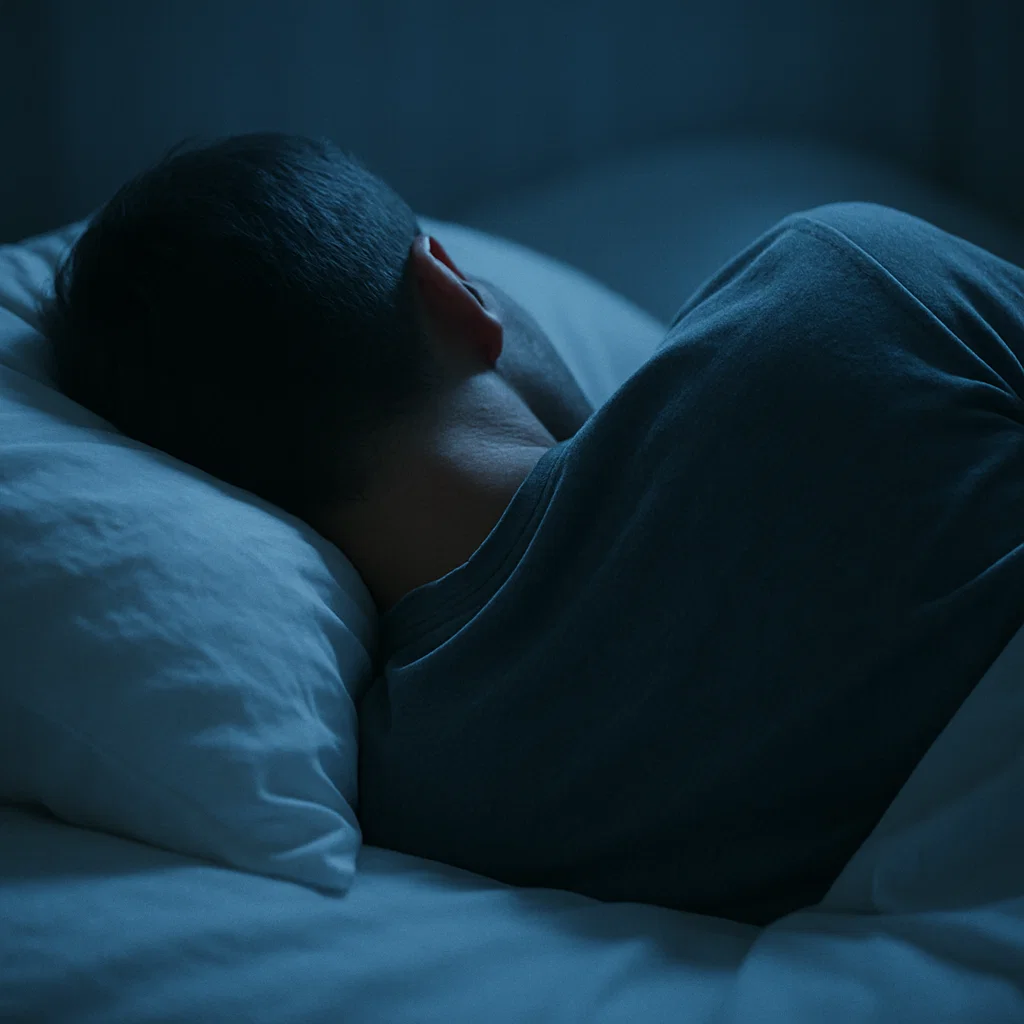
View details →Q I am fine during the day, but as soon as I lie down my heartbeat echoes into the pillow. Why is it worse lying down? (45, self-employed)
A. A quiet room and a lying posture both make palpitations easier to notice. Background noise disappears, and lying on your left side brings the heart closer to the chest wall so each beat transmits more easily. If it persists after changing position, or the pulse is irregular, testing is needed.
View details →Q It only happens when I am stressed. Is my mind really making my heart race? (33, nurse)
A. Stress genuinely raises heart rate through the autonomic nervous system. It is a bodily response, not a matter of imagination. But if palpitations also occur outside stressful moments, or the pulse is irregular, do not explain everything by stress — it needs to be checked.
View details →# Food / Triggers (2)
Q Do I have to give up coffee completely? I would like to keep my one morning cup. (38, designer)
A. You do not have to quit outright, but adjusting the total amount and the timing helps. Up to about 400mg of caffeine a day (three to four cups) is the usual guide; with palpitations, take less than that and avoid caffeine after early afternoon.
View details →Q It is much worse the day after drinking, or after a big meal. Is that connected? (49, self-employed)
A. Yes. The day after drinking, dehydration and an unsettled autonomic system raise the heart rate; after overeating, blood flow shifts to digestion and the heart works harder. A blood-sugar drop after a load of sweet food can also trigger palpitations.
View details →# Treatment Schedule (1)
# Treatment Stages (1)
# Effectiveness (1)
Heart Palpitations is not just a simple symptom
Korean medicine that considers both your constitution and lifestyle rhythm treats the root cause.
From consultation to precise treatment, we provide personalized care.
Prescriptions tailored to your constitution and symptoms treat the root cause
The director personally sees you from first to follow-up visits
We identify the essence through Sasang constitution, pulse and abdominal diagnosis
Treatment based on long clinical experience and evidence
Was this helpful? If you need accurate care for your condition, please contact us below.