
Q I am a 52-year-old housewife. I have never injured my shoulder, but I have been told that my rotator cuff is torn. I have never fallen or bumped into anything, so how can it rupture?
A More than half of rotator cuff tears are degenerative tears that occur without trauma. After the age of 40, if repetitive use of the arm accumulates while blood flow to the tendons decreases and elasticity declines, the tendons can gradually wear down and tear even without a specific accident. This is particularly common in the supraspinatus tendon, which frequently rubs against the bone beneath the acromion.
Detailed Answer
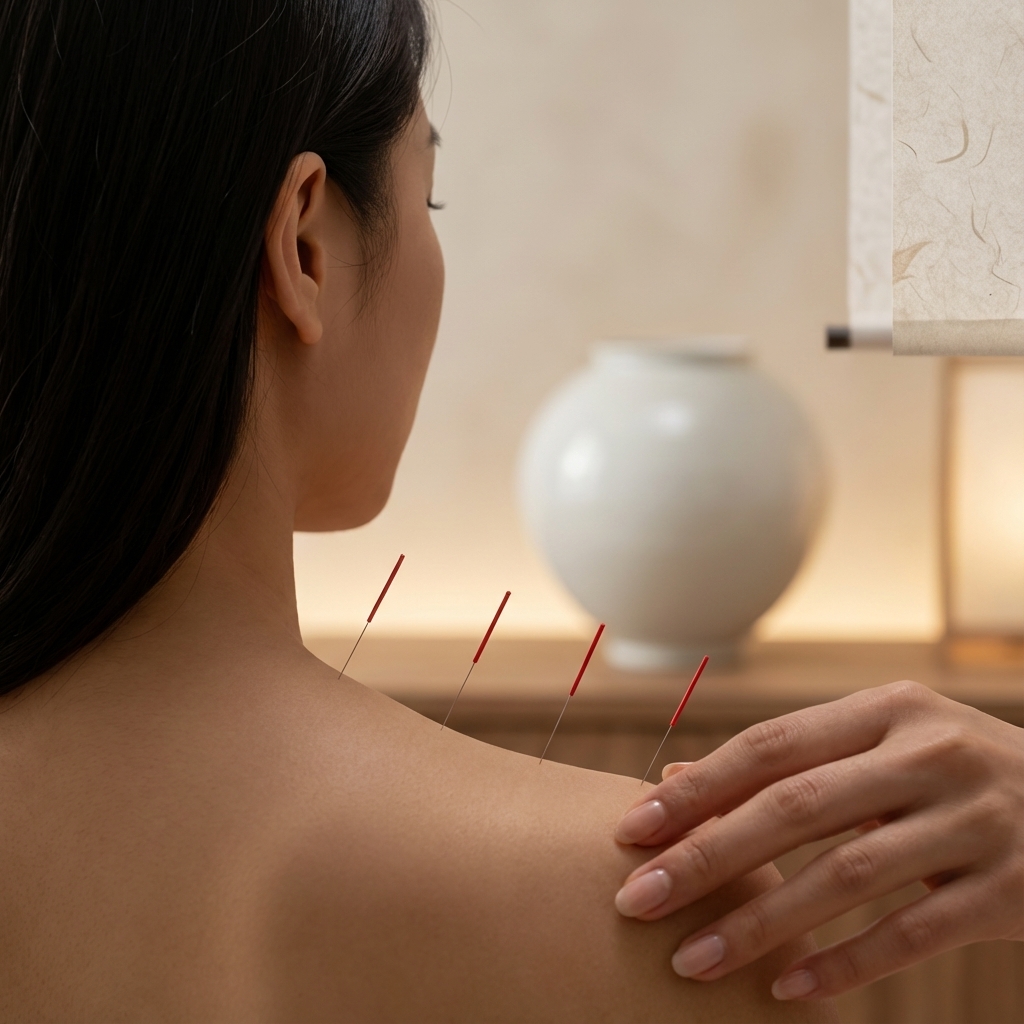
The rotator cuff refers to the four tendons (supraspinatus, infraspinatus, teres minor, and subscapularis) that surround the shoulder, and among them, the supraspinatus tendon is the most prone to tearing. Degenerative tears are much more common than traumatic tears; starting in the age of 40, an avascular zone (critical zone) develops within the tendon where blood supply decreases, causing micro-damage to accumulate without being able to heal. If repetitive movements that raise the arms above the shoulders, such as washing dishes, hanging laundry, or mopping, are performed, the acromion (the roof of the shoulder blade) and the tendons rub against each other, gradually wearing down and potentially progressing from a partial tear to a full-thickness tear. Consequently, it often begins without any apparent accident, with patients complaining, "It started hurting when I lift my arm one day." From the perspective of a Korean medicine clinic, this type of degenerative tear is viewed as a condition where damage to the tendons and muscles is compounded by a deficiency of vital energy and blood. The nutrition and elasticity of the tendons are governed by the blood stored by the liver, while the robustness of the muscles supporting the tendons depends on the energy generated by the spleen and stomach. After middle age, when the blood of the liver and the energy of the spleen and stomach weaken, the tendons fail to receive proper nutrition and become dry and weak; furthermore, if blood becomes localized and stagnant due to repetitive use, recovery becomes even slower. At Dongjedang, we apply external treatments to the injured area in stages using acupuncture and moxibustion to release adhesions and strengthen ligaments and tendons. Simultaneously, we combine this with internal treatments centered on detoxification to flush out waste products and stagnant blood, helping vital energy and blood reach the tendons effectively. This approach is based on the belief that preventing recurrence requires not just addressing the torn area, but also changing the underlying bodily conditions that inevitably led to the weakening of the tendons.
Related FAQs
-
Q
I am a 59-year-old construction site manager. I was advised to have surgery at the hospital. Is it really true that there is no other option besides surgery? Is it possible to avoid surgery through traditional Korean medicine treatment?
#Possibility / Realistic Goals
-
Q
I am a 50-year-old housewife. I underwent rotator cuff repair surgery last year, but I still feel stiffness and my strength hasn't fully returned. Is Korean traditional medicine treatment meaningful even after surgery?
#Possibility / Realistic Goals
-
Q
I am a 46-year-old IT developer. I was diagnosed with a partial rotator cuff tear, and my neck is always stiff while my arm occasionally feels numb. Do I have a herniated disc in my neck as well, or are the two related?
#Comorbidities
-
Q
I am a 51-year-old nurse. I wake up two or three times every night due to shoulder pain. Is there a good sleeping position for a patient with a rotator cuff tear?
#Lifestyle Management
-
Q
I am a 43-year-old member of a badminton club. I stopped all exercise after being diagnosed with a partial tear, but my shoulder feels like it is actually getting stiffer. Which exercises are acceptable, and which are not?
#Lifestyle Management