

Q I am a 42-year-old nurse and my chest hurts more when I wake up. How should I position myself for sleep?
A Sleeping curled on one side compresses the lower ribs and shoulder, which can worsen morning pain. Lying on your side with the painful side up, with a pillow supporting the upper arm so the shoulder does not roll forward, reduces the load. When lying on your back, a thin cushion under the knees lowers tension in the lower back and upper body together.
Detailed Answer
Sleep is when a single posture is held longest in the day. A poor position can undo the effect of daytime treatment overnight. Being especially stiff and sore in the morning is a sign that a particular area was compressed or stretched all night.
A pillow that is too high tucks the chin and stiffens the neck and back; one that is too low lets the shoulders roll forward. As a guide, match the pillow to shoulder height when on your side, and lower than that when on your back. Sleeping face down turns the neck to one side for a long period and compresses the chest, so it is best avoided while chest pain persists.
Korean Medicine Clinic Perspective
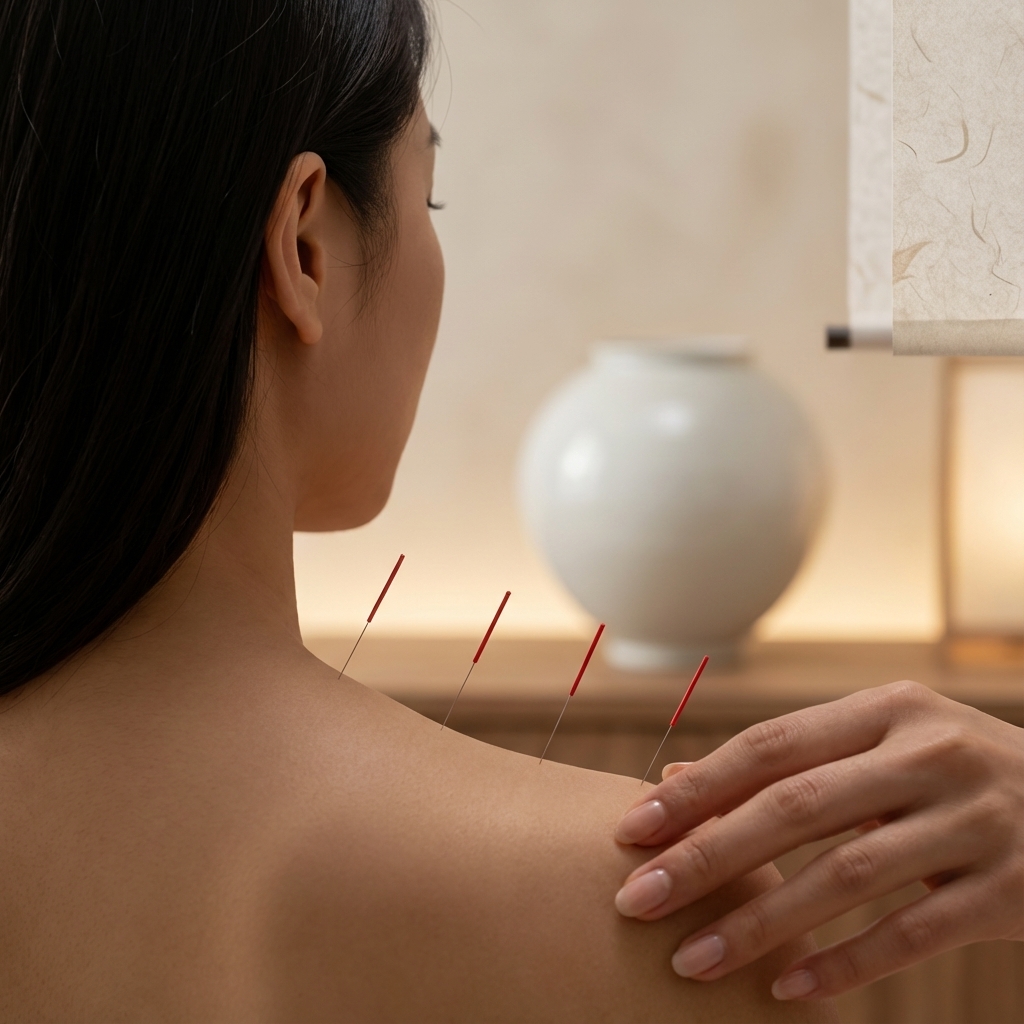
For those whose pain is worst in the morning, we always check sleeping posture alongside the treatment plan. The area that stiffens overnight is often consistent, so we release it with acupuncture and give guidance on gentle relaxation movements before bed. For those who run cold and stiffen further in the early hours, a warm pack or moxibustion before sleep can help.
Related FAQs
-
Q
I am 45 and work full time. Cardiology says my ECG and echocardiogram are both normal, but my chest still hurts. So where is the problem?
#Possibility / Realistic Goals
-
Q
I am a 34-year-old man and was told I have costochondritis. Can treatment at a Korean medicine clinic help?
#Possibility / Realistic Goals
-
Q
I am 47 and self-employed. My chest pain has come and gone for three years. Can something like this be treated?
#Possibility / Realistic Goals
-
Q
I am a 39-year-old designer with chest pain along with stiffness in my neck, shoulders, and back. Are they connected?
#Comorbidities
-
Q
Are there stretches I can do at my desk? I am a 36-year-old office worker and my chest feels tight when I sit for long.
#Lifestyle Management